Direct Procurement
Precision Sintered Tungsten Hardware & Custom Blanks
Select industrial components manufactured to exact hardness and fracture toughness specifications.
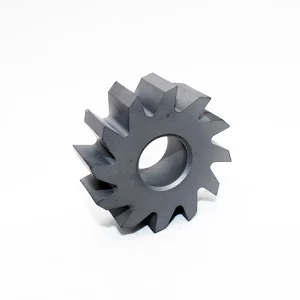
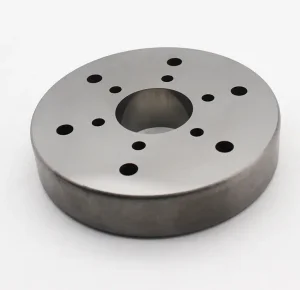
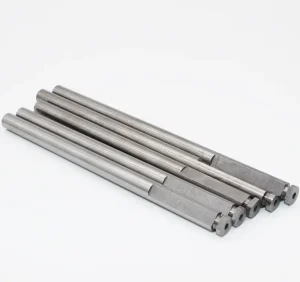
Material Science Analysis
How Hard Is Tungsten? Decoupling Pure Element vs. Cemented Carbide
When global industrial buyers evaluate "China How Hard Is Tungsten Manufacturers & Factory", they typically face a core technical ambiguity between pure elemental Tungsten (W) and sintered Cemented Tungsten Carbide (WC-Co).
Elemental Tungsten (W)
Pure tungsten sits around 7.5 on the Mohs scale, with a Vickers hardness ranging from 350 to 450 HV. It boasts an ultra-high melting point (3422°C) and density (19.25 g/cm³), making it crucial for thermal balance, radiation shielding, and semiconductor filament tooling.
Cemented Carbide (WC-Co)
By stoichiometrically synthesizing carbon with tungsten to produce WC, and introducing metallic binders like Cobalt (Co) or Nickel (Ni) through Hot Isostatic Pressing (HIP), hardness surges to 85.5–93.0 HRA (1500–2600 HV), rivaling industrial diamonds.
The Hardness-Toughness Tradeoff
Procurement teams must balance abrasive resistance against fracture vulnerability. Micro-grain sizing (<0.5 μm) and low binder ratios maximize HRA, while elevated binder percentages (e.g., YG15 to YG20) protect components operating under severe mechanical impacts.
Manufacturing Authority
Jiangxi Zhongfu: 24-Year Formulation-Driven Factory Ecosystem
Positioned directly within Jiangxi's world-class tungsten belt, Jiangxi Zhongfu Cemented Carbide Co., Ltd. controls the complete manufacturing route from metallurgical powder synthesis to nanometer-grade surface grinding.
| Grade Series | Cobalt Binder (% Co) | Density (g/cm³) | Hardness Rating (HRA) | Transverse Rupture (TRS) | Typical Industrial Deployment |
|---|---|---|---|---|---|
| YG6 (ISO K10-K20) | 6.0% | 14.8 – 15.0 | ≈ 90.5 | > 1900 MPa | High-wear chiller plates, wire drawing dies, cast iron machining |
| YG8 (ISO K20-K30) | 8.0% | 14.6 – 14.8 | ≈ 89.5 | > 2200 MPa | Mining button bits, rock drill brazed tips, lathe welding tools |
| YG15 (ISO K40) | 15.0% | 13.9 – 14.1 | ≈ 87.0 | > 2800 MPa | Heavy cold-heading punches, stamping dies, mechanical seal rings |
| YG20 (Impact Class) | 20.0% | 13.4 – 13.6 | ≈ 85.5 | > 3100 MPa | Roll crushing wear parts, progressive stamping blanks, EDM blocks |
| Ni-Bonded (Non-Magnetic) | Nickel Phase | 14.5 – 14.9 | 88.0 – 90.0 | > 2100 MPa | MWD/LWD downhole logging sensors, non-magnetic jewelry pins, chemical seals |
100% Virgin Powder
Zero recycled or contaminated scrap scrap powder. Our proprietary reduction guarantees homogeneous grain distributions without microporosity.
Overpressure Sinter-HIP
Consolidating components at up to 100 bar argon atmospheres eliminates micro-voids, increasing mechanical longevity by over 40%.
Global Export Supply
Direct supply to precision tool builders in the US, Germany, Canada, Australia, and 20+ countries with full metallurgical traceability.
Fast Technical Quoting
Our application engineering department reviews 2D/3D customer part prints and delivers comprehensive manufacturing feasibility reports in under 8 hours.
Enterprise Solutions
Macro Industry Demands & Critical Wear Applications
High-load operational environments mandate specific metallurgical hardness parameters to mitigate sudden catastrophic spalling or chronic frictional breakdown.
Heavy Metallurgical Mills
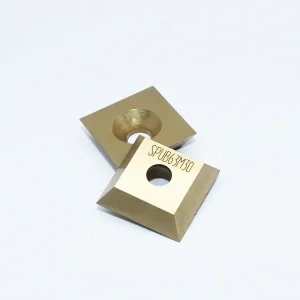
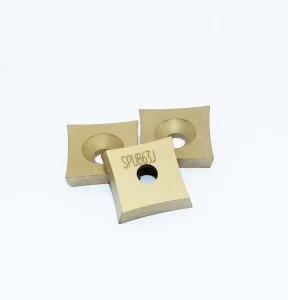
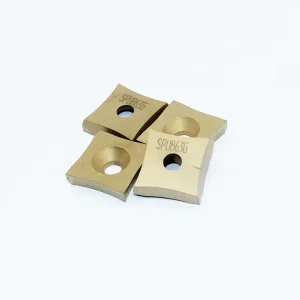
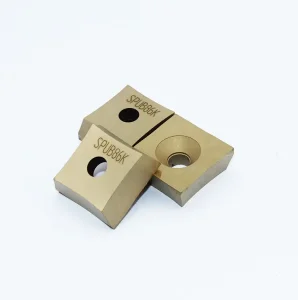
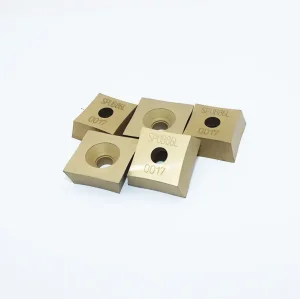
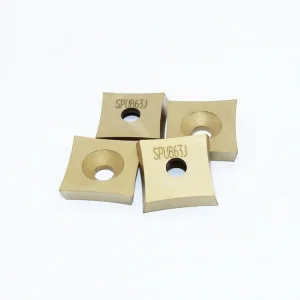
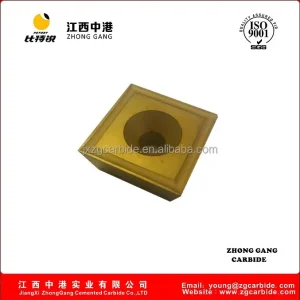
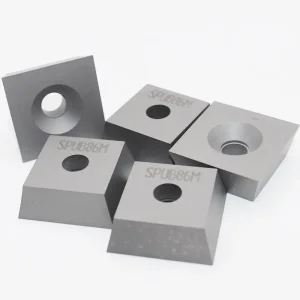
Continuous steel slab peeling and hot tube scarfing demand extreme hot-hardness. Specialized inserts like SPUB63, SPUB86, SNMX19, and SNMG1907 maintain edge stability against scaling under thermal shock loads exceeding 900°C.
Mining, Tunneling & Oilfield
Rotary drilling through hard quartzite formations requires toughness matched with abrasive resistance. Sintered rock bit inserts, scraper cutters, and gripper tips ensure sustained penetration rates without brittle tooth fracture.
Non-Magnetic Precision Sensing
Aerospace directional drilling (MWD/LWD) and automated magnetic sorting require strict non-magnetic boundaries. Zhongfu replaces cobalt with specialized nickel matrix systems, delivering non-permeable parts with zero magnetic footprint.
Innovation Trajectory
Technical Roadmap: Next-Generation Tungsten Hardness Engineering
Addressing the next evolution of cutting speeds, micro-tooling tolerances, and environmental compliance across the international market.
Ultrafine & Nano-Grain WC (<0.2 μm)
Developing nano-scale crystalline powder structures that simultaneously boost hardness above 93.5 HRA without forfeiting boundary toughness. Essential for micro-drills utilized in semiconductor wafer and PCB processing.
Multi-Layered AlTiN / CVD Coatings
Enhancing substrate surface hardness using high-density PVD/CVD nano-coatings. Thermal barrier coatings protect cemented carbide structures at extreme cutting speeds where frictional temperatures approach 1100°C.
Zero-Porosity Additive Sintering
Combining computerized pressure profiling with optimized binder gradient control to achieve near-net shape geometry, eliminating costly diamond-wheel finishing for intricate non-standard geometries.
Enterprise Assurance
Compliance, Traceability & Localized Support
International industrial supply chains require strict supply consistency, documentation integrity, and verified material provenance.
Metallographic Certifications
Every exported production batch ships with a full inspection certificate: density verification, magnetic saturation analysis, coercive force metrics, and metallographic grain-size imaging.
Conflict-Free Provenance
Jiangxi Zhongfu strictly enforces ethical raw material procurement protocols. Sourcing directly from regional reserves adhering to global conflict-free mineral transparency guidelines.
Precision Export Logistics
Heavy, dense tungsten carbide products require specialized shockproof and anti-corrosive vacuum packaging to safeguard micro-ground edges during air or sea freight transit.
Procurement Knowledge Base
Frequently Asked Questions on Tungsten Hardness & Sourcing
Direct answers to core questions from toolroom managers, procurement directors, and design engineers.
How hard is pure tungsten compared to tungsten carbide?
Pure tungsten has a Mohs hardness of approximately 7.5 and a Vickers hardness around 350-450 HV, exhibiting moderate ductile properties in its elemental state. Cemented tungsten carbide (WC) is an engineered ceramic-metallic matrix measuring approximately 9.0 to 9.5 on the Mohs scale and reaching 85.5 to 93.0 HRA (1500 to 2600 HV), making it one of the hardest materials known to industrial tooling.
Can Zhongfu manufacture non-standard custom carbide parts from 2D/3D drawings?
Yes. Custom fabrication accounts for the vast majority of our production volume. Clients can send 2D prints (DWG, DXF, PDF) or 3D models (STEP, IGES). Our engineering team will review geometric tolerances, evaluate surface finish requirements (down to Ra 0.05 μm), and recommend the optimal grade and powder blend.
What is the correlation between cobalt content and cemented carbide hardness?
Cobalt operates as the ductile metallic binder phase holding rigid WC crystals together. Decreasing cobalt percentage (e.g., down to 6% in YG6) yields higher surface hardness (≈90.5 HRA) and exceptional abrasive wear endurance, but lowers impact tolerance. Increasing cobalt (e.g., 15% to 20% in YG15/YG20) lowers hardness down to 85.5–87.0 HRA while significantly boosting fracture toughness against heavy mechanical pounding.
Why does overpressure Sinter-HIP technology matter for part hardness?
Standard vacuum sintering can leave micro-porosity pockets inside thick cross-section parts. Sinter-HIP introduces high-pressure inert argon gas (up to 100 bar) at peak sintering temperatures, closing internal micro-voids, increasing structural density toward theoretical limits (near 100%), and enhancing transverse rupture strength and fatigue resistance.
How does non-magnetic tungsten carbide prevent magnetic sensor interference?
Standard cemented carbide uses ferromagnetic cobalt, causing signal deflection in proximity to directional electronics. Non-magnetic grades utilize nickel or proprietary nickel-chromium binders, achieving ultra-low relative magnetic permeability (μr < 1.005) while retaining surface hardness values around 88 to 90 HRA.
Extended Product Portfolio
Engineered CNC Inserts, Rod Blanks & Brazed Components
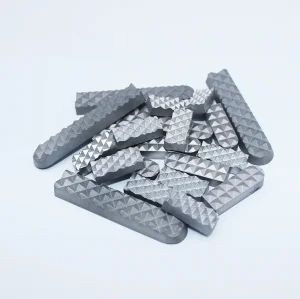
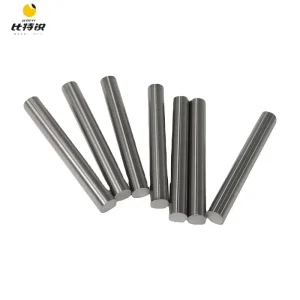
Explore our full line of specialized metal-removal, woodcutting, and rock-penetration components.