
Precision Tooling & High-Hardness Wear Solutions
Engineered for continuous cutting, tube scarfing, profile scarfing, and extreme mechanical friction applications.

China Carbide Cutting Rods for Tungsten Alloy Cutting Tool Components Suppliers, Factories
View Product Details
China Best price CVD coating tungsten carbide non standard carbide jaw insert cnc Manufacturer, Factory
View Product Details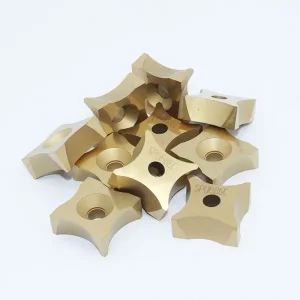
Buy SPUB86C P40 tungsten carbide tube scarfing insert for heavy machining Supplier, Factories
View Product Details
Wholesale Cemented carbide metal insert_cutting_tool SPUB86B/86C/86D/86E/86F/86G/86H/86K/86M Manufacturers, Factory
View Product Details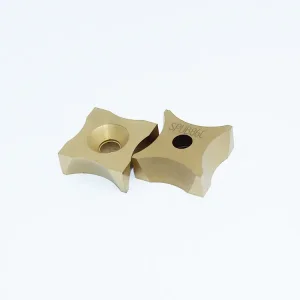
Wholesale SPUB86C customized lathe_ tungsten_carbide_inserts drill bit insert Supplier, Factory
View Product Details
Wholesale China best price custom tungsten carbide steel cutters concrete scarifier blade Supplier, Factory
View Product Details
Wholesale Factory wholesale SPUB86 CVD coating tungsten carbide turning inserts Manufacturers, Factories
View Product Details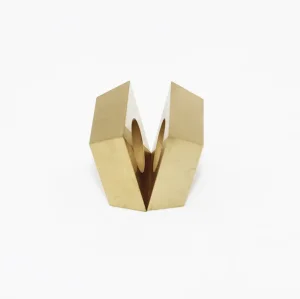
Wholesale Carbide hard alloy blade square Carbide Cutting Inserts for Metal Processing Suppliers, Factories
View Product DetailsDecoding "Dureza Del Titanio" vs. Cemented Carbide Superiority
A rigorous engineering benchmark examining microhardness, yield behavior under shear, compressive resistance, and thermal hardness dynamics across industrial metallurgy.
Microstructural Density & Lattice Strength
Pure titanium and structural titanium alloys (e.g., Ti-6Al-4V) provide an impressive strength-to-weight ratio, yet base hardness remains capped around 30 to 40 HRC (300-400 HV). When mechanical friction, severe gouging, or abrasive wear occur, titanium alloys quickly suffer galling and adhesion. Zhongfu's sintered tungsten carbide matrices deliver Vickers values surpassing 1,500 to 2,200 HV, bridging structural durability with unmatched surface hardness.
Compressive Yield & Deflection Resistance
The elastic modulus of industrial cemented carbide reaches 550–650 GPa, virtually four to five times higher than titanium alloys (110–115 GPa). In cold forming, pipe scarfing, and high-impact rotary tools, extreme deflection causes premature geometric failure. Cemented carbide resists elastic deformation under intense mechanical loads, preserving exact tolerances and micron-level precision during intense operations.
Hot Hardness (Red Hardness) Retention
Titanium undergoes rapid oxidation and significant surface softening when working temperatures exceed 500°C. In contrast, tungsten carbide retains ultra-high mechanical hardness and boundary lubrication up to 900°C–1,000°C. Engineered with cobalt or nickel solid solution binders and enhanced with multi-layer CVD/PVD coatings, our materials maintain sharp cutting edges and resist thermal degradation under high-speed milling friction.
| Material Category | Hardness Rating (HRC / HRA / HV) | Young's Modulus (GPa) | Thermal Degradation Limit (°C) | Primary Industrial Use-Case |
|---|---|---|---|---|
| Commercially Pure Ti (Grades 1-4) | 70–90 HRB (~15–20 HRC) | 105 GPa | 350°C | Chemical tanks, fluid corrosion containment |
| Aerospace Titanium (Ti-6Al-4V Gr 5) | 32–38 HRC (~330–370 HV) | 114 GPa | 450°C | Structural airframes, lightweight rotating fans |
| Titanium Nitride Coating (TiN/TiAlN) | 2,300–3,000 HV (Film Layer) | 400+ GPa (Film) | 800°C | Thin wear barrier for tooling & medical scalpels |
| Zhongfu WC-Co Submicron Carbide (YG6X) | 91.5–93.0 HRA (~1,650–1,900 HV) | 620 GPa | 950°C | Precision endmills, non-ferrous finishing inserts |
| Zhongfu Tough-Impact Carbide (YG15/YG20) | 85.5–88.0 HRA (~1,250–1,400 HV) | 540 GPa | 850°C | Severe impact cold heading, concrete scarifiers |
Why Global Buyers Depend on China's Advanced Carbide Hubs
Harnessing virgin mineral supply dominance, complete upstream vertical integration, and modernized Overpressure Hot Isostatic Sintering (Sinter-HIP).
Direct Tungsten Supply Bastion
China commands over 80% of global tungsten reserves, centering in Jiangxi and Hunan provinces. Jiangxi Zhongfu Cemented Carbide Co., Ltd. sits right at the supply nucleus. We eliminate volatile international intermediary markups, securing pristine ammonium paratungstate (APT) and tungsten powder with zero reliance on low-grade recycled scrap.
100 bar Sinter-HIP Consolidation
Eliminating internal microporosity is paramount. Our automated vacuum furnace lines apply up to 10 MPa (100 bar) of pure argon gas during liquid phase sintering. The Sinter-HIP process seals micropores, raises structural transverse rupture strength (TRS) past 3,200 MPa, and guarantees consistent reliability under dynamic fatigue.
Sub-Micron h6 Precision Grinding
Pressing is only the first step. Our manufacturing floors feature Swiss and German 5-axis CNC tool grinding centers, centerless grinding units, and precision wire EDM equipment. We hold round rod tolerances within h6 (+0/-0.008 mm), deliver mirror surface finishes below Ra 0.05 µm, and build custom inserts directly matching complex CAD geometry.
Agile Global Supply Chains
Standard European and North American tooling lead times frequently stretch from 12 to 20 weeks for bespoke carbide grades. Our automated manufacturing architecture delivers tailored prototype sintering in 10 working days, and ships large container volumes in under 4 weeks—backed by reliable air/sea multimodal logistics into over 20 nations.
High-Hardness Strategic Deployments Across Global Sectors
Where standard titanium components face severe friction limits, Zhongfu's engineered carbide solutions provide operational longevity, process continuity, and superior cost performance.
Continuous Heavy Steel Mill Tube Scarfing
High-frequency welded (ERW) steel pipes demand immediate removal of red-hot interior and exterior weld seams. Standard hardened tool steels and coated titanium components soften and deform within seconds under 800°C slag friction. Our SPUB86C, SPUB63, and SNMX series scarfing inserts, fortified with multi-layer CVD coatings, withstand severe thermal shocks, maintaining pristine tube geometries through miles of continuous processing.
Downhole MWD/LWD Drilling & Non-Magnetic Tooling
Deep oil, gas, and geothermal drilling assemblies require non-magnetic components to prevent distortion of sensitive magnetometers. Standard cobalt binders carry ferromagnetic signatures that skew azimuth measurement. Zhongfu's nickel-bonded (Ni) non-magnetic tungsten carbide grades combine ultra-low magnetic permeability (μ ≤ 1.005) with 89–90 HRA hardness, defending against severe downhole slurry abrasion and corrosive hydrogen sulfide environments.
Aerospace Titanium Machining (Endmills & Drills)
Machining tough titanium alloys like Ti-6Al-4V is notoriously demanding: low thermal conductivity traps friction heat directly at the cutting edge, inducing rapid tool failure. Our 0.25 µm nano-grain solid carbide rods provide the extreme edge sharpness and chipping resistance essential for solid end mills and drills, boosting tool lifespan up to 300% over conventional micro-grain rods.
Concrete Scarification & Road Milling Cutters
Highway cold planers and floor scarifiers encounter immense impact and silica grinding. Standard hardened steels wear away in hours. Zhongfu manufactures forged body assemblies fitted with tungsten carbide flail cutters and rotating tips that withstand millions of violent impacts against concrete surfaces, delivering smooth roadway profiles and reducing unplanned maintenance stops.
High-Pressure Waterjet Orifices & Slurry Valve Seats
Waterjet cutting nozzles operate under hydraulic pressures exceeding 60,000 PSI (4,000 bar), where garnet abrasive slurries rapidly erode ordinary materials. Zhongfu's specialized ultrafine-grain carbide seats and nozzles resist supersonic slurry erosion, keeping spray streams coherent and preserving dimensional accuracy across hundreds of operating hours.
Automated Stamping & Progressive Forming Dies
Modern electric motor laminations and electronic connectors rely on high-speed stamping presses cycling up to 1,200 strokes per minute. Our YG15 and YG20 submicron plates, ground to flat mirror finishes, resist both micro-chipping and tensile fatigue, running through millions of stamping strokes before requiring routine regrinding.
Frequently Asked Questions on Titanium vs. Carbide Hardness
Essential metallurgical and commercial guidance for purchasing managers, chief engineers, and OEM toolmakers worldwide.
What is the actual hardness of titanium compared to tungsten carbide?
Standard aerospace titanium (Ti-6Al-4V) measures approximately 32–38 HRC (around 300–360 HV). In direct comparison, industrial cemented tungsten carbide typically rates from 85.5 to 93.0 HRA (equivalent to 68–82 HRC, or 1,300–2,000+ HV). Tungsten carbide provides roughly 400% higher hardness and significantly superior resistance to sliding abrasive wear than bulk titanium alloys.
Can Zhongfu manufacture custom wear parts directly from customer CAD drawings?
Yes. Custom sintered and precision-machined wear parts are our primary core capability. You can share your 2D (DWG/PDF) or 3D (STEP/IGES) drawings with technical tolerances. Our metallurgists will review your operational environment, stress loads, and abrasive factors to tailor the optimum grade recipe, grain structure, and precision grinding pathway.
Why is non-magnetic carbide necessary when titanium itself is already non-magnetic?
While bulk titanium is naturally non-magnetic, its low surface hardness makes it prone to rapid galling and abrasive failure in deep well environments or sliding seal assemblies. Standard tungsten carbide uses ferromagnetic cobalt, causing signal deflection in MWD/LWD tools. Zhongfu's nickel-bonded non-magnetic carbide offers the best of both: complete magnetic neutrality coupled with extreme 89 HRA hardness.
What quality control methods are implemented before shipping international orders?
Every single batch undergoes exhaustive quality verification. We inspect raw powder granulometry via laser diffraction, verify transverse rupture strength (TRS), check microstructural cobalt pooling using high-resolution metallographic microscopes, and confirm near-zero porosity. Dimensions are verified via precision digital toolmaker optical comparators and CMM equipment before secure moisture-barrier packaging.
How fast can our procurement team expect quotations and engineering reviews?
Our dedicated international metallurgical engineering group guarantees technical reviews and official price quotations within 8 working hours. We provide complete grade datasheets, expected production cycle timelines, and express air freight arrangements to ensure your manufacturing schedules stay entirely on track.
What is the standard lead time for customized carbide blanks and inserts?
For catalog sizes and standard rods/plates, items ship within 48 to 72 hours from factory stock. Customized press dies and bespoke carbide blanks typically take 10 to 15 business days for vacuum Sinter-HIP production, plus an additional 3 to 5 days if sub-micron grinding (h6 tolerances) or specialized CVD/PVD coatings are required.
Wear-Resistant Components, Rods & Specialized Hardware
Advanced non-magnetic shafts, micro-grain tool rods, waterjet seats, and high-performance industrial gear cutters.

Wholesale Wholesale Steel Pipe Scarfing Tools SPUB63J Tube Scarfing Inserts Supplier, Factories
View Product Details
Wholesale Customized tungsten non-magnetic carbide scarifier cutter/through hole wear parts Manufacturers, Factories
View Product Details
Wholesale China best price straight toothed steel small pinion gears Manufacturers, Supplier
View Product Details
China Dia 8 × 330 mm Nano Grain Size Tungsten Carbide Rods for Making 0.25 µm Endmills, Drills and Boring Tools Manufacturer, Suppliers
View Product Details
China Wholesale custom tungsten carbide module gear milling shaper cutters Manufacturers, Suppliers
View Product Details
Wholesale Customized tungsten cemented carbide hardware parts water jet nozzle seat valve Factory, Factories
View Product Details
Buy Square Tungsten insert carbide manufacturer threading carbide blank inserts Manufacturer, Manufacturers
View Product Details