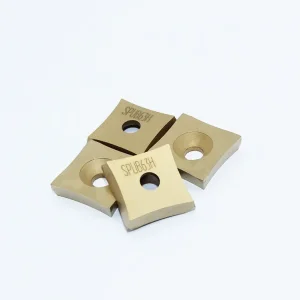
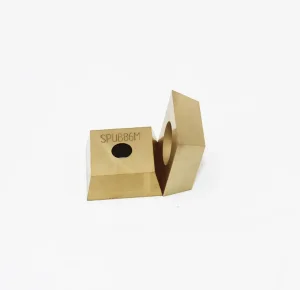
High-Precision Carbide Welding Tips & Turning Inserts
Engineered with sub-micron grain sizing and advanced HIP-sintered densification to withstand high cutting temperatures and extreme shear mechanical forces.

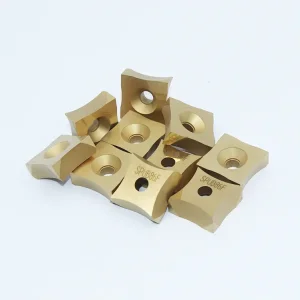
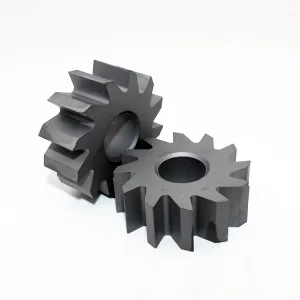





Carbide Welding Blades: Engineering Foundations & Microstructure
Why brazed carbide lathe cutting tools remain the irreplaceable pillar for heavy roughing, discontinuous cuts, and severe vibration turnings across modern heavy manufacturing.
Interfacial Brazability Mechanics
Unlike standard indexable clamping, a carbide welding blade relies on atomic wetting between the tool steel shank and the carbide tip. Using high-frequency induction brazing with silver-copper-zinc alloys (e.g., BAg-8 or copper sandwich shims), internal shear stresses generated by differences in thermal expansion coefficient are dampened, preventing joint peeling under continuous 900°C cutting edge loads.
HIP Sintering & Porosity Elimination
Zhongfu utilizes advanced Overpressure Sinter-HIP furnaces operating at 1450°C and 60–100 bar Argon pressure. This liquid-phase consolidation closes microscopic A-type, B-type, and C-type porosity down to ISO standards, drastically increasing the transverse rupture strength (TRS) to upwards of 2600 MPa, preventing brittle fractures during heavy interruptive lathe turnings.
Custom Regrinding Economics
For large-scale forging facilities and train wheel set refurbishment, indexable inserts become cost-prohibitive once edge breakage occurs. Brazed carbide welding blades can be custom profile-reground 4 to 8 times using resin-bonded diamond wheels, drastically cutting the tooling spend per metric ton of swarf removed.
Global Procurement Needs & Turnkey Industry Solutions
Addressing the shifting operational pain points of multinational manufacturing plants, roll foundries, and automated precision machine shops.
Roll Turning & Hardened Steels
Centrifugally cast high-chromium iron rolls, forged steel backup rolls, and high-nickel chill rolls (HRC 45–65) require blades with high thermal hardness and crater wear resistance. Custom formulated YG6X and YW2 welding tips eliminate thermal spalling and hold tight diametrical tolerances over single tool cuts exceeding 5,000 meters.
Oilfield Tubular & Scarfing Tools
Continuous steel pipe mills and casing manufacturers require specialized outer diameter (OD) and inner diameter (ID) tube scarfing and weld bead peeling tools. Zhongfu supplies matched SPUB63, SPUB86, and SNMX welding inserts that seamlessly weld onto mandrel holders, resisting severe abrasion from hot weld flashes.
Non-Magnetic Drilling Subsystems
In Measurement-While-Drilling (MWD) downhole tools, interference with geomagnetic sensors is unacceptable. Our nickel-bonded non-magnetic solid carbide rods, wear bushings, and cutting tips provide zero-magnetic permeability (µr < 1.005) while delivering the physical wear characteristics of standard cobalt grades.
Engineering Grade Guide for Lathe Welding Blades
Review standard and specialized metallurgical compositions designed for steel turning, cast iron cutting, and non-ferrous roughing applications.
| ISO Category | Carbide Grade | Binder (Co/Ni %) | Density (g/cm³) | Hardness (HRA) | TRS (N/mm²) | Recommended Machining Application |
|---|---|---|---|---|---|---|
| ISO K10–K20 | YG6 / YG6X | 6.0% Co | 14.90–15.00 | 90.5–91.5 | ≥ 2000 | Finishing & semi-finishing of chilled cast iron, non-ferrous metals, and bakelite turning. |
| ISO K20–K30 | YG8 | 8.0% Co | 14.60–14.80 | 89.5–90.2 | ≥ 2400 | Rough turning, interrupted planning of cast iron, rock drilling bits, and heavy brazed tools. |
| ISO P10–P20 | YT15 | 6.0% Co (TiC 15%) | 11.30–11.60 | 91.0–92.0 | ≥ 1700 | Continuous high-speed turning of carbon steel and alloy steel under stable machining setups. |
| ISO M10–M20 | YW1 / YW2 | 8.0% Co (TaC/NbC) | 12.90–13.20 | 90.0–91.0 | ≥ 1800 | Universal machining: stainless steel, heat-resistant high alloy steel, high manganese steel. |
| Non-Magnetic | ZF-NM12 | 8.5% Ni Binder | 14.50–14.70 | 88.5–89.5 | ≥ 2200 | MWD downhole directional parts, magnetic chuck lathe workpieces, chemical wear parts. |
Full-Chain Traceability & Global Compliance Framework
Ensuring cross-border shipments conform strictly to international trade safety, raw material origins, and metallurgical certifications.
100% Virgin Powder
Zero recycled scrap (zinc-process sludge) is permitted in our prime lathe blade batches. Every batch is certified with complete spectrometry records, maintaining repeatable grain boundary strength.
RoHS & REACH Compliance
Our products pass comprehensive hazardous substance screening. Free from prohibited organic solvents or uncontrolled impurities, verified annually by independent SGS / TÜV laboratory testing.
On-Site Application Support
Our dedicated bilingual engineering application team provides brazing temperature curve advice, shank pocket milling geometry recommendations, and emergency stock agreements (VMI) for tier-1 distributors.
Packaging & Safe Transit
Export orders are vacuum-sealed in moisture-resistant polymer cases with shock-absorbent internal honeycomb dividers, preventing transit-induced edge chipping across sea and air freight routes.
Technological Roadmap: Next-Gen Carbide Cutting Tools
Bridging traditional metallurgical manufacturing with automated intelligence and nano-scale grain engineering.
Ultrafine Sub-Micron Grades
Transitioning turning tip WC grain structures down to 0.2–0.4 µm. This microstructural refinement prevents flank wear erosion and enhances thermal shock resistance during high-speed dry lathe operations.
Pre-Tinning & Active Metallization
Developing laser-activated nickel and silver surface pre-coatings on the seating surfaces of carbide welding blades, lowering the required brazing temperature by 80°C and eliminating micro-void formation.
PVD HiPIMS Multi-Layer Systems
Applying high-power impulse magnetron sputtering (AlTiSiN / TiAlSiN) directly onto ground brazed tools. This introduces an ultra-dense, self-lubricating thermal barrier layer capable of withstanding up to 1150°C cutting edge temperatures.
Frequently Asked Questions on Carbide Welding Blades
Detailed technical, logistical, and commercial answers for machining engineers, plant managers, and procurement professionals.
What are the metallurgical differences between carbide welding blades and indexable inserts?
How does Zhongfu prevent cracking and brazing joint failure during tool assembly?
Can you produce custom carbide welding blades according to unique 2D/3D customer blueprints?
What are the primary factors to consider when selecting between YG6, YG8, and YT15 carbide grades?
What quality control protocols are applied to exported carbide batches?
Advanced Tungsten Carbide Wear Parts & Cutting Modules
Explore our comprehensive spectrum of lathe inserts, profile milling cutters, wear components, and precision alloy blanks.