Factory-Direct Tungsten Carbide Wear Parts & Tooling (Part I)
Manufactured using 100% virgin refractory raw materials sourced directly from Jiangxi's primary mineral belt, consolidated via Sinter-HIP processing for extreme durability.

China Wholesale customized high precision hard alloy tungsten carbide cutting tool wear parts
View Product Specs
Wholesale China Non-magnetic Solid Cemented Carbide Pin Plug Gauges Rod Manufacturers
View Product Specs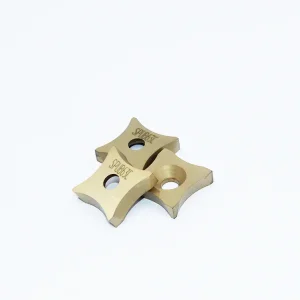

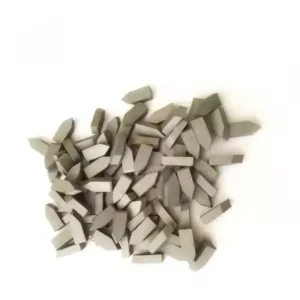
China New shape cemented carbide tips for railway track tamping pick center tooth
View Product Specs
Buy High Hardness High Density Pressureless Sintered Silicon Carbide Plate Polished SiC Ceramic Plate
View Product Specs
China Hot sale SPUB63M30 tungsten carbide odinternalexternal tube scarfing insert
View Product Specs

China Best price CVD coating tungsten carbide non standard carbide jaw insert cnc
View Product SpecsWhere Was Tungsten Found? The Mineralogical Genesis of Element 74
From 18th-century European mineralogical isolation to the discovery of colossal polymetallic skarn and quartz-vein belts in Jiangxi, China, understanding deposit origins is the key to securing uninterrupted, pure-grade raw tungsten carbide powder.
Historical Discovery (1781–1783)
Tungsten, derived from the Swedish words "tung sten" (heavy stone), was first identified in 1781 by Carl Wilhelm Scheele in Sweden through the isolation of tungstic acid from scheelite (CaWO₄). Two years later, in 1783, the Spanish brothers Juan José and Fausto de Elhuyar successfully isolated elemental metallic tungsten by reducing tungstic acid derived from wolframite ((Fe,Mn)WO₄) with powdered charcoal.
This landmark scientific breakthrough exposed an element with the highest melting point of all known metals (3,422°C, 6,192°F) and unparalleled atomic packing density, setting off a century-long race to map global deposit nodes.
The Jiangxi Epicenter (1907)
While European deposits in Cornwall and Saxony met early chemical laboratory needs, the modern industrial tungsten epoch truly began in 1907 at Xihuashan, Dayu County, Jiangxi Province, China. Prospecting uncovered massive hydrothermal quartz veins cutting deep into Mesozoic granitic batholiths within the Nanling Mountain Range.
This geological discovery revealed the richest concentration of high-purity wolframite on Earth. Jiangxi quickly earned its global reputation as the "Tungsten Capital of the World," providing the geological cornerstone for over a century of continuous metallurgy.
Global Reserve Distribution
According to U.S. Geological Survey (USGS) data, world tungsten reserves are estimated at approximately 3.8 to 4.2 million metric tons of contained metal. China holds over 50% of identifiable economic reserves and accounts for more than 80% of global primary mine output, largely concentrated in Jiangxi and Hunan provinces.
Secondary deposits occur in Russia (Northern Caucasus skarns), Vietnam (Nui Phao polymetallic mine), Bolivia, and Canada, but none offer the scale, ore purity, and downstream metallurgical integration found in South China.
Carl Wilhelm Scheele discovers tungstic acid from a white mineral known as "heavy stone" in Bispberg's iron mine. The mineral was subsequently named scheelite in his honor.
Fausto and Juan José de Elhuyar discover that the acid from wolframite is identical to scheelite's acid, achieving direct reduction of elemental tungsten through charcoal heating.
High-grade wolframite vein complexes are identified in Dayu, Jiangxi. Industrial mining begins, establishing China's Century-long dominance in primary tungsten resource supply.
Karl Schröter liquid-phase sinters fine tungsten monocarbide (WC) particles using metallic cobalt as a cementing binder, giving birth to the modern cutting tool and wear parts industry.
The Upstream Processing Chain: From Raw Ore to Sinterable WC Powder
Purchasing cemented carbide directly from a manufacturer situated at the extraction origin eliminates middle-tier supply markups, verifies raw mineral provenance, and ensures high chemical purity from ore to finished blank.
Hydrometallurgy to APT
Crushed wolframite and scheelite ores undergo flotation, gravity separation, and caustic autoclave leaching. The resulting sodium tungstate solution passes through ion exchange and crystallizers to yield Ammonium Paratungstate (APT: (NH₄)₁₀[H₂W₁₂O₄₂]·4H₂O), the foundational global trade benchmark for tungsten purity (minimum 88.5% WO₃ content).
Calcination & Hydrogen Reduction
APT is calcined in continuous rotary kilns to generate Tungsten Blue Oxide (TBO) or Tungsten Trioxide (WO₃). This oxide feeds directly into multi-tube pusher hydrogen reduction furnaces operating between 700°C and 1000°C, stripping oxygen to produce pure, virgin elemental Tungsten Powder (W) with controlled Fisher Sub-Sieve Sizer (FSSS) grain diameters.
High-Temp Carburization to WC
Pure tungsten powder is blended with high-purity carbon black in stoichiometric proportions (~6.13% carbon by weight) and heated in induction or pusher furnaces under protective hydrogen atmosphere at 1400°C–2000°C. The resulting Tungsten Monocarbide (WC) achieves an exceptional microhardness rating of 2200–2600 HV.
| Processing Stage | Intermediate Product | Typical Chemical Formula | Key Purity Metrics / Critical Limits | Impact on Tool Wear Life |
|---|---|---|---|---|
| Primary Beneficiation | Wolframite / Scheelite Ore | (Fe,Mn)WO₄ / CaWO₄ | Concentrate grade: 65% WO₃ min | Dictates raw trace impurity baseline (As, P, S). |
| Chemical Refining | Ammonium Paratungstate (APT) | (NH₄)₁₀[H₂W₁₂O₄₂]·4H₂O | Total impurities < 100 ppm, Mo < 20 ppm | Prevents high-temperature lattice defects in crystal structure. |
| Direct Reduction | Pure Tungsten Powder | W | Oxygen content < 0.25%, FSSS: 0.6–12.0 µm | Controls final grain uniformity, eliminating localized embrittlement. |
| Solid-State Carburization | Tungsten Monocarbide Powder | WC | Free Carbon < 0.05%, Total Carbon 6.13 ± 0.03% | Eliminates eta (η) phase embrittlement or graphite pooling. |
| Sinter-HIP Consolidation | Cemented Carbide Compact | WC + Co / Ni | Porosity: A02, B00, C00; Density: 14.2–15.0 g/cm³ | Ensures maximal transverse rupture strength (TRS > 2800 MPa). |
Why Sourcing From a Jiangxi Primary Factory Protects Global OEM Margins
Jiangxi Zhongfu Cemented Carbide Co., Ltd. operates in Nanchang, Jiangxi, combining 24 years of manufacturing heritage with direct access to the world’s most concentrated tungsten corridor.
100% Virgin Powder Assurance
Unlike regional brokers who blend low-grade recycled zinc-process scrap powders, Zhongfu enforces a strict Zero Recycled Powder Mandate for all precision wear parts, h6 ground rods, and tube scarfing inserts. This guarantees predictable cobalt dissolution, tight carbide crystal lattice spacing, and zero unexpected brittle fractures.
Overpressure Sinter-HIP Technology
Zhongfu utilizes German-engineered overpressure vacuum sintering (Sinter-HIP) at pressures up to 100 bar (10 MPa) and temperatures above 1450°C. By applying isostatic gas pressure precisely during the liquid-phase cobalt solidification stage, internal micro-voids are eliminated, achieving porosity levels superior to ISO A02-B00.
Vertical Price Insulation
By sitting directly within the Jiangxi mining and smelting belt, our production floor bypasses multiple layers of international trading desks, freight consolidators, and import tariffs on intermediate oxides. This provides global customers with stable factory pricing, insulation from volatile LME trade swings, and reliable delivery schedules.
High-Stress Downstream Applications: Engineering Sintered Carbide in Action
From high-frequency ERW pipe scarfing to sub-surface Measurement-While-Drilling (MWD) assemblies, explore how custom powder grades resolve extreme abrasion, thermal shock, and mechanical fatigue.
High-Frequency ERW Tube Scarfing
In continuous electric resistance welded (ERW) tube mills, outside diameter (OD) and inside diameter (ID) scarfing inserts like SPUB63, SPUB86, SNMX19, and SNMG1907 face continuous red-hardness stress and severe thermal cycling. Our engineered P40/P50 titanium-tantalum carbide (TiC/TaC) modified formulations with specialized CVD TiCN-Al₂O₃ coatings resist crater wear and mechanical notch failure under continuous 1,000°C weld bead conditions.
Oilfield Directional Drilling (MWD/LWD)
Downhole Measurement-While-Drilling and Logging-While-Drilling directional tools operate next to sensitive electromagnetic orientation sensors. Standard cobalt-bonded carbide distorts sensor readings due to ferromagnetic interference. Zhongfu’s Nickel-Bonded Non-Magnetic Alloys feature magnetic permeability ratings below μ ≤ 1.005 while maintaining HRA 89.5+ hardness, ensuring erosion resistance against abrasive drill mud without disrupting telemetry.
Heavy Railway Track Tamping Tines
Railway track maintenance machinery utilizes tamping picks that penetrate and compact ballast rock under violent cyclic hydraulic vibration. Unprotected alloy steel picks wear out in tens of hours. Zhongfu manufactures YG8 / YG11C heavy-duty brazed tips with coarse tungsten carbide grains (3.0–5.0 µm) that provide superior dynamic impact absorption and fracture toughness (K1C > 18 MPa·m½), extending tamping service life past 150 track kilometers.
EDM Punching & Cold Heading Dies
For high-volume fastener cold-heading and automotive stamping, carbide plates and blocks must withstand millions of cycles of high-pressure impact without spalling. Zhongfu’s YG15 and YG20 thick sintered block stocks (100×100×60 mm) provide uniform cobalt distribution that eliminates wire-EDM micro-cracking and edge flaking during deep punch tooling operation.
Cemented Carbide Grade Selection & Material Matrix
A comprehensive engineering reference correlating cobalt binder fraction, grain size classification, density, and fracture toughness to mechanical operational limits.
| Carbide Grade | Binder Phase (wt%) | Nominal WC Grain Size (μm) | Density (g/cm³) | Hardness (HRA / HV30) | Transverse Rupture (TRS, MPa) | Primary Industrial Use-Case |
|---|---|---|---|---|---|---|
| YG6 (ISO K10-K20) | 6.0% Cobalt | 1.2 – 1.8 (Medium) | 14.85 – 15.00 | 90.5 HRA / 1580 HV | ≥ 2,000 MPa | Cast iron machining, wire drawing dies, wear plates, valve seats |
| YG8 (ISO K20-K30) | 8.0% Cobalt | 1.4 – 2.2 (Medium) | 14.60 – 14.80 | 89.5 HRA / 1450 HV | ≥ 2,400 MPa | Brazed cutting tips, rotary percussion rock bits, woodturning cutters |
| YG11C (Mining Class) | 11.0% Cobalt | 2.8 – 4.5 (Coarse) | 14.30 – 14.50 | 86.5 HRA / 1180 HV | ≥ 2,700 MPa | Railway track tamping picks, geotechnical drill buttons, coal picks |
| YG15 (ISO K40) | 15.0% Cobalt | 1.6 – 2.4 (Medium-Coarse) | 13.95 – 14.15 | 87.0 HRA / 1220 HV | ≥ 2,900 MPa | Heavy cold stamping punches, metal forming rolls, deep drawing dies |
| YG20 (Impact Die) | 20.0% Cobalt | 2.0 – 3.0 (Coarse) | 13.40 – 13.65 | 85.5 HRA / 1060 HV | ≥ 3,200 MPa | Fastener cold-heading punches, heavy impact forging tools, thick EDM blocks |
| UF-06 (Nano-Grain) | 6.0% Cobalt + Inhibitors | 0.2 – 0.5 (Ultrafine) | 14.90 – 15.05 | 93.2 HRA / 1850 HV | ≥ 3,800 MPa | Solid carbide end mills, aerospace drills, micro-machining router bits |
| NM-10 (Non-Magnetic) | 10.0% Nickel Binder | 1.5 – 2.5 (Medium) | 14.45 – 14.70 | 88.5 HRA / 1350 HV | ≥ 2,200 MPa | MWD downhole sub components, magnetic powder molds, pump seal rings |
The Next Generation of Powder Metallurgy: Technological Roadmap
How Zhongfu is pushing the operational boundaries of cemented carbide through binderless consolidation, additive sinter profiling, and multi-layer nano-composite coatings.
Binder-Phase Grain Growth Inhibition
By blending trace fractions (0.2–0.8 wt%) of Vanadium Carbide (VC) and Chromium Carbide (Cr₃C₂) during wet ball milling, our researchers inhibit Ostwald ripening during Sinter-HIP heating. This preserves an ultrafine sub-micron WC matrix (< 0.4 µm) that achieves an exceptional combination of extreme hardness (> 93.5 HRA) and high transverse rupture strength, ideal for next-gen CFRP composite routing.
Sustainable & Cobalt-Free Formulations
Driven by strict European REACH regulatory limits and critical mineral sourcing risks on cobalt, Zhongfu is advancing Iron-Nickel-Chromium (Fe-Ni-Cr) multi-component alternative binders. These formulations demonstrate higher resistance to acidic corrosive slurries in petrochemical valves, while eliminating biological toxicity concerns during wet precision grinding.
Gradient-Sintered "Cobalt-Capped" Inserts
By controlling nitrogen gas flow and carbon activity during vacuum sintering, our engineers generate functional functionally graded cemented carbides (FGCC). The resulting inserts feature a cobalt-enriched, crack-arresting tough surface layer (30–50 µm thick) over an ultra-hard, cobalt-depleted wear core, dramatically extending performance during interrupted dry steel turning.
Global Compliance, Quality Verification & Technical Support
We combine strict aerospace-grade quality standards with direct engineering support to deliver fully compliant, defect-free carbide wear components.
Metallographic Microstructure Screening
Every batch of Sinter-HIP carbide undergoes metallographic polishing and chemical etching according to ASTM B657 / ISO 4499 standards. Technicians verify free graphite absence, confirm zero harmful embrittling eta (η) phase (Co₃W₃C), and validate uniform mean grain size under high-resolution metallurgical optical microscopy.
RMI & Conflict-Free Sourcing Compliance
Operating adjacent to Jiangxi's licensed mineral concessions allows us to guarantee complete mineral provenance. All raw ores and APT concentrates adhere to the Responsible Minerals Initiative (RMI) standards, ensuring products are conflict-free, fully auditable, and compliant with EU Supply Chain Due Diligence legislation.
Rapid 8-Hour Engineering Turnaround
Our bilingual senior metallurgical engineering team reviews customer technical 2D/3D component drawings (DWG, STEP, DXF), providing grade recommendations, shrinkage allowance factors, and Design-for-Manufacturing (DFM) feedback within an 8-hour guaranteed response window.
Frequently Asked Questions on Tungsten Sourcing & Manufacturing
Key technical insights on ore deposits, grade selection, recycled scrap detection, and working with Jiangxi primary manufacturing facilities.
Factory-Direct Tungsten Carbide Wear Parts & Tooling (Part II)
Explore our complete range of certified sintered blocks, non-magnetic rods, woodturning inserts, chuck jaws, and railway tamping picks.