
Featured Tungsten & Cemented Carbide Tooling Components
Direct-from-factory sintered blanks, indexable inserts, custom flanges, and anti-vibration mechanical elements engineered for extreme service.


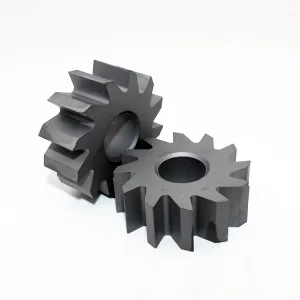
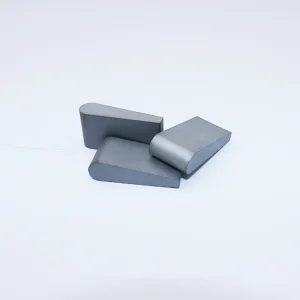

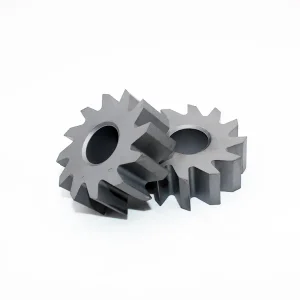
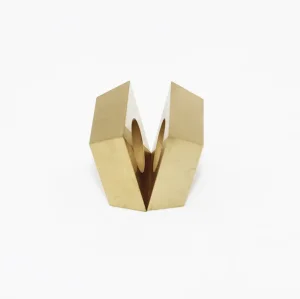
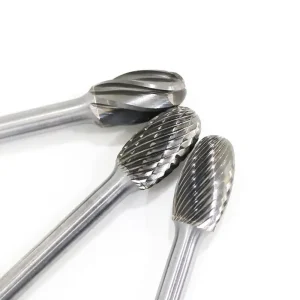
Defining Types of Tungsten: From Elemental Refractories to Sintered Composites
Selecting industrial tungsten requires matching mechanical stresses, thermal ceilings, chemical exposure, and magnetic permeability against metallurgical phases.
Pure Tungsten (99.95%+)
Characterized by the highest melting point of all non-alloy metals (3,422°C) and an exceptionally low thermal expansion coefficient.
- CVD/PVD Sputtering Targets
- High-Temperature Furnace Heating Elements
- Glass-to-Metal Sealing Pins & Electrodes
Cemented Carbides (WC-Co/Ni)
An aggregate of tungsten monocarbide hard phase cemented in a metallic binder matrix, yielding ultra-high hardness (HRA 85–94).
- CNC Indexable Milling & Peeling Inserts
- Solid Micro-Grain h6 Drills & End Mills
- Railway Tamping Tines & Scarfing Cutters
Heavy Alloys (W-Ni-Fe/Cu)
High-density refractory composites (17.0–18.8 g/cm³) engineered for maximum mass-to-volume ratio and kinetic stability.
- Medical Radiotherapy Multi-Leaf Collimators
- Downhole MWD/LWD Drilling Sink Bars
- Aviation Anti-Vibration Counterweights
Tungsten Copper (W-Cu)
Pseudo-alloys synthesized via liquid-phase skeleton infiltration, bridging tungsten's arc erosion resistance with copper's conductivity.
- High-Voltage SF6 Circuit Breaker Contacts
- Semiconductor Thermal Spreader Substrates
- EDM & ECM Precision Sparking Electrodes
Engineering Selection Guide: Grade Chemistry vs Physical Constants
| Classification | Standard Grade Reference | Density (g/cm³) | Hardness Rating | Modulus of Elasticity (GPa) | Binder / Matrix Type | Primary Degradation Resistance |
|---|---|---|---|---|---|---|
| Sub-Micron Cemented Carbide | YG6X / ISO K10 | 14.90–15.05 | 91.5–93.0 HRA | 630 | 6% Cobalt | Abrasive edge wear & micro-chipping |
| Impact-Resistant Hard Alloy | YG15 / YG20 | 13.50–14.00 | 85.5–87.5 HRA | 520 | 15%–20% Cobalt | Heavy cyclic shock, fracturing & spalling |
| Non-Magnetic Cemented Carbide | YN8 / YN12 | 14.40–14.80 | 88.0–90.5 HRA | 580 | Nickel-Chromium Matrix | Magnetic permeability & galvanic corrosion |
| Tungsten Heavy Alloy (D17) | Class 1 (90W-Ni-Fe) | 17.00–17.20 | 28–34 HRC | 350 | Ni-Fe Infiltrated Phase | Gamma/X-Ray radiation & kinetic inertia |
| Tungsten Copper Composite | W75Cu25 (RWMA Class 11) | 14.50–14.80 | 180–210 HB | 290 | 25% Copper Infiltrate | High-voltage electrical arc erosion & heat |
Field-Proven Deployment Across Key Geographic Hubs
Tailoring tungsten grades to regional operating environments, harsh extraction chemistries, and heavy manufacturing workflows.
North America: Energy & Shale Gas
Permian Basin & Western Canada: Downhole MWD (Measurement While Drilling) components operate in high-chlorine, highly abrasive saline slurries. Zhongfu's nickel-bonded non-magnetic tungsten parts eliminate sensor signal deflection while ensuring unyielding wear longevity.
- Rotor-stator sleeves for downhole mud motors
- Custom trim chokes for wellhead high-pressure trees
- High-strength directional steering pads
DACH Region & EU: Precision Automotive
Bavaria & Baden-Württemberg: High-speed CNC machining centers require extreme tool rigidity and sub-micron runout tolerances. Solid tungsten carbide h6 rods (sub-micron WC 0.4–0.6 µm) support end mill production for machining titanium alloys and structural CFK aerostructures.
- h6-ground solid rods with dual helical coolant channels
- Scarfing inserts SPUB63 & SNMX for rolling mills
- Fine-blanking punches for transmission stamping
Australia & LatAm: Open-Pit Mining
Pilbara & Atacama Corridors: Ground engaging tools (GET) face severe abrasive quartz wear and gouging shock. Sinter-HIP tungsten tamping tines and heavy-duty brazed buttons deliver over 3.5× longer operational intervals than traditional hardfaced steels.
- Railway ballast tamping tine tips for heavy freight lines
- High-cobalt parabolic drill bit inserts (YG11C/YG13C)
- Rotary crushing jaw composite blocks
The Jiangxi Tungsten Cluster Advantage: Source to Finished Component
Direct upstream integration with China's mineral reserves ensures price stability, verified origin, and uncompromised powder purity.
Upstream Mineral Assurance
Jiangxi Province contains the world's dense concentration of black tungsten (wolframite) and scheelite. Sourcing raw APT (Ammonium Paratungstate) within a 150-kilometer radius insulates our clients from geopolitical shipping logjams and speculative price volatility.
Zero-Porosity Sinter-HIP Capacity
Internal low-pressure hot isostatic pressing (Sinter-HIP) operates at 10 MPa and 1,450°C. This consolidates structural micro-voids, elevating transversal rupture strength (TRS) to ≥ 3,800 MPa—crucial for high-consequence tooling components.
Agile Tooling Turnaround
Operating a vertically integrated facility across 5,000+ m² enables rapid custom prototype pressing in 7–10 days, compared to the 8–12 week lead times common with Western catalog distributors.
Next-Generation Tungsten Metallurgy & Processing Roadmap
Zhongfu Carbide's engineering roadmap focuses on ultra-fine grain structures, binder-free hard alloys, and low-waste near-net forming.
Nano-Grain Sub-Micron WC
Grain boundaries stabilized below 0.2 µm using VC and Cr3C2 grain growth inhibitors. Provides Vickers hardness exceeding HV30 1950 for micro-drills in 5G PCB drilling.
Cobalt-Free Alternative Binders
Developing Fe-Ni-Cr intermetallic matrices to replace standard cobalt binders. Addresses EU REACH environmental targets while boosting corrosion resistance in acidic petrochemical trim.
Binderless Pure Tungsten Carbides
Spark plasma sintering (SPS) techniques for pure tungsten carbide without soft metallic binder phases. Eliminates high-temperature adhesive smearing in abrasive optical glass mold pressing.
Refractory Additive Manufacturing
Laser powder bed fusion (LPBF) and binder jetting for complex tungsten heavy alloy lattice structures, enabling internal conformal cooling paths for advanced propulsion thruster nozzles.
Global Regulatory Compliance & Direct Engineering Support
Ensuring full traceability, international standard compliance, and smooth customs clearance for high-density refractory materials.
Full Conflict-Free Auditing
Certified alignment with RMAP (Responsible Minerals Initiative) guidelines. Our raw materials are fully traced back to non-conflict smelters, with verifiable material test reports (MTR) according to EN 10204 3.1 standards.
ITAR & Dual-Use Clearance
Navigating export controls for tungsten heavy alloys and refractory shapes. Our dedicated logistics team prepares dual-use end-user declarations (EUD) to ensure fast customs clearance across North American and European ports.
24/7 DDP Logistics Support
Offering Delivered Duty Paid (DDP) multimodal terms via air courier, ocean freight, and China-Europe railway. We handle insurance, tariffs, and direct delivery straight to your machine shop or regional manufacturing line.
Questions Global Buyers Ask Before Finalizing Specifications
Clear answers covering minimum order quantities, custom tooling lead times, binder formulations, and metallographic testing.
What is the functional difference between Pure Tungsten, Tungsten Heavy Alloy (WHA), and Cemented Tungsten Carbide?
How does grain size in tungsten carbide influence tool life and cutting performance?
Can Zhongfu deliver custom non-magnetic tungsten carbide for electromagnetic environments?
What metallographic and non-destructive quality tests accompany each batch?
What is the typical production lead time for custom OEM parts from drawing to delivery?
High-Demand Machining, Mining & Refractory Catalog
Browse our wear-resistant cutting components, brazed tip blanks, high-purity plates, and non-magnetic rods ready for international export.






