
Precision Sintered & Precision Ground Assemblies
Direct factory-sourced carbide inserts, precision pins, milling vessels, and heavy-duty mechanical transmission elements built to engineering specifications.

Wholesale Custom 60 knife variable speed fixed gear cast iron truck large metal gear Manufacturers, Factory
View Specifications
Wholesale China Non-magnetic Solid Cemented Carbide Pin Plug Gauges Rod Manufacturers, Factories
View Specifications
Wholesale Factory sale customized carbide milling jar tungsten carbide bowl/ jar/mortar Manufacturer, Factory
View Specifications
China Best price YG8 tungsten carbide gripper inserts for chuck jaw Suppliers, Factories
View Specifications
China tungsten carbide tube scarfing inserts SQ8615WCB Manufacturers, Supplier
View Specifications
China Tungsten cemented carbide cutting inserts for CNC machine tool bar peeling SPUB86I Suppliers, Factories
View Specifications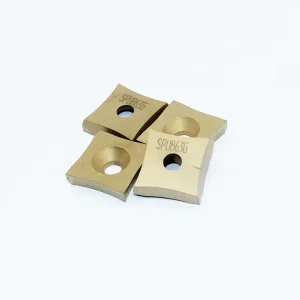
Buy Wear resistant SPUB 63G tool holder insert carbide cutting inserts turning tools Manufacturer, Supplier
View Specifications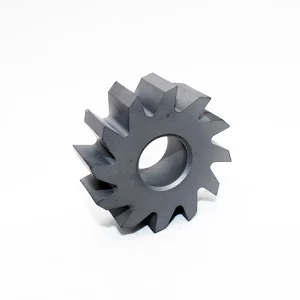
Buy Wholesale custom nonstandard metal worm gears bevel gears pinion gears Suppliers, Factories
View SpecificationsGlobal Corporate Procurement Paradigms for Cemented Carbides
Navigating geopolitical raw material concentration, binder phase optimization, and total operational cost mitigation across tier-1 industrial supply chains.
Upstream APT Integration
Over 80% of global Ammonium Paratungstate (APT) output is concentrated within Jiangxi province. Sourcing through integrated facilities guarantees direct-to-mine traceability, minimizing geopolitical price volatility and securing uninterrupted WC powder supply lines.
Binder Phase Engineering
Modern applications require tailor-made Cobalt (Co) vs. Nickel (Ni) ratios. High-stress tamping tines and cold-heading punches employ ductile 15-20% Co formulations, while offshore MWD tools and valve trim mandate nickel-bonded, non-magnetic matrices for zero magnetic interference.
Total Cost of Ownership (TCO)
Procuring low-grade scrap-recycled carbide introduces catastrophic micro-void fracture risks. Premium virgin powders sintered via Sinter-HIP furnaces extend continuous line runtime by 3.8x, dramatically lowering unplanned factory downtime and cutting tooling costs per ton.
Metallurgical Mastery Quantified
Precision parameters verified under ISO standards, driving high-performance carbide applications worldwide.
Specialized Metallurgical Formulations by Industrial Domain
Tailoring transverse rupture strength, Rockwell hardness, and chemical grain stability across heavy industries.
Railway & Track Maintenance
Tamping tine tips must withstand cyclic gravel ballast impacts without brittle failure. Patented coarse-grained WC matrices combined with 11-13% ductile cobalt binders eliminate edge-flaking, maintaining railway geometric tolerances over extended maintenance periods.
Steel Mills & Tube Mills
External (OD) and Internal (ID) scarfing inserts like SPUB63, SPUB86, and SNMX19 face severe thermal cycles during longitudinal welded seam removal. High-temperature CVD multi-layer coatings stop weld spatter adhesion and catastrophic mechanical edge breakdown.
Energy, MWD & Downhole Drilling
Directional drilling pulses require non-magnetic components to prevent magnetometer distortion. Our nickel-bonded cemented carbides deliver a relative magnetic permeability ($\mu_r$) of < 1.005 while resisting corrosive drilling muds containing sulfides.
Stamping Dies & Wear Tooling
For fine stamping, punch dies, and metal forming tools, grades like YG15 and YG20 offer balanced hardness (HRA 85.5-87) and high transverse rupture strength, resisting repeated dynamic compression and edge-chipping during long manufacturing runs.
Cemented Carbide Metallurgical Grade Selector
Correlating physical attributes with production performance. Sinter-HIP processing eliminates microporosity across all formulations.
| Standard Grade | Binder Matrix | Density (g/cm³) | Hardness (HRA) | TRS (MPa) | Primary Industrial Application |
|---|---|---|---|---|---|
| YG6 (ISO K10-K20) | 6% Cobalt | 14.80 – 15.00 | ≥ 90.5 | ≥ 1900 | Chilled cast iron finishing, non-ferrous bar peeling, precision wire drawing dies. |
| YG8 (ISO K20-K30) | 8% Cobalt | 14.60 – 14.80 | ≥ 89.5 | ≥ 2200 | Heavy-duty rock drill bits, brazed lathe cutters, chuck jaw gripper inserts. |
| YG15 (ISO K40) | 15% Cobalt | 13.90 – 14.10 | ≥ 87.0 | ≥ 2800 | High-load stamping dies, cold-heading punches, fasteners, wire guide bushings. |
| YG20 (Heavy Impact) | 20% Cobalt | 13.40 – 13.60 | ≥ 85.5 | ≥ 3100 | Large cold-forging dies, thick wear plates, severe shock tooling components. |
| NM-10 (Non-Magnetic) | 10% Nickel / Cr | 14.40 – 14.70 | ≥ 89.0 | ≥ 2400 | MWD drill pulse collars, flow restrictor orifices, magnetic powder compaction molds. |
Technological Frontiers & Carbide Material Science
Anticipating demanding operational environments with next-generation powder metallurgy innovations.
Sub-Micron Grain Refinement (<0.2µm)
By using grain-growth inhibitors such as Vanadium Carbide (VC) and Chromium Carbide (Cr3C2), our latest round rods achieve grain structures under 0.25 microns. This configuration improves flank wear resistance for micro-drills in aerospace composite machining.
Eco-Binder Formulations (Cobalt-Free)
To reduce supply volatility and meet EU REACH sustainability initiatives, Zhongfu's R&D team is developing Fe-Ni-Cr intermetallic binder matrices. These alloys match the hardness and fracture toughness of standard WC-Co while improving resistance to hot-acid corrosion.
Advanced Sinter-HIP Consolidation
Operating pressure-sintering cycles up to 10 MPa at 1,450°C ensures pore closure down to level A02-B00. This near-zero porosity process raises transverse rupture strength and preserves polished mirror finishes ($Ra \le 0.05\,\mu\text{m}$) for high-precision dies.
Indexable Tooling, Tamping Elements & Scarfing Cutters
High-durability inserts and customized cutting solutions engineered to maintain dimensional stability across abrasive industrial environments.
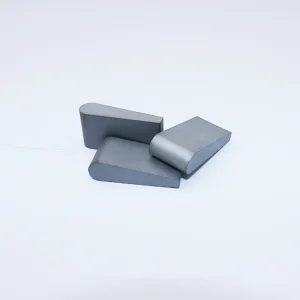
China New shape tungsten carbide tamping tines for railway Manufacturers, Factory
View Specifications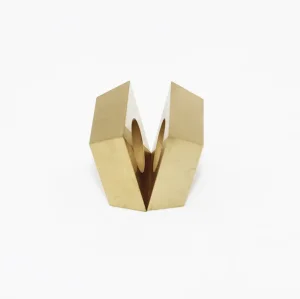
Wholesale Carbide hard alloy blade square Carbide Cutting Inserts for Metal Processing Suppliers, Factories
View Specifications
Wholesale Best price woodturning tungsten carbide turning tip inserts and cutter railway Manufacturer, Suppliers
View Specifications
China Best price SPUB86J CVD coating boxes woodworking tungsten carbide button insert Manufacturer, Supplier
View Specifications
China Factory wholesale Tungsten square original carbide cutting inserts Manufacturer, Manufacturers
View Specifications
China SPUB63J CVD coating tungsten carbide od scarfing insert Manufacturers, Suppliers
View Specifications
China Hot sale SPUB63M30 tungsten carbide odinternalexternal tube scarfing insert Manufacturer, Factories
View Specifications
China Wholesale SPUB63M30 tungsten carbide the cutter indexable cutting tools Supplier, Suppliers
View SpecificationsInternational Regulatory Frameworks & Compliance Support
Meeting environmental, trade, and metallographic verification requirements across North American, European, and Asia-Pacific supply chains.
Export Compliance & Tariffs
Shipments include complete documentation: Certificates of Analysis (COA), EN 10204 3.1 inspection certificates, HS Code 8209.00 classifications, and full traceability. This streamlines customs clearance across US, Canadian, Mexican, Australian, and EU ports.
Conflict-Free Mineral Auditing
In accordance with OECD Due Diligence Guidance and the Dodd-Frank Act Section 1502, our tungsten feedstocks are sourced through verified conflict-free smelters (RMI conformant), ensuring clean corporate reporting for tier-1 defense, automotive, and energy clients.
Metallographic Validation
Every production batch undergoes transverse rupture strength tests, magnetic saturation checks (Cobalt index), coercive force (Hc) verification, and optical microscopy to confirm carbon phase balance with no brittle eta-phase formation.
Frequently Asked Technical Questions
Direct engineering answers to support material selection, quotation requests, and drawing reviews.
How do Sinter-HIP and traditional vacuum sintering differ in production?
How does grain size affect wear resistance versus impact toughness?
Why choose nickel binders over cobalt for downhole and chemical applications?
What are the standard manufacturing tolerances for ground carbide rods and components?
What documentation is supplied with international export shipments?
Consult Our Metallurgy Engineering Team
Send your 2D/3D component drawings (PDF, STEP, DWG) for a manufacturability review, grade recommendation, and quotation within 8 working hours.