
Precision Cemented Tungsten Carbide Parts & Tooling
Engineered for high impact resistance, micro-metric dimensional stability, and prolonged service life in harsh abrasive conditions.
-
 Wholesale Custom 60 knife variable speed fixed gear cast iron truck large metal gear Manufacturers, FactoryRequest Factory Quote
-
 Buy Premium Bright Surface Tungsten Heavy Alloy Sheets & Pure Tungsten Plates for Industrial Applications Manufacturer, FactoriesRequest Factory Quote
-
 China Tungsten tool holder lathe cemented carbide cutting tool inserts for chian saw Manufacturer, SuppliersRequest Factory Quote
-
 China SPUB86 P40 tungsten carbide scarfing inserts for welded steel pipe Manufacturer, FactoryRequest Factory Quote
-
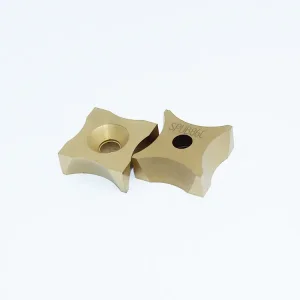 Wholesale SPUB86C customized lathe_ tungsten_carbide_inserts drill bit insert Supplier, FactoryRequest Factory Quote
-
 Wholesale tungsten carbide scarfing insert SQ8615WCB Supplier, FactoryRequest Factory Quote
-
 China Customized tungsten carbide insert for wear parts crushing roll Manufacturer, SuppliersRequest Factory Quote
-
 China Factory supply non-magnetic carbide pin for jewelry industry Supplier, FactoryRequest Factory Quote
Why "Tungsten Fun Facts" Dictate Industrial Procurement Logic
In industrial mechanical engineering and material science, popular scientific curiosities about tungsten are not merely trivia—they represent core metallurgical criteria that dictate tooling productivity, MTBF (Mean Time Between Failures), and factory CAPEX efficiency.
When design engineers and corporate procurement directors search for "Buy Tungsten Fun Facts Suppliers & Factories", the underlying search intent spans two critical axes: first, grasping the extraordinary atomic physics that make tungsten (Wolfram) irreplaceable in severe environments; and second, identifying a vertically integrated manufacturing partner capable of converting these refractory properties into high-yield, ISO-compliant cemented carbide parts, plates, rods, and complex geometric inserts.
Tungsten occupies position 74 on the periodic table. Its 5d electron shell configuration yields exceptional cohesive bond energies, preventing grain boundary dislocation even at temperatures that vaporize conventional engineering steels. In modern powder metallurgy (P/M), elemental tungsten powder is carburized into tungsten carbide (WC) and cemented with cobalt or nickel binders through advanced Sinter-HIP (Hot Isostatic Pressing) cycles. This transforms a brittle refractory powder into an impenetrable matrix of extreme hardness (up to 92.5 HRA) and fracture toughness.
Top 10 Metallurgical "Fun Facts" That Drive Real Commercial ROI
How the extraordinary atomic and mechanical attributes of tungsten solve extreme wear, acoustic vibration, and thermal fatigue in heavy industrial production lines.
1. "Heavy Stone": The Swedish Etymology Behind Heavy Metal Machining
The name tungsten originates from Swedish ("tung sten"), literally meaning "heavy stone". Discovered in 1781 by Carl Wilhelm Scheele, this extreme mass (19.25 g/cm³) is leveraged in our tungsten heavy alloy sheets and counterweights. It provides 1.7 times the density of lead without toxic bioaccumulation, making it the premier choice for aerospace vibration dampers, kinetic flywheel balances, and surgical collimators.
2. The Unmeltable Threshold
With a melting threshold of 3,422°C (6,192°F), pure tungsten possesses the highest melting point of all known metals, second only to carbon among all elements. When processed into tube scarfing inserts (e.g., SQ8615WCB or SPUB86), the cutting edge resists plastic deformation even under glowing friction during continuous flash welding line conditioning.
3. Zero-Porosity HIP Metrology
At atmospheric pressure, sintered WC blanks retain micro-voids. Zhongfu integrates 100-bar Hot Isostatic Pressing (HIP) during liquid phase sintering. The gas pressure collapses micro-pores to near zero (<A02 porosity class), increasing transverse rupture strength (TRS) by over 30% compared to standard vacuum furnace runs.
4. Non-Magnetic Mystery Solved
Tungsten itself is non-magnetic, but standard cobalt-bonded carbide is ferromagnetic. By engineering proprietary austenitic nickel (Ni-Cr) binder formulations, we produce zero-magnetic permeability carbide pins and gauges (μ ≤ 1.005) tailored for MWD downhole orientation tools, electronic lead frame stamping, and semiconductor inspection.
5. Diamond's Twin: Mohs 9.5
Monocarbide crystals (WC) register a Vickers hardness exceeding 2,200 HV (Mohs ~9.5), trailing only diamond and cubic boron nitride. When utilized in our crushing roll wear inserts and rock drill bits, our carbide resists abrasive scratching against quartz silica, basalt, and high-hardness mineral aggregates.
6. Radiation Attenuation Superiority
Gamma and X-ray absorption is proportional to the fifth power of the atomic number (Z=74). Tungsten heavy alloy provides 30% to 40% higher linear attenuation coefficients than lead, enabling compact collimator designs, isotope transport shielding, and non-toxic medical imaging shutters.
7. Thermal Shock Immunity
With thermal conductivity at 170 W/(m·K), tungsten conducts heat four times faster than alloy steel while retaining minimal thermal expansion. This eliminates thermal gradient micro-cracking in high-speed dry milling, friction stir welding tools, and hot roll ring applications.
Localized Application Scenarios: Cross-Continental Engineering Demand
Procurement demands vary by regional industrial clustering. Here is how our engineered tungsten grades match regional specifications across key worldwide markets.
North America: Shale Gas, Mining & Defense
Across the Permian Basin and Canadian oil sands, directional drilling tools face aggressive sand abrasion and cyclic shock. Our YG8, YG11C, and YG15 gripper inserts and mud motor radial bearings deliver high fracture toughness under extreme hydrostatic pressure. In aerospace corridors from Ohio to Washington, non-magnetic carbide rod blanks are grounded to h6 tolerances for multi-axis composite trimming routers.
Europe: Precision Toolmaking & Steel Scarfing
German, Italian, and Polish precision toolmakers demand sub-micron grain WC rods with grain sizes between 0.2 and 0.4 μm for micro-end mills. Simultaneously, Central European heavy tube mills implement our SPUB86, SPUB63, and SNMX scarfing inserts with TiAlN/AlCrN PVD coatings to peel internal and external weld beads at feed rates up to 120 m/min without edge chipping.
Asia-Pacific: EV Stamping Dies & Solar Wafers
In Asian manufacturing epicenters (China, Japan, South Korea, Vietnam), tungsten carbide plate blanks (100×100×60 mm) are EDM wire-cut into precision progressive stamping dies for EV motor rotor/stator laminations and battery casing draw rings. Our low-cobalt YG6X and YG8N resist micro-pitting under millions of high-speed stamping strokes.
Technical Roadmap: Tungsten Metallurgy Through 2035
From binderless nanocrystalline structures to 3D binder jetting: How our ongoing R&D is redefining the limits of extreme wear tooling.
Nanoscale Grain Refinement & High-Entropy Binders
Transitioning from classic cobalt matrices toward Co-Ni-Fe high-entropy alloy (HEA) binders. This metallurgical shift enhances corrosion resistance in acidic wet grinding by 400% while maintaining Rockwell hardness above 91.5 HRA. Complete integration of automated in-situ magnetic saturation inspection.
Near-Net Additive Manufacturing & Binder Jetting
Industrialization of binder-jet 3D printing of refractory tungsten bodies with internal conformal cooling channels for aluminum die casting cores and deep-hole drilling boring bars. Sinter-HIP cycles re-engineered to achieve 99.4% theoretical solid density on complex internal cavity geometries.
Fusion Energy Plasma Divertors & Smart Wear Telemetry
Supplying specialized pure W-1%La2O3 and functionally graded tungsten carbide tiles for magnetic confinement fusion reactors (Tokamak divertor armors). Development of embedded micro-sensor pockets in heavy wear crushing rolls to report real-time wear progression wirelessly to factory SCADA systems.
Comprehensive Cemented Carbide Selection Guide
Match your specific load profile, velocity, and impact case directly to certified grain structures before ordering custom tooling blanks.
| Carbide Grade | Binder Ratio (%) | Density (g/cm³) | Hardness (HRA) | TRS (N/mm²) | Target Industrial Application |
|---|---|---|---|---|---|
| YG6 / ISO K10 | 6.0% Cobalt | 14.95 ± 0.10 | 90.5 ± 0.5 | 1,900 | Cast iron turning, wear plates, ceramic tile cutter wheels, drawing dies. |
| YG8 / ISO K20 | 8.0% Cobalt | 14.70 ± 0.10 | 89.5 ± 0.5 | 2,200 | Brazed lathe tips, water well drill bits, pipe scarfing inserts, cold heading dies. |
| YG15 / ISO K30 | 15.0% Cobalt | 14.00 ± 0.15 | 87.0 ± 0.5 | 2,800 | Heavy stamping punches, cold heading molds, crushing roll edges, impact anvils. |
| YG20 / ISO K40 | 20.0% Cobalt | 13.50 ± 0.15 | 85.5 ± 0.5 | 3,100 | High-impact forming rolls, blanking dies for thick sheet metal, hot forging inserts. |
| Ni-Non-Magnetic | 8.5% Nickel-Cr | 14.65 ± 0.10 | 88.5 ± 0.5 | 2,100 | Downhole MWD sensor housings, semiconductor pin gauges, magnetic disk stamping. |
Supply Chain Resilience: Why Sourcing From Jiangxi Factory Hubs Secures Your Bottom Line
Over 60% of the world's upstream tungsten reserves and refined ammonium paratungstate (APT) originate within the Jiangxi mining basin, creating an unmatched localized manufacturing ecosystem.
International procurement teams in the US, Germany, and Japan frequently encounter supply volatility caused by multi-tiered intermediary brokers. Sourcing directly from Jiangxi Zhongfu Cemented Carbide Co., Ltd. in Nanchang, Jiangxi, delivers structural price and lead-time advantages that third-party resellers cannot replicate:
1. Vertically Integrated Upstream Supply
Our proximity to primary wolframite and scheelite refining corridors gives us direct access to high-purity virgin Ammonium Paratungstate (APT). We control ball milling, spray drying, automated pressing, and sintering under one roof—free from secondary scrap adulteration.
2. 8-Hour Engineering Turnaround
Custom carbide manufacturing requires rapid CAD/CAM translation. Our in-house metallurgists and tool designers evaluate 2D/3D customer part prints, propose shrinkage-compensated tooling cavities, and provide formal DFM (Design for Manufacturability) reports within 8 hours.
3. Complete Surface & Finish Capabilities
Beyond raw sintered blanks, our workshop operates CNC profile grinders, centerless grinding lines for h6 rod blanks (±0.002 mm tolerance), wire EDM cutting cells, and vacuum brazing ovens, delivering ready-to-mount components directly to your assembly line.
Global Sourcing Economics: Tool Life vs. Unit Purchase Cost
Evaluating the mathematical realities of total cost of ownership (TCO) in industrial metal removal and severe wear tooling environments.
Savvy procurement officers distinguish between initial acquisition price and effective cost-per-hour-in-cut. When a tube scarfing insert or downhole drill button wears prematurely, the downtime expenses—machine line stoppage, lost production tonnage, operator labor, and tool re-indexing—exceed the raw insert price by up to 25 times.
The TCO Optimization Formula for Wear Tooling
Total Tooling Cost per Ton Produced = (Purchase Price + Setup Cost + Downtime Cost per Index) / (Parts Produced per Edge × Usable Working Edges)
By enforcing 100% virgin powder preparation, exact cobalt distribution, and multi-stage sinter-HIP processing, Zhongfu carbide inserts routinely deliver 35% to 55% longer service cycles between index changes compared to low-cost scrap-blended alternatives. For large steel mills running continuous welded tube lines with SPUB86 or SQ8615WCB scarfing inserts, this prevents weld burn-through, preserves uniform wall thickness, and saves hundreds of production hours each quarter.
Quality Control, Environmental Compliance & Export Protocols
Every shipment is backed by verified metallographic inspection, ISO compliance, and robust export-grade protective packaging.
Metallographic Microstructure Testing
Cross-section inspection under 1,000× metallographic microscopes guarantees uniform binder distribution, prevents free carbon phase (graphite flakes), and prevents eta-phase (η phase) embrittlement that causes catastrophic cutting edge breakage.
Coercive Force & Magnetic Saturation
Non-destructive magnetic testing measures coercive force (Hc) and magnetic saturation (4πσ), ensuring cobalt binder composition and carbide grain growth inhibitors are calibrated to standard grade specifications.
RoHS, REACH & Conflict-Free Compliance
We source raw materials responsibly through audited smelters adhering strictly to the Conflict-Free Sourcing Initiative (CFSI/RMAP). Full compliance documentation is available for RoHS 3 and EU REACH regulations.
Anti-Corrosive Export Packaging
Carbide products undergo ultrasonic vapor cleaning and are sealed with multi-layer VCI (Volatile Corrosion Inhibitor) foil. Precision-ground edges and h6 rods are isolated in custom compartmentalized foam trays to prevent shipping damage during international air or ocean transit.
Frequently Asked Questions: Sourcing Tungsten Carbide From Factory Direct
Essential technical and commercial clarifications to streamline your quotation, prototype sampling, and production delivery.
Can Zhongfu produce custom cemented tungsten carbide parts according to proprietary 2D/3D CAD drawings?
What is the functional difference between cobalt (Co) and nickel (Ni) bonded tungsten carbide?
How does Sinter-HIP processing differ from standard vacuum furnace sintering?
What are the typical lead times for custom carbide blanks versus standard stock items?
What grinding tolerances and surface finishes can your factory maintain on solid carbide rods and plates?
Which countries and regions do you currently support with factory direct shipping and logistics?
High-Durability Tungsten Alloys, Inserts & Wear Components
Engineered for high impact resistance, micro-metric dimensional stability, and prolonged service life in harsh abrasive conditions.
-
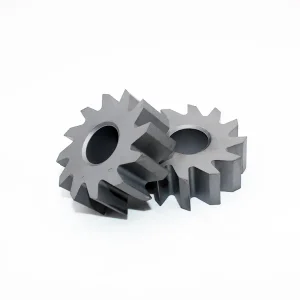 Buy Custom made transmission reverse idle gear starter gear spur gear set Manufacturer, FactoryRequest Factory Quote
-
 Wholesale Industrial Tungsten Alloy Rod Tungsten Material For Stainless Steel Machining Wear‑Resistant Solid Tungsten Bar Supplier, SuppliersRequest Factory Quote
-
 Wholesale China Non-magnetic Solid Cemented Carbide Pin Plug Gauges Rod Manufacturers, FactoriesRequest Factory Quote
-
 Buy Cemented tungsten carbide gripper inserts/tips for mining and diamond drilling Factory, FactoriesRequest Factory Quote
-
 China tungsten carbide tube scarfing inserts SQ8615WCB Manufacturers, SupplierRequest Factory Quote
-
 Wholesale Customized Cemented Carbide Plate — Factory-Direct Tungsten Carbide Blanks in Any Size, Shape & Grade Factory, FactoriesRequest Factory Quote
-
 China Factory supply SPUB86 CVD coating radius tungsten carbide tips brazed insert Manufacturer, FactoryRequest Factory Quote
-
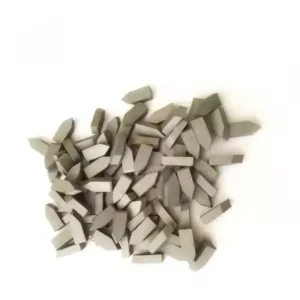 Wholesale Customized carbide welding tips for turning milling cutters Manufacturer, ManufacturersRequest Factory Quote