
Featured Tungsten Carbide Wear Products & Cutting Inserts
Direct factory production lines for extreme resistance to thermal mechanical shock, abrasive gouging, and corrosive fluid dynamics.

China SPUB86F TiN coating tungsten carbide tube scarfing insert Manufacturers, Suppliers
View Technical Specs
China Wholesale custom tungsten carbide module gear milling shaper cutters Manufacturers, Suppliers
View Technical Specs
Buy Premium Bright Surface Tungsten Heavy Alloy Sheets & Pure Tungsten Plates for Industrial Applications Manufacturer, Factories
View Technical Specs
China Factory wholesale Tungsten square original carbide cutting inserts Manufacturer, Manufacturers
View Technical Specs
China Carbide Cutting Rods for Tungsten Alloy Cutting Tool Components Suppliers, Factories
View Technical Specs
China SPUB63J CVD coating tungsten carbide od scarfing insert Manufacturers, Suppliers
View Technical Specs
Buy Wholesale SPUB63M30 tungsten carbide welding inserts square for needle holders Suppliers, Factory
View Technical Specs
China Tungsten Carbide Plate | OEM Wear-Resistant Cemented Carbide Blank for Tooling & EDM Manufacturers, Supplier
View Technical SpecsEngineering Metallurgy: Grain Boundaries, Co-Binder Networks & Phase Stability
Cemented tungsten carbide (WC-Co/Ni) is not simply an alloy; it is an engineered metal matrix composite (MMC) characterized by hard hexagonal mono-tungsten carbide grains embedded in a ductile transition metal binder. Mastering this material requires control over stoichiometry, binder mean free path, and carbide dissolution during liquid-phase sintering.
Grain Sizing Classification
Hardness and fracture toughness operate in inverse tension. By modulating raw ammonium paratungstate (APT) reduction, grain morphologies are engineered across distinct spectra:
Overpressure Sinter-HIP
Standard atmospheric vacuum sintering leaves microporosities that compromise tensile load capacity. Zhongfu applies 100-bar argon overpressure Hot Isostatic Pressing at 1,420°C–1,480°C directly during binder solidification, collapsing micro-voids to achieve ISO 4499 A00, B00, C00 pore ratings.
Carbon Balance & Eta-Phase
Accurate atmospheric regulation prevents carbon deficit (forming brittle Co3W3C eta-phase precipitate) or carbon surplus (free graphite precipitation). Both defects catastrophically reduce transverse rupture strength (TRS) and edge sharpness under dynamic shearing.
Global Carbide Grade Selection Guide: Chemical, Physical & Mechanical Metrics
Selecting optimal cemented carbide requires balancing cobalt volume, grain size, transverse rupture strength (TRS), and density. Consult our standardized technical baseline before generating engineering requests for quote (RFQ).
| ISO Class | China / GB Grade | Binder (% wt) | Grain Class | Density (g/cm³) | Hardness (HRA / HV30) | TRS (MPa) | Optimal Operating Applications |
|---|---|---|---|---|---|---|---|
| K05–K10 | YG3X / YG6X | 3.0% – 6.0% Co | Submicron (0.8 µm) | 14.90 – 15.10 | 91.5 – 92.5 HRA | ≥ 1,900 | Chilled cast iron finishing, non-ferrous fine turning, wire drawing dies. |
| K15–K20 | YG6 | 6.0% Co | Medium (1.2–1.6 µm) | 14.80 – 15.00 | 90.0 – 90.8 HRA | ≥ 2,200 | Wear components, guide bushes, waterjet cutting orifice nozzles. |
| K20–K30 | YG8 | 8.0% Co | Medium-Coarse (1.8 µm) | 14.60 – 14.80 | 89.0 – 89.8 HRA | ≥ 2,500 | Woodworking knives, core drill bits, rotary burrs, tube scarfing rings. |
| K30–K40 | YG11C / YG15 | 11.0% – 15.0% Co | Coarse (2.5–3.5 µm) | 14.00 – 14.40 | 86.5 – 88.0 HRA | ≥ 2,800 | Heavy rock drilling inserts, railway tamping picks, geotechnical cutters. |
| G-Class | YG20 / YG20C | 20.0% Co | Coarse (3.0–4.0 µm) | 13.40 – 13.65 | 84.5 – 86.0 HRA | ≥ 3,200 | Cold heading dies, punch stamping tooling, heavy impact blanking blocks. |
| Non-Mag | YN6 / YN12 | 6.0% – 12.0% Ni | Submicron to Fine | 14.50 – 14.90 | 87.5 – 90.5 HRA | ≥ 2,100 | MWD/LWD oilfield tools, semiconductor magnetic mold blocks, seal faces. |
Macro Industry Engineering Solutions
How precision cemented carbide grades overcome complex mechanical wear, cavitation erosion, and fatigue in high-throughput operating environments.
Subsea, Mining & Downhole Oilfield Tools
High pressure drops across choke valves and directional drilling mud pulser systems subject metal surfaces to high-velocity sand slurry erosion. We manufacture solid tungsten carbide choke stems, orifice seats, and Measurement While Drilling (MWD/LWD) wear sleeves using nickel-bonded non-magnetic grades (magnetic permeability µ < 1.005) to eliminate electromagnetic signal distortion while withstanding downhole H2S and CO2 sour gas corrosion.
Steel Processing & High-Frequency Tube Scarfing
In high-frequency longitudinal welded pipe production, the red-hot weld seam (800°C–1,000°C) must be planed smoothly in a single pass. Our specialized scarfing inserts—such as SPUB63, SPUB86, SNMX19, and SNMX25—are pressed from micro-grain substrates and treated with thick multi-layer CVD TiCN/Al2O3/TiN thermal barrier coatings to prevent notch wear, micro-chipping, and catastrophic thermal fracturing.
Precision Progressive Stamping & Powder Molds
Stamping silicon steel electrical motor laminations or lead frames demands dimensional repeatability across millions of cycles. Our YG15 and YG20 ultra-dense EDM plates feature stress-relieved internal microstructures that eliminate cracking during wire electrical discharge machining (WEDM). These dies maintain sharp shearing edges while resisting cyclic micro-chipping under cyclic punch pressures exceeding 500 MPa.
Geotechnical Engineering & High-Speed Railway Infrastructure
Automated track maintenance machines rely on ballast tamping tines that vibrate at 35 Hz and plunge repeatedly into crushed granite rock. Standard manganese steel tines wear down within days, causing track geometry shifts. Zhongfu equips heavy tamping tools with brazed, multi-compound tungsten carbide plates (YG11C/YG15C). By optimizing brazing alloy compositions and using high-toughness, coarse-grained carbide, our components deliver service lifetimes up to 400% longer than standard OEM wear parts.
China Factory 4.0: Supply Chain Resilience, Vertical Integration & Cost Synergy
Located in Nanchang, Jiangxi—the upstream hub of the world's primary tungsten deposits—Zhongfu operates a digitally integrated 5,000 m² manufacturing plant engineered to eliminate supply chain disruptions.
100% Upstream Mineral Control
Unlike downstream job-shops that rely on secondary scrap metal or recycled tungsten, we feed our wet-ball mills with 100% virgin ammonium paratungstate (APT). This pristine feed line prevents contamination from trace lead, tin, or phosphorus—elements that can destabilize carbide grain boundaries under mechanical fatigue.
Automated Isostatic Pressing
To ensure uniform density across complex geometries, our production floor combines high-tonnage multi-axis automatic presses with Cold Isostatic Pressing (CIP) chambers operating at 200 MPa. This eliminates directional density gradients and minimizes post-sinter warpage, delivering tighter net-shape tolerances prior to grinding.
Sub-Micron Precision Grinding
Our finishing facilities feature CNC 5-axis profile grinders, high-precision centerless grinding platforms, and double-disc surface grinding units capable of achieving mirror-surface finishes (Ra ≤ 0.05 µm) and diameter concentricities within h6 limits (±0.003 mm) for high-performance rotary tool shank stock.
Global Enterprise Procurement Requirements: TCO, Quality Assurance & Vendor Auditing
For multinational automotive, aerospace, and energy contractors, evaluating a carbide supplier requires looking beyond price per kilogram. Procurement teams must account for total cost of ownership (TCO), batch-to-batch consistency, and rigorous metallurgical qualification.
Total Cost of Ownership (TCO)
A 15% purchase price discount on low-grade carbide quickly evaporates when tools require frequent indexing or suffer in-service fractures. Extending insert cutting life by 35% reduces scheduled line shutdowns, index changeovers, tool-setter labor, and scrap workpieces, reducing overall manufacturing costs per part.
Mill Test Certificates (EN 10204 3.1)
Every production batch includes full traceability documentation. Our quality control team issues EN 10204 3.1 certified inspection reports covering binder content, Vickers hardness (HV30), density via Archimedes displacement, coercive force (Hc), magnetic saturation (4πσ), and microstructural porosity ratings.
Dual-Sourcing Risk Mitigation
Western OEMs facing elevated European and North American manufacturing costs can stabilize their operations by qualifying Zhongfu as a certified Tier-1/Tier-2 offshore production partner. Our manufacturing operations maintain dedicated safety buffer inventories for contract partners, ensuring reliable on-time delivery.
Technology Roadmap: Cobalt-Free Binders, Additive Manufacturing & CVD Nanocoatings
As environmental regulations tighten and machining conditions become more demanding, cemented carbide technology continues to advance across several key fronts.
Alternative Green Binders (Fe-Ni-Cr)
To address environmental and supply concerns associated with standard cobalt, Zhongfu's metallurgical engineers are developing Fe-Ni-Cr intermetallic matrix formulations. These cobalt-free cemented carbides match conventional WC-Co hardness while improving acid corrosion resistance by up to 300% in petrochemical valve applications.
Binder Jet 3D Printing (Additive Carbide)
For complex components featuring conformal cooling channels, lattice internal geometries, or complex fluid dynamics that cannot be machined through pressing and sintering, we are integrating Binder Jetting additive manufacturing platforms. This enables zero-tooling rapid prototyping of dense cemented carbide blanks.
HiPIMS & Multi-Gradient Nano-Coatings
Leveraging High Power Impulse Magnetron Sputtering (HiPIMS) and medium-temperature CVD, our tool coatings now incorporate nano-laminated AlTiN/AlCrN and microcrystalline diamond films up to 20 µm thick. These layers act as thermal barriers against interface temperatures exceeding 1,100°C when dry machining titanium and nickel superalloys.
Localized Support, Conflict Minerals & International Compliance Assurance
Smooth cross-border supply chain integration requires full regulatory compliance, export control verification, and structured logistics management.
Conflict Mineral Compliance (Dodd-Frank Sec. 1502)
Zhongfu guarantees that 100% of our tungsten raw material origin trails comply with the Responsible Minerals Initiative (RMI) standards. We supply signed Responsible Minerals Assurance Process (RMAP) documentation confirming zero sourcing from conflict-affected or high-risk areas (CAHRAs).
REACH & RoHS Full Declarations
All exported solid tungsten carbide products, nickel-bonded plates, and coated inserts comply fully with EU Regulation (EC) No 1907/2006 (REACH) and Directive 2011/65/EU (RoHS). Material Safety Data Sheets (MSDS) and Substances of Very High Concern (SVHC) declarations are provided with commercial documentation.
Incoterms 2020 DDP Expedited Logistics
We provide complete end-to-end logistics solutions under Incoterms DDP (Delivered Duty Paid), DAP, or CIF. Our logistics network maintains bonded air and maritime freight corridors serving the United States, Germany, Mexico, Canada, Australia, and 20+ industrialized markets worldwide.
Frequently Asked Technical Questions (FAQ)
Direct answers to core questions from industrial tool buyers, design engineers, and commercial procurement directors.
How does grain sizing impact the relationship between carbide hardness and fracture toughness?
What metallurgical advantages does Overpressure Sinter-HIP provide over standard vacuum sintering?
When should engineers specify nickel-bonded non-magnetic carbide instead of cobalt-bonded grades?
How does Zhongfu prevent cracking in thick carbide plates during wire electrical discharge machining (WEDM)?
What typical production lead times can global enterprise buyers anticipate for custom drawings?
What quality documentation accompanies custom cemented tungsten carbide shipments?
Industrial Tungsten Carbide Components & Tooling Blanks
Engineered to tight dimensional tolerances, our wear blanks, cutting tips, and ground billets deliver reliable performance across heavy manufacturing, milling, and rail infrastructure operations.
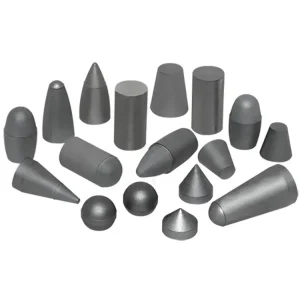
China Round billet metal for high strength cemented carbide tools Manufacturer, Supplier
View Technical Specs
Buy Wholesale high quality tungsten wolfram carbide grooving inserts milling Manufacturers, Suppliers
View Technical Specs
Wholesale China best price custom tungsten carbide steel cutters concrete scarifier blade Supplier, Factory
View Technical Specs
Buy New Shape Tungsten Carbide Tamping Tine Tools for Railway Industry Manufacturer, Factories
View Technical Specs
China Tungsten carbide tamping tines for railway construction equipment Suppliers, Factory
View Technical Specs
China Wholesale carbide insert cutting tools cnc Supplier, Factory
View Technical Specs
Buy YG8 carbide gripper inserts for chuck jaw Manufacturers, Supplier
View Technical Specs