

Factory Precision-Engineered Carbide Tooling & Components
Explore our core ISO-certified tungsten carbide blanks, scarfing inserts, gripper tips, and precision wear components manufactured under strict HIP sinter protocols.

China Best price YG8 tungsten carbide gripper inserts for chuck jaw Suppliers, Factories
Explore Specification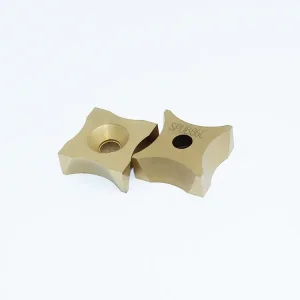
China SPUB86C P40 CVD coating tungsten carbide scarfing insert Manufacturers, Suppliers
Explore Specification
China SPUB63B wholesale lathe round tungsten carbide turning inserts Supplier, Factory
Explore Specification
Wholesale Custom 60 knife variable speed fixed gear cast iron truck large metal gear Manufacturers, Factory
Explore Specification
China Carbide Cutting Rods for Tungsten Alloy Cutting Tool Components Suppliers, Factories
Explore Specification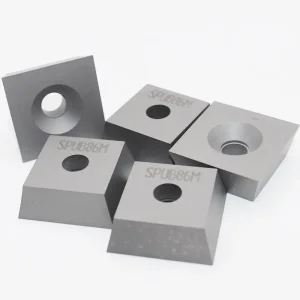
China Factory wholesale boxes tungsten woodworking carbide button inserts Supplier, Factories
Explore Specification
Wholesale Nickel based tungsten carbide rods with nickel binder for machinery Manufacturer, Factories
Explore SpecificationEngineering Fundamentals of Cemented Tungsten Carbide Countersinks
A comprehensive examination of transverse rupture strength, cobalt binder kinetics, and multi-flute geometry designed to eliminate chatter in demanding industrial hole-finishing operations.
In high-precision machining, countersinking represents far more than a simple deburring or chamfering task. When producing conical recesses for countersunk fasteners in structural aerospace assemblies, high-temperature automotive cylinder heads, offshore drilling risers, and wear-resistant tool die sets, the countersink tool is subjected to extreme compressive stresses, elevated interfacial friction, and dynamic chatter vibrations. Machinists frequently encounter rapid edge blunting, thermal cracking, and severe work-hardening when utilizing conventional High-Speed Steel (HSS) or cobalt-alloy countersinks on abrasive materials like titanium alloys (Ti-6Al-4V), nickel-based superalloys (Inconel 718), hard cast iron, and carbon-fiber-reinforced polymer (CFRP) composites.
Choosing to buy from a verified tungsten carbide countersink factory ensures direct access to metallurgical formulation customization, Hot Isostatic Pressing (HIP) sintering integrity, and sub-micron grain sizing. Cemented tungsten carbide (WC-Co) combines the extreme hardness and abrasion resistance of ceramic tungsten carbide crystals (HV 1800–2400) with the ductile fracture toughness of a cobalt or nickel binder matrix. For global Original Equipment Manufacturers (OEMs) and Tier-1 tier toolmakers, procuring directly from specialized Chinese carbide factories bridges the critical gap between cost efficiency and aerospace-grade chamfer precision (tolerances within ±0.005 mm with mirror surface roughness Ra < 0.2 µm).
Sub-Micron & Nano-Grain WC Substrates
By engineering carbide powder grain matrices down to 0.4 – 0.8 µm, our sinter-HIP technology achieves an optimal hardness-to-toughness equilibrium (91.5–93.2 HRA). Micro-grain structures arrest crack propagation during interrupted cuts and heavy axial thrust.
Transverse Rupture Strength: ≥ 3800 MPaChatter-Free Flute Dynamics
Unequal flute spacing (variable indexing: e.g., 118°/122°/120°) disrupts harmonic resonance, eliminating wavy chatter marks on conical bevel surfaces. Radial relief profiles ensure sharp yet structurally reinforced cutting lips.
Concentricity & Runout: TIR ≤ 0.003 mmAdvanced PVD/CVD Nanocomposite Coatings
Titanium Aluminum Nitride (AlTiN), Titanium Silicon Nitride (TiAlSiN), and Diamond-Like Carbon (DLC) physical vapor depositions resist edge oxidation up to 1,100°C, facilitating dry and Minimum Quantity Lubrication (MQL) machining.
Microhardness: Up to 3600 HVWhy Sourcing Tungsten Carbide Countersinks Directly from China Factories Delivers High ROI
Strategic benefits of Jiangxi's integrated tungsten industrial corridor: guaranteed virgin powder security, advanced automated sintering lines, and factory-direct engineering responsiveness.
The global cutting tool market is experiencing a profound supply-chain realignment. Procurement directors and manufacturing engineers no longer accept the prolonged lead times and excessive distribution markups imposed by multi-tier trading houses. China controls more than 80% of the world's upstream tungsten reserves and extraction infrastructure, with Jiangxi province serving as the global capital for ammonium paratungstate (APT), tungsten carbide powder synthesis, and precision hard-alloy metallurgy.
When international buyers partner directly with our factory, Jiangxi Zhongfu Cemented Carbide Co., Ltd. (operating with 24+ years of dedicated industrial experience across our 5,000 m² modern manufacturing facility), they gain end-to-end metallurgical traceability. Unlike secondary grinders that purchase pre-sintered generic blanks from third parties, a bona fide carbide manufacturer manages every chemical and mechanical variable:
1. 100% Virgin Raw Material Integrity
We enforce a strict zero-recycled-scrap policy for all cutting-tool grade products. Virgin sub-micron tungsten carbide powder is homogenized with high-purity cobalt or specialized non-magnetic nickel binders, completely eliminating micro-voids, iron impurities, and cobalt pools that trigger catastrophic premature fracture.
2. Overpressure HIP Sintering Technology
Standard vacuum sintering leaves microscopic residual pores that degrade transverse rupture strength. Our pressurized Sinter-HIP autoclaves apply up to 60–100 bar of inert argon gas at 1,450°C, compressing theoretical density to >99.95% (Porosity rating ISO A00, B00, C00).
3. 5-Axis CNC Tool & Cutter Grinding Centers
Equipped with state-of-the-art Walter, Rollomatic, and ANCA 5-axis grinding stations, our production lines achieve repeatable pitch geometry, automated flute polishing (mirror finish on flutes prevents chip welding), and specialized edge honing (2 to 5 µm radii for chatter mitigation).
4. Agile Rapid Tooling & Custom Geometry
Custom countersink requirements—whether non-standard inclusion angles (60°, 82°, 90°, 100°, 120°), combined step-drill countersinks, internal coolant through-holes, or threaded aircraft shanks—move from CAD drawing review to physical pilot testing in under 7 business days.
5. Direct Cost Arbitrage & Supply Reliability
By eliminating overseas wholesale markups, buyers capture 35% to 55% direct procurement cost reductions while maintaining dimensional consistency across 10,000+ unit repeat orders, backed by automated optical and CMM verification.
24+
Years Sintering Expertise
5,000m²
Dedicated Factory Floor
< 8h
Engineering Drawing Turnaround
20+
Export Nations Worldwide
Emerging Industry Trends in Tungsten Carbide Countersink Manufacturing
How automation, hybrid multi-material stackups, and dry-machining mandates are driving next-generation cutting geometry and tooling longevity.
The manufacturing landscape is undergoing significant transformation driven by the transition toward lightweight composite-metal aerostructures, high-voltage electric vehicle (EV) battery trays, and high-pressure hydrogen flow systems. In these cutting-edge applications, hole preparation tolerances have tightened drastically. Countersinks must execute flush fastener seats with zero burr formation, zero fiber delamination, and zero surface burnishing.
Micro-Stop Aerospace Cage Integration
Modern aerospace assembly demands micro-stop countersink cutters with threaded or quick-change shanks compatible with Zephyr or ATI depth-limiting cages. Our factory grinds precision carbide countersinks with integral or replaceable carbide pilots that maintain hole perpendicularity and fastener flushness within ±0.0005 inches (±0.012 mm).
CFRP / Titanium Stack Drilling & Countersinking
Machining multi-layer stacks of carbon fiber composite laminated to Ti-6Al-4V titanium alloy is notorious for severe tool wear. While carbon fibers quickly abrade cutting edges, titanium generates intense heat and galling. We formulate dual-phase carbide substrates coated with diamond or high-aluminum PVD layers that cut cleanly through both materials without delaminating resin or smearing titanium.
Indexable Carbide Insert Countersinks
For large diameter beveling (Ø25 mm to Ø120 mm) in heavy structural engineering, solid carbide tools become cost-prohibitive. Chinese factories are leading the development of indexable countersink bodies utilizing standard or custom multi-sided tungsten carbide inserts (e.g., TCMT, CCMT, SPUB series). When a cutting edge dulls, indexing the insert takes seconds, slashing machine tool downtime by up to 70%.
Zero-Flute (Cross-Hole) Deburring Geometry
For sheet metal, tubing, and non-ferrous chamfering, zero-flute cross-hole countersinks eliminate chatter entirely. Sintered from tough YG8/YG10 grades, the through-hole allows effortless continuous chip evacuation backward away from the workpiece, completely preventing chip scratching on polished aesthetic surfaces.
Localized Heavy-Duty Application Scenarios & Tailored Tooling Solutions
From aerospace fuselage rivet preparation to subsea valve seating, discover how our custom formulations solve severe mechanical wear challenges.
Commercial Aerospace & Defense Aircraft
Challenge: Chamfering 100° and 130° rivet holes across Al 7075-T6 wing skins and Ti-6Al-4V spars without thermal stress or burrs that could initiate fatigue cracking.
Factory Solution: Sub-micron YG6X grade countersinks with integral polished pilots, unequal 3-flute geometry, and nano-TiAlN coating. Over 2,500 continuous rivet seats per tool cycle with zero edge chipping.
Automotive Powertrain & EV Production
Challenge: High-volume chamfering of cylinder block oil passages, brake calipers, and cast nodular iron wheel hubs on high-speed transfer lines.
Factory Solution: Solid carbide multi-flute countersinks sintered in YG8 (8% Co binder) combined with ultra-slick CrN or AlCrN coating. Handles aggressive feed rates (0.15–0.30 mm/rev) with superior resistance to micro-chipping.
Oil & Gas Subsea Valves & Downhole Tools
Challenge: Beveling sealing seats and flanged fittings in high-nickel alloys (Monel, Inconel 625, Hastelloy) and duplex stainless steels operating in corrosive environments.
Factory Solution: Nickel-bonded non-magnetic tungsten carbide tooling designed to prevent galvanic corrosion and withstand severe high-pressure abrasive slurry flow without chemical pitting.
Precision Mold, Stamping Die & Toolmaking
Challenge: Countersinking guide pin holes and ejector pin recesses in hardened tool steels (D2, H13, 1.2379, 1.2344) heat-treated up to 55–62 HRC.
Factory Solution: Ultra-fine grain WC (0.5 µm) with 10% Co and silicon-infused TiSiN coating delivering microhardness >3600 HV. Enables direct dry countersinking without electrical discharge machining (EDM).
Printed Circuit Boards (PCB) & Electronics
Challenge: Micro-chamfering copper-clad fiberglass (FR-4) substrates and aluminum heat sinks where micro-burrs bridge circuits and cause electrical shorting.
Factory Solution: Micro-diameter solid carbide countersinks (Ø0.5 mm to Ø3.0 mm) ground with mirror-polished flutes and razor-honed cutting edges that sever fiberglass strands crisply without pull-out.
Cemented Carbide Grade Selection Guide for Countersinks
Reference technical properties to align cobalt percentage, grain size, hardness, and fracture toughness with your workpiece metallurgy.
| Carbide Grade | Binder (Co/Ni %) | Grain Size (µm) | Density (g/cm³) | Hardness (HRA) | TRS (MPa) | Primary Industrial Application |
|---|---|---|---|---|---|---|
| YG6X (Micro-Grain) | 6.0% Co | 0.6 – 0.8 | 14.90 – 15.05 | 92.5 – 93.5 | 2800 – 3200 | Aerospace carbon fiber, chilled cast iron, non-ferrous finishing |
| YG6 (ISO K10–K20) | 6.0% Co | 1.2 – 1.6 | 14.85 – 15.00 | 90.5 – 91.5 | 2400 – 2600 | General grey cast iron, brass, bronze, rigid machine setups |
| YG8 (ISO K20–K30) | 8.0% Co | 1.4 – 2.0 | 14.60 – 14.80 | 89.5 – 90.5 | 2700 – 3000 | Versatile structural steels, stainless steel chamfering, handheld tools |
| YG10X (Sub-Micron) | 10.0% Co | 0.5 – 0.7 | 14.40 – 14.60 | 91.5 – 92.5 | 3600 – 4000 | Titanium alloys, Inconel superalloys, high-impact interrupted cuts |
| YG15 (Heavy Impact) | 15.0% Co | 1.8 – 2.5 | 13.90 – 14.20 | 87.0 – 88.5 | 3200 – 3500 | Large diameter countersink bodies, stamping die chamfering, punch dies |
| Ni-Bonded (Non-Mag) | 8.0% – 12.0% Ni | 1.0 – 1.5 | 14.50 – 14.80 | 88.5 – 90.5 | 2300 – 2700 | Subsea oil & gas valves, medical implants, magnetic assembly fixtures |
*Data represents baseline metallurgical specifications. Zhongfu customizes cobalt/nickel formulation ratios upon technical drawing submission.
Global Enterprise Vendor Audit Checklist: Qualifying a Carbide Tool Factory
Essential quality verification benchmarks demanded by Fortune 500 procurement teams before awarding long-term supply contracts.
1. Spectrometric Powder Verification
Ensure your supplier verifies incoming tungsten and binder powders with Inductively Coupled Plasma Mass Spectrometry (ICP-MS) to guarantee zero contamination from low-melting-point tramp elements (such as lead, tin, or bismuth) that induce grain-boundary embrittlement.
2. Magnetic Saturation & Coercivity Testing
Magnetic balance inspection provides instant nondestructive verification of the carbon-cobalt balance. Optimal magnetic saturation ensures that neither carbon-deficient eta-phase (fragile W3Co3C crystals) nor free graphite inclusions exist in the sintered microstructure.
3. Automated Dynamic Runout Verification
A countersink with high runout will oscillate, creating out-of-round, triangular, or scalloped fastener holes. Verify that your manufacturer performs 100% laser runout checks ensuring Total Indicated Runout (TIR) does not exceed 0.005 mm on the shank-to-cutting-body axis.
4. Coating Adhesion Scratch Testing
PVD coatings must pass HF1 to HF4 Rockwell C indentation adhesion testing (VDI 3198 standard). Premature coating flaking under thermal shear forces exposes raw carbide to abrasive wear, nullifying the coating's financial value.
Frequently Asked Questions: Purchasing Tungsten Carbide Countersinks
Comprehensive engineering insights address technical queries, custom drawing specs, and international logistics logistics.
What is the key advantage of solid tungsten carbide countersinks over High-Speed Steel (HSS-E / M42)?
Solid tungsten carbide retains extreme hardness and cutting edge geometry at operating temperatures up to 800°C–900°C, whereas HSS softens dramatically above 550°C. In abrasive alloys, stainless steels, and composites, cemented carbide provides 10x to 25x the operational tool life, drastically reducing tool change frequency, machine cycle time, and cost per finished hole.
Which inclusion angles can your factory manufacture, and how do I select the right one?
Our CNC grinding centers produce all global standard and proprietary countersink angles: 60° (center holes and machine deburring), 82° (standard US ANSI/ASME flathead screws), 90° (metric ISO, DIN 7991 countersunk fasteners), 100° (aerospace rivets and Boeing/Airbus fastener specs), and 120° (sheet metal and thread lead chamfering). Custom non-standard angles are fully accommodated to drawing.
How do single-flute, 3-flute, and multi-flute countersinks compare in practice?
Single-flute countersinks offer spacious chip clearance, making them ideal for light chamfering and small portable drill operations without chatter. 3-flute countersinks represent the industrial benchmark for CNC machining, providing balanced 3-point centering, high rigidity, and excellent material removal rates. Multi-flute (4 to 6 flutes) designs provide unmatched fine surface finishes on hard steels (>45 HRC) and cast irons where chip load per tooth is low.
Can your factory supply carbide countersinks with replaceable or integral pilots?
Yes. For critical aerospace riveting and precision mechanical assemblies, pilot countersinks ensure absolute concentricity between the through-hole and the conical chamfer. We manufacture both integral solid carbide pilots (precision ground to h6 tolerance) and countersink bodies configured for modular, interchangeable carbide or bronze guide pilots.
What is the typical production lead time for custom carbide countersink orders?
Standard carbide blanks and common ISO geometry countersinks ship within 3 to 5 business days. Custom tool geometries, special inclusion angles, proprietary coatings, or pilot-step cutters typically complete manufacturing, inspection, and vacuum packing in 12 to 18 business days. Rush prototype batches can be prioritized within 7 days.
What export documentation and metallographic quality reports do you provide?
Every export shipment includes comprehensive quality dossiers: Material Chemical Composition Assay (WC and Co/Ni content), Density and Hardness Test Records (HRA/HV), Metallographic Microstructure & Porosity Micrographs (ISO standard), Optical CMM Dimensional Inspection Reports, and Certificate of Origin (CO/Form A/Form E).
Complementary Industrial Carbide Rods, Blanks & Turning Tooling
Explore our full metallurgical portfolio: solid ground carbide round bars for end mill and countersink toolmaking, turning inserts, pins, and custom structural components.

Buy Cemented tungsten carbide gripper inserts/tips for mining and diamond drilling Factory, Factories
Explore Specification
China Factory supply non-magnetic carbide pin for jewelry industry Supplier, Factory
Explore Specification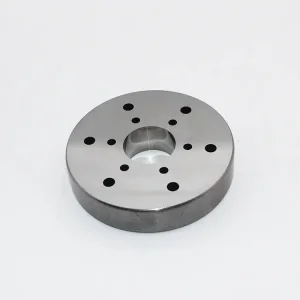
China Customized tungsten carbide fitting elbow tee cap reducer pipe flanges Suppliers, Factories
Explore Specification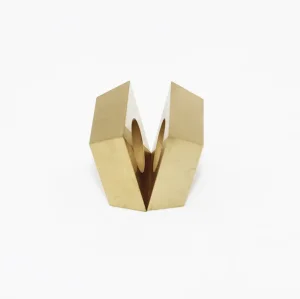
Wholesale Carbide hard alloy blade square Carbide Cutting Inserts for Metal Processing Suppliers, Factories
Explore Specification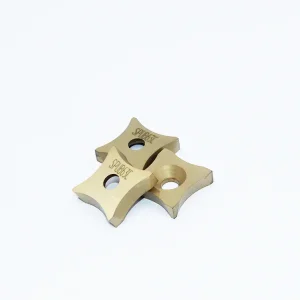
Wholesale Best price SPUB-63C tungsten scrap brake lathe carbide cutting inserts tools Supplier, Suppliers
Explore Specification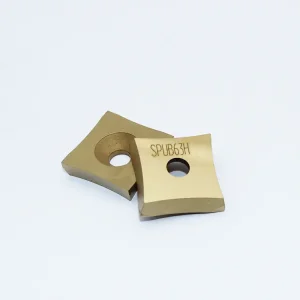
Buy Wholesale SPUB63H square tungsten carbide cemented cutting turning lathe tools Manufacturers, Factories
Explore Specification
Buy Tungsten Carbide Round Rod Blanks for End Mills Manufacturer, Manufacturers
Explore Specification