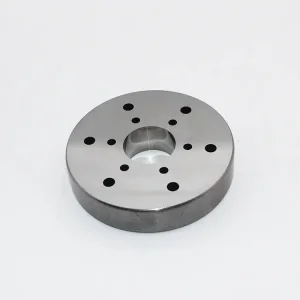
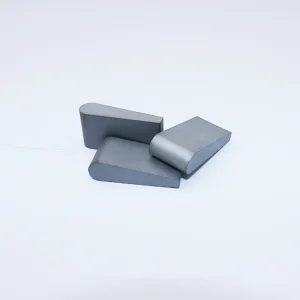
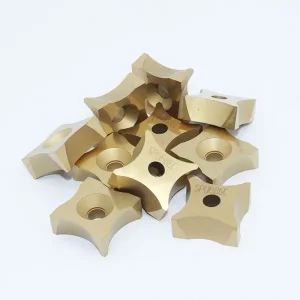
China Wholesale custom tungsten carbide module gear milling shaper cutters Manufacturers, Suppliers
View Specifications
Explore heavy-duty scarfing inserts, cold heading dies, module cutters, and solid wear-resistant blanks manufactured under sub-micron metallurgical control.

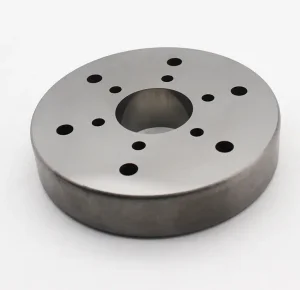





A macroeconomic shift toward deep-strata extraction, exotic superalloys, and high-speed CNC manufacturing is redefining global tungsten carbide bit procurement.
Tungsten ore (wolframite and scheelite) concentration remains geographically specific. Global buyers prioritize integrated factories that control virgin ammonium paratungstate (APT) processing directly into micro-grain tungsten carbide (WC) powder, eliminating intermediate supply shocks and volatile scrap blend variations.
Modern downhole drilling, geological trenching, and aerospace rotary machining encounter extreme tribological shear, hyper-thermal cycling (up to 1,000°C at shear margins), and mechanical shock. Sintered carbides must achieve fracture toughness (K1C) exceeding 10.5 MPa·m½ alongside hardness above 90 HRA.
Industrial procurement departments have evolved past unit-cost metrics. The industry standard evaluates Cost Per Meter Drilled (CPMD) or Cost Per Machined Part (CPMP). A high-performance carbide bit offering a 35% life extension vastly offsets initial acquisition cost by preventing downtime in heavy operations.
From functional gradient cobalt architecture to sinter-HIP pressure synthesis, carbide bit engineering is advancing through material science breakthroughs.
Transitioning from sub-micron (0.8 µm) to nano-scale (0.2–0.4 µm) grain structures yields transverse rupture strength (TRS) upwards of 4,000 N/mm², minimizing micro-chipping on cutting edges under intermittent shock loads.
By modulating carbon potential during cycle stages, modern bits achieve a dual-phase structure: a cobalt-depleted, ultra-hard diamond-like outer skin paired with a cobalt-rich ductile core for superior impact absorption.
Substituting cobalt with nickel-chromium or non-magnetic nickel-molybdenum binder matrices solves premature failure caused by chemical galvanic degradation in sulfurous crude or coastal saline environments.
Application of multi-layer chemical vapor deposition (CVD) coatings and thick AlCrN/TiSiN physical vapor deposition (PVD) films delivers a barrier resisting 1,100°C oxidation and micro-abrasive scouring.
Specific wear scenarios demand tailored tungsten carbide formulations. See how customized geometries and specialized grades solve downhole, track, and foundry challenges.
In hot igneous granite formations, YG8C and YG11C spherical carbide bit buttons withstand 60+ MPa axial loads. Engineered insert retention geometries prevent premature tip pull-out under intense percussive cyclic shock.
Continuous internal and external weld seam de-burring demands high-temperature stability. Zhongfu SPUB63 and SPUB86 heavy-duty carbide inserts provide mirror-finish scarfing on high-frequency resistance-welded steel pipes.
Railway track maintenance requires rapid cyclic immersion into basalt aggregate. Sintered carbide tamping tines survive aggressive Gouging Abrasion, outlasting welded hardfacing plates by up to 500 operational hours.
Consult this reference to balance cobalt binder concentration, density, Rockwell hardness, and transverse rupture limits prior to tooling manufacture.
| Carbide Grade | Cobalt Content (%) | Grain Size (µm) | Density (g/cm³) | Hardness (HRA) | TRS (N/mm²) | Primary Industrial Sector |
|---|---|---|---|---|---|---|
| YG6 / K10–K20 | 6.0% | 1.0 – 1.6 | 14.85 – 15.00 | 90.5 | 2,100 | Cast iron turning, wear plates, drawing dies |
| YG8 / K20–K30 | 8.0% | 1.2 – 2.0 | 14.60 – 14.80 | 89.5 | 2,400 | Rock drilling bits, rotary mining picks, brazed tips |
| YG11C / Heavy Impact | 11.0% | 2.2 – 3.2 | 14.30 – 14.50 | 87.0 | 2,700 | Downhole DTH percussion bits, road planing picks |
| YG15 / Forming | 15.0% | 1.4 – 2.2 | 13.90 – 14.15 | 87.0 | 2,900 | Cold heading dies, punch molds, high-stress rollers |
| YG20 / Extreme Shock | 20.0% | 1.6 – 2.6 | 13.40 – 13.65 | 85.5 | 3,200 | Stamping molds, blanking dies, heavy EDM blocks |
| Ni-Bonded (Non-Magnetic) | 8.0%–12.0% Ni | 0.8 – 1.4 | 14.50 – 14.85 | 88.5 – 90.0 | 2,300 | MWD oilfield sensors, jewelry tools, non-magnetic dies |
Our 5,000 m² Nanchang facility executes end-to-end powder preparation, high-pressure sintering, and CNC micron grinding under strict ISO 9001:2015 traceability.
We reject recycled scrap powders in core structural bits. Pure ammonium paratungstate and cobalt binders deliver controlled stoichiometry, preventing unwanted eta-phase brittleness and free graphite pockets.
State-of-the-art sinter-HIP furnaces apply up to 10 MPa of inert argon pressure at 1,450°C. This collapses internal micropores, delivering near-theoretical density and exceptional transverse rupture endurance.
Every batch undergoes metallographic microscopy for WC crystal grain sizing, saturation magnetization testing for cobalt phase purity, and ultrasonic testing for internal flaw elimination.
Clear, direct engineering answers on custom drawings, grade formulations, binder performance, and international logistics.
From CVD-coated bar peeling inserts to railway tamping wear components, discover specialized tungsten solutions ready for industrial integration.