
Precision Tooling, Inserts & Sintered Hardware Series
Explore our core engineering catalog including heavy-duty scarfing inserts, centerless lathe peeling components, and custom transmission sets built for extreme operating stress.
-
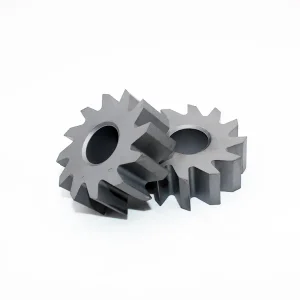
Buy Custom made transmission reverse idle gear starter gear spur gear set Manufacturer, Factory
Inquire Spec Details -

China SPUB86 P40 tungsten carbide scarfing inserts for welded steel pipe Manufacturer, Factory
Inquire Spec Details -
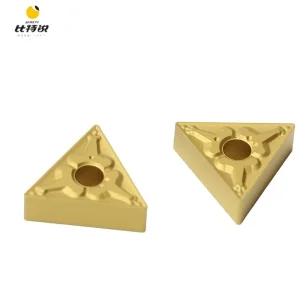
China Tungsten Carbide Bar Peeling Insert Hard Alloy Cutting for Centerless Lathe Steel Rod Manufacturer, Suppliers
Inquire Spec Details -

Buy Square Tungsten insert carbide manufacturer threading carbide blank inserts Manufacturer, Manufacturers
Inquire Spec Details -

China High quality SPUB86M china indexable tungsten carbide_inserts Manufacturer, Supplier
Inquire Spec Details -
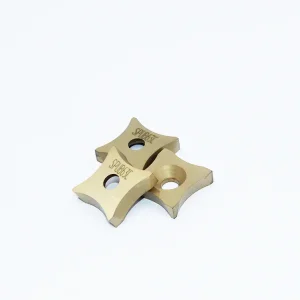
Buy SPUB-63 External Scarfing Inserts for Tubes Machining and High Frequency Pipes Suppliers, Factory
Inquire Spec Details -

China Wholesale insert carbide manufacturer threading carbide blank inserts Manufacturers, Factory
Inquire Spec Details -

China SPUB86C P40 uncoated blank cemented tools carbide inserts Suppliers, Factory
Inquire Spec Details
Commercial Status of Solid Carbide Rods in High-Precision Manufacturing
Analyzing cross-sector demands driving sub-micron tungsten carbide bar consumption across Tier-1 aerospace tooling, electric mobility, medical robotics, and 3C micro-drilling sectors.
Structural Material Evolution: Meeting Modern High-Speed Cutting (HSC) Demands
In contemporary global manufacturing, the solid tungsten carbide rod serves as the foundational core for high-performance rotary cutting tools, including solid carbide end mills, step drills, reamers, taps, and dental burs. Driven by the aerospace sector's transition toward difficult-to-machine superalloys (such as Inconel 718, Titanium Ti-6Al-4V, and carbon fiber reinforced polymers CFRP), traditional high-speed steels and standard macro-grain carbides fail rapidly under elevated thermal and mechanical stresses. Solid carbide rods formulated with sub-micron (<0.8 µm) and nano-grain (<0.4 µm) tungsten carbide structures embedded in cobalt-rich binders deliver the thermodynamic stability and micro-hardness required to maintain sharp cutting edges past 800°C.
Simultaneously, the global push toward miniaturized electronics—spanning 5G telecommunications, semiconductor test sockets, and printed circuit board (PCB) multilayer fabrication—has fueled an unprecedented demand for ultra-small micro-drills (Ø0.05 mm to Ø0.50 mm). In these micro-machining regimes, any metallurgical defect, such as cobalt pooling, un-sintered micro-cavities (A-type porosity), or residual tungsten phase precipitates, leads to instantaneous catastrophic tool breakage. Consequently, international procurement teams are moving away from regional trading houses toward fully integrated solid carbide rod factories that control virgin ammonium paratungstate (APT) reduction, spray drying, automated multi-axis extrusion, and automated Sinter-HIP processing.
Aerospace Superalloys
Engineered with 10-12% Cobalt and grain inhibitors (VC/Cr3C2) to resist thermal shock, notch wear, and lateral deflection during dynamic 5-axis trochoidal pocketing of aerospace-grade nickel alloys.
3C Electronics & PCB Micro-Drills
Nano-scale 0.2 µm grain matrix ensures edge radius sharpness < 1 µm, delivering burr-free via hole drilling across copper-clad laminates without wandering or micro-fracturing at 250,000 RPM.
Automotive Powertrain & EV
Ultra-wear resistant grades tailored for high-speed machining of compacted graphite iron (CGI), case-hardened transmission gears, and lightweight hypereutectic aluminum engine blocks.
Die & Mold Hard Milling (>60 HRC)
Micro-grain carbide blanks capable of dry, high-velocity finishing on hardened tool steels (SKD11, Nak80, D2), eliminating the need for expensive secondary electrical discharge machining (EDM).
Why Global Buyers Procure Solid Carbide Rods Directly from China
China commands over 80% of the world's upstream tungsten ore extraction and intermediate refining capacity. Sourcing directly from modern, automated solid carbide rod factories located in manufacturing hubs such as Jiangxi and Hunan offers distinct technological and economic advantages over regional distributors.
By controlling the lifecycle from pure Wolframite/Scheelite refinement to high-purity Tungsten Carbide (WC) powder synthesis, advanced Chinese manufacturers eliminate multi-tier supply markups while securing guaranteed batch consistency in chemical stoichiometry.
- 100% Virgin Powder Guarantees: Pure WC without secondary scrap cross-contamination; strictly controlled carbon saturation eliminates brittle eta-phase crystals.
- Automated Piston & Screw Extrusion: Continuous automated extrusion lines equipped with vacuum de-airing chambers guarantee uniform green-body density.
- Massive Sinter-HIP Furnace Arrays: Multi-ton capacity vacuum pressure sintering furnaces (100 bar) operate round-the-clock for predictable delivery cycles.
- High-Precision In-House Centerless Grinding: Advanced CNC cylindrical grinding machines from Agathon and Royal Master maintain h6/h5 diameter specs effortlessly.
Lean Supply Chain Workflow Matrix
Understanding the direct engineering link from chemical purification to centerless-ground delivery reveals how modern Chinese factories slash lead times from weeks to days:
Engineering Grade Selection Matrix for Solid Carbide Rods
Cross-referencing binder percentages, average grain diameters, micro-hardness ratings, and TRS benchmarks for optimal tool grinding selection.
| Alloy Grade | Cobalt Content (Co %) | Grain Size (µm) | Density (g/cm³) | Hardness (HRA / HV30) | TRS (MPa) | Recommended Machining Target |
|---|---|---|---|---|---|---|
| ZF-U06 (Ultra-Fine) | 6.0% | 0.4 - 0.6 | 14.95 - 15.05 | 93.2 HRA / 1750 HV | 3,800 MPa | Chilled cast iron, non-ferrous metals, abrasive plastics, graphite electrodes |
| ZF-N08 (Nano-Grade) | 8.0% | 0.2 - 0.4 | 14.70 - 14.85 | 93.8 HRA / 1850 HV | 4,200 MPa | Hardened mold steels (52–65 HRC), titanium alloys, micro-drills < Ø1.0mm |
| ZF-S10 (Sub-Micron Universal) | 10.0% | 0.6 - 0.8 | 14.45 - 14.60 | 92.0 HRA / 1600 HV | 4,100 MPa | General steel milling (P-class), stainless steels (304, 316L), roughing end mills |
| ZF-T12 (Impact Toughness) | 12.0% | 0.8 - 1.0 | 14.15 - 14.30 | 90.5 HRA / 1450 HV | 4,400 MPa | Heavy interrupted cutting, long-overhang boring bars, structural reamers |
| ZF-NM10 (Non-Magnetic Ni) | 10.0% (Ni binder) | 0.8 - 1.2 | 14.50 - 14.70 | 89.8 HRA / 1400 HV | 3,200 MPa | Magnetic sensor plungers, medical electronics, subsea valve wear trims |
Real-World Deployment: From Aerospace Trochoidal Fluting to Medical Implants
Solid carbide rods operate across specialized CNC tooling environments where material integrity determines workpiece quality and cycle life.
Aerospace Impeller & Blisk 5-Axis Milling
Machining closed titanium or nickel-alloy blisks requires solid carbide end mills with length-to-diameter ratios reaching up to 8D. Rods must display extreme modulus of elasticity (Young's Modulus > 580 GPa) to prevent dynamic chatter, tool deflection, and micro-grooving on contoured blade surfaces.
Deep-Hole Gun Drilling with Helical Coolant
Equipped with dual helical coolant channels (30° or 40° lead angles), our coolant-fed rods enable high-pressure lubricant flow straight to the cutting interface. This prevents chip welding and evacuation jams when drilling fuel rail passages and transmission valve blocks up to 30D deep.
Orthopedic Bone Drills & Dental Burs
Medical implant manufacturing demands biocompatible purity and defect-free material density. Ground carbide blanks for bone pins, surgical drills, and dental burs undergo 100% Eddy Current surface crack testing to prevent catastrophic in-vivo tool breakage.
Semiconductor Test Probe Pins & Punches
With sub-micron roundness tolerances (h5) and mirror finishes (Ra < 0.05 µm), our ultra-fine unground and ground pins serve as contact test probes, precision punches, and wear sleeves within abrasive IC packaging environments.
Technological Frontiers Shaping Solid Carbide Rod Manufacturing
Exploring binder phase innovations, circular recycled loops, gradient structures, and multi-hole geometry design.
Closed-Loop Recycled Tungsten (Zinc Process)
Advancements in chemical and zinc-recovery recycling enable the reuse of high-purity cemented carbide scrap with minimal carbon footprint, lowering supply volatility while adhering strictly to international ESG mandates without degrading TRS.
Functionally Graded Carbide Architectures
By controlling nitrogen activity and cooling atmospheres during the final Sinter-HIP phase, factories engineer rods with a tough, cobalt-enriched interior core surrounded by a hard, wear-resistant outer periphery, yielding balanced deflection and wear resistance.
Advanced Multi-Coolant Geometries
Beyond conventional single-hole and two-hole designs, automated extruders now produce 3-hole and 4-hole helical channels with variable helix angles (35°/38°). This allows tool manufacturers to produce chatter-free variable-helix end mills directly from stock blanks.
B2B Procurement Guide: Non-Destructive Testing & Tolerancing Standards
Key technical criteria international procurement teams must mandate when inspecting solid carbide rod shipments.
Key Inspection Checkpoints for Bulk Rod Shipments
When qualifying a solid carbide rod supplier, overseas buyers must specify precise metallographic, magnetic, and physical tolerances beyond outer diameter values:
- Total Indicator Reading (TIR / Straightness): Verify straightness ≤ 0.02 mm per 100 mm length. Excessive runout creates tool grinding imbalance and premature wheel loading.
- Porosity Inspection (ISO 4505): Blanks must satisfy A02, B00, C00 ratings under metallographic microscopes. Any visible micro-pores > 10 µm will cause fluting edge chip-outs.
- Magnetic Saturation & Coercive Force: Coercivity (Hc in kA/m) validates correct grain size control, while magnetic saturation (4πσ) confirms absence of free carbon or brittle eta (W3Co3C) phase.
- Ultrasonic Surface & Internal NDT: Centerless ground rods must be 100% ultrasonically checked to catch internal micro-fissures originating from extrusion die shear stresses.
Standard Outer Diameter Ground Tolerances (ISO h6 / h5)
h6: +0 / -0.006 mm
h5: +0 / -0.004 mm
h6: +0 / -0.008 mm
h5: +0 / -0.005 mm
h6: +0 / -0.009 mm
h5: +0 / -0.006 mm
h6: +0 / -0.011 mm
h5: +0 / -0.008 mm
h6: +0 / -0.013 mm
h5: +0 / -0.009 mm
h6: +0 / -0.016 mm
h5: +0 / -0.011 mm
*Standard stock ground rods are supplied with precision chamfered lead-in ends (15° or 45°) to safeguard automatic tool loader collets from premature scoring.
Wear Parts, Stamping Plates & Round Billet Materials
Review our specialized metallurgical components including roll crushing wear parts, stamping die plates, and round metal billets for high-strength cemented carbide tooling.
-
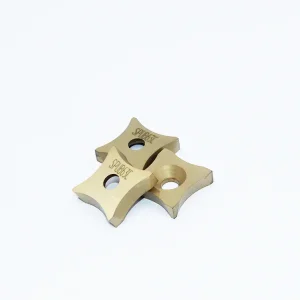
Wholesale Best price SPUB-63C tungsten scrap brake lathe carbide cutting inserts tools Supplier, Suppliers
Inquire Spec Details -
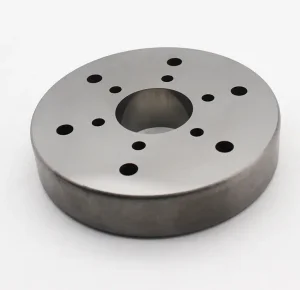
Buy Customized tungsten cemented carbide wear parts for roll crushing Manufacturer, Manufacturers
Inquire Spec Details -

China Factory wholesale Tungsten square original carbide cutting inserts Manufacturer, Manufacturers
Inquire Spec Details -

China CNC Carbide Turning Tool Internal Tungsten Steel Cutting Insert Scraping Blade for Steel Workpiece Manufacturers, Factory
Inquire Spec Details -

China Best price SPUB86J CVD coating boxes woodworking tungsten carbide button insert Manufacturer, Supplier
Inquire Spec Details -

Wholesale Wholesale Steel Pipe Scarfing Tools SPUB63J Tube Scarfing Inserts Supplier, Factories
Inquire Spec Details -

Wholesale Premium Tungsten Carbide Sheet for Stamping Dies Durable P30 Alloy Model 200x200x10mm Manufacturers, Suppliers
Inquire Spec Details -
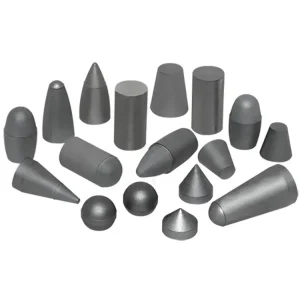
China Round billet metal for high strength cemented carbide tools Manufacturer, Supplier
Inquire Spec Details
Technical Questions Overseas Buyers Ask Before Sourcing Carbide Rods
In-depth responses covering powder purity, sintering techniques, straightness verification, and customized shank configurations.
What is the difference between Sinter-HIP and traditional vacuum sintering for carbide rods?
Traditional vacuum sintering subjects the pressed carbide powder to heat (approx. 1400°C–1450°C) under vacuum conditions, which drives out binders and consolidates the matrix. However, microscopic residual gas pockets and porosity (A04/B04 class) can remain trapped within the core. In contrast, Sinter-HIP (Hot Isostatic Pressing) introduces high-purity argon gas at high pressures (typically 60 to 100 bar / 6 to 10 MPa) during the liquid-phase sintering stage. This overpressure crushes internal micro-voids, elevating theoretical density to >99.99%. For cutting tool makers, Sinter-HIP rods dramatically eliminate catastrophic early flaking, micro-edge chipping, and flute breakage when grinding deep flutes on multi-axis CNC machines.
How do sub-micron and nano-grain carbide rods improve tool life in hardened steels (>55 HRC)?
Wear resistance in cemented carbide is dictated by the mean free path of the cobalt binder and the exposed surface area of the tungsten carbide (WC) crystals. In coarse or medium-grain carbide (1.5–3.0 µm), large cobalt pools are vulnerable to micro-adhesion, thermal leaching, and mechanical abrasion. Sub-micron (0.4–0.8 µm) and nano-grain (<0.4 µm) structures distribute the metallic cobalt in microscopically thin films between millions of densely packed carbide boundaries. This prevents dislocation movements and preserves cutting edge micro-hardness up to 93–94 HRA, allowing cutting tools to cleanly shear hard martensitic structures without micro-chipping.
Can you manufacture solid carbide rods with custom coolant hole configurations and chamfers?
Yes. As an integrated factory, we extrude solid carbide rods with diverse internal coolant architectures. These include axial central straight coolant holes (from Ø0.3 mm to Ø3.0 mm), dual parallel straight holes, and dual helical coolant channels with precise 30°, 40°, or variable helix angles tailored for drill flute manufacture. Furthermore, rods can be supplied cut-to-length with precision factory chamfers (e.g., 45° x 0.5 mm or 15° lead-in radii) and centerless ground to strict h6 or h5 limits, ready for direct loading into CNC tool grinders (such as Walter, Rollomatic, ANCA, or Makino).
How do you verify straightness (TIR) and avoid runout on long slender rods (Ø3 x 330 mm)?
Slender carbide rods (especially lengths exceeding 300 mm) are prone to thermal warpage during cooling if sintering trays are not carefully leveled or if extrusion stress relief is uneven. At our factory, rods are sintered on high-purity, graphite-profiled V-boats to preserve baseline linearity. Post-sintering, 100% of blanks are inspected using dial test indicators on precision motorized roller benches. Any blank exceeding 0.02 mm TIR per 100 mm is dynamically hot-straightened or rejected before centerless grinding. This guarantees that your CNC grinding wheels encounter zero rotational vibration during flute grinding cycles.
What documentation and metallurgical test certificates accompany export shipments?
Every production batch undergoes strict quality gates and is accompanied by an official 3.1 Inspection Certificate (MTC). This document specifies: (1) Actual chemical composition and Cobalt weight percentage; (2) Density checked via Archimedes water displacement (g/cm³); (3) Rockwell Hardness (HRA) and Vickers (HV30); (4) Transverse Rupture Strength (TRS in MPa via 3-point bend test); (5) Coercive force (Hc) and Magnetic Saturation (4πσ); and (6) Metallographic cross-section photography verifying ISO 4505 porosity compliance (A02/B00 or better).
Partner Directly with a Tier-1 Solid Carbide Rod Factory
Eliminate supply-chain intermediaries and secure stable, metallurgical-grade consistency for your end mill, drill, and wear-component production lines. Request tailored sample blanks, custom grade formulations, or full wholesale pricing catalogs today.