

Direct Sourcing Catalog
Precision Sintered Carbide Components: Group A
Explore precision-ground, HIP-sintered industrial inserts, welding blanks, and specialized cutting parts engineered with microscopic structural uniformity.






Material Science
¿Qué Es Tungsteno? Architectural Mechanics & Industrial Relevance
A rigorous examination of transition metal properties, binary carbon bonding, and the metallurgical advantages of cemented tungsten carbide.
Atomic & Crystal Structure
Tungsten (W, atomic number 74), known in Spanish-speaking and European engineering circles as Wolframio or Tungsteno, possesses the highest melting point of all refractory metals at 3,422°C (6,192°F). When combined stoichiometrically with carbon at high heat, it forms tungsten monocarbide (WC), an interstitial compound with extreme covalent-ionic bonding that yields near-diamond hardness ratings of 89.0 to 93.5 HRA.
Binder Phase Thermodynamics
Pure sintered WC is exceptionally brittle. Commercial industrial applications require liquid-phase sintering with ductile metallic binders—typically 6% to 20% Cobalt (Co) or Nickel (Ni). In the classic WC-Co matrix, cobalt wets the carbide grains during high-temperature sintering, producing a composite material that pairs hard, abrasive-resistant grains with a fracture-resistant ductile matrix.
Modulus of Elasticity & Rigidity
Tungsten carbide exhibits a Young’s Modulus of approximately 530 to 700 GPa—nearly triple that of structural steels. This rigidity minimizes tool deflection during heavy-duty turning, deep boring, and metal tube scarfing, ensuring dimensional stability and micron-level surface finishes under severe load and heat conditions.
Manufacturing Infrastructure
Chinese Factory Infrastructure: End-to-End Vertical Control
Why sourcing direct from specialized Jiangxi carbide production clusters delivers unrivaled metallurgical purity, scale, and cost-efficiency.
Virgin Ore Proximity
Located in Jiangxi, the global epicenter of tungsten ore reserves, our operations run entirely on 100% virgin ammonium paratungstate (APT) raw stock. Direct access prevents recycled scrap contamination and maintains stable crystal structures.
Overpressure Sinter-HIP
Porosity is the primary failure mode of heavy-impact tools. Modern manufacturing utilizes high-pressure HIP (Hot Isostatic Pressing) sintering at 1,450°C and up to 10 MPa of argon gas, closing micro-voids and achieving theoretical density.
Sub-Micron Milling
Continuous ball-milling control yields ultrafine to nano-grain powders (down to 0.2–0.6 µm). This fine-grain distribution ensures sharp cutting edges, low chipping rates on high-speed CNC tools, and exceptional polishability on blank plates.
Economies of Scale
With an active 5,000 m² floor plan and specialized automated pressing lines, high-volume production reduces scrap ratios and cycle times, delivering significant cost savings on standard wear blanks and custom OEM profiles.
24+
Years Engineering Expertise
5,000 m²
Modern Production Area
< 8 Hrs
Technical Drawing Feasibility Review
100%
Virgin Powder Verification
Metallurgical Matrix
Standard & Custom Sintered Carbide Grade Specifications
Review engineering tolerances, physical density indices, and impact resistance profiles across primary ISO/ASTM standardized classifications.
| Carbide Grade | Binder % (Co / Ni) | Grain Size (µm) | Density (g/cm³) | Hardness (HRA) | Transverse Rupture (TRS, MPa) | Primary Industrial Utility |
|---|---|---|---|---|---|---|
| YG6 / K10 | 6.0% Co | 1.2 – 1.6 | 14.90 – 15.00 | 90.5 | 1,900 | Cast iron finishing, non-ferrous profiling, hard wood routing. |
| YG8 / K20 | 8.0% Co | 1.4 – 2.0 | 14.60 – 14.80 | 89.5 | 2,200 | Mining drill button bits, brazed cutting tips, stone splitting tools. |
| YG15 / K40 | 15.0% Co | 1.8 – 2.4 | 13.90 – 14.15 | 87.0 | 2,800 | Stamping punches, cold-heading die inserts, high-shock forming. |
| YG20 | 20.0% Co | 2.2 – 3.0 | 13.40 – 13.60 | 85.5 | 3,100 | Heavy-impact cold punching, roll rings, wire flattening rollers. |
| Ni-Bind (Non-Mag) | 8.0 – 12.0% Ni | 1.0 – 1.8 | 14.40 – 14.80 | 88.0 – 90.0 | 2,100 | Oil downhole MWD/LWD tools, magnetic molding, corrosive fluid seals. |
Industry Applications
Mission-Critical Use Cases: Where Tungsten Excels
Deploying specialized tungsten carbide across aggressive abrasive, mechanical impact, and corrosive working environments worldwide.
Steel Mills: Tube & Bar Peeling
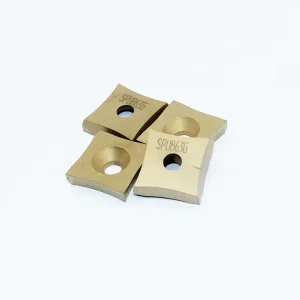
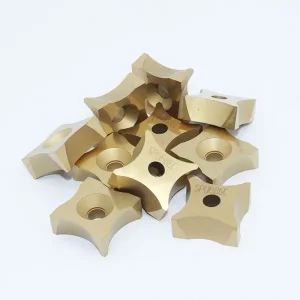
Continuous ERW tube scarfing and centerless bar peeling demand consistent thermal shock resistance. Our heavy-duty SPUB63, SPUB86, and SNMX series remove welded internal/external beads without micro-chipping, lowering maintenance downtime.
Mining, Geotechnical & Tamping
Excavation tools, rotary tricone bits, down-the-hole (DTH) drill buttons, and railway track tamping tine tips leverage customized YG8 and YG11C coarse-grain compositions to resist aggregate impact and severe frictional wear.
Precision Tooling & EDM Blocks
For die makers and progressive stamping operations, our HIP-sintered ground carbide plates and thick blocks deliver near-zero internal porosity. This allows micro-hole wire EDM cutting without thermal micro-cracking or localized structural failure.
Regulatory & Logistics
Localization Support, Regulatory Compliance & Safe Global Supply
Ensuring cross-border compliance, verified supply chains, and engineering documentation for multinational procurement operations.
Conflict Minerals & ESG Traceability
Tungsten is a tightly regulated 3TG mineral. Our factory strictly adheres to OECD Due Diligence Guidance, RMI (Responsible Minerals Initiative) verification, and conflict-free supply chains, supplying full origin documentation with every export order.
Bilingual Engineering & Export Protocols
Navigating cross-border procurement requires clear technical communication. We provide bilingual (English/Spanish) CAD review, full mill test reports (MTR), metallographic micro-imaging, and custom Incoterms arrangements (FOB, CIF, DDP).
Customs Tariff Classification (HS Codes)
Our customs logistics team handles proper documentation and tariff classification under HS Code 8209.00 (carbide plates, tips, and inserts) and 8101.99 (tungsten wear parts), reducing border delays and ensuring smooth customs clearance.
Next-Gen Metallurgy
Emerging Industry Trends in Cemented Tungsten Carbide
The transition toward binder optimization, circular manufacturing, and near-net shape production.
Sub-Micron & Nano-Grain Synthesis
As micro-machining grows across semiconductor, medical, and aerospace sectors, demand is shifting toward sub-micron grain sizes (< 0.5 µm). These ultrafine microstructures enhance cutting edge sharpness while maintaining high fracture resistance.
Nickel-Bonded & Alternative Binders
Environmental and supply factors are driving the development of cobalt-free binders. Nickel-bonded tungsten carbide provides critical non-magnetic performance and enhanced corrosion resistance for subsea oil and gas, marine, and medical tooling.
Near-Net Shape & Advanced 3D Sintering
Because finished tungsten carbide can typically only be ground using high-grit diamond wheels or wire EDM, near-net shape green machining is becoming the industry standard. This minimizes material waste and shortens post-sinter lead times.
Direct Sourcing Catalog
Precision Sintered Carbide Components: Group B
Explore heavy-duty blanks, custom wear components, nozzles, flat plates, and precision milling tools produced directly in our facility.






Technical Clarifications
Frequently Asked Questions: Sourcing & Metallurgy
Detailed technical answers for industrial procurement managers, tooling engineers, and global buyers.
What is the distinction between pure tungsten and cemented tungsten carbide?
Pure tungsten is an elemental refractory metal prized for electrical contacts, radiation shielding, and filaments due to its high melting point (3,422°C). Cemented tungsten carbide (WC-Co/Ni) is a metal matrix composite designed for tooling and wear components, offering significantly higher hardness, compressive strength, and abrasion resistance.
How does Hot Isostatic Pressing (HIP) affect component working life?
Standard vacuum sintering can leave micro-pores that serve as stress concentrators during mechanical shock. Overpressure HIP sintering introduces up to 10 MPa of argon at sintering temperatures, closing internal micro-voids, increasing density, and boosting transverse rupture strength (TRS) by 15% to 30%.
Can your factory produce custom parts directly from CAD drawings?
Yes. Custom manufacturing to print is our core strength. We work with 2D drawings (DWG, DXF, PDF) and 3D models (STEP, IGES). Our engineering team reviews tolerances, suggests suitable carbide grades, and provides manufacturability feedback within 8 hours.
How should procurement teams select between YG6, YG8, and YG15?
Selection depends on your balance between wear resistance and impact tolerance. YG6 (6% Co) provides superior hardness for sliding wear and fine cutting; YG8 (8% Co) is the balanced choice for rock drilling and metal turning; and YG15/YG20 (15–20% Co) provides high impact toughness for punching, stamping, and heavy heading dies.