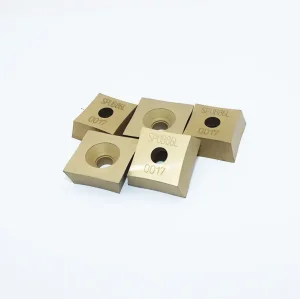
Factory-Direct Precision Shafts & Ultra-Hard Tooling Components
Explore our hot-selling sintered blanks, h6-ground tungsten carbide shafts, and cold tooling modules manufactured with 100% virgin sub-micron powders for zero runout and high wear endurance.
-
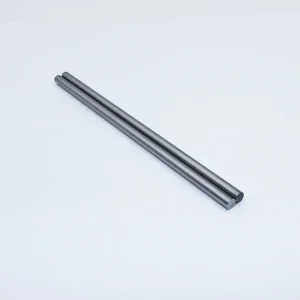 Non-Magnetic / Anti-Corrosion Wholesale Non magnetic cemented carbide rods for making water meter shaft Supplier, Suppliers
-
-
-
-
-
-
-
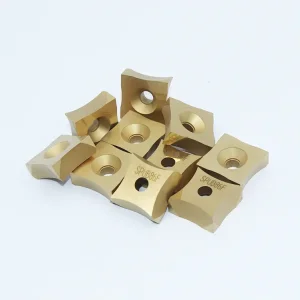 High-Feed Turning Tools China Factory sale tungsten carbide insert cutting tools turning tool Manufacturer, Supplier
Precision Ground Steel Shaft Engineering: Metallurgy, Core Toughness & Micro-Finishes
A comprehensive engineering guide to procuring precision ground linear motion shafts, micro-diameter drive pins, and non-magnetic carbide rotor shafts for high-dynamic automated assemblies.
Alloy Substrate Integrity
We source ultra-clean vacuum-degassed bearing steels (AISI 52100 / 100Cr6), carbon structural steels (C45E / AISI 1045), and high-tensile chrome-moly alloys (42CrMo4 / AISI 4140) ensuring micro-cleanliness, low inclusion levels, and uniform grain refinement for maximum rotational fatigue life.
Induction Case Hardening
Using localized high-frequency induction heating coils, we develop an optimized martensitic case profile with surface hardness reaching 60–64 HRC and an effective case depth (ECD) up to 3.5 mm, maintaining a ductile, shock-absorbing pearlitic-ferritic core that resists dynamic torsional shear.
Multi-Stage Centerless Grinding
Our CNC centerless through-feed grinding lines utilize vitrified CBN (Cubic Boron Nitride) wheels and automated in-process laser gauging to hold ISO tolerance classes h6, h7, g6, and f7. Surface finishes achieve Ra ≤ 0.15 μm, eliminating micro-asperities that degrade linear ball bushings.
Electro-Plating & Hard Coatings
For demanding atmospheric and chemical conditions, we provide micro-crack functional hard chrome plating (15–25 μm thickness, 900–1100 HV0.1) or proprietary PVD/CVD coatings that pass 100-hour to 500-hour neutral salt spray (ASTM B117) corrosion tests without pitting.
Engineering Specifications Matrix: Linear & Ground Shafting
Compare baseline mechanical parameters, metallurgical grades, hardness thresholds, and allowable geometric dimensioning and tolerancing (GD&T) metrics for industrial shaft design.
| Material Grade | Hardness Spec | Case Depth (mm) | Diameter Range | Tolerance Class | Surface Roughness | Primary Mechanical Property |
|---|---|---|---|---|---|---|
| AISI 1045 / C45E | 58 – 62 HRC | 0.8 – 2.5 mm | Ø3 – Ø80 mm | ISO h6, h7, g6 | Ra 0.15 – 0.20 μm | High cost-efficiency, balanced core tensile strength (650 MPa) |
| AISI 52100 / 100Cr6 | 60 – 64 HRC | Through-Hardened / 1.5–3.0 | Ø2 – Ø60 mm | ISO h5, h6 | Ra 0.08 – 0.15 μm | Extreme rolling contact fatigue endurance & wear resistance |
| AISI 440C Martensitic SS | 55 – 58 HRC | 1.0 – 2.0 mm / Core | Ø4 – Ø50 mm | ISO h6, f7 | Ra 0.10 – 0.20 μm | High resistance to chemical washes, steam, and saline exposure |
| AISI 304 / 316 Austenitic | 200 – 250 HB (Work Hard) | Non-Hardened Core | Ø1 – Ø100 mm | ISO h7, h8 | Ra 0.20 – 0.30 μm | Full magnetic permeability < 1.02 μ, acid/alkali resistance |
| Non-Magnetic Ni-Carbide | 88 – 91 HRA (70–75 HRC) | 100% Solid Solidified | Ø1 – Ø40 mm | ISO h5, h6 | Ra 0.05 – 0.10 μm | Zero magnetic interference; extreme erosion resistance for meters |
Cylindricity & Roundness Control
Circularity deviations generate vibration in high-speed linear bearings. Our advanced centerless regulating wheel speeds and specialized work-rest blades maintain circularity within 30% of the total diameter tolerance band (e.g., circularity < 0.002 mm for h6).
Total Indicator Reading (TIR) Runout
Straightness imperfections lead to premature edge-loading on linear recirculating bearings. Zhongfu implements automatic multi-point pneumatic dial deflection analysis ensuring shaft bow is constrained to less than 0.005 mm per 1,000 mm of span length.
Abbot-Firestone Micro-Topography
Beyond standard Ra, our superfinishing stones monitor the bearing area curve (Rmr) to deliver an ideal 70–80% plateau surface. This retains lubricating oil films while offering direct load-bearing contact with recirculating steel ball bearings.
Localized Engineering Application Scenarios Across Key Industries
From high-speed automated gantry systems to non-magnetic fluid metering sensors, see how precision ground shafts and carbide cores meet severe operational stresses.
Automotive Steer-by-Wire & Powertrain
Steering column pinions, EPS motor guide shafts, and transmission armature shafts demand high torsional fatigue resistance and precise journal runout. We produce induction-hardened carbon steel shafts with stepped splines, ground keyways, and circlip grooves tailored to IATF 16949 automotive tier-1 assembly lines.
Industrial Robotics & Linear Stages
Robotic Cartesian arms, pick-and-place linear axes, and 3D printing gantries rely on h6-ground AISI 52100 precision shafts acting as inner raceways for linear ball bushings. Low surface roughness prevents ball skidding, while uniform hardness eliminates pitting under acceleration forces exceeding 3G.
Fluid Metering & Magnetic Sensor Shafts
In smart smart water meters, flow sensors, and downhole MWD tools, standard ferromagnetic steel shafts distort electromagnetic measuring signals. Our proprietary nickel-bonded non-magnetic tungsten carbide shafts eliminate hysteresis, prevent magnetic scale buildup, and provide decades of zero-wear operation.
Heavy Machinery, Mining & Scarfing Tools
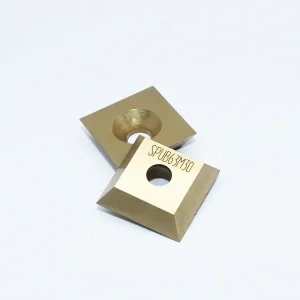
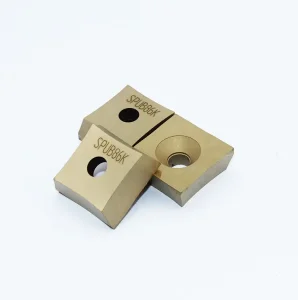
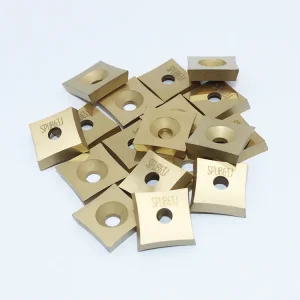
Steel mill tube scarfing systems, concrete scarifier blades, and cold heading dies operate under continuous vibration and aggressive abrasion. Zhongfu integrates solid carbide wear inserts, SPUB-series cutters, and carbide punch shafts that resist spalling even under severe continuous impact.
China Factory Ecosystem: Upstream Tungsten Control to High-Yield Finishing
How Jiangxi Zhongfu leverages localized mineral assets, in-house metallurgical synthesis, and advanced machining arrays to guarantee supply chain resilience and cost superiority.
Upstream Tungsten Mineral Dominance
Situated in Nanchang, Jiangxi—the epicenter of global tungsten reserves—our factory bypasses multi-tier commodity middlemen. We control virgin Ammonium Paratungstate (APT) conversion directly into sub-micron Tungsten Carbide (WC) powder, guaranteeing chemical purity and uninterrupted raw stock availability regardless of global macro disruptions.
Vertically Integrated Sinter-HIP Capacity
Unlike third-party machine shops that merely grind purchased bar stock, we operate vacuum Sinter-HIP (Hot Isostatic Pressing) furnaces at 100 bar pressure. This process consolidates structural blanks at 1450°C, eliminating microscopic voids and micro-porosity before precision grinding begins.
Agile Prototyping & Scale Efficiency
Our workshop houses over 60 high-speed CNC centerless through-feed grinders, internal/external cylindrical CNC units, and laser micrometer checking stations. We deliver customized prototypes in as little as 5 to 7 days, scaling up to containerized shipments of 500,000+ shafts per month with absolute batch-to-batch repeatability.
Technology Roadmap: Next-Generation Precision Shaft Manufacturing
Discover our ongoing technological transitions toward Industry 4.0 adaptive grinding, low-friction composite shafts, and green metallurgy.
AI In-Process Grinding Compensation
Integration of real-time laser diffraction sensors coupled to CNC regulating servo drives. Thermal expansion of the workpiece and wheel breakdown are dynamically compensated in sub-second cycles, maintaining a tight ±0.001 mm envelope across entire production runs.
Diamond-Like Carbon (DLC) & Nanocoatings
Moving beyond hexavalent chromium plating, our R&D engineers are qualifying plasma-enhanced chemical vapor deposition (PECVD) DLC layers. These deliver high hardness (> 2500 HV) with dry-running friction coefficients below 0.05, suitable for food-contact and medical applications.
Bi-Metal Friction-Welded Shafting
To reduce inertial weight while preserving extreme surface wear resistance, our roadmap incorporates inertia friction welding: pairing lightweight stainless or alloy tubular centers with solid tungsten carbide end journals for high-speed dynamic spindles.
Zero-Carbon Clean Sintering Cycles
Transitioning sintering furnace arrays to 100% renewable electric grid sources and incorporating closed-loop solvent recovery systems in spray drying towers, enabling carbon-neutral product lifecycle declarations (EPD) for European industrial customers.
Global Standards Compliance & Comprehensive Quality Metrology
How Zhongfu eliminates procurement risks for overseas engineering departments through stringent quality certifications, dimensional traceability, and bonded logistics.
Full 3.1 Material Traceability
Every shipment is accompanied by EN 10204 Type 3.1 inspection certificates. Chemical spectrometer breakdown, tensile stress-strain graphs, micro-hardness transverse profiles, and metallographic grain size ratings are recorded and archived for 10 years.
Non-Destructive Testing (NDT)
100% eddy current crack detection testing is performed inline on induction hardened shafts to identify subsurface quench cracks, inclusions, or seam defects before final grinding, guaranteeing zero in-service fatigue fractures under heavy dynamic cycling.
RoHS, REACH & Conflict Minerals
All finished products comply with EU Directive 2011/65/EU (RoHS) and Regulation (EC) No 1907/2006 (REACH). Nickel-bonded and cobalt-bonded raw powders originate exclusively from certified conflict-free smelters audited by the Responsible Minerals Initiative (RMI).
DDP Port Logistics & Protective Crating
Precision ground shafts require high-grade rust and impact protection. We utilize VCI (Vapor Corrosion Inhibitor) plastic wrapping, individual paperboard tubes, and custom reinforced wooden export crates to prevent bending and oxidation during intermodal ocean transit.
Frequently Asked Questions: Sourcing Precision Ground Steel Shafts
In-depth responses covering tolerances, surface finishes, machining capabilities, and ordering procedures from our Chief Metallurgical & Production Engineers.
What is the difference between precision ground steel shafts and standard cold-drawn bars?
Can Zhongfu machine custom features onto shafts according to customer 2D/3D drawings?
Why choose a nickel-bonded tungsten carbide shaft over a chrome-plated steel shaft?
What case depth should be specified for high-load linear motion shafts?
How does Zhongfu guarantee shaft straightness during international shipping?
Precision Ground Rods, Milling Blanks & Tube Scarfing Modules
Browse our precision-ground carbide round rods, indexable tube scarfing inserts, and high-wear components manufactured directly in our Nanchang production facility.
-
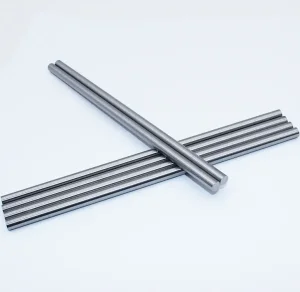 Ni Binder / Zero Magnetic China Nickel non magnetic cemented carbide rods with Nickel binder Manufacturer, Manufacturers
-
-
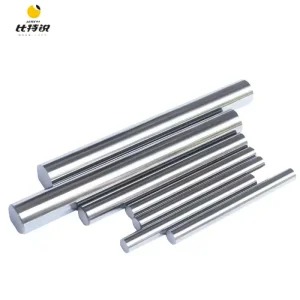
CNC Precision Inserts China Wholesale carbide insert cutting tools cnc Supplier, Factory
-
-
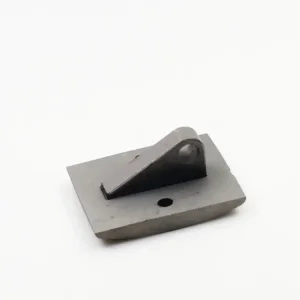 Anti-Erosion Wear Parts Buy Wholesale tungsten non-magnetic cemented carbide wear parts Supplier, Suppliers
-
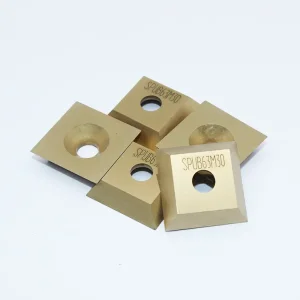
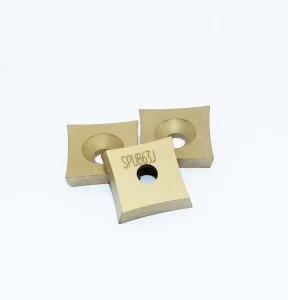 CVD OD Scarfing Insert China SPUB63J CVD coating tungsten carbide od scarfing insert Manufacturers, Suppliers
-
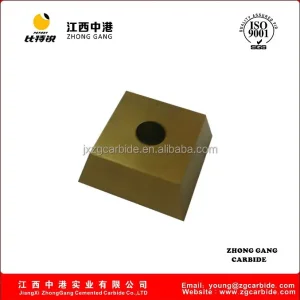 Heavy Rail Scarfing SQ Wholesale tungsten carbide scarfing insert SQ8615WCB Supplier, Factory
-