
Featured Tungsten Carbide Precision Components
Engineered for extreme wear resistance, micro-grain density, and demanding thermal environments. Direct factory manufacturing supporting custom tooling, scarfing, and fluid wear applications.
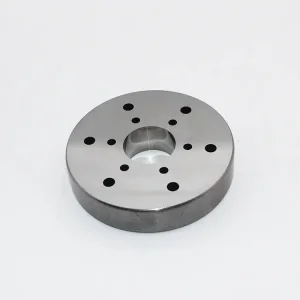
China Customized tungsten carbide fitting elbow tee cap reducer pipe flanges
Procure Specification
Custom tungsten carbide spiral bevel gear milling cutters for sale
Procure Specification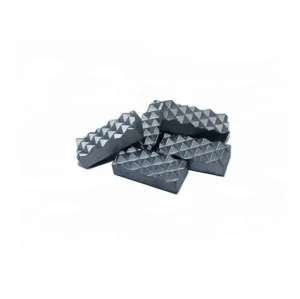
YG8 cemented carbide gripper inserts Manufacturers, Factory
Procure Specification
Tungsten cemented tools carbide coated blank inserts
Procure Specification
Customized tungsten carbide hardware parts water jet nozzle seat valve
Procure Specification
SPUB63M30 TiN coating scarfing insert carbide OD scarfing insert
Procure Specification
High precision carbide insert cutting tools CNC turning inserts
Procure Specification
SPUB63B heavy duty tungsten carbide tube scarfing insert box
Procure SpecificationHow Is Tungsten Made: The Complete Metallurgical Process Flow
Tungsten (W, atomic number 74) possesses the highest melting point of all refractory metals at 3,422 °C (6,192 °F) and lowest vapor pressure. Understanding how raw mineral scheelite and wolframite transform into precision cemented tungsten carbide (WC-Co) is vital for industrial procurement engineers seeking predictable wear performance.
Ore Extraction & Beneficiation
Mined wolframite ((Fe,Mn)WO₄) or scheelite (CaWO₄) undergoes froth flotation, magnetic separation, and gravity concentration to yield WO₃ concentrates exceeding 65% purity.
Chemical Digestion & APT Synthesis
Pressure digestion in sodium hydroxide or soda ash converts concentrates into sodium tungstate solution, followed by solvent extraction to crystallize Ammonium Paratungstate (APT).
Calcination & Hydrogen Reduction
APT is calcined into blue tungsten oxide (TBO) or yellow oxide (WO₃), then reduced in multi-tube pusher furnaces under pure dry hydrogen gas stream at 700°C–1000°C into submicron tungsten powder.
Solid-State Carburization
Pure metallic tungsten powder is intensely blended with high-purity carbon black and heated in graphite resistance vacuum furnaces at 1350°C–1600°C to create stoichiometric monocarbide (WC).
Attritor Wet Milling & Spray Drying
WC powder is homogenized with ductile metal binder (Cobalt or Nickel) and paraffin in ethanol slurries within attritor mills, followed by closed-circuit spray drying into spherical pressable granules.
Isostatic Pressing & Sinter-HIP
Green blanks pressed via CNC automatic presses or cold isostatic pressing (CIP) undergo Sinter-HIP (Overpressure Vacuum Liquid Phase Sintering) at 1450°C under 60-100 bar Argon to eliminate internal micro-pores.
Why Source Tungsten From Chinese Factories: The Jiangxi Supply Chain Advantage
Over 80% of the world's primary tungsten concentrates and ammonium paratungstate originate from China's geological belt in Jiangxi and Hunan provinces. Jiangxi Zhongfu Cemented Carbide Co., Ltd., based in Nanchang, leverages direct proximity to the world's largest tungsten reserves to supply virgin-powder sintered parts worldwide.
100% Virgin Powder Integrity
Unlike suppliers relying on chemically recovered secondary zinc-scrap powder with unpredictable residual trace elements, our Jiangxi facilities utilize virgin APT-reduced WC powders. This ensures uniform grain size distribution, superior transverse rupture strength (TRS > 3800 MPa), and zero cobalt pools.
Integrated Vertical Synthesis
From powder blending, paraffin doping, dry-bag CIP pressing, to 10 MPa overpressure sinter-HIP and optical profile diamond grinding, complete vertical integration minimizes intermediate transfer risks and enables traceability compliant with ISO 9001:2015.
Shorter Lead Times & Total Cost Edge
Proximity to the core chemical extraction centers guarantees steady material allocation without oceanic shipping delays for raw stock. Overseas buyers achieve 25% to 40% reduction in Total Cost of Ownership (TCO) compared to European or North American converted stock.
Tungsten Carbide Grade Engineering Matrix & Performance Bounds
Selecting the optimum WC-Co formulation requires balancing hardness (abrasive wear life) against fracture toughness (K1C impact capacity). Review the engineering datasheet below calibrated for industrial machinery and heavy cutting.
| Alloy Grade | Binder % (Co/Ni) | Grain Size (µm) | Density (g/cm³) | Hardness (HRA) | T.R.S. (MPa) | Target Industrial Application |
|---|---|---|---|---|---|---|
| YG6 / K10 | 6.0% Co | 1.2 – 1.6 | 14.85 – 15.00 | 90.5 – 91.5 | ≥ 2200 | Wire drawing dies, non-ferrous finish machining, precision wear bushings |
| YG6X / K05 | 6.0% Co | 0.6 – 0.8 (Submicron) | 14.80 – 14.95 | 92.0 – 93.0 | ≥ 2400 | Chilled cast iron turning, PCB micro drills, hard wood carving blades |
| YG8 / K20 | 8.0% Co | 1.4 – 2.0 | 14.60 – 14.80 | 89.0 – 90.0 | ≥ 2600 | Brazed rock bits, gripper inserts, steel pipe scarfing cutters, cold heading |
| YG15 / K40 | 15.0% Co | 2.0 – 3.5 (Coarse) | 13.90 – 14.15 | 86.5 – 87.5 | ≥ 3100 | Stamping dies, fastener punch tooling, heavy railway tamping tines |
| YG20 / G50 | 20.0% Co | 2.2 – 4.0 | 13.40 – 13.65 | 84.5 – 86.0 | ≥ 3400 | High-impact forging punches, cold extrusion dies, thick armor plating |
| YN8 (Ni-Bond) | 8.0% Ni | 1.2 – 1.8 | 14.50 – 14.75 | 88.5 – 89.5 | ≥ 2300 | Non-magnetic plug gauges, downhole MWD/LWD drilling, acidic corrosive valves |
Macro Solutions & Localized Application Scenarios
Cemented carbide components serve as the critical mechanical wear barrier across modern high-stress industries. Our manufacturing protocols support tailored geometry and custom metallurgies calibrated for targeted operating environments.
Heavy Steel Tubing & ERW Scarfing
High-speed longitudinal seam electric resistance welded (ERW) pipes demand extreme red-hardness. Zhongfu produces scarfing inserts (SPUB63, SPUB86, SNMX19) coated with PVD TiAlN/TiN to resist mechanical impact and thermal shock at 950°C pipe exit speeds.
Rail Infrastructure & Ballast Tamping
Railway tamping tines strike highly abrasive granite ballast under continuous hydraulic vibration. Our vacuum-brazed tungsten carbide plates provide extended wear protection, reducing maintenance downtime for high-speed rail track maintenance machines by over 400%.
Subsurface MWD Oil & Gas Exploration
Measurement-While-Drilling (MWD) pulse generators and directional drill bits operate under corrosive drilling muds and magnetic sensors. Zhongfu's non-magnetic nickel-alloyed carbide retains magnetic permeability µ < 1.05 while resisting sand erosion at 200 m/s flow rates.
Global Enterprise Sourcing Standards: Verifying Factory E-E-A-T
When procuring custom tungsten components from China, international sourcing directors must mandate specific metallographic and dimensional validation procedures to avoid premature fracture in production.
Microstructure & Porosity (ISO 4505)
Insist on metallographic inspection certificates verifying porosity within A02-B02 limits without uncombined carbon (free graphite) or brittle eta-phase (W₃Co₃C or W₆Co₆C) which severely impairs impact fatigue resistance.
Tolerance Precision (h6 / ISO Grade IT5)
Ensure the plant maintains centerless grinding and mirror wire-EDM facilities capable of maintaining h6 diameter tolerances (e.g. +0.000/-0.008 mm on solid carbide rods) with surface finishes under Ra 0.2 µm.
Batch Coercivity & Magnetic Saturation
Quality suppliers measure coercivity (Hc in kA/m) and magnetic saturation (4πσ) to verify exact carbon balance, ensuring binder integrity is uniform from lot to lot without variation between production cycles.
Heavy Machining & Specialized Carbide Products
Engineered for extreme rock drilling, tube conditioning, gauge standards, and rotary milling. Direct factory supplies with standard or tailor-made geometries.
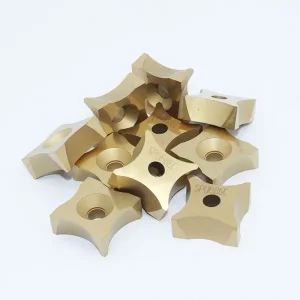
SPUB86C P40 tungsten carbide tube scarfing insert for heavy machining
Procure Specification
Tungsten carbide tamping tines for railway construction equipment
Procure Specification
Non-magnetic Solid Cemented Carbide Pin Plug Gauges Rod
Procure Specification
SPUB-63C cemented mining tungsten tools carbide drill insert
Procure Specification
Tungsten Carbide Round Rod H6 Ground Ø1-40mm Solid Carbide Blanks
Procure Specification
SPUB-63 series machine cutter carbide CNC cutting tools turning
Procure Specification
Tungsten carbide tube scarfing inserts SQ8615WCB
Procure Specification
SPUB-63 Steel Pipe Scarfing Tools Tube Scarfing Inserts
Procure SpecificationEngineering & Factory Procurement Q&A
Direct technical clarifications from Jiangxi Zhongfu Cemented Carbide engineers regarding chemistry, HIP processing, tolerances, and supply chain logistics.
What is the metallurgical difference between vacuum sintering and Sinter-HIP?
Why is Nickel used instead of Cobalt in non-magnetic carbide components?
Can Zhongfu fabricate complex geometries and pre-forms directly from customer CAD drawings?
What quality certifications and batch test reports accompany export shipments?
What is the standard production cycle and air/ocean dispatch timeframe from Nanchang?
Request Technical Datasheets, Grade Formulation & OEM Factory Pricing
Connect directly with Jiangxi Zhongfu Cemented Carbide metallurgists. Send your CAD drawings or target wear parameters; our engineering desk provides grade recommendations and complete quotation within 8 hours.