
High-Density Tungsten Carbide Solutions: Primary Catalog
Explore standard and precision-ground carbide parts sintered via low-porosity HIP thermal processing for ultimate structural resilience.
How Dense Is Tungsten? Engineering Fundamentals & Specific Gravity Analysis
A rigorous examination of elemental tungsten (W) vs. cemented tungsten carbide (WC-Co/Ni) matrices for global industrial buyers.
Pure Elemental Density: 19.25 g/cm³
Pure metallic tungsten possesses one of the highest densities among stable chemical elements, matching gold at approximately 19.25–19.3 g/cm³. Its high mass density derives from the compact body-centered cubic (BCC) crystalline lattice and an extraordinary atomic weight of 183.84 u. When global supply chains inquire how dense tungsten is, distinguishing pure refractory metal from engineered cemented carbides is critical for accurate material specification.
Cemented Carbide Density: 13.4 – 15.2 g/cm³
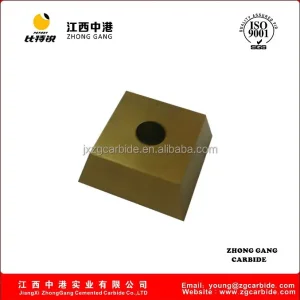
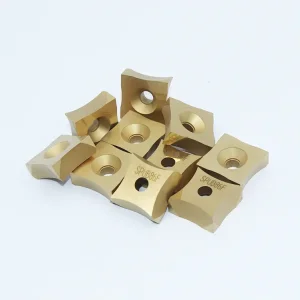
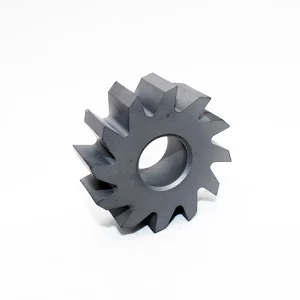
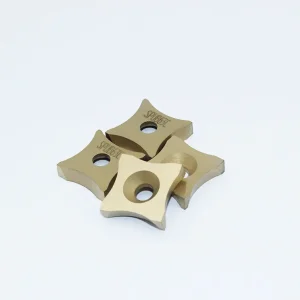
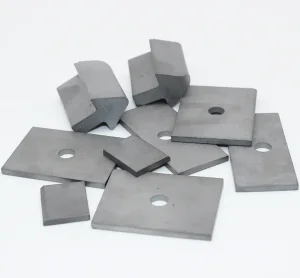
Industrial components (such as scarfing blades, peeling inserts, and blank plates) are manufactured from Tungsten Carbide (WC) combined with metallic binder phases like Cobalt (Co) or Nickel (Ni). Because Cobalt holds a density of 8.90 g/cm³, shifting binder concentrations systematically influences bulk density. For example, high-hardness YG6 grades exhibit 14.8–15.0 g/cm³, whereas impact-resistant YG20 grades demonstrate 13.4–13.6 g/cm³.
HIP Sintering & Porosity Elimination
Theoretical density cannot translate to field performance if micro-voids and trace porosities persist. At Jiangxi Zhongfu Cemented Carbide Co., Ltd., sintering is conducted in overpressure Hot Isostatic Pressing (Sinter-HIP) furnaces reaching 100 bar. This thermal cycle forces molten binder metal into microscopic boundary voids, achieving 99.98% of theoretical density, ensuring high transverse rupture strength and resistance against fracture.
| Carbide Grade / Alloy | Composition Ratio | Density (g/cm³) | Hardness (HRA) | TRS (MPa) | Primary Industrial Use-Case |
|---|---|---|---|---|---|
| Pure Tungsten (Refractory) | 99.95% W | 19.25 – 19.30 | ≈ 70 HRC | ≈ 1,200 | Radiation shielding, balancing weights, aerospace ballast |
| YG6 (ISO K10–K20) | 94% WC, 6% Co | 14.80 – 15.00 | 90.5 | 2,100 | Chilled cast iron cutting, non-ferrous machining, wear plates |
| YG8 (ISO K20–K30) | 92% WC, 8% Co | 14.60 – 14.80 | 89.5 | 2,400 | Tube scarfing inserts, bar peeling tools, well-drilling tips |
| YG15 (ISO K40) | 85% WC, 15% Co | 13.90 – 14.10 | 87.0 | 2,800 | Stamping dies, cold heading punches, structural impact wear |
| YG20 (Impact Hardmetal) | 80% WC, 20% Co | 13.40 – 13.60 | 85.5 | 3,100 | Heavy-duty cold extrusion dies, forging tools, thick EDM blocks |
| Nickel-Bonded (Non-Magnetic) | WC + Ni/Cr/Mo Binder | 14.50 – 14.90 | 88.0 – 90.0 | 2,200 | MWD/LWD oil tools, magnetic component pressing, corrosive seals |
Why Procure High-Density Tungsten Directly From Chinese Factories?
Leveraging geographic mineral concentration, vertical powder synthesis, and automated metallurgical infrastructure in Jiangxi, China.
Direct Source: Jiangxi Ore Reserves
Jiangxi Province represents the epicenter of global tungsten reserves (wolframite and scheelite). By locating our modern 5,000+ m² production facility in Nanchang, Jiangxi Zhongfu eliminates layered mineral trading costs, provides authenticated virgin ammonium paratungstate (APT) feedstock, and ensures guaranteed raw material provenance free from low-purity recycled scrap.
Vertical Granulation & Ball Milling
Consistency in high-density components hinges on uniform powder particle distribution. Our internal ball-milling facilities, utilizing automated spray drying towers, produce spherical WC grains with uniform cobalt coating. This strict powder rheology prevents binder pooling during sintering, securing structural density variances below ±0.03 g/cm³ across production lots.
Advanced Sinter-HIP & h6 Precision Finishing
Operating beyond rudimentary vacuum ovens, our shop floor integrates high-pressure sintering equipment capable of handling large-format plates and complex scarfing geometries. Subsequent multi-axis CNC surface grinding, centerless profile grinding, and optical edge preparation deliver h6 dimensional tolerances on solid carbide round rods and mirror finishes (Ra ≤ 0.2 µm).
Cross-Sector Industrial Solutions Powered by Dense Hardmetals
Deploying tailored tungsten carbide grades across demanding operational environments around the globe.
Steel Mills: Tube Scarfing & Bar Peeling
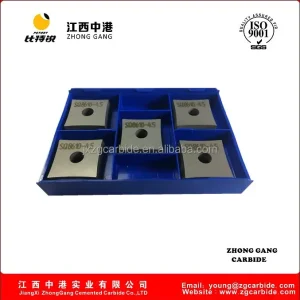
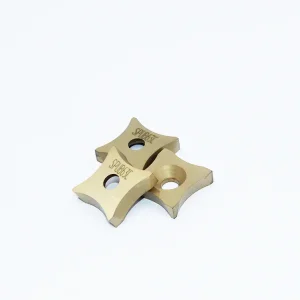
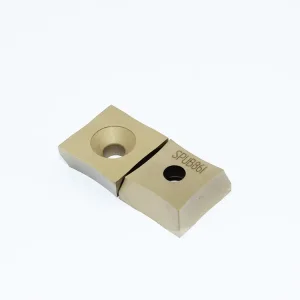
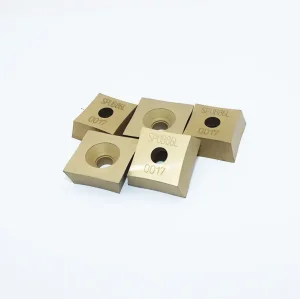
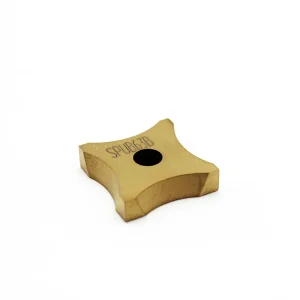
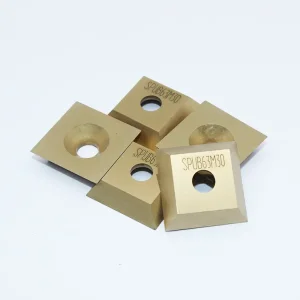
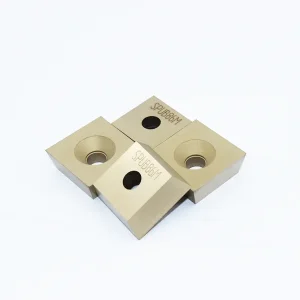
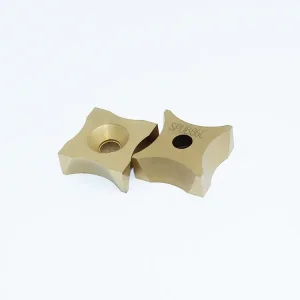
In high-frequency welded (ERW) steel tube production, continuous thermal loads demand cutting materials that retain compressive strength above 800°C. Our SPUB63, SPUB86, and SDUW scarfing inserts remove interior and exterior weld beads smoothly, eliminating micro-cracking and extending tool edge service lifespan under intensive metallurgical throughput.
Energy Drilling & Downhole Oilfield Tools
Subterranean exploration demands dense tungsten matrix elements capable of withstanding severe gouging, sand erosion, and high hydraulic pressures. For measurement-while-drilling (MWD) assemblies, Zhongfu manufactures nickel-bonded non-magnetic parts that protect sensitive navigational gyroscopes while providing the hardness of conventional tungsten.
Precision Die, Stamping & Forming Tools
Cold-heading dies and punching inserts experience cyclic mechanical shocks exceeding thousands of cycles per minute. Our dense YG15 and YG20 custom plates, ground EDM blanks, and forming bushings resist micro-chipping, lowering maintenance-induced machine stoppages across automotive connector and fastener production plants.
01 / Formulation
Formulating pure WC powders with cobalt/nickel binders using wet ball-milling to achieve target grain size.
02 / Isostatic Pressing
Precision hydraulic compaction into near-net geometries with balanced green density.
03 / Sinter-HIP
Thermal pressure treatment at 1,450°C and 100 bar, sealing porosity to near-theoretical density limits.
04 / Precision Metrology
CNC diamond wheel grinding, h6 tolerance control, and metallographic structural inspection.
Macro Trends Reshaping Tungsten Carbide Sourcing
How supply chain resilience, micro-grain metallurgy, and direct factory partnerships drive competitive enterprise margins.
Shift to Ultrafine & Nano-Grain WC
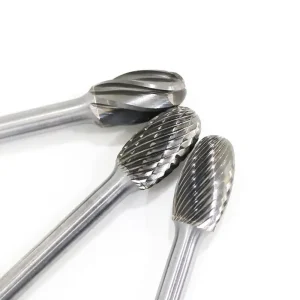
Modern CNC machining centers operating at elevated spindle speeds demand high edge retention. The industry is moving from standard 1.5–2.5 µm grain structures to sub-micron (0.4–0.8 µm) and nano-grain (0.2–0.4 µm) profiles. Zhongfu’s nano-grain solid carbide rods provide the ideal substrate for PVD/CVD diamond-like coatings, extending drill and end-mill longevity in hardened steel and titanium aerospace processing.
Tier-1 Direct OEM Collaboration
International industrial procurement teams in North America, Europe, and Australasia are bypassing trading intermediaries in favor of direct technical cooperation with ISO-compliant manufacturing plants. Access to factory-level metallurgists allows for rapid formula adjustment, shortening design iterations from months to days while reducing total component cost of ownership.
Responsible Sourcing & Traceability
Global regulatory frameworks necessitate documented material traceability. By operating an integrated supply chain that directly refines ore and processes tungsten powders, Jiangxi Zhongfu guarantees clear origin certifications, consistent chemical composition, and conflict-free mineral declarations across all export shipments.
High-Density Tungsten Carbide Solutions: Secondary Catalog
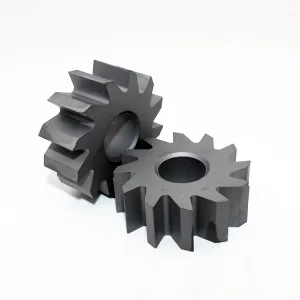
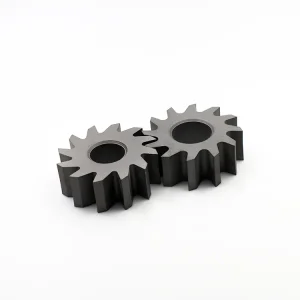
Explore specialized cutting blades, railway tamping teeth, custom precision pinions, and high-performance tube scarfing inserts.
Frequently Asked Questions: High-Density Tungsten Sourcing
Detailed engineering explanations answering key procurement, manufacturing, and grade selection questions.