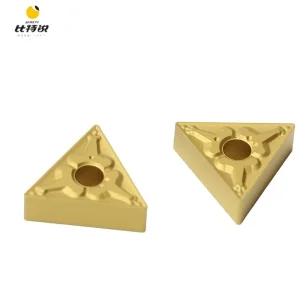
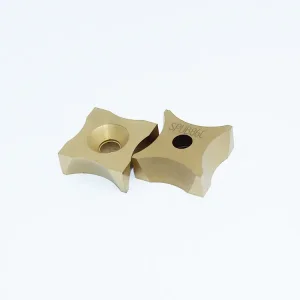
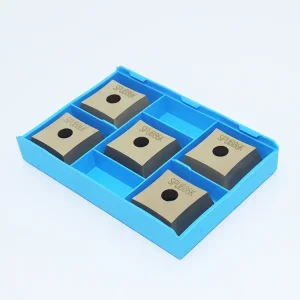
Precision Gear Tooling & Sintered Blanks (Top Tier)
Engineered for high-torque gear cutting, spline profiling, and severe mechanical wear resistance.



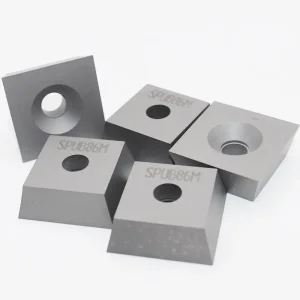
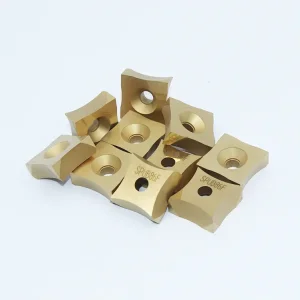


Global State of Gear Cutting & Machining Services
The transmission market is transforming under high-speed electric drive requirements, demanding AGMA Class 12-14 tolerances.
High-Precision Cinematics
Modern gearboxes operate beyond 15,000 RPM in EV and aerospace setups. This requires continuous generating grinding, skiving, and gear honing to eliminate micro-chatter, pitch deviation, and torsional vibration.
Wear & Fatigue Resilient Materials
Standard carbon steels are widely substituted by 18CrNiMo7-6, 20MnCr5, and specialized cemented carbides. These materials withstand severe surface contact stresses, preventing pitting, spalling, and sub-surface shearing.
Digital Metrology Integration
In-process Gleason and Klingelnberg tooth profile analyzers inspect involute profiles in real time. Closed-loop CNC grinding machines receive immediate coordinate feedback, adjusting wheel geometry before deviations arise.
Chinese Factory Manufacturing: Scale, Speed & Metallurgy
Combining complete domestic tungsten supply chains with ultra-fast CNC setup turnarounds.
Vertical Powder Control
With direct access to primary tungsten extraction in Jiangxi, virgin ammonium paratungstate (APT) is processed on site. This prevents carbide batch contamination and guarantees predictable grain size distribution.
Rapid Prototype to Production
Multi-axis mill-turn centers and universal 6-axis gear hobbers reduce turnaround for initial pilot runs from the industry-average 8-12 weeks down to 10-15 business days.
Cost Advantage via Sinter-HIP
Overpressure sintering furnaces eliminate residual internal micro-pores down to A02-B02 standards, decreasing insert chipping incidents while keeping unit production costs 30-40% below Western European competitors.
Strict Quality Gateways
Every gear-cutting blank undergoes coercive force (Hc) testing, magnetic saturation (4πσ) verification, and Ra surface finish certification before entering packaging and international logistics.
Application Scenarios & Engineering Field Performance
Where high-performance gear cutting, broaching, and hard machining maintain zero-failure thresholds.
Automotive & Electric Transaxles
High-reduction planetary gearsets and differential bevel gears require ultra-quiet operation (low NVH). Sintered carbide hobbing tools deliver tooth leads without scalloping marks, ensuring minimal gear mesh whine.
Aerospace Turboprop & Actuation Gears
Used for flight control flaps, fuel pump drives, and reduction gearboxes requiring custom tooth geometries. Micro-grain carbide form tools preserve sharp cutting edges during deep profile broaching of titanium alloys.
Heavy Mining & Railway Drives
Railway tamping gear systems, coal haulage wheelsets, and industrial mill gear drives endure high shock loads. Extra-tough YG15 and YG20 grades prevent flank spalling under intense cyclical impacts.
Global Industry Evolution & Emerging Technologies
The gear manufacturing industry is transitioning from wet milling and thermal grinding toward complete dry power skiving and AI-monitored tooling wear paths.
High-Velocity Power Skiving
Replacing traditional shaping and broaching for internal ring gears. Skiving runs at surface speeds up to 250 m/min, requiring high hot-hardness properties found in AlCrN and AlTiN PVD-coated cemented carbide inserts.
Green / Dry Gear Machining
Environmental standards are driving factories toward Minimum Quantity Lubrication (MQL) and dry hobbing. This process relies on ultra-dense, cobalt-optimized submicron carbide substrates capable of handling chip interface temperatures up to 1,000°C.
Predictive Tool Wear Algorithms
Smart cutting systems use spindle torque feedback and acoustic emission sensors to detect minor carbide edge chipping. Worn teeth are identified before micro-cracking impacts the finished gear tooth flank geometry.
B2B Procurement Blueprint: Strategic Selection Criteria
Key technical checkpoints for sourcing gear-cutting tooling, custom inserts, and subcontracted machining.
Substrate Grade Match
Confirm binder ratios: 6% cobalt yields high hardness (91.5 HRA) for smooth finishing, while 10-15% cobalt balances edge toughness for intermittent, interrupted splining cuts.
Edge Preparation (K-Factor)
A controlled cutting edge radius (waterfall or trumpet hone from 15 to 40 µm) prevents premature micro-chipping without raising cutting forces to vibration-inducing levels.
Batch Porosity Verification
Confirm the supplier utilizes Sinter-HIP processing. Inspect microstructure micrographs to verify that porosity remains strictly below ISO 4505 standards.
Full Inspection Traceability
Require detailed Material Test Reports (MTR) covering density, Rockwell A hardness, coercive force, and transverse rupture strength (TRS) across all production heats.
Technical Q&A: In-Depth Engineering Insights
Direct technical answers addressing gear tolerances, material wear behaviors, and custom tool profiles.
Why use cemented carbide over high-speed steel (HSS) for gear tooling?
While PM-HSS offers baseline toughness, cemented tungsten carbide maintains its cutting edge at temperatures up to 900-1000°C. This allows 3 to 5 times faster cutting speeds, extended tool life between sharpenings, and higher accuracy across large manufacturing runs.
How does Sinter-HIP processing benefit gear cutter reliability?
Sinter-HIP applies inert gas pressures up to 10 MPa at sintering temperatures, closing internal micro-voids. This increases transverse rupture strength (TRS) by 20-30%, preventing tooth breakage during heavy intermittent cutting passes.
Can you produce custom profile inserts from customer drawings?
Yes. Custom gear-cutting inserts, involute grooving tips, and scarfing profiles are manufactured to drawing specifications. Production includes optical profile grinding, wire-EDM processing, and laser edge-honing to maintain sub-micron dimensional tolerances.
What coatings are recommended for machining hardened gear steels?
For steels hardened above 50 HRC, we recommend nano-composite AlTiN or AlCrN coatings applied via Physical Vapor Deposition (PVD). These coatings form an aluminum oxide barrier during dry cutting, protecting the carbide edge from oxidation.
How do you prevent tool chipping during internal spline broaching?
Chipping is prevented by combining a medium-grain 10-12% cobalt substrate (such as YG11 or YG15) with an engineered hone on the cutting edge (20-35 µm). This geometry redirects shear stresses back into the carbide core.
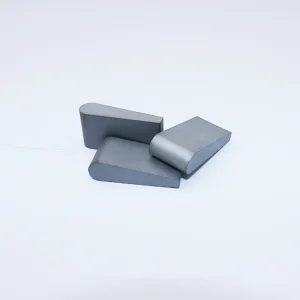
Precision Wear Parts, Inserts & Blanks (Extended Selection)
Engineered to handle severe abrasion, mechanical stress, and tight-tolerance requirements.