
Precision Carbide Blanks, Tooling Inserts & Milling Components
Explore high-performance tungsten carbide sub-assemblies, tool blanks, and milling accessories manufactured under ISO 9001:2015 and Sinter-HIP quality standards.
-

China Wholesale customized high precision hard alloy tungsten carbide cutting tool wear parts Suppliers, Factory
Configure & Inquire -

China YG8 Standard tungsten carbide torque gripper inserts for chuck jaws Factory, Factories
Configure & Inquire -

China Carbide Cutting Rods for Tungsten Alloy Cutting Tool Components Suppliers, Factories
Configure & Inquire -

Buy Cemented tungsten carbide gripper inserts/tips for mining and diamond drilling Factory, Factories
Configure & Inquire -

Wholesale Cemented carbide metal insert_cutting_tool SPUB86B/86C/86D/86E/86F/86G/86H/86K/86M Manufacturers, Factory
Configure & Inquire -
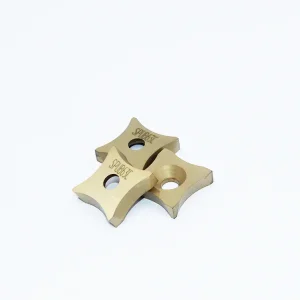
Wholesale Best price SPUB-63C tungsten scrap brake lathe carbide cutting inserts tools Supplier, Suppliers
Configure & Inquire -

Wholesale Factory sale customized carbide milling jar tungsten carbide bowl/ jar/mortar Manufacturer, Factory
Configure & Inquire -

China Wholesale custom tungsten carbide module gear milling shaper cutters Manufacturers, Suppliers
Configure & Inquire
The Global Commercial & Industrial Landscape of Flat End Mills
Strategic analysis of procurement volumes, market drivers, and advanced solid carbide milling technologies across high-precision CNC manufacturing sectors.
The modern manufacturing economy relies heavily on subtractive machining, where the flat end mill cutter (often designated as a square end mill or 90-degree cylindrical milling tool) occupies the position of primary workhorse. From high-feed plunge roughing of aerospace forgings to mirror-finish side wall profiling in medical micro-implants, square end mills establish datum surfaces, precise square shoulders, deep slots, and high-tolerance pockets. The worldwide market for solid carbide and indexable flat milling cutters exceeded USD 10.4 billion in recent evaluations, propelled by aggressive re-shoring initiatives, the mass expansion of commercial space programs, automotive electric powertrain transitions, and microscopic tolerance demands in multi-axis 5-axis simultaneous machining centers.
Industrial procurement directors and machine shop operational managers no longer seek merely a "cutting tool supplier." Today’s operational realities demand formulation-driven manufacturing partners who maintain complete metallurgical oversight—from ammonium paratungstate (APT) reduction and tungsten carbide powder grading, through automated vacuum pressure Sinter-HIP furnaces, to state-of-the-art 6-axis Walter and Rollomatic CNC tool grinding systems. When purchasing flat end mill cutters at wholesale or enterprise scale, verifying that your manufacturer controls substrate homogeneity, micro-flute geometry, unequal helix angle spacing, and cathodic arc physical vapor deposition (PVD) coating integrity is imperative to eliminating unpredicted tool failure and reducing cycle times.
Substrate Metallurgy: Micro-Grain vs. Nano-Grain Tungsten Carbide Matrices
A flat end mill cutter's structural performance is established long before flute grinding commences. Cemented tungsten carbide (WC-Co) is an engineered metal matrix composite where microscopic tungsten carbide ceramic particles provide extreme hot hardness, while a ductile metallic cobalt (or nickel) binder matrix absorbs mechanical deflection, shock loads, and high-frequency cyclical vibrations. Leading carbide tool manufacturers divide substrate categories based on average tungsten carbide grain diameter:
Medium/Coarse Grain (1.0 – 2.5 μm)
Characterized by cobalt content between 10% and 15%. Exhibits superior fracture toughness and thermal impact resistance. Primarily utilized in heavy-duty roughing end mills, rough mining inserts, and interrupted cut tooling where structural shock resistance overrides razor-edge retention.
Sub-Micron Grain (0.5 – 0.8 μm)
The industry benchmark for standard solid carbide flat end mills. Balances 8% to 12% cobalt distribution with high transverse rupture strength (TRS ≥ 3,800 MPa). Delivers optimal versatility across ISO P (steels), ISO M (stainless), and ISO K (cast iron) milling applications.
Ultra-Fine & Nano-Grain (< 0.4 μm)
Engineered for extreme hardness (HRA 92.5 – 94.0) and ultra-sharp cutting edge hone diameters (< 3 μm). Essential for hard milling (HRC 55–68), titanium aerospace framing, optical mold cores, and medical implants requiring mirror Ra surface finishes.
During the Sinter-HIP process, the pre-pressed green body is subjected to temperatures exceeding 1,400°C alongside isostatic argon gas pressures reaching 100 bar. This collapses internal microporosity to less than A02-B00 grade under ISO 4505 standards. High-integrity carbide rod blanks ensure that when 4-axis or 5-axis grinding wheels cut the primary relief angles and flute gashes, the cutting edge does not suffer micro-chipping or early delamination under severe side-load deflections.
Engineering Grade Selection Matrix for Flat End Mills
Cross-reference material hardness, cobalt binder volume, cutting speeds, and target workpieces before issuing requests for quotation (RFQs).
| ISO Material Group | WC Grain Class | Cobalt (Co %) | Hardness (HRA / HV) | Recommended Coating | Typical Application Range |
|---|---|---|---|---|---|
| ISO P (Carbon / Alloy Steel) | Sub-Micron (0.6 μm) | 10.0% | 91.8 HRA / 1600 HV | AlTiN / TiAlN PVD | General square shoulder milling, 4140, 4340, tool steels up to 45 HRC |
| ISO M (Stainless Steels) | Ultra-Fine (0.4 μm) | 12.0% | 92.2 HRA / 1680 HV | AlCrN / TiAlSiN | Austenitic 304/316, duplex 2205, suppressing built-up edge (BUE) |
| ISO K (Cast Iron / Ductile) | Sub-Micron (0.8 μm) | 6.0% – 8.0% | 92.8 HRA / 1750 HV | Multi-layer TiCN / Al2O3 | High abrasion resistance, grey cast iron, engine blocks, brake rotors |
| ISO S (Ti & Superalloys) | Nano-Grain (0.3 μm) | 10.0% + TaC/NbC | 93.0 HRA / 1800 HV | Silicon-doped nACo / CrAlN | Inconel 718, Ti-6Al-4V, aerospace structural blisks, extreme thermal resistance |
| ISO H (Hardened Steels 55-68 HRC) | Ultra-Fine (< 0.3 μm) | 8.0% | 93.8 HRA / 1950 HV | Nano-Composite AlTiSiN | Die & mold finishing, D2, H13, continuous high-speed hard milling |
| ISO N (Non-Ferrous / Aluminum) | Sub-Micron (0.8 μm) | 9.0% (Zero Iron Affinity) | 92.0 HRA / 1620 HV | Uncoated Mirror / DLC / CVD Diamond | 6061-T6, 7075 aero billets, mirror polished flutes, zero chips welding |
*Note: All values reflect standard Sinter-HIP quality parameters. Physical characteristics can be customized through specific grain inhibitors (VC, Cr3C2) tailored to high-speed dynamic trochoidal toolpaths.
Geometric Architecture & Thin-Film Coating Chemistries
A high-performance solid flat end mill is an acoustic and mechanical system. In conventional tool geometry, equidistant flutes entering a workpiece generate harmonic resonance peaks that trigger chatter marks, premature edge fracture, and ruined spindle bearings. State-of-the-art flat end mills engineered by qualified manufacturers integrate sophisticated geometric design parameters:
Variable Helix & Unequal Flute Pitch
Flutes ground with alternating helix angles (e.g., 35°/38° or 38°/41°) continuously alter the chip impact frequency. This phase shift disrupts mechanical chatter, allowing up to a 40% increase in axial depth of cut (ap) and exceptional surface finishes.
Micro-Honed Controlled Edge Preparation (K-Factor)
Razor-sharp raw ground edges fracture instantly when engaging high-tensile alloys. Controlled micro-blasting or drag finishing creates a calibrated edge hone (typically 5–15 μm) with asymmetric waterfall geometry, dramatically strengthening the wedge angle.
Nano-Structured Monolayer & Gradient PVD Coatings
Thermal stability at the shear zone often tops 1,000°C. Modern AlTiN, AlCrN, and silicon-doped TiAlSiN coatings form dense, self-healing aluminum oxide (Al2O3) passive surface barriers that prevent chemical diffusion wear and thermal shock cracking.
Coating Performance Spectrum: PVD vs. CVD Diamond
While physical vapor deposition (PVD) maintains sharp tool edges due to its low application temperature (< 500°C) without decarburizing the carbide core, composite carbon machining demands diamond solutions. In carbon fiber reinforced polymers (CFRP), graphite electrodes, and high-silicon hypereutectic aluminum alloys (A390), diamond-like carbon (DLC) or 100% genuine CVD crystalline diamond coatings (thickness 6–15 μm) provide abrasive resistance up to 10,000 Vickers hardness, extending tool life by 800% to 1,500% over bare carbide.
Localized Industrial Use Scenarios for Flat End Mills
Specific operational paradigms and machining strategies across modern industrial production ecosystems.
Aerospace Monolithic Spars & Bulkheads
Machining massive monolithic 7075-T651 aluminum plates into lightweight structural airframes requires high-velocity material removal rates (MRR > 3,500 cm³/min). 3-flute flat end mills with polished flutes and balanced chip pockets eliminate chip packing and spindle stalling at 24,000 RPM.
High-Hardness Automotive Die & Mold
Stamping dies fabricated from hardened pre-sintered steels (H13, Nak80, Cr12MoV) at 52 to 62 HRC require square end mills capable of direct dry contouring. Micro-grain flat end mills with corner chamfer protections mitigate catastrophic corner breakages during deep-pocket shoulder milling.
Medical Implants & Bio-Compatible Parts
Machining titanium Ti-6Al-4V ELI bone plates, bone screws, and cobalt-chromium knee joints demands burr-free square corner generation. Rigid, ultra-sharp 4-flute flat cutters maintain sharp profiles without work-hardening the surgical substrate or causing micro-burr tearing.
Semiconductor & 3C Electronic Chassis
Ultra-thin smartphone internal frames, tablet enclosures, and wafer-handling chucks in copper or magnesium require high-speed micromilling flat end mills (∅0.2mm to ∅3.0mm) operating with total radial indicator runout (TIR) guaranteed under 0.002 mm.
Macro Industry Solutions: High-Efficiency Milling (HEM) & Dynamic Strategies
Modern machine shops are actively transitioning from legacy slotting techniques toward High-Efficiency Milling (HEM), commonly referred to as trochoidal or dynamic milling. Traditional full-slotting methods subject a flat end mill to high radial engagement angles (180° arc of contact), generating immense thermal spikes, concentrated cutter deflection, and immediate tool breakage if chip evacuation is restricted.
Trochoidal toolpaths leverage a minimal radial depth of cut (ae = 5% to 15% of cutter diameter) paired with full axial depth utilization (ap = 200% to 400% of cutter diameter). This approach provides several mathematical and physical advantages:
Radial Chip Thinning Effect
Operating below a 50% radial immersion angle causes the instantaneous chip thickness to drop below the programmed feed per tooth (fz). Programmers can safely increase table feed rates by 200% to 500% to maintain target chip load without overloading the cutting edge.
Expanded Thermal Dissipation Cycles
With an engagement arc often less than 30 degrees, each cutting tooth spends over 80% of its rotational cycle in free air or high-pressure coolant, drastically reducing thermal fatigue and micro-fractures in the tungsten-cobalt boundary layers.
Full Flute Length Utilization
Rather than wearing out only the bottom 2mm of the end mill, HEM spreads abrasive mechanical wear evenly across the entire flute length, yielding up to a 300% extension in overall cutter lifespan while maintaining square perpendicular walls.
Technology Roadmap (2026–2035): The Future of Flat End Milling
Emerging scientific breakthroughs reshaping solid carbide cutting tools, tool telemetry, and sustainable material closed-loops.
Sensorized & Smart Flat Cutters
Integration of thin-film piezoresistive micro-sensors directly within the tool shank or holder interface. Relays real-time micro-deflection, localized cutting temperature, and vibration telemetry to the CNC controller via 5G-enabled edge computing networks to prevent tool fracture before it occurs.
Supercritical Cryogenic Machining
Internal through-coolant channels optimized via metal 3D printing to deliver supercritical CO2 (scCO2) or liquid nitrogen (LN2) directly onto the tool-chip interface at -196°C. Eliminates oil-based emulsion misting, extends tool life in Inconel by 4x, and enables green manufacturing.
High-Entropy Alloy (HEA) Binders
Gradual replacement of traditional pure cobalt binders with multi-component High-Entropy Alloys (e.g., FeCoNiCrAl). Delivers elevated resistance to binder phase leaching during high-temperature titanium cutting, preventing catastrophic plastic deformation at cutter tips.
Closed-Loop Tungsten Circularity
Industrial carbide manufacturers are implementing 100% zinc-recovery recycling protocols for spent scrap flat end mills. Chemical extraction converts used solid tools back into virgin-grade nano APT powder with a 75% reduction in carbon footprint compared to raw mine-extracted wolframite.
Procurement Engineering: Supplier Verification & Quality Audit Protocols
When procuring flat end mill cutters directly from Chinese manufacturing facilities and tier-one OEM factories, procurement teams must look past basic website catalogs. Establishing a robust metallurgical and geometrical audit framework guarantees that bulk shipments perform with the identical precision of initial prototype samples. Use this engineering checklist when vetting potential solid carbide milling tool suppliers:
| Inspection Dimension | Critical Quality Indicator | Standard Acceptance Threshold | Verification Instrumentation |
|---|---|---|---|
| Shank Tolerance | Outer diameter consistency & roundness | ISO h6 (e.g., +0.000 / -0.008 mm for ∅6.0mm) | Laser micrometer / Mitutoyo air gauge |
| Total Runout (TIR) | Radial flute concentricity relative to shank axis | ≤ 0.003 mm at cutting head tip | Zoller Genius tool presetter |
| Substrate Porosity | Absence of internal micro-voids and carbon soot | ISO 4505 Grade A00, B00, C00 (zero pores > 1μm) | Metallographic scanning electron microscope (SEM) |
| Coating Adhesion | Interfacial shear strength between PVD film & WC substrate | Scratch test critical load Lc ≥ 80 N (HF1-HF2) | Automated diamond scratch tester |
| Edge Hone Quality | Micro-chipping along the primary cutting lip | Maximum notch depth < 0.002 mm along entire flute | Alicona 3D optical surface metrology |
Direct manufacturers with true formulation-level engineering capabilities can tailor their chemical mixtures to exact shop floor conditions. For instance, increasing tantalum carbide (TaC) additions prevents crater wear during high-speed steel roughing, while transitioning to non-magnetic nickel-based binders eliminates ferromagnetic interference in oilfield MWD/LWD drilling components and semiconductor fabrication chambers.
Engineering Questions: Flat End Mill Sourcing & Machining Optimization
Detailed technical responses straight from our application tooling engineers and metallurgical specialists.
What is the functional difference between 2, 3, 4, and multi-flute flat end mills?
Flute count directly controls chip pocket capacity and tool core rigidity. 2-flute cutters feature expansive chip gullets required for plunging and heavy-feed pocketing in gummy materials like soft aluminum alloys and thermoplastics. 3-flute tools provide the ideal harmony for aluminum high-speed milling, offering stiffness with sufficient chip space. 4-flute cutters are the industry standard for steel and stainless square shoulder milling. 6-flute and 7-flute mills are reserved for high-efficiency trochoidal passes and fine peripheral finishing in high-temp superalloys where radial chip loads are minimal.
Why is a small corner chamfer or corner radius often added to a flat end mill?
The theoretical 90-degree corner tip of a pure square end mill represents the mechanically weakest geometry on the tool. Under high cutting forces, this razor-sharp micro-point experiences localized stress concentrations that cause premature micro-chipping. By adding a minuscule protection chamfer (e.g., 0.1 mm × 45°) or a micro-corner radius (0.2 mm R), the cutting load is distributed along a smooth arc, boosting edge retention by over 200% while still maintaining a sharp 90-degree step on the finished workpiece.
How does radial depth of cut (ae) affect tool deflection in long-reach flat end mills?
Tool deflection follows cantilever beam physics, scaling proportionally with cutting force and the cube of unsupported overhang length ($L^3$), while inversely proportional to the fourth power of the core diameter ($d^4$). In long-reach operations, tool deflection creates taper errors on perpendicular vertical walls. By dropping radial engagement (ae) below 10% and adopting dynamic toolpaths, radial cutting forces are drastically reduced, keeping wall deflection within ±0.005 mm without slowing spindle feeds.
When should an engineer specify dry milling with air blast versus wet flood coolant?
In hard milling of hardened tool steels (50–65 HRC) and standard alloy steels using advanced TiAlN or AlCrN coated solid carbide tools, dry machining with high-pressure air blast is overwhelmingly preferred. Continuous flood coolant causes extreme cyclical thermal shocks as teeth alternate into and out of the cut, inducing comb cracks across the cutting face. High-pressure air blasts evacuate chips cleanly while allowing the PVD coating to operate at elevated temperatures, forming its protective aluminum oxide glaze.
What minimum order quantities (MOQs) and lead times apply for custom flat end mills?
For standard catalog sizes (∅1.0mm to ∅20.0mm in standard metric and fractional imperial dimensions), our factory maintains vast semi-finished inventory with 24-to-48-hour dispatch windows. For specialized custom designs—such as step-diameter flat mills, bespoke variable-pitch flutes, non-standard neck reliefs, or specialized non-magnetic grades—our engineering design turnaround is within 8 hours, with physical batch manufacturing cycles typically requiring 10 to 18 business days.
How does cobalt percentage influence wear resistance vs. impact toughness?
Cobalt operates as the ductile metallic cement binding the hard, brittle tungsten carbide granules. A lower cobalt ratio (6% to 8%) maximizes hardness (up to 93.5 HRA), compressive yield strength, and abrasive flank wear resistance, making it ideal for continuous cutting and abrasive cast irons. Conversely, a higher cobalt ratio (10% to 15%) boosts transverse rupture strength and shock absorption, making it superior for interrupted milling, heavy roughing cuts, and high-chatter environments.
High-Precision Scarfing Inserts, Lathe Tooling & Custom Carbide Parts
Browse heavy-duty industrial cutting components, scarfing inserts, ground rods, and specialized wear parts ready for global bulk export.
-
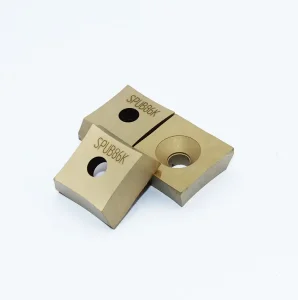
Wholesale Carbide scarfing inserts SPUB86B/86C/86D/86E/86F/86G/86H/86K/86M Manufacturers, Factories
Configure & Inquire -

China SPUB63J CVD coating tungsten carbide od scarfing insert Manufacturers, Suppliers
Configure & Inquire -
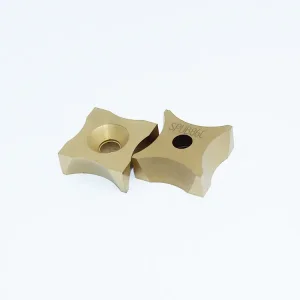
Wholesale SPUB86C customized lathe_ tungsten_carbide_inserts drill bit insert Supplier, Factory
Configure & Inquire -

Buy Wholesale SPUB63 tungsten carbide insert scraps lathe cutting tools turning Supplier, Factories
Configure & Inquire -
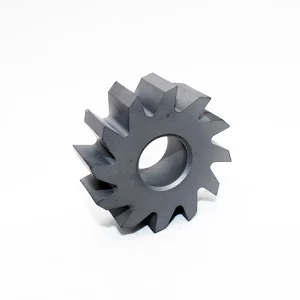
Buy Wholesale custom nonstandard metal worm gears bevel gears pinion gears Suppliers, Factories
Configure & Inquire -

China High quality SPUB-63 series machine cutter carbide cnc cutting tools turning Manufacturer, Factories
Configure & Inquire -

China New shape cemented carbide tips for railway track tamping pick center tooth Manufacturers, Factory
Configure & Inquire -

Wholesale SPUB63B wholesale ISO TiN tungsten carbide scarfing insert Supplier, Factory
Configure & Inquire
Partner with an Engineering-Led Carbide Manufacturer
Optimize cutting cycle times, eliminate unexpected machine tool downtime, and lower cost-per-part with tailor-made tungsten carbide formulations and custom flute profiles.