
Precision Milling Cutters, Inserts & Blanks
Engineered with 100% virgin tungsten powder and HIP-sintered for defect-free metallurgical performance. Browse our standard and custom precision tooling components.

Wholesale Cemented Carbide Metal Insert SPUB86B/86C/86D/86E/86F/86G/86H/86K/86M
View Product Details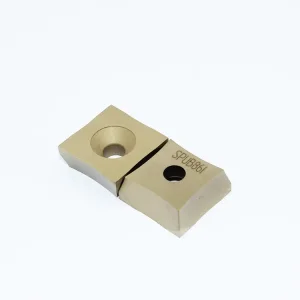
Square Carbide Inserts for Heavy Duty Milling Tools & Turning Cutters
View Product Details
High-Efficiency CNC Indexable Carbide Insert Cutting Tools for Milling
View Product Details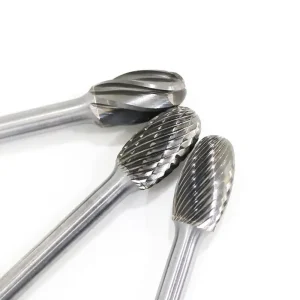
Oval Cutting Tool Solid Tungsten Carbide Rotary Burr & End Finishing File
View Product Details
YG8 Grade Tungsten Carbide Serrated Gripper Inserts for Chuck Jaws
View Product Details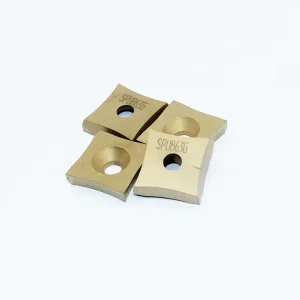
Wear Resistant SPUB 63G Milling & Tool Holder Cutting Inserts
View Product Details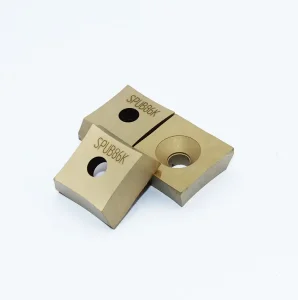
Wholesale High-Toughness Carbide Scarfing Inserts SPUB Series
View Product Details
Precision Threading & Slotting Carbide Blank Inserts for Toolmakers
View Product DetailsEnd Mill Flat Technology Roadmap & Future Outlook
In modern computer numerical control (CNC) roughing, finishing, slotting, and profiling operations, the flat end mill remains the absolute backbone of manufacturing. Explore the cutting-edge developments transforming solid carbide rotary tooling.
Ultra-Fine Grain Powder Substrates
The progression from coarse WC-Co grades to 0.2–0.5 µm nano-submicron matrices has increased transverse rupture strength (TRS) past 4,200 MPa while maintaining hardness over 92.5 HRA. This mitigates micro-chipping during intermittent slotting and dynamic high-feed trochoidal passes.
- Sinter-HIP eliminates internal porosity
- Inverted cobalt segregation prevention
- Enhanced mechanical shock dampening
Nanostructured PVD/CVD Surface Architecture
Monolithic coatings have evolved into gradient multilayers combining AlTiN, AlCrN, TiSiN, and ultra-smooth Diamond-Like Carbon (DLC). High thermal barrier coatings allow flat end mills to operate dry in high-speed machining (HSM) environments above 1,100°C without abrasive edge wash-out.
- Oxidation threshold pushed to 1,200°C
- Friction coefficient drops below 0.25
- Droplet-free cathodic arc evaporation
Differential Pitch & Dynamic Flute Geometries
Chatter and harmonics are the primary causes of premature cutter failure in flat end milling. Modern multi-axis CNC grinding produces variable helix (e.g., 35°/38°) and unequal tooth indexing, disrupting resonant frequencies to achieve mirror surface roughness below Ra 0.2 µm.
- Optimized gash angles for chip evacuation
- Reinforced corner land protects flat tips
- Eccentric relief grind enhances sharpness
Macro Industry Solutions: Engineering Demands Across Sectors
Purchasing agents and manufacturing engineers cannot rely on general-purpose end mills when cutting specialized materials. Our manufacturing routes adapt grain size, binder percentages, and edge pre-honing according to sector-specific metallurgical dynamics.
Aerospace & Defense
Workpieces: Ti-6Al-4V, Inconel 718, Hastelloy, 7075-T6 aluminum structural ribs.
Challenge: Extreme work-hardening, chemical reactivity, and excessive heat retention at the cutting edge.
Tooling Solution: Flat end mills with specialized 4-flute and 5-flute uneven helix configurations, low-thermal conductivity multi-layer AlCrN coatings, and internal through-coolant ports for high-pressure delivery directly to the shear zone.
Automotive & EV Drive
Workpieces: Compacted graphite iron (CGI), nodular cast iron, forged 4140 steel, EV stator casings.
Challenge: Demands for lowest cycle time per unit, aggressive chip loads, continuous 24/7 robotic cell operation.
Tooling Solution: High-rigidity 4-flute flat square end mills with corner chamfers (0.2–0.5 mm) to prevent edge fracture during breakout, paired with nano-composite TiAlSiN coatings optimized for dry or MQL (Minimum Quantity Lubrication) cutting.
Medical Device & Implants
Workpieces: CoCrMo alloys, 316LVM medical stainless steel, implantable PEEK, grade 5 titanium.
Challenge: Absolute surface integrity requirement, zero burr tolerance, micro-scale geometries without thermal degradation.
Tooling Solution: Sub-micron 0.2 µm grain WC rods ground to h5 shank limits, featuring wiper flat geometries on cutting bottoms for Ra < 0.15 µm finishes that eliminate post-machining electropolishing processes.
Die, Mold & Electronics
Workpieces: NAK80, H13, D2, S50C hardened steel (50–65 HRC), semiconductor synthetic graphite dies.
Challenge: Extreme abrasive wear of cutting flanks and severe risk of tool deflection during deep cavity pocketing.
Tooling Solution: Extra-long shank solid flat end mills featuring tapered necks for rigidity, 0.4 µm micro-grain cobalt formulations (10–12% Co content), and thick multilayer silicon-doped physical coatings providing extreme hot-hardness.
China Factory 4.0: Supply Chain Resilience & Upstream Efficiency
Purchasing directly from primary Chinese cemented carbide manufacturers unlocks strategic supply chain and operational advantages that Western distribution networks cannot replicate.
Upstream Tungsten Ore Integration
Situated in Jiangxi Province—the world's capital of tungsten ore reserves—our production facilities maintain direct vertical control from Ammonium Paratungstate (APT) reduction and tungsten carbide powder synthesis to ball milling, spray drying, and sinter-HIP pressing. This shields B2B buyers from global raw material price speculation.
Automated 5-Axis CNC Flute Grinding
Our workshop houses high-precision Walter Helitronic, Rollomatic, and ANCA 5-axis CNC tool grinding centers running unmanned lights-out shifts. Coupled with laser non-contact in-process gauging, we ensure diameter tolerances within ±0.005 mm and runout ≤0.003 mm across massive recurring production batches.
Smart Quality Gateways & Traceability
Every batch of carbide flat end mills undergoes strict quality gates: Shimadzu metallographic phase verification, magnetic saturation testing for Co distribution, and 100% Zoller optical wheel presetter verification for core thickness, concentricity, and corner radius integrity prior to laser etching.
Tungsten Carbide Substrate Selection for Flat End Mills
Review the exact metallurgical parameters to specify the ideal blank or solid end mill cutter for your machining applications.
| Carbide Grade | Grain Size (µm) | Cobalt Content (%) | Density (g/cm³) | Hardness (HRA / HV) | TRS (MPa) | Primary Cutting Application |
|---|---|---|---|---|---|---|
| ZF-Micro02 Ultra-Fine | 0.2 – 0.4 | 8.0% | 14.65 | 93.2 HRA / 1850 HV | 4,100 | Hardened tool steel (55–68 HRC), die/mold micro-finishing, aerospace superalloys. |
| ZF-Fine06 General HSM | 0.5 – 0.7 | 10.0% | 14.45 | 92.1 HRA / 1680 HV | 3,900 | High-speed milling of carbon steels, alloy steels, stainless steel (304/316), and iron. |
| ZF-Tuff12 Heavy Roughing | 0.8 – 1.0 | 12.0% | 14.25 | 90.8 HRA / 1520 HV | 4,300 | Interrupted cut, heavy roughing, large slotting depths, older CNC setups prone to vibration. |
| ZF-Alu04 Non-Ferrous | 0.6 – 0.8 | 6.0% | 14.95 | 92.8 HRA / 1760 HV | 3,600 | Mirror-finishing of aluminum 6061/7075, brass, copper, magnesium, and engineering polymers. |
| ZF-NonMag Ni-Bonded | 1.0 – 1.5 | 8.5% Ni | 14.70 | 89.5 HRA / 1410 HV | 3,200 | Non-magnetic wear components, EDM tooling blocks, chemical and downhole tools. |
Global Enterprise Purchasing: Total Cost of Ownership (TCO)
Purchasing Directors and Procurement Officers evaluate cutting tools far beyond the base unit price. High tool life repeatability, reduced spindle downtime, and verifiable material certifications drive bottom-line enterprise margins.
Spindle Downtime Mitigation
Tooling constitutes only 3% to 5% of total machining overhead, yet tool failures impact the remaining 95% (machine run rate, operator labor, scrap loss). Using consistently ground flat end mills ensures predictable wear lifespans, enabling automated tool swaps without unexpected catastrophic breakage.
Lot-to-Lot Consistency Audits
Nothing harms automated CAM programming faster than hardness swings between production deliveries. Our factory provides detailed Inspection Test Certificates (EN 10204 3.1) detailing exact chemical composition, grain structure micrographs, and optical measurement data sheets with every shipment.
Flexible OEM / Private Label Delivery
Whether you require standard cylindrical h6 ground solid rods to grind your own end mill designs or turn-key custom branded end mills with your specific logo, corner radius, and coating recipe, our manufacturing lines handle low minimum order quantities (MOQs) with swift prototype turnarounds.
Localized Support & International Compliance Assurance
Exporting high-precision tooling to tier-one global markets requires rigorous conformance to international standards, chemical safety regulations, and environmental mandates.
ISO 9001:2015 Registered
Certified Quality Management Systems monitor every phase of manufacturing, from powder blending to laser marking. Full batch traceability ensures immediate process diagnosis and corrective action loops.
Conflict-Free 3TG
100% of our tungsten raw material is ethically sourced from audited smelters adhering to the Responsible Minerals Initiative (RMI). Full CFSI CMRT documentation provided for Dodd-Frank Section 1502 compliance.
RoHS & REACH Compliant
All finished cemented carbide tools, brazed inserts, and ceramic coatings are certified free of SVHCs (Substances of Very High Concern), cadmium, lead, and hazardous chemical contaminants under EU directives.
Multi-Region Logistics
Direct export capabilities with air express courier, DDP sea freight, and dedicated customs clearance documentation for North America, the European Union, Australia, and ASEAN industrial centers.
Specialty Carbide Tooling, Grippers & Ceramic Plates
Explore our specialized range of indexable tungsten carbide wear components, chuck grippers, railway tamping tines, and advanced engineering ceramics.

New Shape Tungsten Carbide Tamping Tine Tools for Railway Track Maintenance
View Product Details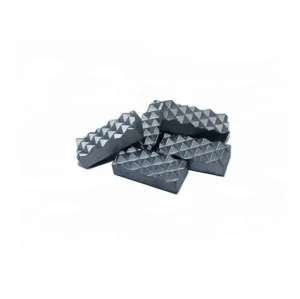
Buy YG8 Sintered Carbide Gripper Inserts for High-Load Clamping Chucks
View Product Details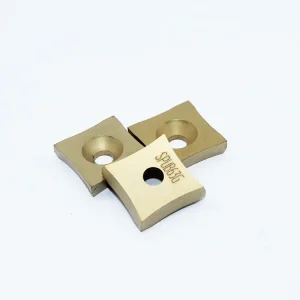
Customized Wear Resistant SPUB 63G Carbide Threading Inserts
View Product Details
Square Tungsten Carbide Button Inserts & Mining Wear Tooling Parts
View Product Details
Factory Supply Non-Magnetic Carbide Pin for Medical & Jewelry Industry
View Product Details
SPUB86F TiN Coating Tungsten Carbide Tube Scarfing & Planing Insert
View Product Details
Pressureless Sintered Silicon Carbide Plate & Polished SiC Ceramic Substrate
View Product Details
SPUB63M30 Tungsten Carbide Welding Inserts Square for Needle Holders
View Product DetailsFrequently Asked Questions: End Mill Flat Sourcing
Critical technical clarifications addressing cutting parameters, tolerances, custom manufacturing, and factory direct supplier qualification.
What is the difference between a flat end mill and a bull nose or ball nose end mill?
A flat end mill (also known as a square end mill) possesses sharp, 90-degree squared corners at the bottom face. It is specifically designed to create flat surfaces, sharp 90° shoulders, planar slots, and precise pockets. In contrast, bull nose mills have corner radiuses that reinforce edge strength, and ball nose mills have hemispherical tips ideal for 3D contoured surface profiling.
How does flute count (2, 3, 4, or 6 flutes) affect flat end mill performance?
Flute count dictates chip gullet volume and tool core rigidity. 2-flute and 3-flute flat end mills have large chip spaces essential for soft, gummy materials like aluminum alloys (6061, 7075) where chip evacuation is paramount. 4-flute and 6-flute designs have thicker web cores that maximize stiffness, making them ideal for steel, stainless, and titanium finishing passes where feed rates and deflection control are critical.
Can your factory manufacture flat end mills directly from custom CAD drawings?
Yes. Custom tooling and OEM/ODM private-label manufacturing constitute more than 60% of our production volume. Our application engineering department reviews 2D (DWG/DXF/PDF) and 3D (STEP/IGES) files, evaluating rake angles, relief lands, neck reliefs, shank flats (Weldon DIN 1835-B), and coolant groove requirements within 8 working hours.
What grinding standards and runout tolerances are maintained on your CNC lines?
All finished solid carbide flat end mills are ground to standard DIN 6527 / DIN 6535 tolerances. Cutter shanks conform strictly to h6 outer diameter tolerance limits, while cutting edge diameters are held within h10 to e8 depending on cutter class. Total indicated runout (T.I.R.) measured at the tool tip is guaranteed ≤0.003 mm on premium lines.
Why is HIP (Hot Isostatic Pressing) sintering critical for flat end mills?
Standard vacuum sintering can leave microscopic internal microporosities (A02/B02 class) inside the cemented carbide core. Under extreme torsional shock during high-feed milling, micro-voids act as stress concentration notches, leading to catastrophic tool snap. Sinter-HIP applies 60–100 bar of argon pressure at 1,450°C, consolidating the WC-Co core to 99.99% theoretical density.
What lead times and minimum order quantities (MOQ) apply for OEM orders?
For standard ground carbide rods and in-stock flat end mill geometries, shipments dispatch within 48 to 72 hours. For custom flute designs, non-standard lengths, or special PVD coating formulations (e.g., AlCrSiN or DLC), pilot sample lead times are typically 7 to 12 working days, with scalable production ramp-ups supported by flexible MOQ tiers.
Ready to Optimize Your Machine Shop Tooling Costs?
Submit your CAD drawings or tooling specifications. Our engineering team provides comprehensive metallurgical consultation, grade recommendations, and direct factory pricing within 8 hours.