
High-Performance Cemented Carbide Wear Solutions: Group A
Explore our hot-selling precision ground rods, wear parts, indexable scarfing inserts, and non-magnetic solid carbide preforms directly sintered in our ISO 9001 certified facility.







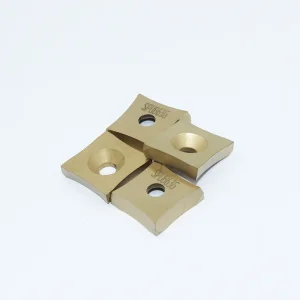
Engineering Structural Resilience Against High-Stress Industrial Degradation
A deep analysis of how modern manufacturing facilities mitigate abrasive wear, thermal shock, mechanical deformation, and chemical corrosion utilizing Sinter-HIP tungsten carbide flat blanks.
Severe Abrasion Mitigation
In high-speed progressive metal stamping dies, paper trimming slitters, and ceramic powder extrusion compactors, sliding friction creates catastrophic mechanical micro-spalling. Cemented carbide flat blanks provide extreme Vickers hardness (HV 1300 to 2200) that maintains cutting edge geometry over millions of continuous punch cycles without dimensional distortion.
Global Metallurgy Dynamics
As tier-one automotive stamping, semiconductor lead frame punching, and subsea petroleum exploration advance, the global cemented carbide blank market has shifted decisively toward 100% virgin sub-micron (0.6–0.9 µm) and ultrafine (0.2–0.5 µm) grain structures. Virgin powder matrices prevent unexpected metallurgical inclusions and structural fractures.
Sinter-HIP Porosity Elimination
Standard vacuum sintering often leaves sub-surface micro-voids that initiate fatal fatigue cracking during wire EDM slicing or severe shear tooling. Our overpressure Sinter-HIP furnaces execute high-temperature sintering under 60–100 bar of argon pressure, achieving metallographic porosity levels compliant with ISO 4505 standards (A00, B00, C00).
Engineering Grade Selection for Flat Blanks & Tool Preforms
Balance extreme fracture toughness ($K_{1C}$) against Rockwell hardness (HRA) to prevent both premature tool wear and impact-induced brittle catastrophic fracture.
| Alloy Grade | Binder (Co/Ni %) | Grain Size (µm) | Hardness (HRA) | T.R.S. (MPa) | Density (g/cm³) | Optimal Industrial Application |
|---|---|---|---|---|---|---|
| YG6 (ISO K10) | 6.0% Co | 1.0 – 1.4 | 90.5 – 91.5 | ≥ 2,100 | 14.90 – 15.05 | Wear plates, precision scrapers, high-speed thin-film slitting knives. |
| YG8 (ISO K20) | 8.0% Co | 1.2 – 1.8 | 89.5 – 90.5 | ≥ 2,400 | 14.65 – 14.85 | Guillotine shear blades, brazed tips, wear guides, wire drawing dies. |
| YG15 (ISO K40) | 15.0% Co | 1.6 – 2.4 | 86.5 – 87.5 | ≥ 2,900 | 13.95 – 14.15 | Heavy stamping punches, silicone steel laminations, cold heading dies. |
| YG20 (Impact) | 20.0% Co | 2.0 – 3.0 | 84.5 – 86.0 | ≥ 3,200 | 13.40 – 13.65 | High-impact blanking dies, stamping mold cores, thick EDM block stock. |
| Ni-Bonded (Corrosion) | 6.0–10% Ni | 1.0 – 1.6 | 88.0 – 90.0 | ≥ 2,200 | 14.50 – 14.80 | Non-magnetic sensor housings, MWD/LWD tools, aggressive acid slitting dies. |
| Submicron Ultra (SM-08) | 8.0% Co + Cr/V | 0.4 – 0.6 | 92.5 – 93.5 | ≥ 3,600 | 14.55 – 14.70 | Semiconductor micro-punches, PCB trimming routing blanks, high-precision EDM dies. |
Carbon Window Optimization
During high-temperature liquid phase sintering, precise balance between total carbon and tungsten stoichiometry prevents both brittle Eta-phase ($\eta$-phase, $W_6Co_6C$ or $W_3Co_3C$) precipitation and excessive free graphite clustering, ensuring isotropic structural integrity throughout the plate thickness.
Grain Growth Inhibitor Technology
By doping the formulation with ultra-pure Vanadium Carbide (VC) and Chromium Carbide ($Cr_3C_2$) in fractional percentages, our powder chemists restrict secondary recrystallization and Ostwald ripening during Sinter-HIP dwell cycles, maintaining ultra-uniform sub-micron grain boundaries.
Overpressure HIP Consolidation
Standard vacuum sintering typically yields residual micro-porosity at deep core zones. Sinter-HIP consolidation applies 10 MPa of inert gas at 1,420°C, compressing remaining gaseous voids to absolute theoretical density, eliminating sub-surface stress raisers during precision electrical discharge machining (EDM).
High-Yield Industrial Deployments Across Global Sectors
From high-speed European packaging lines to North American aerospace press tooling and Asia-Pacific semiconductor cleanrooms, our flat blanks provide predictable tool life.
Automotive Stamping Dies & Punch Tooling
Used by tool and die makers across North American automotive corridors (Michigan, Ohio, Ontario) for stamping high-strength steel (AHSS) brackets, electric vehicle battery cell casings, and motor rotor/stator electrical steel laminations. YG15 and YG20 grades withstand heavy cyclical stamping shocks exceeding 600 strokes per minute without edge chipping.
Electronics & Semiconductor Tooling
Supplied to precision engineering facilities in Taiwan, Japan, and South Korea for micro-blanking connector lead frames, memory module brackets, and PCB routing blades. Utilizing our sub-micron grain (0.4–0.6 µm) grades, wire EDM wire-cutters can burn razor-sharp 0.05 mm corner radii without edge breakaways or grain tear-out.
Industrial Knives, Woodworking & Paper Slitting
Integrated into continuous shearing equipment in Germany, Scandinavia, and North America. Sintered rectangular flat strips with high cobalt-free or fine-grain binders serve as top and bottom circular knife inlays, veneer peeling blades, corrugated cardboard slitters, and plastic recycling granulator knives.
Non-Magnetic Wear Plates & Downhole Seals
Deployed in directional drilling Measurement While Drilling (MWD) housings, eddy-current sorting guides, and permanent magnet powder compaction dies across Texas, Alberta, and the Middle East. Specialized nickel-bonded matrices resist severe galvanic corrosion from sour brines ($H_2S$) and acidic media.
Global Regulatory Conformity, Quality Assurance & Supply Chain Reliability
Procuring cemented carbide flat blanks internationally requires rigorous metallurgical traceability, ESG certification, and localized logistical responsiveness.
Conflict-Free Mineral Assurance (3TG)
Jiangxi Zhongfu strictly enforces RMAP (Responsible Minerals Assurance Process) compliance. All tungsten concentrates and cobalt powders originate from certified, conflict-free smelters, fully satisfying Dodd-Frank Section 1502 and EU Regulation 2017/821 requirements with comprehensive supply chain documentation for tier-one OEM audits.
RoHS & REACH Metallurgical Compliance
Our flat blanks, sintered blocks, and ground strips undergo regular third-party SGS/TÜV testing. Content levels of restricted heavy metals (lead, cadmium, mercury, hexavalent chromium) and SVHC chemicals remain well beneath EU RoHS (2011/65/EU) and REACH (EC 1907/2006) limits, facilitating direct integration into consumer goods and medical tooling.
Rapid Global Technical Dispatch
With an engineering and technical sales team maintaining 8-hour quote and drawing review SLAs, overseas procurement teams in Europe, North America, and Australia receive comprehensive CAD/CAM manufacturability evaluations, volumetric shrink calculations, and localized DDP logistics forwarding with zero customs bottlenecks.
Next-Generation Technology Roadmap for Sintered Cemented Carbides
Anticipating the evolving demands of additive preforming, functionally graded materials (FGM), and ultra-sustainable closed-loop recycling frameworks.
Functionally Graded Carbide (FGM)
R&D trials in gradient sintering allow flat blanks to possess an ultra-hard sub-micron surface layer (92.5 HRA) for maximum friction resistance, seamlessly transitioning into a high-cobalt ductile interior core (86 HRA) that absorbs shock vibrations in extreme deep-drawing operations.
Binder Jetting & Near-Net Additive Preforming
Integrating binder jet 3D printing with HIP consolidation produces flat blanks with internal conformally cooled channels for stamping ultra-high-strength boron steels, shortening cycle times and cooling die components directly at the shear zone.
Zinc-Process Chemical Recycling Upcycling
Advancing proprietary thermo-chemical reclaiming technology that recovers sintered tungsten carbide scrap down to pristine virgin-equivalent WC powder grain morphology, reducing carbon footprints by up to 65% while maintaining virgin metallurgical purity.
Alternative Non-Toxic Binders (Fe-Ni-Co Free)
Developing intermetallic Fe-Al and High-Entropy Alloy (HEA) binder systems to replace cobalt entirely for aggressive pharmaceutical punch tooling, eliminating chemical leaching while delivering elevated hot-hardness up to 800°C.
Frequently Asked Questions by Toolmakers & Metallurgical Buyers
Critical insights addressing tolerances, grinding allowances, wire EDM cutting parameters, and binder phase selections.
As-sintered flat blanks retain nominal tolerances controlled by precise sintering shrinkage calculations. Typically, length and width carry an as-sintered tolerance of +0.8 mm / +1.5 mm (never minus), and thickness carries +0.4 mm / +0.8 mm. This provides adequate grinding allowance for toolmakers to surface-grind or wire EDM the blank to finished blueprint specifications (e.g., ±0.002 mm). Pre-ground blanks with ground top/bottom faces (Ra ≤ 0.2 µm) can also be supplied upon request.
Wire EDM removes carbide material through localized electrical thermal spark erosion (reaching 10,000°C), which creates a re-solidified "white layer" characterized by high tensile stress, cobalt depletion, and micro-cracking. To prevent tool failure under load, toolmakers should use low-energy finishing skim cuts, followed by mechanical polishing (removing 0.01–0.02 mm of the affected recast layer) or low-temperature stress relief annealing at 200°C to restore transverse rupture strength.
Standard cobalt-bonded carbide is ferromagnetic and susceptible to leaching in acidic environments (pH < 7) or galvanic corrosion in deionized water tanks used during EDM. Nickel-bonded carbide offers superior non-magnetic properties (magnetic permeability $\mu \le 1.005$) and chemical passivation against corrosion, making it mandatory for downhole MWD oilfield tools, sensor wear plates, and wet battery slurry mixing knives.
Plate warping is prevented through precise metallurgical powder packing density, isotropic die pressing, and high-purity graphite setter plate leveling. During liquid phase sintering at 1,400°C, the plate shrinks volumetrically by approximately 18–22%. Controlled thermal ramping and homogeneous argon gas circulation inside our overpressure Sinter-HIP furnace eliminate thermal gradients, maintaining flat straightness tolerances within 0.5–1.0 mm/m.
Yes. We regularly produce near-net-shape flat blanks with counterbored mounting holes, chamfered cutting edges, tapers, and stepped geometries in the "green state" (soft pre-sintered state). Pre-forming green compacts using high-speed 5-axis CNC machining centers before final Sinter-HIP reduces diamond wheel grinding time and scrap material costs by up to 50% for our customers.
High-Performance Cemented Carbide Wear Solutions: Group B
Explore our heavy-duty button inserts, custom gear cutters, bar peeling preforms, and large-format stamping die sheets engineered to ISO standards.





Request Custom Grade Formulations & Fast CAD Quotations
Send your blueprints, 2D/3D step files, or wear performance requirements directly to our senior metallurgical engineering team. We deliver manufacturability feedback, grade recommendations, and competitive direct factory pricing within 8 hours.