Primary Industrial Tungsten Carbide & Tool Solutions
Engineered with 100% virgin tungsten cobalt powder and sintered in high-pressure HIP furnaces for near-zero micro-porosity and elite fracture toughness.
Global Landscape of Brazed Carbide Tips & Tooling Manufacturing
An in-depth metallurgical analysis of how direct manufacturing clusters in China are redefining cutting tool lifecycles across heavy industry worldwide.
Supply Chain Concentration & Raw Material Security
Tungsten (wolfram) extraction and ammonium paratungstate (APT) conversion are concentrated heavily in Jiangxi, China. Sourcing from a factory based directly at the raw material center eliminates middlemen markups, avoids sub-tier logistics delays, and ensures 100% virgin powder purity without recycled contaminants.
Cost per Part (CPP) vs. Tool Acquisition Economics
Global manufacturing procurement has shifted from measuring initial purchase cost to total cost of ownership (TCO). Brazed tips offer a rigid mechanical bond that dampens harmonic vibrations better than modular toolholders, lowering micro-chipping risks and drastically decreasing tool replacement downtime in high-feed lathes.
Advanced HIP Sintering & Microstructure Uniformity
Modern pressure sintering (Sinter-HIP) at 1400°C–1450°C and 60–100 bar inert gas pressure removes micropores within the cemented carbide matrix. This ensures balanced cobalt distribution, uniform grain boundaries, and high transverse rupture strength (TRS) required for interrupted roughing cuts.
Emerging Industry Trends & Next-Gen Tooling Technology
The transition from traditional mechanical clamping toward high-entropy brazing alloys, nano-grain formulations, and specialized anti-corrosive binders.
Nano & Ultrafine Grain Refinement
By controlling tungsten carbide crystal grains under 0.5 µm (submicron/nano) with trace grain-growth inhibitors such as VC and Cr3C2, our tools provide higher surface hardness without sacrificing transverse rupture toughness.
Silver-Copper Sandwich Brazing Alloys
High-thermal shock environments demand engineered tri-metal brazing shims (Ag-Cu-Ag). These compensate for the thermal expansion mismatch between the carbide tip and steel shank, preventing micro-stress fractures at the joint.
Nickel-Bonded Non-Magnetic Blanks
Replacing traditional cobalt binders with specialized nickel alloys creates parts resistant to chemical oxidation and downhole galvanic corrosion while maintaining relative magnetic permeability µr < 1.05 for directional drilling sensors.
Smart Induction Brazing Automation
Adoption of temperature-controlled optical pyrometers prevents localized carbide overheating during manufacturing. Precise thermal control preserves grain structure and maximizes shear strength across the entire brazing seam.
Localized Applications & In-Field Performance Scenarios
From heavy-duty railway maintenance to deep-well geomechanical coring, tailored carbide grades address distinct physical stress profiles.
Railway Ballast Tamping & Track Maintenance
Tamping tine tips experience severe cyclic impact against hard granite and basalt ballast. High-cobalt impact-resistant grades (YG15–YG20) provide the required fracture resilience to prevent premature catastrophic tip failure on high-speed rail networks.
Heavy Steel Mill Rod Peeling & Scarfing
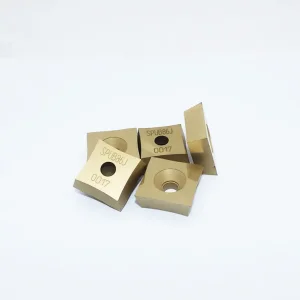
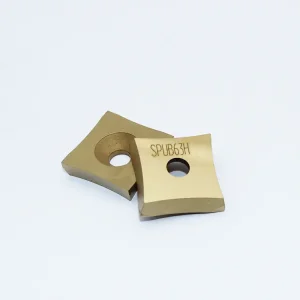
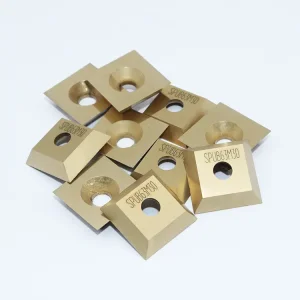
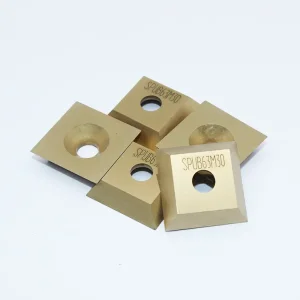
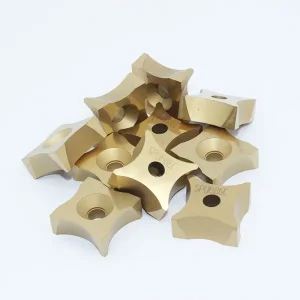
Heavy bar peeling (SPUB, SNMX series) works under high thermal and abrasive loads to remove surface decarb from hot-rolled bars. Micro-alloyed tungsten carbide blanks resist thermal shock cracking caused by flood coolant cycling.
Water Well, Geothermal & Rotary Mining Bits
Brazed bits operating in abrasive quartz formations demand dense, coarse-to-medium grain YG8 carbide. The balanced cobalt matrix retains cutting geometry against abrasive rock matrices while dissipating drill torque spikes.
| ISO / Grade | Cobalt Binder (%) | Density (g/cm³) | Hardness (HRA) | TRS (N/mm²) | Primary Industrial Utility |
|---|---|---|---|---|---|
| YG6 / K10-K20 | 6.0% | 14.90 - 15.00 | 90.5 | ≥ 1900 | Fine turning of cast iron, non-ferrous bars, light finishing cuts |
| YG8 / K20-K30 | 8.0% | 14.65 - 14.80 | 89.5 | ≥ 2200 | Universal brazed tips, masonry drilling, centerless peeling blanks |
| YG15 / K40 | 15.0% | 13.95 - 14.15 | 87.0 | ≥ 2800 | Heavy stamping punches, cold-heading dies, extreme impact tooling |
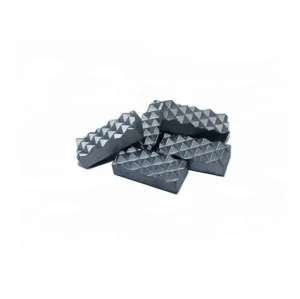
| YG20 / G50 | 20.0% | 13.45 - 13.65 | 85.5 | ≥ 3100 | Railway tamping tine edges, heavy wire drawing, shear cutter blocks |
| Ni-Bonded NM | Ni alloy | 14.50 - 14.90 | 88.5 | ≥ 2100 | MWD downhole directional tools, corrosion wear rings, sensor dies |
Enterprise Solutions: From Custom Powder to Finished Tool
A transparent look at Jiangxi Zhongfu's manufacturing chain, ensuring quality compliance across every batch.
1. 100% Virgin Powder Formulation
We blend purity-certified tungsten carbide powder with fine metallic cobalt or nickel without recycled scrap. Patented trace additions refine grain structures and eliminate thermal segregation.
2. CNC Bi-Directional Pressing
Automated presses generate uniform green-body compaction. High density consistency minimizes dimensional warping and non-uniform shrinkage during the thermal cycle.
3. Sinter-HIP Consolidation
Green blanks undergo combined vacuum de-waxing and 100-bar high-pressure argon sintering, sealing micro-porosity to ISO 4505 standards for consistent structural integrity.
4. Micron Precision Grinding
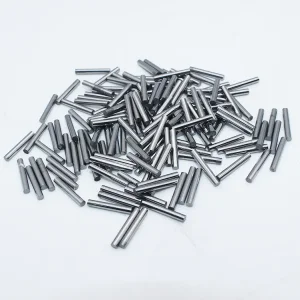
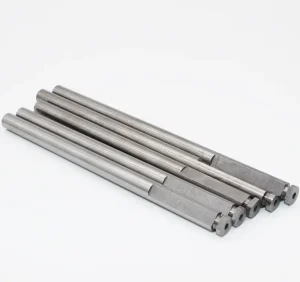
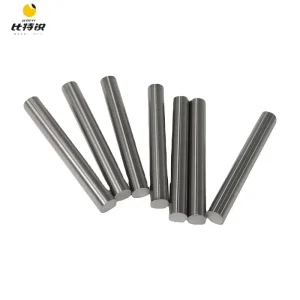
Equipped with centerless grinders, surface grinders, and optical profile machinery, achieving h6 dimensional tolerance on carbide rods and precise rake angles on custom tips.
5. Metallographic Verification
Every lot undergoes coercive force analysis, magnetic saturation testing, Vickers micro-hardness verification, and SEM metallography inspection before final shipment.
6. Global Export Handling
Anti-shock moisture-sealed packaging, automated rust protection for steel-bonded parts, and full logistics documentation compliant with ASTM B777 and ISO standards.
Frequently Asked Questions for Overseas Tooling Buyers
Key technical and procurement details to help your engineering team evaluate supplier qualification.
Why use brazed carbide tips instead of indexable inserts?
Brazed tips form a solid metallurgical bond with the tool shank, avoiding mechanical screw deflection, pocket pocket deformation, and chatter. They are ideal for deep interrupted turning, heavy-stock hogging, custom cutting geometries, and high-vibration railway or mining equipment.
How does Zhongfu prevent tip detachment during heavy brazing?
Tip shear failure typically traces back to excessive residual stress or poor surface wetting. We provide optimized pre-tinning coatings and specify silver-copper-nickel sandwich brazing shims, matched with precise induction heating ramps to balance thermal contraction differences.
Can you supply custom non-magnetic carbide wear parts?
Yes. By replacing standard cobalt binders with proprietary nickel-chromium formulations, our non-magnetic carbide parts achieve magnetic permeability µr < 1.05 while providing strong corrosion resistance in saline, acidic, and downhole directional drilling applications.
What documentation and test certificates are included with shipments?
Every industrial production batch ships with complete Mill Test Certificates (MTC), including quantitative chemical composition (WC, Co, Ni content), density, Rockwell hardness (HRA), transverse rupture strength (TRS), and micro-porosity ratings.
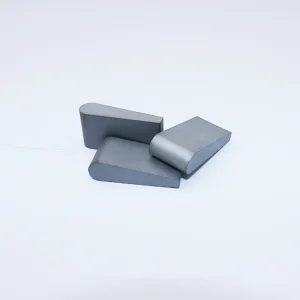
Precision Blanks, Wear Cutters & Sintered Inserts
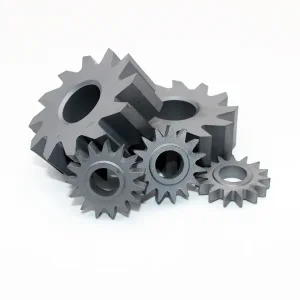
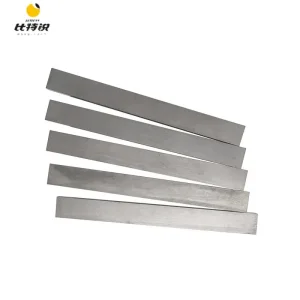
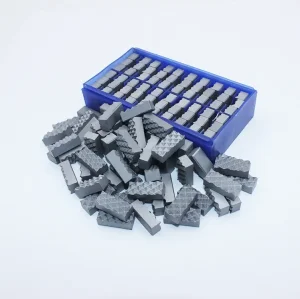
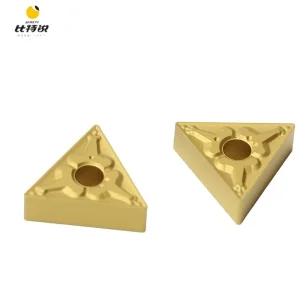
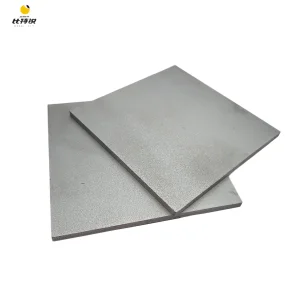
Explore our catalog of standard and custom-molded tungsten carbide components ready for global OEM delivery.