

Industrial Wear Core Solutions
High-Performance Tungsten Carbide Molds & Peeling Inserts for US Toolrooms
Engineered with zero-porosity HIP (Hot Isostatic Pressing) sintering techniques, these flagship components deliver maximum toughness and dimensional retention under cyclic cold extrusion pressures.

Engineered SPUB63J CVD Coating Tungsten Carbide OD Scarfing Insert for US Steel & ERW Tube Mills
View Specifications
Industrial Grade SPUB86F TiN Coating Tungsten Carbide Tube Scarfing Inserts for North American Foundries
View Specifications
CNC Machine Tool Bar Peeling Inserts SPUB86I Cemented Carbide Tools for US Precision Alloy Processors
View Specifications
Market Intelligence & Demand
Commercial Status: Tungsten Carbide Mold Adoption Across United States Manufacturing
As the United States re-shores high-value manufacturing in automotive, aerospace, oil & gas, and semiconductor electronics, Tier-1 toolmakers face an acute demand for extended tool life, lower downtime, and severe wear tolerance.
Automotive Fastener Cold Forging
From Michigan to Tennessee, automotive cold heading production relies on tungsten carbide cold heading dies. By substituting conventional tool steels (like D2 or M2) with our YG15 to YG20 cobalt-binder grades, US stamping lines experience a 600% gain in continuous cycles without progressive galling or dimensional drift.
Aerospace Superalloy Wire Drawing
In aerospace manufacturing corridors across California and Washington, drawing high-nickel, titanium, and stainless wires demands flawless finish. Our ultra-fine grain tungsten carbide wire drawing dies provide mirror Ra 0.05 µm polish, preventing surface micro-cracking and assuring strict compliance with AMS and ASTM wire specs.
Energy & Downhole Exploration
Texas and Gulf Coast downhole drilling operators demand extreme resistance against abrasive slurry and cyclic shock. We formulate non-magnetic nickel-bonded carbide components and valve trim molds designed specifically for deep-well MWD/LWD tools where standard cobalt-bound parts yield magnetic interference.
Material Science & Technical Roadmap
Engineered Powder Metallurgy: Grade Formulations for Cold Work & Wear Molds
Tool performance is governed by WC grain distribution, cobalt binder phase thickness, and the absence of micro-voids. Consult our grade selection roadmap engineered specifically for high-stress tooling environments.
| Carbide Grade | Cobalt / Binder % | Grain Size (µm) | Hardness (HRA) | TRS (MPa) | Recommended Industrial Usages |
|---|---|---|---|---|---|
| YG6X / K10 | 6.0% Co | 0.8 (Sub-micron) | 91.5 - 92.5 | 2,200 | Non-ferrous drawing dies, high-speed slitter knives, precision punch inserts. |
| YG8 / K20 | 8.0% Co | 1.2 (Fine) | 89.5 - 90.5 | 2,600 | Tube scarfing inserts, light heading dies, heavy-duty wire reduction molds. |
| YG15 / K40 | 15.0% Co | 1.8 - 2.2 (Medium) | 86.5 - 87.5 | 3,100 | Standard cold heading dies, progressive stamping dies, fastener punch tooling. |
| YG20C / Impact | 20.0% Co | 2.5 - 3.0 (Coarse) | 84.0 - 85.5 | 3,400 | Severe impact heading dies, thick-plate punching, large cold extrusion sleeves. |
| NM-12 (Non-Mag) | 12.0% Ni/Cr | 1.4 (Medium-Fine) | 88.0 - 89.5 | 2,400 | MWD downhole directional drilling tools, magnetic media stamping, chemical seals. |
Engineering Roadmap: Sinter-HIP Consolidation Technology
Our facility employs state-of-the-art Overpressure Sinter-HIP Furnaces (up to 100 bar Ar pressure). By heating powder blanks to liquid-phase sintering temperature and applying isostatic gas pressure simultaneously, the internal cobalt binder migrates to heal residual micro-voids. This achieves 99.99% theoretical density, eliminating macro-pores (Class A02 or better under ASTM B276), ensuring your tooling withstands extreme cyclic shear without unpredictable catastrophic fracturing.
Smart Manufacturing & Global Agility
China Factory 4.0: Supply Chain Agility & Cost Certainty for Global OEM Procurement
Combining the world's richest raw tungsten deposits in Jiangxi with robotic pressing, 5-axis profile grinding, and digital metallurgy tracking for predictable tooling delivery.
Step 01
Virgin WC Powder Control
We source 100% virgin ammonium paratungstate (APT). No recycled zinc-process scrap. Every batch is certified for grain uniformity via Fisher sub-sieve sizers.
Step 02
CNC Multi-Cavity Pressing
Equipped with Swiss & German CNC axial presses, molding near-net-shape blanks with minimal sintering distortion, reducing costly diamond grinding allowances.
Step 03
Overpressure Sinter-HIP
Automated dewaxing and 100-bar HIP cycles eliminate microporosity, maximizing transverse rupture strength and shock absorption under severe press loads.
Step 04
Sub-Micron Profile Grinding
AgieCharmilles wire EDM, centerless grinding, and optical curve profile grinding achieve OD/ID circularity within 0.002 mm and Ra 0.05 mirror surfaces.
North American Logistics & Compliance
Seamless US Engineering Support, Trade Compliance, and Quality Verification
Eliminate procurement friction. We operate directly with US purchasing managers, supply chain VPs, and die shop superintendents across all US time zones.
Full ASTM/ISO Metallurgical CMM Reports
Every shipment to the US includes comprehensive CoC (Certificate of Conformance), density tests (ASTM B311), Rockwell A hardness (ASTM B294), and CMM dimensional inspection sheets detailing every critical tolerance.
DDP Express Delivery & Customs Handling
We provide full DDP (Delivered Duty Paid) door-to-door delivery across US industrial corridors—including Chicago, Detroit, Houston, Dallas, and Los Angeles. Fast 3-day express air sample dispatch ensures zero downtime.
Dedicated English Engineering Desk
Our senior tungsten carbide application engineers provide real-time CAD/CAM drawing review (STEP, DWG, DXF, IGES) within 8 hours, offering grade optimization to reduce wear and prevent die chipping.
Expanded Inventory Catalog
Precision Scarfing, Threading, and CNC Carbide Inserts Serving US Machine Shops
Engineered for high-feed bar peeling, CNC steel pipe finishing, and severe-duty threading blanks. Retaining maximum edge integrity at elevated cutting temperatures.

Square Tungsten Insert Carbide Threading Carbide Blank Inserts for US Toolmaking Facilities
View Specifications
SPUB86C P40 Grade Uncoated Blank Cemented Tools Carbide Inserts for North American Foundries
View Specifications
Industrial Tungsten Carbide Scarfing Insert SQ8615WCB for United States Steel Tube & Pipe Mills
View Specifications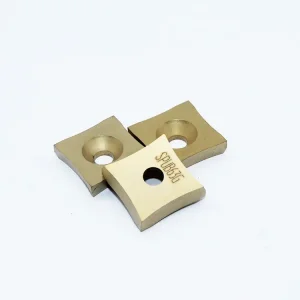
Wear Resistant SPUB 63 Series Carbide Turning Tube Scarfing Inserts for US Pipe Fabricators
View Specifications
Cemented Carbide Metal Cutting Inserts SPUB86B to SPUB86M for US CNC Machining Centers
View Specifications
Tungsten Carbide Square Thread Inserts Tools for United States Heavy Machinery Manufacturing
View Specifications
SPUB86J CVD Coating Woodworking & Milling Tungsten Carbide Button Inserts for US Distributors
View Specifications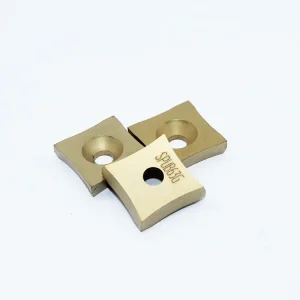
Wear Resistant SPUB 63G Customized Carbide Threading Inserts for North American Tool Distributors
View Specifications
Technical FAQ & Guidance
Engineering Questions US Toolmakers & Procurement Teams Ask
Direct answers from our metallurgical engineering team regarding tooling lifespan, grade formulations, EDM handling, and shipping logistics.
Why choose tungsten carbide cold heading dies over hardened tool steels like D2 or CPM-M4?
Tungsten carbide exhibits a Young's modulus nearly three times that of steel (~580-650 GPa vs ~210 GPa) and significantly superior hardness (86-92 HRA vs 60-64 HRC). Under heavy fastener forming stresses, steel dies deform elastically and wear rapidly, requiring frequent line stoppages. Our YG15/YG20 carbide inserts maintain dimensional stability across hundreds of thousands of strike cycles, dramatically lowering machine downtime and piece-part cost.
How does your factory prevent micro-cracking during Wire EDM machining of carbide mold blanks?
Carbide is susceptible to cobalt leaching and micro-cracking in the EDM recast layer (White Layer) if thermal energy is excessive. We recommend finishing with trim cuts using high-frequency, low-energy settings and anti-electrolysis generators. Furthermore, our 100-bar HIP-sintered blanks possess a fully homogeneous binder distribution with zero free-graphite or eta-phase (W3Co3C), which significantly reduces the sensitivity to thermal micro-fissuring during customer wire erosion.
What is the standard lead time for custom carbide dies shipped to United States destinations?
For custom molds and heading dies built to customer 2D/3D prints, our standard production lead time is 2 to 3 weeks (including near-net pressing, HIP sintering, and CNC precision grinding). Express air courier (FedEx/DHL/UPS) delivers directly to any US facility in 4-6 business days. For recurring production contracts, we offer safety stock blanket programs for immediate local pull.
Can you manufacture non-magnetic carbide wear parts for downhole and medical uses?
Yes. By replacing standard ferromagnetic cobalt binders with specially alloyed nickel-chromium matrix formulations, we produce high-hardness wear parts with magnetic permeability (µ) approaching 1.001 - 1.005. These are widely implemented in directional downhole drilling sensors (MWD/LWD), magnetic inductor tooling, and semiconductor inspection environments across the United States.
Ready to Optimize Your Tooling Life & Lower Production Costs?
Upload your drawing or speak directly with an application metallurgist today. We provide full DFM feasibility analysis, grade matching, and competitive quotes within 8 hours.