
Precision Tooling Solutions for Greater Boston Machine Shops
High-performance CNC carbide inserts designed for micro-tolerances, extended tool life, and high-speed machining of superalloys and hardened stainless steels.
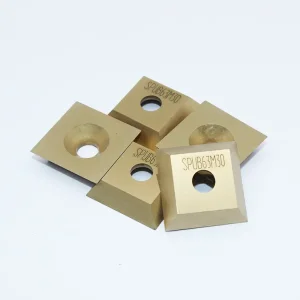
Precision Tungsten Square Indexable Carbide Inserts - Boston Series
View Specifications & Request Quote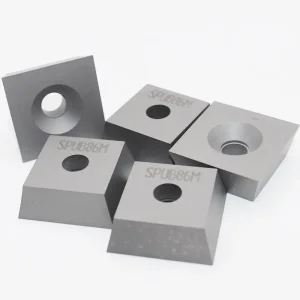
High-Durability Tungsten Woodworking & Milling Carbide Button Inserts
View Specifications & Request Quote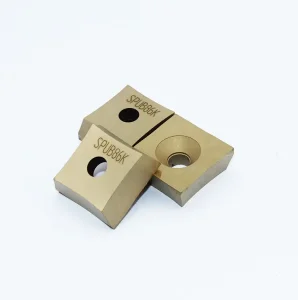
High-Performance PVD/CVD Coated Blank Inserts for New England Machining
View Specifications & Request QuoteThe Boston Industrial Ecosystem: High-Tech Machining Demands
Strategic material insights into how the Route 128 Technology Corridor and New England's medical and defense contractors drive tungsten carbide metallurgy innovations.
The Greater Boston industrial cluster—stretching from the Route 128 innovation corridor to precision manufacturing hubs in Cambridge, Lynn, Worcester, and the North Shore—represents one of North America's most technologically demanding precision-engineering markets. Unlike high-volume consumer commodity manufacturing, Boston’s industrial base focuses on mission-critical aerospace structures, surgical-grade medical devices, defense optics, micro-electromechanical systems (MEMS), and semiconductor manufacturing capital equipment.
Machining components in these sectors involves difficult-to-machine superalloys such as Inconel 718, Waspaloy, Titanium Grade 5 (Ti-6Al-4V), Cobalt-Chrome (CoCr), Nitronic stainless steels, and carbon fiber reinforced polymers (CFRP). Machining these advanced materials requires tungsten carbide inserts engineered to withstand severe thermal loads, extreme notch wear, abrasive shear stress, and work-hardening tendencies.
As a specialized wholesale manufacturer supplying the Boston market, we engineer tungsten carbide inserts with custom binder formulations (6% to 12% Cobalt or Nickel-based binders), sub-micron grain structures (0.4 µm to 0.8 µm WC grain size), and multi-layer nano-coatings tailored specifically to the operational realities of New England's contract machine shops and OEM toolrooms.
Information Gain: Wear Mechanics in Boston Precision Manufacturing
Machining medical implants (316LVM, CoCr) or aerospace turbine parts in Boston job shops requires strict surface integrity (Ra < 0.2 µm). Standard carbide inserts suffer rapid micro-chipping due to built-up edge (BUE) and flank wear ($V_B$).
Our Sinter-HIP manufactured carbide inserts incorporate fine-grain WC microstructures reinforced with Vanadium Carbide (VC) and Chromium Carbide ($\text{Cr}_3\text{C}_2$) grain growth inhibitors. This metallurgical balance increases Transverse Rupture Strength (TRS) above 3,800 MPa while holding hardness at 92.5 HRA, extending tool life by up to 45% during continuous turning of tough nickel superalloys.
Global Industry Trends & Tooling Supply Chain Resilience
How Boston procurement managers and tooling buyers balance cost optimization, ITAR/ISO compliance, vendor consolidation, and raw material volatility.
Total Cost of Ownership (TCO) Shift
Procurement teams in New England are shifting focus from initial unit price to Total Cost per Cutting Edge. By reducing tool change frequency, preventing spindle downtime, and maximizing machine utilization rates, our long-life carbide inserts reduce global cost-per-part by 18% to 27%.
100% Virgin Powder Metallurgy
Volatile global tungsten concentrate prices require stable, direct-factory sourcing. We utilize 100% pure virgin APT (Ammonium Paratungstate) tungsten powders without scrap contamination, eliminating internal voids and density variations across production batches.
Vendor Consolidation & Custom Geometry
Boston machine shops are streamlining supply chains by sourcing standard turning/milling inserts, scarfing inserts, threading blanks, and custom carbide wear parts from a single direct manufacturer capable of rapid custom drawing turnarounds.
Grade Selection & Coating Metallurgy Matrix
Engineering guidelines for selecting substrate microstructures, binders, and PVD/CVD coatings tailored for specific alloy groups in Boston manufacturing.
| Carbide Grade Class | Grain Size (µm) | Binder (Co/Ni %) | Hardness (HRA) | Recommended Coating | Target Boston Application |
|---|---|---|---|---|---|
| UF-05 Sub-Micron | 0.5 µm | 6.0% Co | 92.8 - 93.5 | PVD AlTiN / TiAlSiN | High-speed finishing of titanium implants (Ti-6Al-4V), aerospace fasteners, and medical bone plates. |
| Nano-Grade XF10 | 0.3 - 0.4 µm | 8.0% Co | 91.5 - 92.2 | PVD Nano-Composite | Micro-milling tools for bio-engineering parts, micro-fluidic dies, and precision electronic housings. |
| General Turning GT20 | 0.8 µm | 9.5% Co | 89.5 - 90.5 | CVD MT-TiCN + Al2O3 | Heavy rough turning of stainless steel (304/316), alloy steel forgings, and defense structural tubes. |
| Non-Magnetic NM-12 | 1.0 µm | 10.0% Ni Binder | 88.5 - 89.5 | Uncoated / DLC | Sensors, marine research instruments, magnetic molding dies, and downhole electronics packaging. |
| Impact Tooling Heavy-K | 1.5 - 2.5 µm | 15.0% Co | 86.5 - 87.5 | Uncoated / TiN | Cold heading dies, heavy stamping punches, and high-impact mining/construction wear plates. |
Localized Logistics & Compliance Assurance
Serving buyers in the Boston metropolitan area and New England requires more than delivering high-hardness tungsten carbide inserts—it demands strict quality documentation, reliable logistics channels, and compliance transparency.
- Fast-Track Air Freight to Logan (BOS): Direct door-to-door express delivery agreements ensuring 4 to 7-day transit times for custom insert batches directly into Greater Boston facilities.
- ISO 9001:2015 Quality Management: Complete lot traceability from initial powder milling to final optical dimensional verification, including Full Material Test Reports (MTR) and CMM inspection data.
- RoHS & REACH Compliance: 100% compliant with global chemical safety standards, ensuring no conflict minerals or restricted heavy metals enter your supply chain.
- Vendor Managed Inventory (VMI) Support: Consignment stocking programs for high-volume Boston manufacturing plants to eliminate stockouts of critical cutting insert geometries.
Engineering Consultation for Boston Shops
Struggling with tool wear on a complex multi-axis CNC job? Send us your 2D/3D part drawings or worn insert photographs. Our metallurgists analyze chip formation patterns, thermal cracking symptoms, and notch wear, delivering tailored grade and geometry recommendations within 8 hours.
Connect With an EngineerTechnical Roadmap: Next-Gen Tungsten Carbide Innovation
Pioneering advancements in powder formulation, green sintering, AI-driven chipbreaker geometry, and binderless cermet technologies.
-
1. AI-Sculpted Dynamic Chipbreakers
Integrating computational fluid dynamics (CFD) and FEA modeling to sculpt variable-angle rake faces. This optimizes chip curling and breaking when turning ductile superalloys at high feed rates without increasing cutting force.
-
2. Green Sinter-HIP Eco-Processing
Transitioning to ultra-low emission, high-pressure Sinter-HIP furnaces operating at 100 bar argon gas pressure. This eliminates micro-porosity (A00, B00 porosity rating) while cutting manufacturing carbon footprint by 35%.
-
3. Binderless & Nano-Composite Hard Metals
Developing binderless WC grades achieving 94.5+ HRA hardness for extreme optical mold polishing, along with high-entropy alloy (HEA) binder systems for extreme chemical resistance in corrosive bio-pharmaceutical environments.
PVD & CVD Multi-Layer Coating Innovation
Our proprietary AlTiSiN nano-structure coating achieves thermal oxidation stability up to 1,100°C, permitting dry high-speed machining (HSM) in high-precision Boston toolrooms.
Request Technical Whitepaper PDFComprehensive Wholesale Tungsten Carbide Insert Range
Standard indexable inserts, custom scarfing blades, non-standard jaw inserts, and wear-resistant round inserts direct from factory production lines.
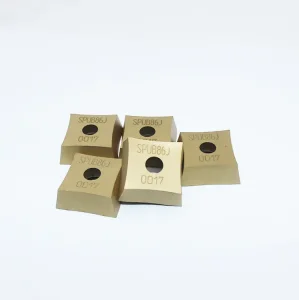
CVD Coated Custom Non-Standard Carbide Jaw & Workholding Inserts for Boston Precision Shops
View Product Specifications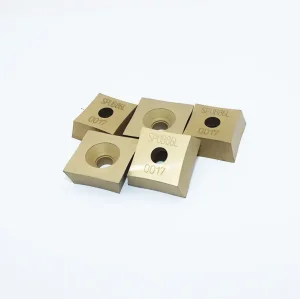
Industrial Square Tungsten Carbide Specialty Button Inserts for Boston Defense Manufacturing
View Product Specifications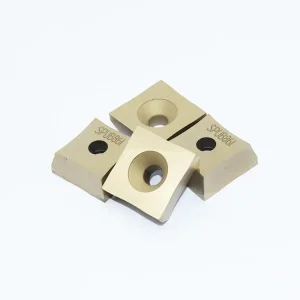
Heavy-Duty Threading Carbide Blank Inserts for Precision Machine Tool Suppliers
View Product Specifications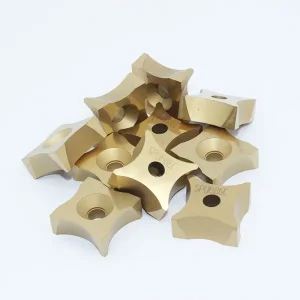
SPUB86 CVD Coated High-Speed Turning Inserts for Boston Metalworking Mills
View Product Specifications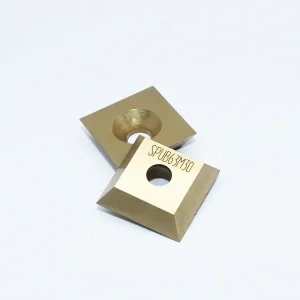
SPUB63 Heavy-Duty Lathe Turning & Scarfing Carbide Inserts for New England Supply
View Product Specifications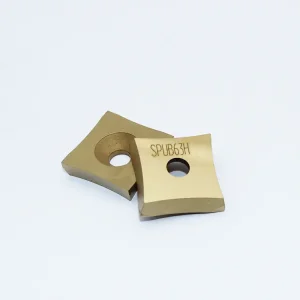
SPUB63H Square Cemented Carbide Lathe Tool Inserts for Hardened Steel Machining
View Product Specifications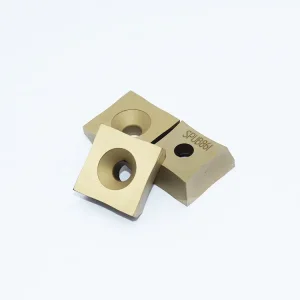
Lathe Carbide Cutting Tool Inserts & Rigid Toolholders for Industrial Manufacturing
View Product Specifications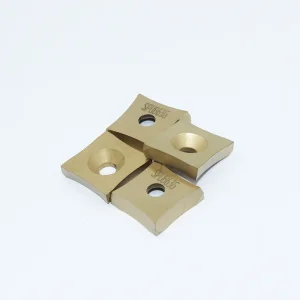
Ultra Wear-Resistant Round Tungsten Carbide Lathe Inserts & Precision Blades
View Product SpecificationsFrequently Asked Questions by Boston Tooling Buyers
Detailed answers regarding grade customization, minimum order quantities, shipping schedules, and metallurgical warranties.