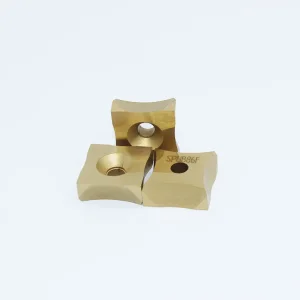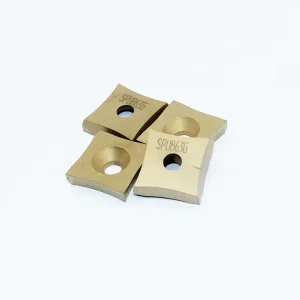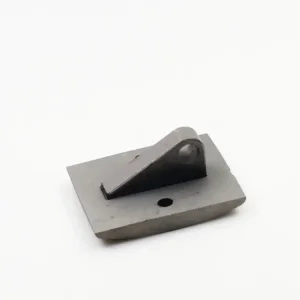
High-Performance Tooling for Advanced Manufacturing
Direct sourcing from Jiangxi Zhongfu Cemented Carbide Co., Ltd. for engineering firms and precision toolshops operating across Central America.
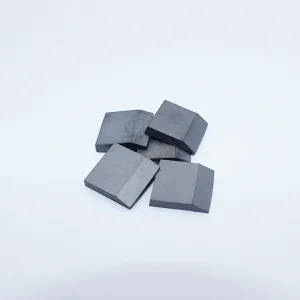
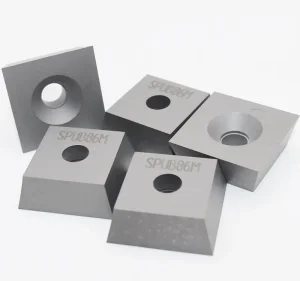
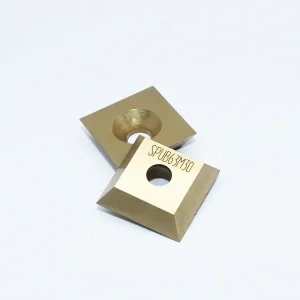
Costa Rica’s Modern Industrial Landscape: High-Precision Needs
From Coyol Free Zone to Cartago, Costa Rica's technological transition drives an unprecedented demand for micro-grain tungsten carbide wear tooling.
Medical Device Micro-Molds
Costa Rica is Latin America’s foremost exporter of medical technology (MedTech). Production facilities in Alajuela and Heredia require ultra-dense sub-micron tungsten carbide mold cavities, catheter tipping dies, and surgical blade stamping matrices that operate under stringent cleanroom requirements with zero micro-flaking.
Free Trade Zone (FTZ) Standards
Operating under Costa Rica’s Free Zone Regime (Régimen de Zonas Francas), transnational electronics and high-tech manufacturers adhere to strict OEE (Overall Equipment Effectiveness) KPIs. Tool replacement must be predictable, requiring carbide molds with isotropic density produced via Hot Isostatic Pressing (HIP).
Agro-Industrial & Extrusion
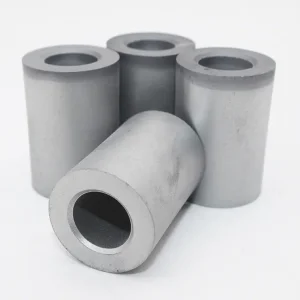
Beyond electronics, Costa Rica maintains active food processing, packaging film extrusion, and aluminum shaping operations. These sectors require large-diameter cemented carbide rings, pelleted feed dies, and corrosion-resistant nickel-binder carbide tooling to withstand humid tropical processing environments.
Why Central American Procurement Teams Source Direct from Zhongfu
Combining the geopolitical raw material advantages of Jiangxi with German-engineered vacuum sintering technology.
Integrated Jiangxi Tungsten Chain
Located in Nanchang, Jiangxi—the world's capital for native tungsten reserves—Zhongfu controls the primary refining stages. By avoiding middle-tier metal brokers, we provide Costa Rican manufacturers with certified metallurgical batch consistency and full traceability from Ammonium Paratungstate (APT) to finished mold blanks.
HIP Overpressure Metallurgy
Every cold heading mold, wire drawing core, and punching die undergoes 100-bar hot isostatic pressure (Sinter-HIP) sintering. This eliminates internal micro-voids, elevating transverse rupture strength (TRS) to upwards of 2800–3200 MPa, preventing catastrophic splitting under cyclic multi-ton impact loading.
Non-Magnetic & Corrosion Blends
For cleanroom environments, electronic component forming, or wet environments prone to electrochemical degradation, we formulate tailored nickel-bonded (Ni) and chromium-stabilized non-magnetic cemented carbide grades that replace standard cobalt binders to resist aggressive pitting and erosion.
Need Custom Tungsten Carbide Tooling in Costa Rica?
Send your 2D/3D CAD drawings (DXF, DWG, STEP) or physical sample specifications. Our application engineers provide comprehensive metallurgical recommendations and CIF San José / Puerto Caldera / Puerto Limón delivery quotes within 8 hours.
Standard & Custom Carbide Grades for Mold Engineering
Select the optimal cobalt-to-carbide ratio according to your mechanical stress, wear profile, and impact intensity.
| Carbide Grade | Binder Content (Co / Ni %) | Density (g/cm³) | Hardness (HRA) | T.R.S. (MPa) | Recommended Industrial Applications |
|---|---|---|---|---|---|
| YG6X / K10 | 6.0% Co | 14.95 | 91.5 | 2200 | High-precision razor slitters, fine wire drawing dies, medical micro-punches. |
| YG8 / K20 | 8.0% Co | 14.75 | 89.5 | 2500 | Wear guide plates, standard extrusion bushings, high-wear scrapers. |
| YG15 / K40 | 15.0% Co | 14.05 | 87.0 | 2800 | Cold heading dies, screw forming punches, intermediate stamping tooling. |
| YG20C / Impact | 20.0% Co (Coarse WC) | 13.50 | 84.5 | 3100 | Heavy cold forging dies, high-impact cold extrusion, thick plate blanking dies. |
| NM-12 (Non-Mag) | 12.0% Ni Binder | 14.40 | 88.0 | 2400 | Electronic lead frame stamping, cleanroom medical molds, non-magnetic sensor jigs. |
Macro Dynamics: Navigating Tool Life & Nearshoring
How engineering partnerships between Asian metallurgical leaders and Central American production plants optimize cost-per-part metrics.
Total Cost of Ownership (TCO)
For high-throughput manufacturing plants in Costa Rica, tooling price represents less than 5% of production expenses; line downtime accounts for over 60%. By utilizing sub-micron grain structures with higher isotropic bonding, Zhongfu dies extend mold cycles by 300% to 500% compared to standard D2/M2 tool steel, drastically lowering changeover interruptions.
Nearshoring Redundancy
Global supply chain realignments have led North American corporations to establish critical nodes in Costa Rica. To mitigate lead time risks, Zhongfu offers flexible blanket-order warehousing and rapid air-cargo fulfillment to Juan Santamaría International Airport (SJO), ensuring plant operations remain completely uninhibited.
Wire EDM & Polish Precision
Modern progressive dies require mirror finishes (Ra ≤ 0.05 µm) to avoid micro-burrs on stamped connector terminals. Zhongfu’s wire-EDM pre-forms and ground blocks are thermally stress-relieved prior to dispatch, eliminating internal stress cracking during customer secondary electrical discharge machining.
Frequently Asked Questions: Sourcing to Costa Rica
Clear, direct answers for tool designers, production engineers, and purchasing directors.
Can Zhongfu customize tungsten carbide mold parts from technical drawings?
What are the key shipping routes and lead times for shipments to Costa Rica?
Why use nickel-binder (non-magnetic) carbide for precision medical and electronic molds?
How does Zhongfu guarantee zero porosity in large carbide blocks and mold blanks?
What are the minimum order quantities (MOQ) for custom carbide mold inserts?
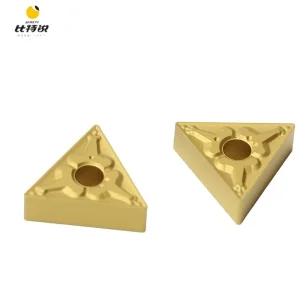
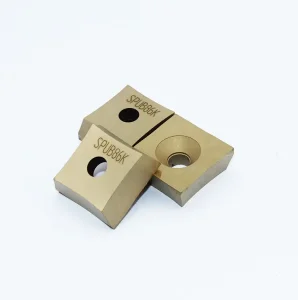
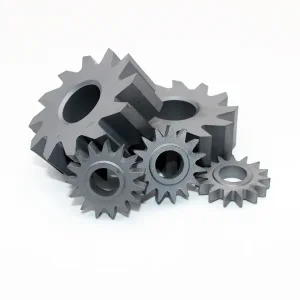
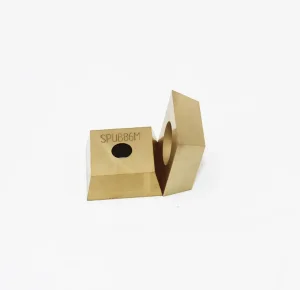
Specialized Wear Inserts, Scarfing Cutters & Tooling Blanks
Heavy-duty, wear-resistant carbide components engineered to withstand high abrasion and cyclic thermal shock.