Featured Non-Magnetic & Wear Resistance Solutions for Uzbekistan
Precision-machined tungsten carbide components formulated specifically for extreme downhole geology, precision manufacturing, and continuous industrial milling operations throughout Uzbekistan's industrial corridors.
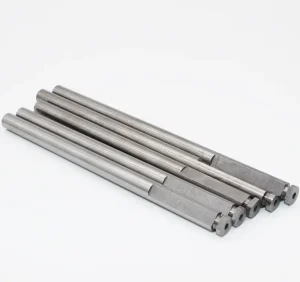
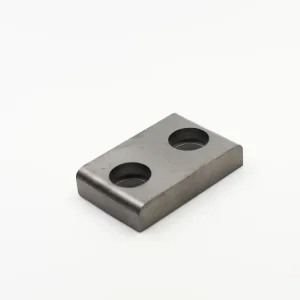
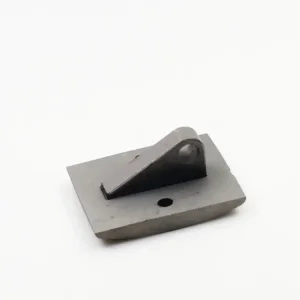
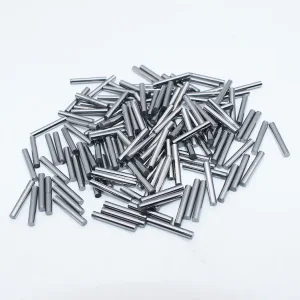
Modernizing Uzbekistan’s Strategic Industrial Engine
Under the national industrial modernization initiatives of the Republic of Uzbekistan, large-scale capital investments are accelerating across the mineral-rich expanses of the Navoi and Almalyk industrial nodes, the hydrocarbon-dense basins of Bukhara-Khiva and Ustyurt, and the burgeoning automated manufacturing clusters of Tashkent and Samarkand.
As state enterprises and joint ventures modernize extraction, heavy processing, and automated precision assemblies, traditional cobalt-bonded carbide wear parts have proven insufficient. Cobalt's intrinsic ferromagnetism introduces critical operational errors in drilling guidance systems, disrupts electromagnetic monitoring arrays, and suffers rapid electrolytic corrosion in acidic leaching solutions. Jiangxi Zhongfu Cemented Carbide Co., Ltd. provides direct manufacturing partnership to deliver sub-micron, nickel-bonded, non-magnetic tungsten carbide solutions customized for Uzbekistan's specific geotechnical and chemical profiles.
Operational Demands Across Uzbek Infrastructure
- Navoi Mining & Metallurgy Combinat (NMMC): Telemetry-clean mining wear sleeves, slurry control components, and sub-surface survey housings free of stray magnetic flux.
- Almalyk Mining & Metallurgical Complex (AMMC): Copper and molybdenum processing slurry choke valves requiring high abrasion resistance combined with chemical corrosion resilience.
- Uzbekneftegaz Downhole Systems: Directional Measurement-While-Drilling (MWD) and Logging-While-Drilling (LWD) wear pads preserving sensor magnetic orientation downhole.
- Tashkent Mechanical & Electronic Parks: High-precision magnetic-neutral punch tools for rotor stamping, electrical steel dies, and semiconductor positioning pins.
Global Evolution of Non-Magnetic Sintered Carbides
Standard cemented carbide relies on cobalt (Co) as a binder metal to wet WC grains during liquid-phase sintering. In cutting-edge instrumentation and severe electrochemical environments, conventional chemistry fails.
Nickel-Chromium Binder Chemistry
By replacing cobalt with an engineered nickel-chromium (Ni-Cr) solid-solution matrix, the phase remains strictly austenitic at all operating temperatures (-50°C to +500°C). This achieves a relative magnetic permeability (μr) consistently below 1.005, eliminating magnetic flux distortion completely.
Ultra-High Overpressure Sinter-HIP
Utilizing high-pressure vacuum Sinter-HIP autoclaves running up to 100 bar at 1,450°C, internal micro-porosity is collapsed completely to ISO A00-B00 ratings. This prevents localized micro-fissuring under the intense cyclical hydraulic pressures encountered in high-output extraction pumps.
Electrochemical Corrosion Shielding
Nickel binders inherently resist corrosive degradation from chloride solutions, sulfuric acids, and saline formation waters. Unlike cobalt, which leaches aggressively in media below pH 6, our proprietary Ni-Cr carbide grades maintain mechanical integrity in severe aqueous and mining slurries.
Non-Magnetic vs. Standard Grade Matrix for Engineering Teams
Compare mechanical, magnetic, and environmental performance vectors to select the optimal carbide alloy for your Uzbekistan project.
| Performance Indicator | Standard WC-Co (YG6 / YG8) | Zhongfu Non-Magnetic NM-Ni8 | Zhongfu High-Toughness NM-Ni15 | Primary Industrial Role |
|---|---|---|---|---|
| Binder Content & Type | 6% - 8% Cobalt (Co) | 8% Nickel-Chromium (Ni-Cr) | 15% Nickel-Molybdenum (Ni-Mo) | Chemical stability & toughness control |
| Magnetic Permeability (μr) | Ferromagnetic (μr > 100) | < 1.005 (Virtually Zero) | < 1.002 (Telemetry Grade) | Sensor housings, MWD guidance tools |
| Hardness (HRA) | 89.5 - 91.5 | 90.0 - 91.5 | 86.5 - 88.0 | Slurry impingement & abrasive wear |
| Transverse Rupture (MPa) | 1,800 - 2,200 | 2,300 - 2,500 | 2,700 - 2,900 | Impact loading & mechanical stress |
| Corrosion Resistance | Low (Rapid Co leaching in acid) | High (Exceptional in neutral/acid) | Superior (Chloride & acidic media) | Chemical injection & hydrometallurgy |
| Uzbekistan Sector Fits | Dry mechanical cutting, general steel | Navoi Gold CIL pumps, MWD collars | Heavy hydraulic valves, cold heading | Direct procurement matching |
Custom Engineered Sintering for High-Stakes Deployments
From prototype design review to high-volume recurring deliveries along Central Asian logistical networks.
Solving Downtime Bottlenecks in Central Asia
In the challenging climate and geological formations of Uzbekistan—ranging from high ambient desert heat to mineralized saline formation beds—component lifespan dictates plant uptime. Replacing worn cobalt carbide parts every few weeks incurs massive labor downtime, logistical customs delays, and lost yield.
By engineering carbide wear blanks specifically balanced with sub-micron grain sizing and custom binder alloys, our components extend service intervals by 300% to 500% across harsh operational settings. Furthermore, our specialized clean-powder manufacturing process ensures zero cross-contamination of iron or cobalt, maintaining stringent magnetic isolation across production runs.
Verified Field Performance Benchmarks
- Directional Drilling Telemetry: Reduced sensor noise by 99.4% in deep exploration wells, safeguarding azimuth and inclination reading fidelity.
- Hydrometallurgical Slurry Valves: Maintained tight dimensional tolerance past 4,200 continuous hours in acidic gold leach slurries with zero surface pitting.
- Stamping of Electromagnetic Rotors: Prevented residual magnetic buildup on dies, eliminating slug pulling and burr defects across 1.2 million cycles.
- Chemical Metering Shafts: High mirror-finish polishing (Ra < 0.05 μm) eliminating seal wear in high-pressure fluid transfer.
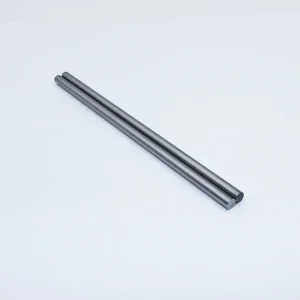
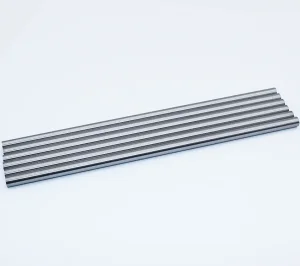
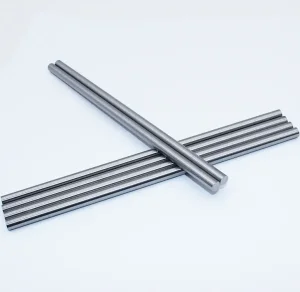
Full Industrial Carbide Portfolio Supplying Uzbekistan
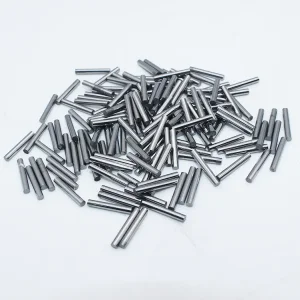
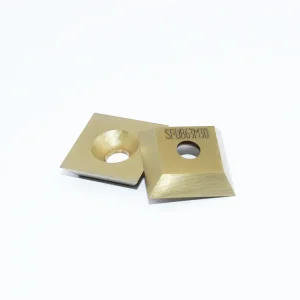
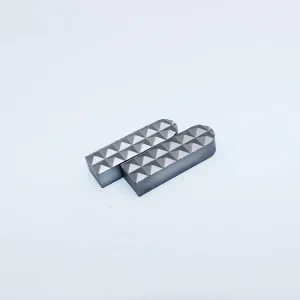
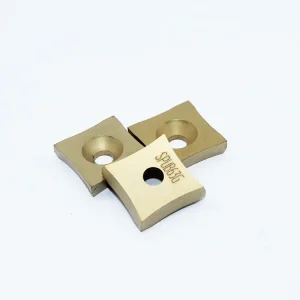
Standardized stock shapes, semi-finished ground rods, and specialized wear inserts ready for immediate consolidation and shipment to Central Asia.
Frequently Asked Technical Questions
Common inquiries from industrial purchasing directors, petroleum tool engineers, and plant managers in Uzbekistan.
Why is nickel binder necessary instead of cobalt for non-magnetic applications?
How does Zhongfu deliver non-magnetic carbide orders to destinations in Uzbekistan?
Can you produce non-magnetic parts according to proprietary CAD/CAM drawings?
How do non-magnetic carbides perform in acidic gold and copper extraction environments?
What quality verification steps guarantee batch-to-batch consistency?
Equip Your Operation with High-Endurance Non-Magnetic Carbide
Submit your CAD drawings or component specifications today. Our senior metallurgical engineers provide full manufacturability reviews and custom quotes within 8 hours.