
Featured Non-Magnetic Carbide Parts for South African Industry
Precision-sintered nickel-binder components designed to withstand severe erosive slurries, continuous mechanical abrasion, and dense electromagnetic sensing environments across Gauteng, Mpumalanga, and the Bushveld Complex.

South Africa Mining Non-Magnetic Carbide Scarifier Cutter & Through-Hole Wear Sleeves
View Product Details →
High-Precision Tungsten Carbide Wear Parts & Non-Magnetic Cutting Blanks for South Africa
View Product Details →
Heavy-Duty Non-Magnetic Tungsten Cemented Carbide Custom Wear Bushings & Plates
View Product Details →
Ultra-Fine Non-Magnetic Carbide Pins for Precious Metal Setting & Electronic Gauging
View Product Details →South Africa's Demand for Non-Magnetic Cemented Carbide
Why sub-Saharan Africa's premier extractive economy requires advanced non-magnetic tungsten metallurgy to eliminate sensor interference, combat corrosive mine drainage, and maximize tool lifecycles.
South Africa: Deep-Level Extraction & Mineral Sorting
South Africa hosts the world's most concentrated reserves of Platinum Group Metals (PGMs), gold in the Witwatersrand Basin, manganese in the Kalahari, and diamonds across the Northern Cape and Limpopo. As mining depths exceed 3,000 meters, directional drilling tools and Measurement While Drilling (MWD/LWD) probe housings encounter intense electromagnetic interference when using standard cobalt-bonded carbides.
Standard cemented carbides rely on cobalt (Co), which is naturally ferromagnetic. In underground exploration and automated sorting facilities—such as High-Gradient Magnetic Separation (HGMS) and X-ray diamond recovery circuits—stray magnetic signatures cause false readings, particle clogging, and tool telemetry failure. Our nickel-bonded non-magnetic parts solve this critical challenge, providing a non-sparking, zero-remanence solution across South African plants.
Global Metallurgy Trends & Subsea Demand
Globally, the non-magnetic tungsten carbide market is accelerating due to the expansion of offshore subsea oil exploration, medical resonance tooling (MRI environments), semiconductor wire bonding, and automated industrial sensing. Conventional cobalt leach in acidic environments (pH < 4) compromises tool longevity in offshore rigs and chemical refineries.
By engineering nickel-chromium (Ni-Cr) and nickel-molybdenum (Ni-Mo) solid-solution binders, modern Chinese sintering plants have pushed magnetic permeability (μr) down to less than 1.002, matching or exceeding international ASTM A342 standards while simultaneously increasing resistance to acidic slurry erosion by 300% compared to traditional YG8 grades.
Chinese Factory Efficiency: End-to-End Metallurgy for African Importers
How Jiangxi Zhongfu integrates upstream tungsten powder refining with precision CNC/EDM diamond grinding to lower procurement cycles from 20 weeks down to under 25 days.
100% Virgin Tungsten & Ni Formulations
Unlike workshops utilizing recycled or reclaimed black powder, our foundry utilizes primary virgin tungsten carbide (purity ≥ 99.95%) wet-milled with electrolytic nickel binders. This ensures an isotropic microstructure free of cobalt contamination, preventing spontaneous magnetic clustering even under cyclic stress.
100-Bar Hot Isostatic Pressing (Sinter-HIP)
All non-magnetic blanks undergo continuous pressure sintering in our computer-monitored Sinter-HIP furnaces at 1,420°C under 10 MPa of ultra-pure argon. This eliminates microscopic shrinkage cavities and internal porosity (evaluated to ISO 4505 class A00/B00), guaranteeing zero void propagation in high-pressure deep wells.
Micron Tolerance Grinding & Mirror Polish
Our grinding workshops are equipped with 5-axis Walter CNC tool grinders, Swiss centerless grinders, and precision slow-wire EDM units. We deliver h6 external diameter tolerances on non-magnetic round rods (±0.002 mm) and surface finishes down to Ra 0.05 μm for leak-tight mechanical seal faces.
Powder Blending
Sub-micron WC mixed with electrolytic Ni/Cr binder in high-energy ball mills.
CNC Isostatic Pressing
Dry-bag cold isostatic pressing (CIP) to ensure uniform density before sintering.
HIP Overpressure Sintering
Argon-assisted hot isostatic pressing to achieve near-theoretical 100% density.
Diamond Precision Finishing
Centerless cylindrical grinding, EDM wire slicing, and optical lap polishing.
Gaussmeter Permeability QA
Individual eddy-current and Hall-effect verification guaranteeing μr < 1.005.
Non-Magnetic Cemented Carbide Grades Specification
Engineered for engineering procurement managers: Compare mechanical properties, binder composition, magnetic permeability, and intended industrial applications.
| Grade Designation | Binder (wt%) | Density (g/cm³) | Hardness (HRA) | TRS (N/mm²) | Permeability (μr) | Target South African Industry Application |
|---|---|---|---|---|---|---|
| NM-06 (Ultra-Hard) | 6% Ni + Cr Inhibitor | 14.90 - 15.05 | 91.5 - 92.8 | 1,900 | ≤ 1.002 | Gauging pins, diamond sorter nozzles, high-precision wear guides |
| NM-09 (General Mining) | 9% Ni Solid Solution | 14.60 - 14.80 | 89.5 - 90.8 | 2,300 | ≤ 1.004 | Slurry pump bushings, valve seats, MWD directional drill collars |
| NM-12 (Toughness Plus) | 12% Ni-Cr-Mo | 14.30 - 14.50 | 87.8 - 89.2 | 2,650 | ≤ 1.005 | Heavy-impact scarifier blades, hydrocyclone apexes, downhole jars |
| NM-15 (Impact Grade) | 15% Ni-Alloyed | 14.00 - 14.20 | 86.0 - 87.5 | 2,900 | ≤ 1.006 | Chute impact liners, deep-well borehole percussion stabilization pads |
| CR-NM (Acid-Resistant) | 10% Ni-Cr Complex | 14.50 - 14.70 | 89.0 - 90.5 | 2,150 | ≤ 1.003 | Acid mine drainage (AMD) pumps, gold leaching autoclaves, marine valves |
Need Custom Technical Formulations or Non-Standard Profiles?
Submit your CAD drawings or dimensional requirements. Our metallurgists provide material certificates and DFM feedback within 8 hours.
Industrial Implementation Across South African Economic Corridors
From the deep underground gold stopes of Carletonville to the coastal terminals of Richards Bay, our non-magnetic tungsten components deliver proven reliability in harsh African operational conditions.
1. Diamond Recovery & X-Ray Separation
In Kimberley, Venetia, and Namaqualand diamond recovery facilities, minerals are concentrated using Dense Medium Separation (DMS) cyclones and magnetic drums. Standard cobalt parts magnetize over time, attracting fine ferro-silicon (FeSi) and causing diamond crushing or bypass. Non-magnetic tungsten carbide ejector pins, scraper nozzles, and wear tiles ensure zero magnetic build-up and maintain 99.8% recovery efficiency.
2. Directional Borehole Drilling (MWD/LWD)
Exploration across the Bushveld Igneous Complex requires high-accuracy directional drilling to intercept thin platinum-bearing chromitite seams (Merensky Reef and UG2). Non-magnetic carbide wear sleeves and flow restrictors installed inside the MWD sensor collar allow magnetic navigation probes and fluxgate magnetometers to calculate inclination without compass distortion.
3. Acid Mine Drainage (AMD) & Slurry Pumping
Witwatersrand gold workings generate severely acidic mine water containing sulfuric acid and suspended quartz grits. While cobalt binder rapidly leaches out, dissolving the carbide matrix and causing premature failure, our nickel-chromium non-magnetic alloys resist attack down to pH 2.0, extending mechanical pump seal and throttle valve life by 4 to 6 times.
International Quality Standards for South African Importers
Zero-defect protocols: Every batch shipped to Durban or Johannesburg is backed by comprehensive metallurgical inspection records, dimensional CMM data, and calibrated magnetic permeability documentation.
Strict Quality Verification Protocols
Overseas procurement risks are mitigated through rigorous in-house laboratory testing following international norms:
- Magnetic Testing: Calibrated fluxgate magnetometers and magnetic balance bridges test relative permeability to μr < 1.005 in accordance with ASTM A342 Method 4.
- Microstructure & Porosity: Metallographic cross-sectioning under 1,000x digital microscope verified to ISO 4505 (A00-A02, B00, C00).
- Density & Hardness: Archimedean water immersion method (ISO 3369) and Rockwell hardness testing under diamond indenters (ISO 3738).
- Ultrasonic Flaw Inspection: Non-destructive testing across all large blanks to detect hidden subsurface micro-cracks before CNC grinding.
Sea Freight, Air Freight & Customs Packaging
Reliable transit from China to South Africa through established logistics partnerships:
- Air Cargo: 3 to 7 working days to O.R. Tambo International Airport (Johannesburg) or Cape Town International for urgent line-stoppage orders.
- Ocean Freight: Consolidated container shipping directly into Durban, Port Elizabeth, or Cape Town Harbor within 22 to 28 days transit.
- Protective Packaging: Vacuum-sealed anti-corrosion barrier bags, shock-absorbing EPS foam cradles, and heavy-duty ISPM-15 export fumigated wooden crates.
- Complete Customs Documentation: Bill of Lading, Commercial Invoice, Packing List, Certificate of Origin, and Mill Test Certificates (MTC 3.1).
Tungsten Carbide Parts, Rods & Industrial Scarfing Inserts
Browse our complete range of specialized non-magnetic alloy rods, precision pin gauges, centerless lathe peeling tools, and high-production scarfing inserts supplied directly to South African mills.

Non-Magnetic Cemented Carbide Rods for Water Meter Shafts & Pump Impellers in South Africa
View Product Details →
Nickel-Based Tungsten Carbide Rods with Nickel Binder for South Africa Machinery Builders
View Product Details →
Nickel Non-Magnetic Cemented Carbide Rods with Nickel Binder for South Africa Extrusion Dies
View Product Details →
Non-Magnetic Solid Cemented Carbide Pin Plug Gauges & Inspection Rods for South Africa
View Product Details →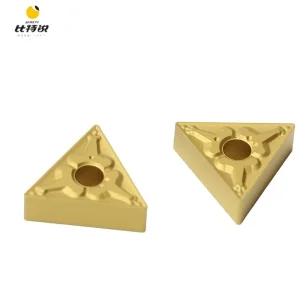
Tungsten Carbide Bar Peeling Inserts for Centerless Lathe Steel Finishing in South Africa
View Product Details →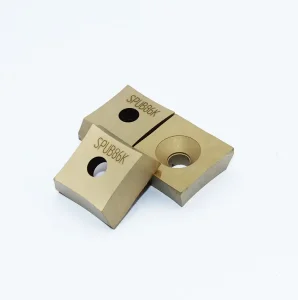
Industrial Carbide Scarfing Inserts SPUB86B/C/D/E/F/G/H/K/M for South Africa Tube Mills
View Product Details →
SPUB-63 Series Tungsten Carbide Milling & Profiling Inserts for South Africa Workshops
View Product Details →
SPUB63M30 TiN-Coated Pipe OD Weld Scarfing Inserts for South Africa Steel Infrastructure
View Product Details →Frequently Asked Technical Questions: Sourcing for South Africa
Clear answers on metallurgical properties, non-magnetic qualification, delivery schedules to South African ports, and customization support.
Standard tungsten carbide uses cobalt as a metallic binder, which is ferromagnetic with high remanence. When subjected to electromagnetic fields or high mechanical shear, cobalt generates residual magnetism. Non-magnetic carbide substitutes cobalt with an alloyed nickel (Ni) or nickel-chromium (Ni-Cr) matrix. Because face-centered cubic nickel in solid solution remains paramagnetic, the resulting parts maintain relative magnetic permeability μr ≤ 1.005, making them invisible to magnetic sensors and non-sparking in explosive mine atmospheres.
Cobalt binder exhibits rapid galvanic dissolution in acidic media below pH 4.0, which is common in South Africa's Witwatersrand gold fields due to pyrite oxidation. Nickel-chromium binders form an instantaneous passive chromium oxide (Cr2O3) boundary film across the sintered boundary. This chemical passivation prevents acidic leaching and prevents quartz sands from causing structural pitting and grain detachment.
Yes. Over 70% of our production consists of customized components built to customer drawings. We accept SolidWorks, STEP, DXF, and PDF engineering blueprints. Our facility handles all mold design, near-net shape powder pressing, 100-bar HIP sintering, and high-precision diamond grinding to fulfill your specified linear, circular, and geometric tolerances.
Every production batch undergoes individual testing using a digital fluxgate magnetometer and calibrated Severn magnetic balance indicator calibrated to ASTM A342 standards. Test certificates verifying that relative magnetic permeability is below the required threshold (μr < 1.005 or μr < 1.002) are provided alongside dimensional CMM inspection reports.
Standard blanks and ground round rods ship within 7 to 10 working days. Custom tooling requiring new pressing dies takes 15 to 22 working days. Urgent air consignments reach Johannesburg (JNB) or Cape Town (CPT) within 4 to 6 business days. Consolidated ocean shipments to Durban or Port Elizabeth take approximately 24 days door-to-port.
China holds over 75% of the world's primary tungsten concentrate reserves. Direct sourcing from our Jiangxi manufacturing base bypasses multiple tiers of European trading intermediaries. Buyers in South Africa achieve an immediate 35% to 50% reduction in unit procurement costs while maintaining equivalent or superior metallurgical density, hardness, and wear endurance.
Optimize Your Non-Magnetic Carbide Component Sourcing Today
Whether you require OEM replacement wear sleeves, MWD directional drill components, diamond separator nozzles, or specialized tungsten scarfing inserts, our engineering sales team is ready to evaluate your requirements.