
Precision Non-Magnetic Wear Components for Paris Engineering Clusters
Optimized for French high-precision defense corridors in Évry and Vélizy, luxury instrument manufacturing in Place Vendôme, and biomedical diagnostics around the Seine Valley. Original manufactured solutions delivered with certified dimensional precision and zero magnetic remanence.
-

Paris Heavy Infrastructure • Tungsten Non-Magnetic Scarifier Cutter & Through-Hole Wear Parts
View Product Details -

Paris Aerospace Micro-Machining • High-Precision Hard Alloy Tungsten Carbide Tool Wear Parts
View Product Details -

Île-de-France Precision Assemblies • Wholesale Tungsten Non-Magnetic Cemented Carbide Wear Parts
View Product Details -

Paris Luxury Horology & Jewelry Atelier • Non-Magnetic Carbide Pin Components
View Product Details
The Non-Magnetic Carbide Ecosystem across Greater Paris (Île-de-France)
While Paris is universally recognized as a global capital of design and finance, the broader Île-de-France region represents Europe’s densest concentration of high-technology engineering, aerospace R&D, precision physics, and high-end artisanal manufacturing.
Paris-Saclay Science Cluster
Home to CEA, CNRS, synchrotron radiation facilities, and advanced particle laboratories. Research teams demanding ultra-clean, non-distorting wear guides and collimation slits utilize non-magnetic tungsten carbide to avoid beamline deflection and electromagnetic interference in ultra-high vacuum (UHV) test chambers.
Aerospace & Defense Corridors
Surrounding Villaroche, Vélizy-Villacoublay, and Gennevilliers, suppliers to Safran, Airbus, and Thales specify non-ferromagnetic carbide parts for inertial navigation housings, turbine flow monitoring probes, and gyroscopic bushings where cobalt remanence (μ>1.05) would cause catastrophic sensor drift.
Place Vendôme Luxury & Micro-Horology
Parisian master watchmakers and high jewelry Maisons require miniature diamond-setting pins, anti-magnetic balance wheel tooling, and mirror-polished micro-punches. Traditional steel or standard WC tooling transfers residual magnetism, fouling micro-mechanical watch movements during assembly.
Market Observation for Parisian Engineering Directors: European supply lines for non-magnetic hard metals have historically faced long mill lead times (16–24 weeks) and high batch minimums. Direct partnership with advanced Chinese powder-metallurgy factories eliminates intermediate supply tiers, offering custom Sinter-HIP runs delivered directly to Paris-Charles de Gaulle logistics hubs within 14–21 days.
Local Challenges in French Precision Manufacturing
French mechanical design bureaus consistently emphasize stringent compliance with environmental mandates (RoHS 3, REACH EC 1907/2006) alongside rigorous dimensional precision under French AFNOR and international ISO standards. Standard cemented carbides rely on cobalt binders (5% to 20%), which exhibit high ferromagnetism and susceptance to galvanic corrosion in chemical or cleanroom wash environments.
In precision Parisian applications—such as magnetic resonance imaging (MRI) equipment fabricated along the Biocitech biotechnology hub or precision sensor shafts for smart water meters—conventional cobalt-bonded carbide distorts the surrounding magnetic field lines, corrupting high-frequency instrumentation.
- Permeability Thresholds: Paris aerospace test protocols require magnetic permeability μr strictly below 1.005.
- Galvanic Stability: Nickel-chromium matrices prevent acidic pitting caused by synthetic lubricants used in CNC machining centres across Seine-Saint-Denis.
- Sub-Micron Finish: Achieving mirror finishes down to Ra 0.05 μm without cobalt leaching or grain pull-out.
The Chinese Manufacturing Advantage
As the origin of over 80% of global tungsten reserves, China provides unmatched structural resilience and cost predictability in cemented carbide manufacturing. Chinese precision factories combine upstream metallurgical purity with cutting-edge Sinter-HIP (Hot Isostatic Pressing at 100 bar) furnaces and multi-axis CNC Swiss grinding technology.
Our factory specializes in customized powder formulation, blending ultra-fine tungsten carbide powder (0.6–1.2 μm) with pure non-magnetic nickel-chromium (Ni-Cr) or non-ferrous multi-element binders. This ensures near-zero porosity (ISO Level A02/B00) and uniform hardness reaching up to HRA 93.5, providing Parisian industrial buyers with world-class tool longevity without magnetic interference.
Metallurgical Comparison: Non-Magnetic vs. Standard Carbide Grades
Understanding the mechanical and physical trade-offs is essential for procurement managers and mechanical engineers evaluating wear parts for sensitive electronic or corrosive environments.
| Grade Category | Binder Type & Wt% | Magnetic Permeability (μr) | Hardness (HRA / HV30) | Transverse Rupture Strength (TRS) | Corrosion Resistance | Primary Industrial Deployment |
|---|---|---|---|---|---|---|
| ZF-NM05 (Ultra-Dense) | 5.0% Ni-Cr-Mo | < 1.002 Zero Remanence | 92.8 – 93.5 HRA | 2,100 N/mm² | Exceptional (pH 2–12) | Magnetic sensor pins, MRI slit collimators, semiconductor test sockets |
| ZF-NM08 (General Wear) | 8.0% Ni-Base Alloy | < 1.005 Non-Magnetic | 90.5 – 91.5 HRA | 2,450 N/mm² | High (Organic & Weak Acids) | Paris water meter drive shafts, non-sparking cutters, downhole tools |
| ZF-NM12 (Shock Tough) | 12.0% Ni-Cr Matrix | < 1.008 Very Low Field | 88.0 – 89.2 HRA | 2,800 N/mm² | Superior Toughness | Stamping dies for magnetic alloys, electronic lead-frame blanking |
| Standard YG6 (Reference) | 6.0% Cobalt (Co) | > 2.500 Ferromagnetic | 90.5 HRA | 1,900 N/mm² | Low (Rapid Acid Pitting) | Standard metal turning, dry abrasive wear plates (Not MRI/Sensor safe) |
| Standard YG15 (Reference) | 15.0% Cobalt (Co) | > 8.000 Strong Magnetic | 87.0 HRA | 2,600 N/mm² | Poor in wet/acidic conditions | Heavy cold forging, high-impact punches (Distorts magnetic fields) |
Why Eliminating Cobalt Matters in High-Tech Assemblies
Cobalt has been the universal binder for cemented carbides for a century due to its outstanding wetting ability with tungsten carbide grains. However, cobalt's ferromagnetic crystalline structure causes parts to become permanently magnetized upon exposure to electromagnetic coils, eddy currents, or high-field motors.
When a wear part in an automated sorting line or robotic arm becomes magnetized, it begins to attract microscopic ferrous dust and metal filings. This abrasive buildup acts as a grinding paste, accelerating abrasive wear by up to 500% and scratching mirror-finished Parisian components.
Nickel-Chromium Solid Solution Engineering
By substituting cobalt with a proprietary non-magnetic austenitic Nickel-Chromium phase developed through our precision ball-milling and vacuum-reduction processes, our parts maintain a complete FCC (face-centered cubic) non-magnetic crystal structure across extreme temperatures ranging from cryogenic levels (−196°C) up to 550°C.
Furthermore, the chromium additions create a passivating oxide film that renders our non-magnetic carbide immune to galvanic corrosion when paired with titanium, 316L stainless steel, or gold alloys in Parisian jewelry and medical hardware.
Global Corporate Sourcing & Compliance Standards for Paris OEMs
Procurement teams representing multinational French industrial conglomerates operate under strict regulatory and operational constraints. Here is how our production processes align with international quality and compliance audits.
Full Lot Traceability & Certification
Every dispatch to the Paris market includes comprehensive metallurgical test reports: 3.1 Mill Test Certificates (EN 10204), chemical composition breakdown via X-ray fluorescence (XRF), density testing, and vibrating sample magnetometer (VSM) permeability verification.
REACH, RoHS & Conflict Minerals
100% compliant with EU Regulation (EC) No 1907/2006 (REACH) and Directive 2011/65/EU (RoHS 3). Our raw tungsten concentrates originate strictly from certified, conflict-free domestic mines adhering to Responsible Minerals Initiative (RMI) standards.
Custom Drawing-to-Part Execution
We machine pre-sintered green bodies on high-speed CNC milling centers to near-net shapes, drastically lowering post-sinter grinding costs. Final finishing capabilities include wire electrical discharge machining (EDM), cylindrical centerless grinding (h5/h6 tolerances), and optical profile grinding.
Total Cost of Ownership (TCO) Model for Paris Buyers: By combining Chinese raw powder cost stability with high-pressure Sinter-HIP processing, our parts deliver up to 3.2 times the operational lifespan of treated tool steels and up to 40% direct unit cost savings compared to Western European specialty carbide brokers.
Future Trends Shaping Non-Magnetic Hard Material Science
The next decade will demand even tighter magnetic isolation, higher thermal conductivity, and cleaner manufacturing processes to meet European Industry 4.0 goals.
1. Nanocrystalline Grain Refinement
Transitioning from sub-micron (0.8 μm) to true nano-grain (<0.2 μm) tungsten carbide matrices allows higher hardness without the typical brittleness associated with low-binder formulations. This enables miniature watch pins and semiconductor probe needles down to 0.15 mm diameter that resist deflection and notch fracture under repetitive automated loading.
2. High-Entropy Alloy (HEA) Binder Systems
Pioneering research within our Chinese metallurgical facilities explores multi-principal element non-magnetic binders (such as Fe-Co-free Al-Cr-Fe-Ni variants). These next-generation systems provide zero magnetic susceptibility while elevating oxidation resistance up to 850°C for extreme aerospace testing in Parisian aeronautics centers.
3. Additive Manufacturing & Sinter-HIP Integration
Complex internal cooling channels for non-sparking scarifier cutters and downhole measurement probes are now feasible via binder-jet 3D printing followed by secondary Hot Isostatic Pressing. This eliminates internal mechanical stresses and allows Parisian mechanical design teams to build organic, weight-optimized wear housings impossible to produce with conventional pressing dies.
4. Closed-Loop Circular Sustainability
In alignment with France’s Loi Anti-Gaspillage pour une Économie Circulaire (AGEC), our facility employs eco-friendly zinc-recycling and chemical reclamation processes for scrap carbide, providing Paris clients with verifiable low-carbon carbide footprints without compromising raw powder virgin purity.
Frequently Asked Questions for Paris & Global Procurement
Clear, verifiable answers to the technical, commercial, and logistical questions most frequently posed by French engineering departments.
How do you guarantee and verify that parts remain 100% non-magnetic (μ < 1.005)?
What are typical delivery lead times from your Chinese factory to Paris workshops?
Can you manufacture complex geometry non-magnetic wear parts directly from French 2D/3D CAD drawings?
How does the corrosion resistance of non-magnetic carbide compare to stainless steel or standard tungsten carbide?
What are your Minimum Order Quantities (MOQ) for prototypes vs. mass production?
How are import tariffs and customs clearance handled for French business buyers?
Comprehensive Carbide Inventory • Preserved Original Product Line
Explore our complete range of high-performance cemented carbide blanks, non-magnetic rods, tamping tools, and CNC inserts engineered for European mechanical contractors, railway infrastructure, and tooling manufacturers.
-

Paris Water Metering & Flow Infrastructure • Non-Magnetic Cemented Carbide Shaft Rods
View Product Details -

French Precision Machinery • Nickel-Based Tungsten Carbide Rods with Anti-Corrosive Binder
View Product Details -

Paris Electronics & Sensor Assembly • Nickel Non-Magnetic Cemented Carbide Rods
View Product Details -

Paris Metrology & Quality Inspection • Non-Magnetic Solid Carbide Pin Plug Gauge Rods
View Product Details -
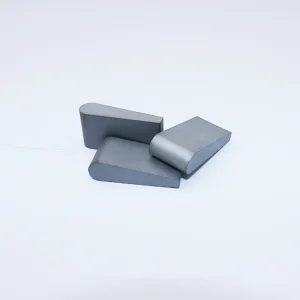
SNCF French High-Speed Rail • Heavy-Duty Tungsten Carbide Tamping Tines
View Product Details -
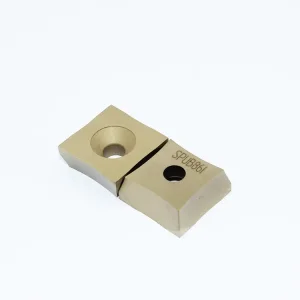
Paris CNC Machine Shops • Square Carbide Turning & Milling Tool Inserts
View Product Details -

Stainless Steel Machining • Wear-Resistant Solid Industrial Tungsten Bar & Rod
View Product Details -

Precision Threading Operations • Factory-Direct Threading Carbide Blank Inserts
View Product Details
Partner with China’s Leading Non-Magnetic Carbide Manufacturer
Whether you are engineering next-generation medical magnetic resonance probes in Paris-Saclay, producing luxury timepiece components, or upgrading wear life on automated machining centers across France, our engineering team provides rapid CAD-to-quote analysis within 8 hours.