
High-Performance Tungsten Carbide Solutions for Kiwi Industrialists
Engineered to withstand intense mechanical impact, severe abrasive slurry, and continuous high-cycle operations across New Zealand fabrication facilities.

Customized Tungsten Carbide Cold Heading Molds, Punch Dies & Wire Drawing Tooling for NZ Plants
View Product Details →
Tungsten Cemented Carbide Cutting Inserts for CNC Lathe Bar Peeling SPUB86I Specification
View Product Details →
High-Efficiency Indexable Carbide Insert Cutting Tools for CNC Precision Machine Shops
View Product Details →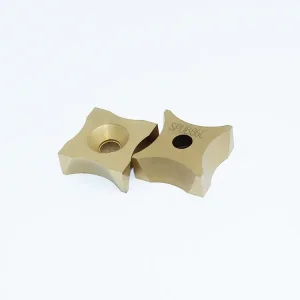
SPUB86C P40 Grade CVD Coated Heavy-Duty Tungsten Carbide Scarfing Inserts for Tube Mills
View Product Details →New Zealand Industrial Landscape: Why Carbide Mold Integrity Matters
A comprehensive examination of tooling requirements across New Zealand's unique manufacturing, agricultural, and precision machining sectors.
Addressing Severe Mechanical Stress in Isolated Supply Chains
Operating within an island economy, New Zealand manufacturers across South Auckland (Manukau, Penrose, East Tamaki), the Waikato regional basin, and Canterbury (Christchurch) cannot afford unpredicted machine downtime caused by premature tooling wear. Local toolrooms frequently face surging domestic fabrication costs and lead times of 12 to 16 weeks when sourcing high-spec tungsten carbide stamping matrices and cold heading dies from traditional European or domestic distributors.
Our factory bridges this gap by directly providing Sinter-HIP (Hot Isostatic Pressing) tungsten carbide mold blanks, pre-formed punch pins, and mirror-polished progressive dies. We customize cobalt and nickel binder ratios specifically for New Zealand's dominant industrial ecosystems:
- Agritech & Farm Mechanization: High-impact carbide wear shoes, seed drill boots, and fertilizer pump seals engineered for abrasive volcanic and alluvial soils.
- Forestry & Wood Processing: Heavy chipper counter-knives, debarker tool tips, and profile cutters engineered to tackle fibrous New Zealand Radiata Pine.
- Dairy & Food Grade Automation: Non-magnetic, nickel-bonded corrosion-proof carbide homogenizer valve seats, extrusion orifices, and rotary seal faces.
- Building, Fasteners & Structural Steel: YG15 to YG20C cold heading dies producing high-tensile seismic-grade structural fasteners and roofing bolts complying with NZS 3404.
The Engineering Dilemma: Hardness vs. Fracture Toughness
For decades, Kiwi toolmakers have been forced to balance tool wear against premature catastrophic cracking. When stamping heavy stainless steel brackets or heading high-tensile wire, standard catalog grades either chip along the shearing edge or deform under high compressive pressure.
This precise microstructural balance extends production longevity by 300% to 800% compared to traditional D2, M2, or ASP23 powder metallurgy tool steels, substantially lowering the cost-per-stamped-part for New Zealand high-volume production lines.
Engineering Grade Selection for New Zealand Tooling Applications
Every industrial mold demands a distinct matrix balance between cobalt binder percentage, mean tungsten carbide grain size, and theoretical density.
| Carbide Grade | Binder (Co/Ni %) | Grain Size (µm) | Hardness (HRA) | TRS (MPa) | Optimized New Zealand Application Scenarios |
|---|---|---|---|---|---|
| ZF-YG6X Ultra-Fine |
6.0% Co | 0.6 – 0.8 | 92.5 – 93.0 | 2,600 | High-precision non-ferrous wire drawing dies, razor-edge foil shearing blades, circuit board micro-drills. |
| ZF-YG8 Medium |
8.0% Co | 1.2 – 1.6 | 89.5 – 90.5 | 2,900 | Lathe welding inserts, agricultural tines, rock boring bits, conveyor scraper shoes in quarry operations. |
| ZF-YG15 Impact Tough |
15.0% Co | 1.6 – 2.2 | 87.0 – 88.0 | 3,400 | Progressive sheet metal stamping dies, deep drawing dies, heavy coin blanking punches, nail-heading tooling. |
| ZF-YG20C Coarse Grain |
20.0% Co | 2.2 – 3.2 | 85.0 – 86.5 | 3,800 | Extreme shock cold heading dies, heavy forging punches, thick plate punching, cold extrusion matrix for fasteners. |
| ZF-NM12 (Ni) Non-Magnetic |
12.0% Ni | 1.0 – 1.4 | 88.0 – 89.5 | 2,700 | Dairy homogenizer orifices, marine pump mechanical seals, magnetic powder compacting dies, chemical dosing valves. |
100% Virgin Sinter-HIP Consolidation
We reject recycled scrap powders. Every mold insert undergoes 100-bar overpressure Hot Isostatic Sintering at 1,450°C, collapsing internal micropores to absolute ISO A00, B00, C00 porosity ratings for mirror polishability.
Sub-Micron Machining & Lapping
Using slow-walking AgieCharmilles wire EDM and ultra-precision Studer cylindrical grinding, we achieve finished mold core tolerances down to ±0.002 mm, with surface roughness polished down to mirror Ra 0.05 µm.
Full Metallurgical Traceability
Every shipment is accompanied by complete EN 10204 Type 3.1 inspection certification, detailing chemical composition, exact density (g/cm³), coercivity (kA/m), magnetic saturation (4πσ), and certified CMM dimension verification.
China Direct Factory Synergy for New Zealand Procurement Teams
Bypassing multi-tier reseller markups to deliver direct factory-gate pricing, specialized engineering consultation, and prompt delivery to NZ seaports and airports.
The Geopolitical Supply Chain Advantage
Jiangxi Province serves as the undisputed global capital of tungsten mining and raw material refining, accounting for over 60% of the world’s APT (Ammonium Paratungstate) supply. By operating our 5,000 m² factory in Nanchang, Jiangxi, Zhongfu Cemented Carbide eliminates cross-border raw material transport overheads and avoids multi-layered speculative trading.
For New Zealand enterprises, this translates into a direct 35% to 55% reduction in total tooling procurement expenditure compared to buying imported European brands via Australian stocking agents. Furthermore, direct collaboration with our metallurgists allows Kiwi production engineers to adjust core carbide grain morphology to suit their exact pressing tonnage, punch cycle speed, and lubrication regimes.
Logistics, Standards Compliance & Import Reliability
New Zealand customs regulations and biosecurity checks conducted by the Ministry for Primary Industries (MPI) are among the strictest in the world. Failing to comply with biological packaging protocols can lead to cargo quarantine, re-exportation, or heavy port demurrage fees.
We safeguard your delivery schedule through comprehensive export compliance systems:
- Strict MPI Packaging: All heavy carbide molds and dies are sealed in vacuum anti-corrosion barrier foil, cushioned with high-density EVA foam, and crated exclusively in certified heat-treated plywood crates bearing the IPPC ISPM 15 stamp.
- FTA Documentation: We issue China-New Zealand Free Trade Agreement Certificates of Origin (Form N-Z), granting complete duty-free entry into Ports of Auckland, Tauranga, Lyttelton, or Napier under HS Code 8207.30 (Dies for pressing, stamping, or punching).
- Express Air Shipments: For urgent breakdown replacements, our logistics partners (DHL Express, FedEx Priority) deliver small batches and replacement punch pins directly to your Auckland or Christchurch workshop within 4 to 6 business days.
Key Application Scenarios in New Zealand Manufacturing
Real-world integration of our custom tungsten carbide mold products across key domestic sectors.
Cold Heading & Fastener Forming
Supplying carbide heading dies, multi-station punch inserts, and hex trimming dies for New Zealand fastener manufacturers producing building tie-downs, seismic timber framing screws, and stainless structural hardware. Our coarse-grained YG20C grades absorb violent repeated 400-ton press impacts without catastrophic core shattering.
Dairy & Food Grade Fluid Handling
In the Waikato and Southland milk processing hubs, stainless steel equipment is rapidly eroded by abrasive dairy powders and high-pressure steam CIP cycles. We supply customized non-magnetic nickel-bonded tungsten carbide homogenizer valve seats, dosing plungers, and spray nozzles that strictly adhere to FDA and sanitary processing protocols.
Forestry Chipper & Sawmill Tooling
New Zealand’s massive radiata pine forestry exports require industrial sawmill blades and counter-knives capable of withstanding heavy timber grit and knots. We provide brazed carbide sawmill tips, chipper knives, and high-impact wear plates that maintain razor sharpness under continuous 24/7 lumber processing.
Total Cost of Ownership: Hardened Tool Steel vs. Sinter-HIP Carbide
Evaluating production economics over a 1,000,000-cycle high-speed metal stamping run in a South Auckland production plant.
| Evaluation Parameter | High-Grade Tool Steel (AISI D2 / 1.2379) | Powder Metallurgy Tool Steel (ASP23) | Zhongfu Sinter-HIP Carbide (ZF-YG15) |
|---|---|---|---|
| Initial Mold Insert Cost | Low (Base Baseline 1.0x) | Moderate (Approx. 2.2x) | Initial Investment (Approx. 3.0x) |
| Average Cycles Between Regrinds | 45,000 – 60,000 cycles | 120,000 – 160,000 cycles | 650,000 – 900,000+ cycles |
| Total Tooling Regrinds Required (1M Run) | 16 to 22 Toolroom Regrinds | 6 to 8 Toolroom Regrinds | 1 Single Maintenance Touch-up |
| Unscheduled Press Downtime Hours | 64 Hours total press stoppage | 24 Hours total press stoppage | < 4 Hours Total Press Stoppage |
| Net Cost per Stamped Part (NZD) | $0.048 / component | $0.029 / component | $0.011 / component (>75% Net Savings) |
Emerging Trends in Carbide Tooling (2025–2030)
How cutting-edge surface coatings, binder alternatives, and circular recycling programs align with New Zealand’s Net-Zero sustainability commitments.
Advanced Multi-Layer CVD & PVD Coatings
The synergy of nano-layered TiAlN, AlCrN, and Diamond-Like Carbon (DLC) on fine-grained carbide substrates lowers friction coefficients down to µ=0.15. This allows New Zealand metal stampers to operate high-speed presses with minimal cooling oil, satisfying rigorous regional environmental compliance.
Circular Economy & Scrap Carbide Reclamation
Tungsten is classified as a critical mineral worldwide. Zhongfu operates a zinc-reclaim closed-loop recycling program, allowing long-term New Zealand partners to return worn dies, punch blanks, and spent inserts for credit towards future production orders, significantly reducing embodied carbon emissions.
Wire EDM Micro-Crack Free Processing
Traditional electric discharge machining (EDM) often leaves a brittle, cobalt-depleted "white layer" on carbide dies that triggers premature fatigue cracking. Our modern CNC wire erosion procedures utilize pulse-controlled generators, followed by electrolytic de-stressing and micro-polishing to preserve structural integrity.
Frequently Asked Questions by New Zealand Engineers & Buyers
Clear, direct answers regarding customized manufacturing, import documentation, tolerances, and quality verification.
Q1: Can you manufacture custom tungsten carbide mold inserts directly from our CAD drawings?
Yes. Customized manufacturing to engineering drawings accounts for over 85% of our production volume. We accept standard CAD formats including STEP, IGES, DXF, and DWG. Our technical engineering office conducts a full manufacturability review within 8 hours, cross-verifying draft angles, shrinkage allowances, and recommending optimal carbide grade compositions based on your operating stresses.
Q2: How do you handle shipping to New Zealand and what are the typical lead times?
For urgent tooling requirements, samples, and replacement punch dies, we ship via DHL Express or FedEx Priority, reaching Auckland or Christchurch in 4 to 6 business days. For bulk production orders (exceeding 200 kg), sea freight to Ports of Auckland, Tauranga, or Lyttelton typically takes 18 to 24 days door-to-door. We provide complete Incoterms support, including FOB, CIF, and full DDP (Delivered Duty Paid).
Q3: Are your wooden crates compliant with New Zealand Ministry for Primary Industries (MPI) regulations?
Strictly compliant. New Zealand enforces stringent biosecurity guidelines under the Biosecurity Act 1993. All export wooden packaging is manufactured from certified engineered plywood or fumigated timber treated in full compliance with ISPM 15 standards, marked with the internationally recognized IPPC stamp, and accompanied by formal packaging declarations to prevent customs quarantine holds.
Q4: How do we verify the metallurgical quality and ensure there is no internal porosity?
Every production heat undergoes non-destructive ultrasonic testing and metallographic micro-examination before leaving our factory. Because our sintering is conducted exclusively in 100-bar overpressure Sinter-HIP vacuum furnaces, internal porosity is controlled to strict ISO 4505 standards (A00, B00, C00). Full EN 10204 Type 3.1 inspection certificates documenting density, HRA hardness, coercivity, and CMM dimensional inspection are supplied with every shipment.
Q5: What carbide grades do you recommend for high-impact cold heading versus abrasive wire drawing?
For high-impact cold heading and fastener forming, we recommend our coarse-grain ZF-YG15 or ZF-YG20C grades (15% to 20% cobalt), which deliver exceptional transverse rupture strength (up to 3,800 MPa) to resist shock cracking. Conversely, for wire drawing and thin-film shearing where abrasive wear dominates, we recommend sub-micron ZF-YG6X or ZF-YG8 grades (6% to 8% cobalt), providing maximum Rockwell hardness of 89.5 to 93.0 HRA.
Q6: Will we be charged import duties when importing your carbide tooling into New Zealand?
Under the China-New Zealand Free Trade Agreement (NZ-China FTA Upgrade), most industrial tungsten carbide components, stamping dies, and wear plates enter New Zealand at 0% customs tariff under HS Codes 8207.30, 8207.20, and 8209.00. We issue the official Certificate of Origin (Form N-Z) to ensure your customs broker processes your consignment completely duty-free.
Precision Carbide Wear Parts, Scarfing Tooling & Inserts
Explore our extended range of tungsten carbide replacement components, gripper inserts, railway tamping tips, and custom blanks.

YG8 Cemented Carbide Serrated Gripper Inserts for Machine Tool Lathe Chuck Jaws
View Product Details →
SPUB63J Grade CVD Coated Heavy-Duty OD Pipe Weld Scarfing Inserts for Mill Lines
View Product Details →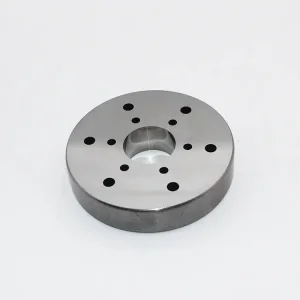
Custom Wear-Proof Tungsten Carbide Lined Elbows, Tees, Caps & Pipe Reducers for Slurry
View Product Details →
High-Shock Tungsten Carbide Tamping Tine Tips for Ballast Tamping Railway Maintenance
View Product Details →
Precision Sintered Square Tungsten Large Heavy-Chip Blank Carbide Inserts for Heavy Turning
View Product Details →
Industrial Grade Square Tungsten Carbide Threading Blank Inserts for Custom Profiling
View Product Details →
SPUB86 Series CVD Coated Tungsten Carbide Turning & Peeling Inserts for Steel Mills
View Product Details →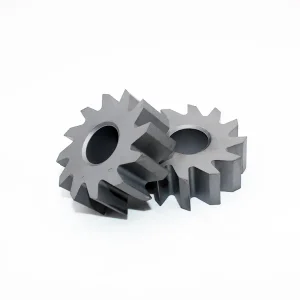
Custom Precision Sintered Transmission Idle & Starter Spur Gear Wear-Resistant Sets
View Product Details →Equip Your New Zealand Operation with Direct Sinter-HIP Carbide
Send your 2D/3D component drawings today. Receive an exhaustive technical quotation, grade recommendation, and tolerance analysis from our metallurgical engineering team within 8 hours.