
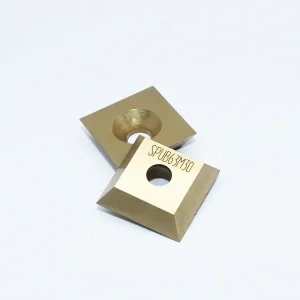
Direct OEM Supply Portfolio
Primary Precision Inserts Ready for Manila Import & Deployment
Factory-calibrated cemented tungsten carbide indexable blanks, CNC turning inserts, and heavy-duty milling cutters directly available for rapid customs clearance at the Port of Manila and direct-to-factory delivery across CALABARZON.
91.5 HRA
Average Substrate Hardness
±0.005 mm
Grinding Dimension Repeatability
10 MPa
HIP Overpressure Sintering
5-7 Days
Direct Air Shipping to Manila (MNL)
Regional Market Dynamics
The Manila Industrial Ecosystem: Demands for High-Reliability Tooling Solutions
The Greater Capital Region of the Philippines—spanning Metro Manila, the Laguna Technopark, the Cavite Economic Zone (CEZ), and Batangas—forms the backbone of the nation's high-value manufacturing sector. Historically dominated by semiconductor backend assembly and testing, the industrial landscape has rapidly diversified into tier-1 and tier-2 automotive component machining, precision mold and die tooling, agricultural processing equipment fabrication, and maritime repair operations along Manila Bay.
Machine shops located in Valenzuela, Caloocan, Quezon City, and Muntinlupa face a specific set of operational hurdles: fluctuating power tariffs, competitive part-per-minute cost pressures from regional ASEAN neighbors, and high ambient tropical humidity that exacerbates thermal stress and tool wear. Local machining procurement leads can no longer afford the exorbitant markups associated with Japanese and European distributor chains that impose multi-tier distributor margins and 6- to 10-week backorders on standard ISO turning and milling inserts.
Consequently, industrial buyers across the Philippines are transitioning toward direct factory-level partnerships with certified tungsten carbide manufacturers who offer metallurgical customization, stable pricing indexed to raw ammonium paratungstate (APT) indices, and agile sea-air logistics routed seamlessly through the Manila International Container Port (MICP) or Ninoy Aquino International Airport (NAIA).
Direct Sourcing Insight: Philippine PEZA-registered enterprises enjoy duty-free capital equipment imports. By pairing China factory-direct supply contracts with Form E ASEAN-China Free Trade Area certificates, tooling costs can be slashed by 35% to 52% relative to traditional regional catalog intermediaries.
Laguna & Cavite Automotive & Mold Cluster
Transmission housings, brake rotor turning, and progressive stamping dies require inserts with high fracture toughness and nano-composite coatings capable of dry or MQL (minimum quantity lubrication) cutting.
- CNMG120408 / WNMG080408 for ductile cast iron
- APMT1135 / APMT1604 shoulder milling inserts
- Submicron tungsten carbide blanks for punch dies
Heavy Infrastructure, Shipbuilding & Mining Tooling
Subic Bay marine yards, Batangas coastal ship repairs, and Surigao/Benguet mineral extraction equipment require severe-service wear plates, scarfing inserts, and high-impact brazed button cutters.
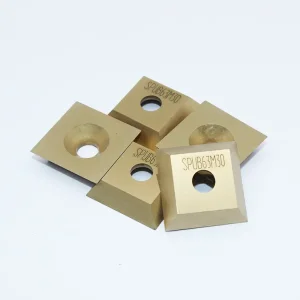
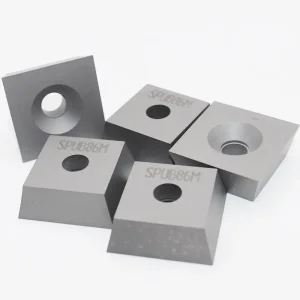
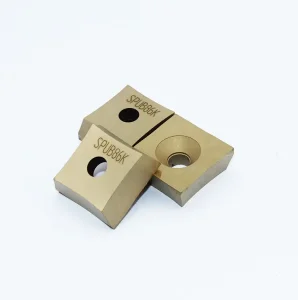
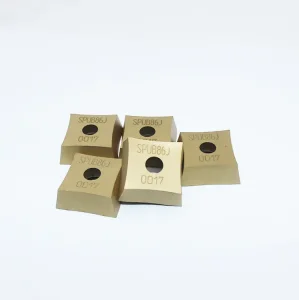
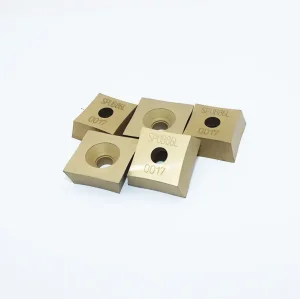
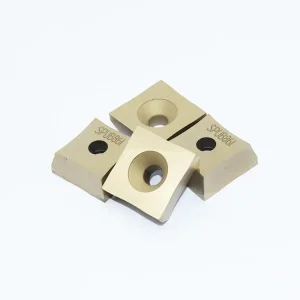
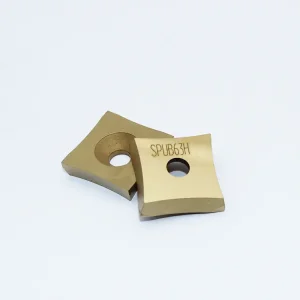
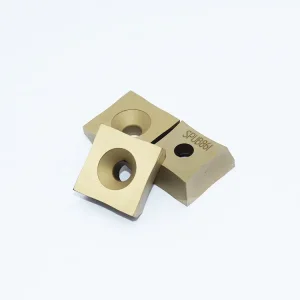
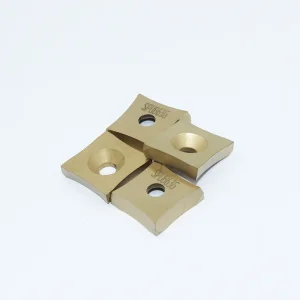
- SPUB86 / SPUB63 heavy weld-seam scarfing inserts
- YG8 / YG11C heavy-duty percussion drilling buttons
- Nickel-bonded non-magnetic wear plates for pump sleeves
Global Supply Chain Economics
Why Direct Manufacturing from Jiangxi Outperforms Global Middlemen
Tungsten (W) is a strategically concentrated critical mineral. Over 80% of global mine output and refining infrastructure resides in China. Sourcing directly from an integrated Jiangxi manufacturer circumvents currency exchange markups, European distribution bottlenecks, and supply vulnerabilities.
100% Virgin APT Powder Control
Unlike uncertified vendors that cut costs using secondary zinc-reclaimed scrap powder, our metallurgical foundation uses 100% pure virgin Ammonium Paratungstate (APT). This guarantees consistent WC grain sizing, predictable cobalt dispersion, and complete absence of tramp elements (like iron or phosphorus) that cause premature micro-cracking during heavy milling.
- Virgin grain sizes from 0.4 μm (nanocrystalline) to 5.0 μm
- Zero tramp-metal contamination via wet ball milling
10 MPa Sinter-HIP Consolidation
Standard atmospheric sintering inevitably leaves trace microporosities that compromise insert edge security under variable chip loads. Our vacuum Sinter-HIP chambers exert an isostatic argon pressure of 100 bar (10 MPa) at 1450°C, collapsing internal voids to achieve theoretical density (≥99.98%) and extreme impact resistance.
- Porosity rating confirmed below ISO A02, B00
- Transverse rupture strength boosted by 25-30%
Nano-Engineered Coatings (PVD/CVD)
Our in-house PVD arc-evaporation and multi-temperature CVD reactors deposit super-nitride, aluminum-oxide, and DLC (diamond-like carbon) coatings. These coatings reduce friction coefficients down to 0.15 and retain micro-hardness up to 1100°C, eliminating built-up edge (BUE) when machining sticky aerospace-grade alloys.
- PVD AlTiN / TiAlSiN for high-temp stainless/Inconel
- Multi-layer CVD TiCN + α-Al2O3 for steel roughing
Engineering Selection Guide
Cemented Tungsten Carbide Grades for Manila CNC & Die Operations
Compare metallurgical properties across ISO standard categories (P, M, K, S, H) to select the optimal balance of flank wear resistance, thermal dissipation, and fracture toughness for your Philippine facility.
| Grade Designation | ISO Class | Cobalt / Binder (%) | Density (g/cm³) | Hardness (HRA) | TRS (MPa) | Target Workpiece & Application in Manila |
|---|---|---|---|---|---|---|
| ZF-P10 | ISO P05–P15 | 6.0% Co + TiC/TaC | 14.65 | 92.4 | 2100 | High-speed continuous finish turning of carbon steels (AISI 1045, 4140) in Luzon auto parts shops. |
| ZF-P25 | ISO P20–P30 | 8.2% Co + TiC/TaC | 14.30 | 91.2 | 2450 | General steel turning and rough face milling with interrupted cuts; ideal for structural steel fabrication. |
| ZF-M20 | ISO M15–M25 | 9.0% Co (Fine Grain) | 14.40 | 91.6 | 2600 | Austenitic & duplex stainless steel (SUS304, SUS316) machining for Manila food processing equipment. |
| ZF-K10 | ISO K05–K15 | 6.0% Co (Submicron) | 14.95 | 92.8 | 2300 | High-silicon aluminum turning, grey cast iron boring, and non-ferrous electronics chassis machining. |
| ZF-K30 / YG8 | ISO K25–K35 | 8.0% Co | 14.70 | 89.8 | 2750 | Woodworking cutterheads, brazed lathe tool tips, and rock percussion drill button inserts for quarrying. |
| ZF-S20 | ISO S15–S25 | 10.0% Co (Ultrafine) | 14.15 | 91.8 | 2900 | Titanium alloys (Ti-6Al-4V) and nickel-base superalloys for aerospace component subcontractors in Clark PEZA. |
| ZF-NM12 | Non-Magnetic | 12.0% Ni / Cr Binder | 14.35 | 89.0 | 2400 | Corrosion-resistant magnetic sensor housings, downhole MWD sleeves, and food sanitary pump seals. |
Enterprise Procurement Framework
How Global & Philippine Buyers Verify Carbide Tool Quality
Mitigate counterfeit risk, eliminate dimensional variances, and safeguard CNC spindle uptime with our five-stage metallurgical and dimensional validation protocol.
01
Powder Morphology & Binder Control
Every powder batch undergoes Fisher sub-sieve sizing (FSSS), carbon-balance spectroscopy, and magnetic saturation analysis (4πσ) to eliminate uncombined carbon or brittle eta-phase (η phase) crystals.
02
Precision Multi-Axis Pressing
Osterwalder CNC hydraulic and electric powder presses enforce uniform green-body density distribution across complex 3D chipbreakers, preventing differential sintering shrinkage and edge warping.
03
Sinter-HIP Overpressure Consolidation
Computer-controlled thermal profiles up to 1500°C combined with 10 MPa argon pressure eliminate micro-voids, guaranteeing isotropic transverse rupture strength and zero internal porosity flaws.
04
Micron-Level CNC Profile Grinding
Equipped with 5-axis Agathon and Wendt periphery grinders, achieving insert thickness and inscribed circle tolerances within ±0.005 mm (ISO Grade E/G) with robotic vision edge-honing verification.
Future Industry Vectors
Emerging Manufacturing Trends Reshaping Philippine Machine Shops
Technological advances in high-efficiency machining, sustainable closed-loop carbide recycling, and advanced multi-component coatings are setting new productivity benchmarks for ASEAN producers.
Nanocrystalline & Gradient Substrates
By refining tungsten carbide crystal grains below 0.3 microns, the interface surface area between tungsten and cobalt expands exponentially. When combined with controlled cobalt-migration techniques during sintering, modern inserts exhibit an ultra-hard outer layer (up to 93.5 HRA) that transitions smoothly into a resilient, shock-absorbing interior core. This prevents sudden catastropic insert breakage during unmonitored night shifts in smart Philippine factories.
Cryogenic & High-Pressure Coolant Geometry
As Manila aerospace machining facilities adopt liquid nitrogen (LN2) and high-pressure supercritical CO2 cooling channels, insert chipbreaker architectures have evolved. Micro-curved coolant jet pockets molded directly behind the cutting lip direct pressurized fluids precisely into the chip-tool shear zone, decreasing thermal degradation by up to 300°C and prolonging tool life fourfold when cutting hard-to-machine alloys.
Closed-Loop Circular Carbide Recycling
With international tungsten supply security under scrutiny, top manufacturers are introducing closed-loop reclamation programs. Machine shops across Metro Manila can collect spent inserts, worn-out end mills, and scarfing scrap. Utilizing zinc reclamation and chemical leaching, spent carbide is converted back into 99.9% pure APT powder, substantially lowering environmental footprints and insulating local shops against price spikes.
Extended Specialty Tooling Catalog
Specialized Tungsten Carbide Inserts & Wear Blanks for Manila Industry
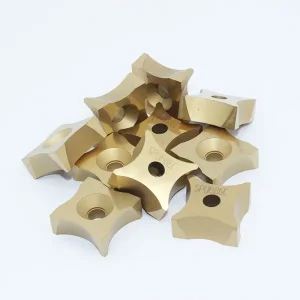
Browse our certified catalog of heavy-duty scarfing inserts, custom chuck jaws, thread chasing blanks, and rotary knife blades built to ISO specifications and custom engineering prints.
Technical & Procurement FAQ
Frequently Asked Questions by Philippine Industrial Buyers
Key considerations covering logistics clearance through the Port of Manila, Form E tariff exemptions, custom drawing turnarounds, and insert life optimization.
How can Philippine buyers eliminate import tariffs when importing from your factory?
Under the ASEAN-China Free Trade Agreement (ACFTA), standard tungsten carbide inserts, rods, and wear plates qualify for preferential 0% import customs duties when accompanied by an authentic Certificate of Origin Form E issued directly from our local customs authority in Jiangxi. Additionally, enterprises registered with PEZA (Philippine Economic Zone Authority) operating in Laguna, Cavite, Clark, or Subic can clear shipments through bonded logistics providers with full VAT exemption. Our export logistics desk handles complete export documentation, including packing lists, commercial invoices with HS code classification (8209.0000 / 8208.1000), and Form E dispatch.
What are the transit times and shipping options to Metro Manila and regional economic zones?
We offer dual-route logistics:
1. Urgent Air Freight (NAIA / Clark): Small-to-medium batches (20 kg to 300 kg) are routed via air express (DHL/FedEx) or direct air cargo from Guangzhou/Shenzhen to Manila (MNL) within 3 to 5 business days.
2. Sea Freight FCL/LCL (Port of Manila - MICP / South Harbor): Bulk shipments (exceeding 500 kg, such as heavy plates, large block stock, or high-volume standard turning inserts) ship via direct container liners from Xiamen or Shenzhen ports to Manila in 7 to 10 days ocean transit time, offering the lowest transportation cost per kilogram.
Can you manufacture non-standard custom insert shapes directly from our CAD drawings?
Yes. Custom carbide wear components and bespoke indexable inserts represent over 45% of our production volume. Philippine machine shops and toolmakers can supply 2D drawings (.DWG, .DXF, .PDF) with explicit tolerance tolerances or 3D STEP/IGES models. Our engineering department reviews drawing feasibility, calculates powder shrinkage ratios (typically 18% to 22%), and provides complete DFM (Design for Manufacturability) feedback and mold quotation within 8 working hours. Pilot samples can be sintered, precision ground, and shipped to your Manila testing facility within 15 calendar days.
Why should a workshop choose Sinter-HIP over conventional vacuum sintering?
Conventional vacuum sintering solidifies the carbide matrix under passive heating, which frequently traps microscopic gas pockets or localized voids within the core. When the insert experiences violent shock loads (such as turning interrupted keyways or milling hard scale on cast steel), these internal micro-pores act as stress concentration notches, precipitating catastrophic insert fracture. Sinter-HIP applies 10 MPa (100 atmospheres) of isostatic argon gas while the cobalt binder is in a liquid state, physically squeezing internal pores shut. This raises the transverse rupture strength (TRS) by 25% to 30% and significantly extends continuous spindle operating hours.
What causes premature coating peeling in high-humidity Philippine machine shops, and how do you prevent it?
Premature coating delamination typically stems from two culprits: chemical leaching of the cobalt binder prior to coating deposition, or inadequate substrate surface activation in tropical, humid environments. In our production line, all sintered inserts pass through automated ultrasonic multi-stage degreasing and micro-sandblasting before coating. In our PVD and CVD reactors, high-energy plasma etching chemically strips trace oxides from the cutting edge, creating an atomically fused adhesive transition layer between the tungsten carbide substrate and the AlTiN / TiCN film, preventing flaking even during aggressive dry-cutting conditions.
What is the minimum order quantity (MOQ) for catalog vs. custom tooling orders?
For standard ISO turning and milling inserts (such as CNMG, WNMG, TNMG, APMT, SEKT) kept in warehouse stock, our standard MOQ is 50 pieces (5 boxes of 10). For custom-profiled blanks, proprietary scarfing geometries, or specialized wear parts requiring new tooling dies, the initial pilot batch MOQ is typically 100 to 200 pieces, with full mold development charges waived upon reaching annual commercial delivery thresholds.