

Industrial Catalog Selection
Precision Wire Shaping & Cemented Carbide Wear Inventory
Engineered for extreme compressive stress, minimal frictional coefficient, and micron-grade geometric repeatability.

Wholesale SPUB63B wholesale ISO TiN tungsten carbide scarfing insert Supplier, Factory
View Specifications
China Factory supply SPUB86 CVD coating radius tungsten carbide tips brazed insert Manufacturer, Factory
View Specifications
Buy Wholesale high quality tungsten wolfram carbide grooving inserts milling Manufacturers, Suppliers
View Specifications
Buy Wholesale SPUB63 tungsten carbide insert scraps lathe cutting tools turning Supplier, Factories
View Specifications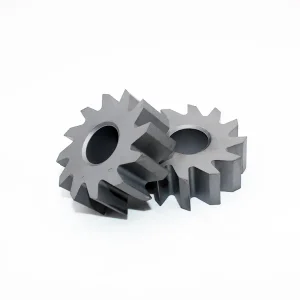
Buy Custom made transmission reverse idle gear starter gear spur gear set Manufacturer, Factory
View Specifications
China Hot sale SPUB63M30 tungsten carbide odinternalexternal tube scarfing insert Manufacturer, Factories
View Specifications
Buy Customized size style tungsten cemented carbide carbon steel reducer blind plate flange Factory, Factories
View Specifications24+
Years Metallurgical Foundry
±0.002mm
Micron Profiling Tolerance
100%
Virgin APT/WC Formulation
<8 Hrs
Rapid Technical Review
Technical White Paper
Global Industrial Landscape of Precision Wire Shaping & Cold Profiling
In high-speed precision manufacturing, the global demand for wire shaping tooling, roll cassettes, profile drawing dies, and wear components has undergone a seismic shift. Modern metallurgical engineering is no longer satisfied with standard circular wire drawing. From rectangular copper hairpins utilized in electric vehicle (EV) stator windings to intricate surgical guide wire cross-sections and high-tensile spring steel configurations, cold profile rolling and wire shaping require extreme structural resilience, thermal fatigue endurance, and sub-micron dimensional stability.
Industrial wire shaping encompasses cold continuous rolling using multi-axis motorized or idle cassettes (Turk’s heads), precision shaped draw dies, guide bushings, and straightening rollers. In these intense operations, contact pressures frequently surpass 2,500 MPa with continuous line velocities reaching 20 to 60 meters per second. The operational life of tooling hinges upon the material’s resistance to micro-spalling, adhesive galling, and frictional thermal degradation.
Engineering Note: The Transition to Hot Isostatic Pressing (Sinter-HIP)
Traditional vacuum-sintered tungsten carbide inherently exhibits micro-porosities (class A04/B02) that serve as localized nucleation sites for fatigue cracking under cyclic load during profile rolling. Jiangxi Zhongfu Cemented Carbide Co., Ltd. implements 10 MPa overpressure Sinter-HIP processing across all wire shaping blanks and wear plates, achieving metallurgical densities reaching 15.0 g/cm³ and virtually zero void fraction (A00/B00/C00).
As global supply chains navigate supply velocity and strict cost-of-ownership requirements, Chinese integrated manufacturing has evolved from simple raw-material supply into high-precision, drawing-to-part engineering hubs. By utilizing local Jiangxi ammonium paratungstate (APT) resources alongside in-house formulation labs, Zhongfu Carbide ensures virgin-powder metallurgical purity without recycled tungsten contaminants, providing OEMs and tooling facilities across North America, Europe, and the Asia-Pacific with exceptional tool lifespans.
Supply Chain Competence
The Chinese Factory Advantage: Integrated Powder-to-Profile Synthesis
How deep regional resource access, vertically integrated furnace routes, and tight engineering cycles reduce lead time by up to 60%.
Upstream Tungsten Integration
Situated in Jiangxi Province—the historic nucleus of global tungsten mining—we secure direct access to top-grade, high-purity tungsten ore derivatives (APT). This eliminates speculative broker markups, prevents secondary contamination, and preserves chemical traceability from powder synthesis to final finished profiling rolls.
Full-Chain CNC Micro-Grinding
We do not outsource critical finishing. From high-tonnage automated hydraulic press molds to vacuum dewaxing, 10 MPa overpressure Sinter-HIP, optical profile grinding (PG), slow-wire EDM cutting, and mirror-finish diamond lapping (Ra ≤ 0.05 μm), all critical processing stays under one roof.
Agile Iteration & Fast Prototyping
Overseas tool rooms often wait 12 to 18 weeks for non-standard carbide profiling cassettes. Our direct foundry model produces pilot blanks within 7 business days, followed by CNC micro-grooving and metallurgical characterization, reducing prototyping cycles down to just 2 to 3 weeks.
Target Deployments
Mission-Critical Wire Shaping & Forming Applications
Engineered for high-duty applications where die galling, edge breakout, or thermal softening cause costly downtime.
Automotive Suspension & Valve Springs
High-tensile chrome-silicon spring steels require precise oval or trapezoidal cross-sections. Our YG15 and YG20 roller dies resist high impact fatigue without micro-chipping, ensuring smooth surface finishes that prevent spring fatigue fracturing.
Medical Catheter & Orthopedic Wires
Ultra-fine stainless steel (304V, 316LVM) and Nitinol wires for cardiovascular guidewires and biopsy forceps demand mirror-polished (Ra < 0.02 μm) sub-micron carbide dies with tight corner radii, eliminating microscopic burrs and surface stress raisers.
EV Stator Hairpin Copper Profiling
Pure oxygen-free high thermal conductivity (OFHC) copper wire must be cold-rolled into sharp rectangular geometry with controlled corner radii (R0.20 ± 0.03 mm). Our micro-grain carbide roll assemblies preserve exact enamel coating adhesion surfaces without copper pickup or galling.
Railway Catenary & Heavy Fasteners
Grooved copper contact wire for high-speed rail electrification alongside high-tensile cold heading fasteners are shaped under severe plastic deformation. Our YG8 and YG11C heavy-duty drawing inserts provide wear-impact resilience during high-tonnage operations.
Engineering Matrix
Cemented Carbide Grade Formulation for Wire Profiling Tooling
Selecting the optimal binder percentage and grain structure is critical to balancing Vickers hardness against fracture toughness (K1C).
| Alloy Grade | Binder (Co/Ni %) | Grain Size (μm) | Density (g/cm³) | Hardness (HRA) | TRS (MPa) | Target Profiling Application |
|---|---|---|---|---|---|---|
| ZF-YG6X | 6.0% Co | 0.8 (Sub-micron) | 14.90 - 15.05 | 92.5 - 93.0 | 2,400 | High-speed fine wire finishing dies, non-ferrous electronics wire |
| ZF-YG8 | 8.0% Co | 1.2 - 1.6 (Medium) | 14.70 - 14.85 | 89.5 - 90.5 | 2,800 | Medium-carbon steel spring wire, profiling rolls, scarfing inserts |
| ZF-YG11C | 11.0% Co | 2.2 - 3.0 (Coarse) | 14.40 - 14.55 | 87.0 - 88.0 | 3,100 | High-reduction cold rolling cassettes, heavy flux-cored welding wire |
| ZF-YG15 | 15.0% Co | 1.8 - 2.4 (Medium-coarse) | 14.00 - 14.15 | 86.5 - 87.5 | 3,300 | Impact cold heading dies, heavy spring coiling pins, bending mandrels |
| ZF-YG20 | 20.0% Co | 2.5 - 3.5 (Coarse) | 13.50 - 13.70 | 84.5 - 85.8 | 3,600 | Severe shock cold extrusion, large profile stamping blocks, EDM blanks |
| ZF-NM12 | 12.0% Ni | 1.0 - 1.4 (Fine-medium) | 14.45 - 14.65 | 88.5 - 89.5 | 2,600 | Non-magnetic wire profiling, saline-lubricated stainless, medical guidewires |
Industry Evolution
Emerging Technological Trends in Wire Shaping Tooling
Key metallurgical advancements reshaping modern wire profiling productivity and die wear metrics.
Nano-Engineered Multi-Phase Binders
Standard cobalt matrix alloys are prone to preferential galvanic leaching and chemical wear when water-miscible drawing emulsions turn acidic. The industry is rapidly adopting cobalt-nickel-chromium-ruthenium (Co-Ni-Cr-Ru) multi-component binders, delivering up to 300% greater corrosion-wear resistance in continuous wet-drawing environments.
Complex CAD/CAM Roll Pass Profiling
Simple 2-roll flatting passes are being replaced by high-precision 4-roll and 8-roll progressive cassette systems that combine reduction and shape calibration into single stations. Utilizing CNC profile diamond wheels allows us to grind specialized parabolic and concave profiles with optical repeatability down to ±0.002 mm.
Advanced CVD & PVD Multilayer Coatings
For arduous titanium and stainless steel profiling, bare carbide can experience micro-welding and adhesive pickup. Applying nano-structured TiAlN, AlTiN, or ultra-smooth Diamond-Like Carbon (DLC) coatings reduces friction coefficients below 0.1, practically eliminating surface tearing and profile score marks.
Procurement Intelligence
Optimizing Total Cost of Ownership (TCO) in Wire Tooling
Why initial unit price accounts for less than 15% of your total operational forming line expenditure.
Senior procurement directors and tooling engineers operating continuous wire forming, cabling, and coiling operations recognize that assessing suppliers solely on initial piece-part cost is fundamentally flawed. When a profile die or rolling cassette wears prematurely out of tolerance, the resulting line stoppage triggers compounding expenses: machine operator downtime, scrap runs of out-of-spec wire, recooling setup delays, and unscheduled maintenance cycles.
Direct Tooling Acquisition
~15% of Lifecycle TCO: Factory-direct sourcing from primary manufacturers like Zhongfu Carbide eliminates intermediary distributors while preserving documented alloy traceability and ISO 9001 quality validation.
Operational Downtime
~55% of Lifecycle TCO: A single die swap on a high-speed tandem wire shaping line can cost $800 to $2,500 in lost throughput. Premium HIP-sintered carbide triples operational campaigns, directly preserving production margins.
Scrap & Surface Rejection
~30% of Lifecycle TCO: Substandard, porous carbide develops micro-scratches that gall copper or nick high-tensile spring wire, causing whole spool rejections. Zero-porosity tooling ensures uniform profile geometry and smooth finishes.
By standardizing on Zhongfu Carbide's precision ground profile dies, EDM wear plates, and scarfing inserts, manufacturing facilities realize lower cost-per-kilometer of processed wire, reliable tool life, and fewer unbudgeted line disruptions.
Heavy Tooling & Inserts Catalog
High-Performance Cemented Carbide Wear Solutions
Explore our precision-machined scarfing inserts, tube conditioning blanks, and custom milling components.

Buy 1*1*0.375“ CVD coating tungsten carbide tube scarfing insert Supplier, Factory
View Specifications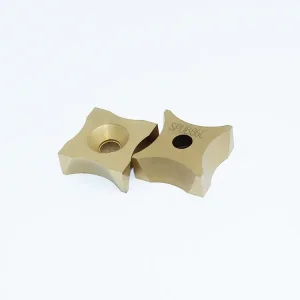
China SPUB86C P40 CVD coating tungsten carbide scarfing insert Manufacturers, Suppliers
View Specifications
China OEM Customizable HIP Processed Square Tungsten Carbide Plate, Polished Flat Blank for Industrial Cutting Tools Manufacturer, Factories
View Specifications
China tungsten carbide tube scarfing inserts SQ8615WCB Manufacturers, Supplier
View Specifications
Wholesale Factory wholesale custom tungsten carbide spiral bevel gear milling cutters for sale Suppliers, Factory
View Specifications
Wholesale Wholesale SPUB63 tungsten indexable carbide brazing inserts woodworking tools Manufacturers, Supplier
View Specifications
China New shape cemented carbide tips for railway track tamping pick center tooth Manufacturers, Factory
View Specifications
China 2020 Tungsten carbide whole seller Tungsten carbide square thread inserts tools Factory, Factories
View Specifications
Direct Technical Answers
Frequently Asked Questions by Industrial Tooling Buyers
Specific metallurgical and logistical answers regarding customized wire shaping manufacturing.
What dimensional tolerances can Zhongfu achieve for custom wire shaping dies and roll profiles?
We regularly hold profile tolerances within ±0.002 mm (±2 μm) on CNC optical profile ground (PG) carbide rolls and shaped wire drawing dies. For high-precision internal profile dies produced via slow-wire EDM and diamond micro-lapping, bore geometries and internal corner radii down to R0.05 mm are maintained with surface finishes reaching Ra 0.05 μm or mirror finish Ra 0.02 μm upon customer request.
How does Zhongfu guarantee zero porosity in large carbide wear plates and thick EDM blocks?
Every wear plate and thick block (such as our standard 100×100×60 mm EDM stock) undergoes vacuum dewaxing followed immediately by 10 MPa overpressure Hot Isostatic Pressing (Sinter-HIP) at 1,420°C. This consolidated metallurgical cycle eliminates internal micro-voids, producing an ultra-dense structure certified to ISO porosity rating A00, B00, C00. This ensures zero pitting or grain dropout during subsequent EDM wire slicing or surface grinding.
Which carbide grade is best suited for cold rolling rectangular copper EV hairpin wire?
For continuous cold rolling of oxygen-free copper hairpins, we typically recommend our sub-micron grain grade ZF-YG6X or fine-grain ZF-YG8. These alloys combine elevated surface hardness (HRA 90.5 to 92.5) with a highly homogenous cobalt distribution, which minimizes adhesive galling and copper pickup. Paired with diamond-lapped roller finishes (Ra ≤ 0.05 μm), they prevent striping on bare or enamelled copper surfaces.
Can you produce non-magnetic carbide wear parts for medical guidewire shaping?
Yes. Standard cobalt-bonded carbide exhibits ferromagnetic properties that can interfere with magnetic inspection sensors and downhole tools. We formulate nickel-bonded grades (such as ZF-NM12) with magnetic permeability (μ) approaching ≤ 1.005. These non-magnetic grades also offer elevated resistance against corrosion in saline, nitric, and organic acid environments common in medical catheter manufacturing.
What are standard lead times for custom wire profiling tooling exported to Europe or North America?
Custom engineered blanks from existing press molds ship within 10 to 14 days. Fully finished, CNC ground profiling rolls, custom shaped draw dies, and scarfing inserts to custom 2D/3D drawings typically ship in 3 to 4 weeks via DHL/FedEx air freight, arriving at international destinations within 3 to 5 business days. Rapid technical feasibility reviews and quotation feedback are delivered within 8 hours.