
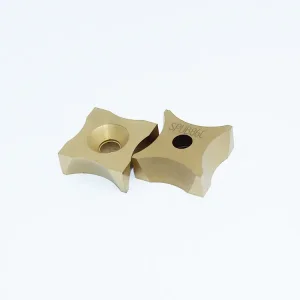
Top-Tier Industrial Tooling
Precision Indexable & Specialized Carbide Insert Portfolio
Manufactured using 100% virgin tungsten carbide sub-micron powder, formulated with customized binder ratios and multi-layer CVD/PVD wear coatings for uncompromising high-speed cutting stability.




Global Industrial Outlook
The Commercial & Engineering Status of Cemented Carbide Inserts
A comprehensive examination of metallurgical evolution, high-feed machining demands, and raw material optimization across worldwide manufacturing hubs.
The global metal cutting and precision subtractive manufacturing sector has entered an era governed by ultra-tough superalloys, tight dimensional tolerances, and high-efficiency automation. Cemented carbide inserts—sintered metallurgical composite solutions consisting of fine tungsten monocarbide (WC) grains embedded within a cobalt (Co) or nickel (Ni) metallic binder—stand as the backbone of modern industrial transformation. From automotive powertrain lines and aerospace turbine machining to heavy railway maintenance, energy exploration, and structural metal fabrication, the selection and implementation of the precise types of carbide inserts directly dictates operational profitability, tool life, and machine spindle uptime.
Historically, generic insert profiles served broad turning and milling roles with moderate cutting speeds. In contrast, modern machining environments operate at surface cutting speeds exceeding 250 m/min under aggressive feed rates, dynamic thermal shifts, and high mechanical shock loads. As international manufacturers contend with volatile raw material prices and heightened environmental regulations, original equipment manufacturers (OEMs) and supply partners must balance high rupture toughness with surface hardness, crater wear defense, and micro-flaking prevention.
Cost of Ownership Realignment
Cutting tools represent approximately 3% to 5% of overall plant operating expenses, yet directly dictate up to 25% of overall cycle efficiency. Premium wholesale cemented carbide inserts reduce premature edge failure, cutting cycle change-overs by up to 34%.
Near-Net Shape & HIP Sintering
Over-pressure Hot Isostatic Pressing (Sinter-HIP) at up to 100 bar closes internal micro-voids, elevating transverse rupture strength (TRS) to over 2800 N/mm² while delivering near-zero porosity across batch runs.
Tailored Metallurgical Grades
From low-cobalt fine-grain compositions (YG6/ISO K10) providing maximum hardness (HRA 90.5+) to higher-cobalt shock-resistant matrices (YG15–YG20) handling heavy interrupted cuts and forging scale removal without catastrophic fracture.
Engineering Taxonomy
Core Types of Carbide Inserts: Geometry, Grades & Functions
A structured technical breakdown of indexable shapes, attachment methods, and coating architectures designed for multi-industry deployment.
| Insert Classification | Common Standard Geometries | Binder / Substrate Type | Primary Industrial Purpose | Key Operational Strength |
|---|---|---|---|---|
| CNC Turning & Boring Inserts | CNMG, WNMG, DNMG, TNMG, CCMT | WC + 6%–10% Co Sub-micron | Shaft turning, ID/OD profiling, facing | High chip control, multi-corner indexability |
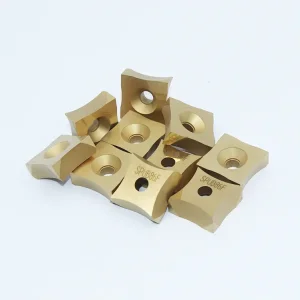
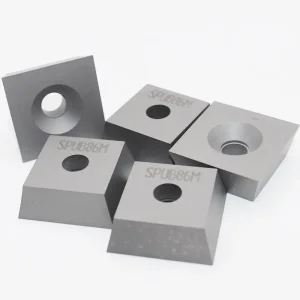
| Heavy Bar Peeling & Scarfing | SPUB63, SPUB86, SNMX19, SNMX25 | Shock-resistant P30–P40 WC-Co | Steel mill continuous slab scarfing, billet peeling | Withstands extreme heat, heavy depths of cut |
| Indexable Milling Inserts | APKT, SEKT, RPMT, LNMU | WC + Sub-micron Grain, PVD/CVD | Shoulder milling, face surfacing, 3D profiling | Reduced cutting forces, low chatter generation |
| Woodworking & Planer Knives | Square, reversible knives, button inserts | Ultra-fine WC + 3%–6% Co | Solid wood, MDF, HDF, composite panel trimming | Ultra-sharp honed cutting edge, mirror finish |
| Railway & Mining Wear Tips | Chisel tips, button teeth, tamping tines | Coarse Grain WC + 8%–15% Co | Ballast tamping, rock drilling, road scarifying | Exceptional resistance to impact fracture and gouging |
| Non-Magnetic Wear Parts | Custom geometries, rings, bushings | Nickel (Ni) Binder Formulation | MWD/LWD oil tools, magnetic coil molding | Zero magnetic permeability, enhanced anti-corrosion |
100%
Virgin Tungsten Carbide Raw Materials
> 2800 MPa
Transverse Rupture Strength via HIP
± 0.005 mm
Precision Grinding Tolerance
3.2x
Wear Life vs. Conventional Uncoated Carbide
Future Technologies
Technological Roadmap: The Evolution of Next-Generation Carbide
How nanotechnology, advanced thermal vapor deposition, and circular economy engineering are reshaping the cemented carbide manufacturing ecosystem.
Nano & Gradient Microstructures
By engineering graded cobalt zones near insert surfaces, modern inserts achieve a ductile core to absorb sudden mechanical shocks while presenting an ultra-hard, cobalt-depleted surface that prevents flank wear under extreme temperatures.
AlTiN & TiSiN Multilayer Coatings
Next-generation Physical Vapor Deposition (PVD) and Medium Temperature Chemical Vapor Deposition (MT-CVD) create nanolaminate barriers up to 20 µm thick, retaining structural integrity past 1100°C without micro-spalling.
Precision Laser Edge Micro-Geometry
Replacing standard wet-blast edge honing, 5-axis ultrafast picosecond lasers now impart customized edge radii (K-factor, waterfall, or trumpet hone) accurate to ±2 µm, eliminating micro-chipping during initial tool entry.
Closed-Loop Circular Metallurgy
Advanced zinc recycling and chemical digest processes recover high-purity tungsten carbide and pure cobalt from spent inserts, reducing embedded carbon emissions while preserving virgin crystal morphology.
Macro Industry Solutions
Engineering Solutions Across Heavy Industrial Sectors
Engineered to solve severe wear, high vibration, thermal fatigue, and corrosive environments across critical global applications.
Primary Steel Mills & Continuous Casting
Challenge: Hot scarfed slabs, oxidized billets, and abrasive slag cause severe thermal cracking in conventional peeling cutters.
Zhongfu Solution: Heavy-duty SPUB86 and SNMX scarfing inserts utilizing P40 shock-resistant substrates coated with thick CVD Al₂O₃ layers, yielding up to a 45% increase in continuous tonnage processed before index rotation.
Railway Infrastructure & Track Maintenance
Challenge: Ballast tamping tines experience brutal cyclic impact and abrasive gouging from quartz and granite ballast beds.
Zhongfu Solution: High-impact YG15/YG20 cemented carbide brazed tines engineered with reinforced base contours, resisting mechanical pull-out and extending tamper operating hours by over 300%.
Aerospace & High-Temperature Alloy Machining
Challenge: Work hardening and high heat generation during the subtractive cutting of Inconel 718 and Titanium Ti-6Al-4V.
Zhongfu Solution: Ultrafine sub-micron grain substrates paired with TiAlSiN PVD coatings and optimized positive rake chipbreaker profiles, minimizing notch wear and maintaining edge stability.
Direct From Factory Floor
High-Demand Cemented Carbide Blanks, Inserts & Billets
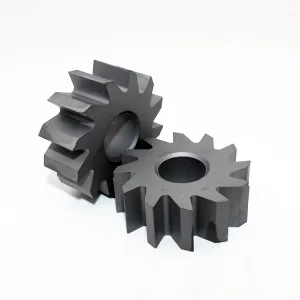
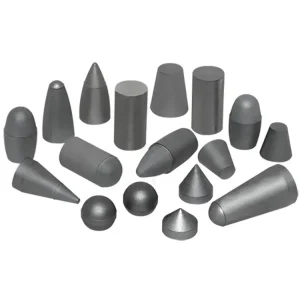
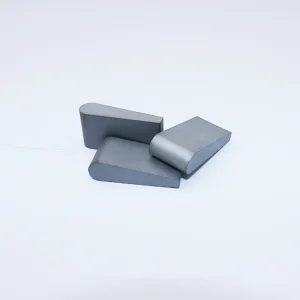
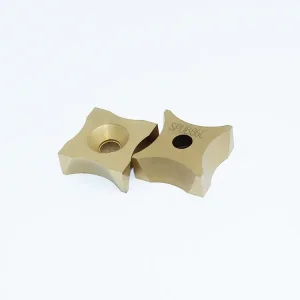
Explore specialized industrial cutting elements, round rods, non-magnetic bars, and high-strength custom geometries engineered for OEM machining partners.



Procurement & Technical Consultation
Frequently Asked Questions: Sourcing & Engineering Types of Carbide Inserts
Direct technical answers from our senior powder metallurgy engineers and export compliance specialists.
What are the key differences between CVD and PVD coatings on carbide inserts?
Chemical Vapor Deposition (CVD) coatings (typically TiCN + Al₂O₃ + TiN) are deposited at elevated temperatures (900°C–1050°C), producing thick protective layers (8–20 µm) that offer supreme thermal resistance and crater wear defense—ideal for high-speed continuous turning of steel and cast iron, as well as heavy scarfing. Physical Vapor Deposition (PVD) coatings (such as TiAlN, AlTiN, TiSiN) are applied at lower temperatures (400°C–500°C), resulting in thinner (2–5 µm), extremely smooth layers that leave compressive residual stresses in the insert edge. This preserves cutting edge sharpness and edge toughness, making PVD the superior choice for milling, threading, parting, drilling, and machining stainless steels and heat-resistant superalloys.
How do cobalt binder levels influence insert wear resistance versus fracture toughness?
Tungsten monocarbide (WC) grains supply extreme hardness and abrasive wear resistance, whereas the cobalt (Co) matrix acts as the cement that delivers mechanical ductility and toughness. Lower cobalt concentrations (3% to 6%, e.g., YG6 or ISO K10) maximize hardness (up to 91.5 HRA), making the insert exceptionally resistant to abrasive wear during steady, high-speed cutting. Higher cobalt contents (10% to 20%, e.g., YG15 to YG20 or ISO P30–P40) elevate transverse rupture strength (TRS) and shock resistance, preventing catastrophic body fracture during heavy interrupted cuts, scale removal on rough castings, and extreme railway ballast tamping.
Why is Non-Magnetic Tungsten Carbide specified in certain industrial operations?
Standard tungsten carbide utilizes cobalt, which is ferromagnetic and prone to corrosion in acidic media. Non-magnetic carbide grades replace cobalt with a specialized nickel (Ni) or nickel-chromium alloy binder. This yields a material with near-unity relative magnetic permeability (μr < 1.05), preventing interference in directional Measurement While Drilling (MWD) downhole oil tools, magnetic component press dies, sensor enclosures, and aggressive chemical processing valves.
Can Zhongfu Carbide produce custom inserts according to customer-supplied 2D/3D CAD drawings?
Yes. Custom precision metallurgy is our primary manufacturing core. Overseas clients can supply STEP, DXF, or PDF engineering drawings specifying tolerances, required substrate hardness, coating specifications, and target workpiece materials. Our engineering staff conducts a thorough Manufacturability and Toolpath Feasibility review within 8 hours, offering grade formula optimizations, custom pressing die design, and complete multi-axis CNC profile grinding.
What quality assurance protocols guarantee consistent batch-to-batch insert performance?
Every production batch undergoes strict traceability protocols starting with Fisher Sub-Sieve Sizer (FSSS) grain sizing of 100% virgin tungsten carbide powder. After Sinter-HIP densification, test specimens are subjected to density measurement, Rockwell A (HRA) hardness verification, coercive force testing, and magnetic saturation analysis. Metallographic microscopes verify that porosity conforms to ISO 4505 standards (A00, B00, C00), accompanied by automated optical vision systems measuring edge hone radii and insert thickness tolerances within ±0.005 mm prior to packaging.