
Featured Tungsten Magnetic & Wear Solutions (Part I)
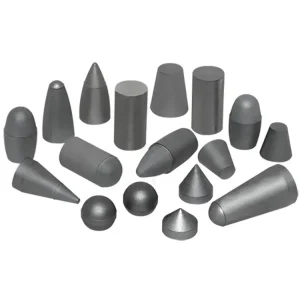
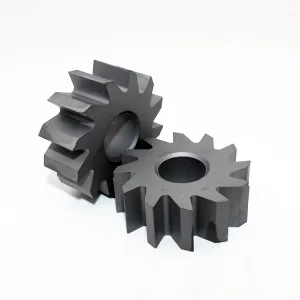
Factory-direct sintered blanks, customized non-magnetic inserts, lathe tools, and h6-ground rods engineered for high abrasive velocity, corrosion-critical zones, and intense magnetic flux containment.






Engineering Science: Magnetic Permeability vs. Ferromagnetic Cobalt Chemistry
In advanced high-wear tooling, controlling magnetic response is a critical metallurgical imperative. Understanding how cobalt (Co) content induces ferromagnetism while nickel-chromium (Ni-Cr) binders ensure near-zero magnetic susceptibility is essential for precision engineering procurement.
Ferromagnetic WC-Co Phase
Standard cemented carbides utilize cobalt (from YG6 to YG20) as the binder phase. Due to Co's unfilled 3d electron shells, these alloys display prominent ferromagnetic properties, with relative magnetic permeability (μr) ranging between 1.5 and 10+. Coercive force (Hc) and magnetic saturation (4πσ) are used on our production line as non-destructive metrics to monitor sub-micron grain boundaries and decarburization (eta-phase).
Nickel-Binder Non-Magnetic Alloys
Where stray magnetic fields degrade component performance—such as in MWD/LWD sensor housings, magnetic tape slitters, and semiconductor ion implantation guides—our patented formulations substitute cobalt with austenitic Ni-Cr or Ni-Mo-Cr matrices. This suppresses magnetic domain formation, achieving an ultra-low relative permeability of μr ≤ 1.005 alongside superior corrosion resistance against acidic media.
Over-Pressure Sinter-HIP Consolidation
Pore elimination is vital for magnetic and structural uniformity. Zhongfu employs 100-bar over-pressure Sinter-HIP furnaces, dissolving internal micro-voids during liquid-phase sintering at 1,450°C. This guarantees near-zero micro-porosity (A02, B00 rating) and ensures continuous electron distribution, eliminating internal stress concentrations and magnetic field anomalies in finished assemblies.
| Alloy Grade Matrix | Binder Chemistry (wt%) | Magnetic Permeability (μr) | Density (g/cm³) | Hardness (HRA) | Transverse Rupture (TRS, MPa) | Target Functional Application |
|---|---|---|---|---|---|---|
| ZF-NM05 (Ultra-Clean) | 5.5% Ni + Cr Inhibitor | ≤ 1.002 | 14.95 ± 0.1 | 91.5 – 92.5 | 2,350 | Semiconductor inspection, magnetic head slitters, electron microscopy stages |
| ZF-NM10 (Impact Wear) | 9.5% Ni-Cr-Mo | ≤ 1.005 | 14.50 ± 0.1 | 89.0 – 90.2 | 2,800 | MWD/LWD oil & gas directional drill bit sleeves, non-sparking coal cutter tools |
| ZF-YG6 (Standard WC-Co) | 6.0% Cobalt | 3.5 – 6.2 (Ferromagnetic) | 14.90 ± 0.1 | 90.5 ± 0.5 | 2,100 | SPUB scarfing inserts, high-speed wire drawing dies, lathe peeling tools |
| ZF-YG15 (Structural Shock) | 15.0% Cobalt | 6.8 – 11.5 (Ferromagnetic) | 14.00 ± 0.1 | 87.0 ± 0.5 | 3,200 | Heavy cold-heading punches, crushing rolls, railway tamping picks |
| ZF-HD18 (Heavy Alloy) | 95W-3.5Ni-1.5Fe | ≤ 1.05 (Tunable) | 18.00 ± 0.2 | 30 – 36 HRC | 1,050 | Radiation collimators, kinetic penetrators, gyro balance weights |
Upstream Dominance: The Jiangxi Tungsten Corridor Advantage
China commands over 80% of the world's primary tungsten reserves. Based in Nanchang, Jiangxi Province, Jiangxi Zhongfu Cemented Carbide Co., Ltd. sits at the center of the world's dense wolframite and scheelite mining zone, providing unmatched supply chain security and cost advantages to overseas OEM partners.
100% Virgin APT Powders
We synthesize exclusively from prime Ammonium Paratungstate (APT). Unlike scrap-recycled cemented carbide with erratic trace tramp elements (such as Ti, Ta, or Si spikes), virgin powder gives us absolute batch-to-batch repeatability in grain boundary cohesion, hardness, and strict magnetic purity.
Insulated Price Stability
Proximity to smelting hubs shields our international buyers from volatile global intermediaries. Our integrated purchasing model locks in pricing stability across multi-ton annual blanket agreements, protecting tier-1 tool manufacturers and distributors from sudden market fluctuations.
In-House Tooling & Mold Shop
Our 5,000 m² Nanchang production floor features full in-house wire-EDM, CNC profile grinders, and automatic dry-press tooling design. We complete custom non-standard molds in just 5 to 7 business days, shortening new product qualification cycles from months down to a few weeks.
High-Volume Scale
With multiple continuous vacuum sintering and sinter-HIP lines running 24/7, we process over 60 tons of finished carbide components monthly. Whether you need 50 pieces of custom wear bushings or 100,000 indexable scarfing inserts, our line delivers consistent delivery cadences without capacity bottlenecks.
Global Procurement Demands: Verification & Process Controls
Procurement directors and quality engineers face zero margin for error in deep drilling, high-speed tube welding, and micro-machining. Zhongfu bridges Chinese manufacturing scale with rigorous Western engineering verification protocols.
1. Dimensional Precision & Geometrical Tolerances
We offer h6 ground round rods (∅1–40 mm), plane parallelism within 0.003 mm on wear plates, and complex indexable insert profiles controlled through optical CNC comparators. Every batch ships with full CMM inspection reports verifying radius blend, facet angles, and chamfer run-out.
2. Metallographic Integrity & Grain Distribution
Each production run undergoes cross-sectional polishing and metallographic examination at 1,500x magnification. We check for eta-phase (η) carbon deficiency, carbon precipitation, and binder pools. Microstructure consistency guarantees your cutting tools do not suffer micro-chipping or early fatigue failure under high-impact cutting conditions.
3. Permeability & Eddy-Current Validation
For non-magnetic grades, we employ low-field permeability meters and digital gaussmeters calibrated against certified standards. Every component destined for downhole instrumentation or medical use is verified to fall below μr = 1.005, preventing erratic field interference during sensor operation.
Mission-Critical Deployment Scenarios Across Global Markets
Our cemented carbide blanks and precision parts serve diverse operational environments across North America, Europe, Australia, and Asia, delivering proven wear resistance and magnetic control under extreme service conditions.
Oil & Gas: MWD/LWD Drilling Tools
During directional horizontal drilling, pulse telemetry sensors and magnetic directional survey instruments must remain free from magnetic interference. Our ZF-NM series non-magnetic carbide wear sleeves, flow restrictors, and mud pulser valves endure high-velocity drilling mud containing abrasive quartz while maintaining zero compass disturbance in downhole telemetry strings.
Automotive & High-Frequency Tube Welded Scarfing
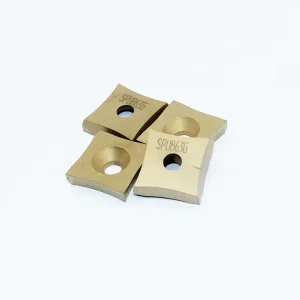
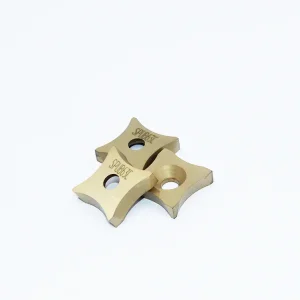
In high-frequency longitudinal tube welding mills, our SPUB-63, SPUB-86, SNMX, and SNMG inserts plane outside weld beads red-hot at line speeds over 120 m/min. The tough substrate paired with CVD/PVD coatings resists mechanical thermal cracking and plastic deformation, ensuring clean tube surfaces without chatter marks.
High-Speed Stamping of EV Motor Laminations
Stamping thin 0.20 mm electrical silicon steel sheets requires punch and die tooling with extreme wear life. Micro-chipping causes edge burrs that ruin motor efficiency. Our submicron YG15 and YG20 grades withstand millions of stroke impacts, maintaining razor-sharp cutting edges and minimizing regrinding downtime.
Global Compliance, Dual-Use Clearance & DDP Logistics
Navigating global trade controls, export certifications, and carbon reporting is as essential as dimensional accuracy. Zhongfu provides fully compliant, transparent trade documentation to eliminate regulatory delays at port of entry.
ITAR-Free & Dual-Use Export Licensing
Certain high-density tungsten formulations and heavy alloys require export licenses. Our experienced international trade division manages all documentation under China's Ministry of Commerce (MOFCOM) regulations, ensuring standard civilian classification (EAR99 / Dual-Use Clear) for predictable shipping across the USA, EU, Australia, and ASEAN hubs.
RoHS, REACH & Conflict-Free Sourcing
Our manufacturing strictly conforms to European REACH and RoHS environmental standards. We audit our ore supply chain under RMAP (Responsible Minerals Assurance Process) guidelines, providing certified documentation that our tungsten, nickel, and cobalt ores originate from ethical, conflict-free, sustainable mining operations.
DDP Door-to-Door Logistics & Consignment
To simplify procurement, we offer Delivered Duty Paid (DDP) shipping directly to your production facility via air express (DHL, FedEx, UPS) or sea/rail freight. We take care of customs clearance, import tariffs, and local freight forwarding, allowing your purchasing team to buy factory-direct with domestic ordering simplicity.
Technological Horizons: The Next Decade in Advanced Tungsten Carbides
Demanding industrial wear applications push conventional metallurgy forward. Zhongfu actively invests in additive manufacturing compatibility, ultrafine nanograin formulations, and closed-loop material recycling to power future industrial tooling.
Submicron & Nano-Grain WC-Ni
Conventional cemented carbides often sacrifice toughness when increasing hardness. By introducing grain growth inhibitors (VC, Cr3C2), our R&D team stabilizes grain sizes below 0.4 μm. This creates dense grain boundary networks that impede crack propagation, delivering hardness above 92.5 HRA while preserving high fracture toughness in non-magnetic grades.
Binder Jetting 3D Tungsten Printing
Complex conformal internal cooling passages inside cutting inserts and mining drill heads cannot be made by conventional pressing. Zhongfu collaborates with university laboratories to produce high-sphericity spray-dried WC-Co/Ni powders tailored for binder-jet 3D printing and subsequent solid-state densification via vacuum Sinter-HIP.
Closed-Loop Sustainable Recycling
To support ESG targets, we are expanding internal zinc-recovery process capabilities to separate tungsten carbide from end-of-life inserts cleanly. This zinc-reclaimed powder is chemically reconstituted to ensure the resulting recycled product matches virgin material quality, helping OEM partners meet their circular economy commitments.
Engineering & Procurement FAQ
Direct answers to the most common metallurgical, tolerance, and commercial questions raised by international engineering and sourcing teams.
What is the fundamental difference between standard tungsten carbide and tungsten magnetic or non-magnetic alloys?
The difference lies in the binder metal matrix. Standard tungsten carbide uses cobalt (Co), which is ferromagnetic (μr ≥ 1.5 to 10+). Tungsten magnetic products may leverage this response for eddy-current sorting and testing. Non-magnetic tungsten carbide substitutes cobalt with an austenitic nickel-chromium (Ni-Cr) or nickel-molybdenum binder, dropping the relative magnetic permeability to ≤ 1.005. This makes it non-reactive near magnetic sensors, compasses, and high-frequency RF systems.
Can you manufacture custom non-standard tungsten wear components directly from our CAD drawings?
Yes. More than 60% of our production consists of customized customer designs. We accept 2D (.dwg, .dxf, .pdf) and 3D (.step, .iges, .x_t) CAD models. Our engineering department conducts a manufacturability review within 8 hours, recommending optimal shrinkage compensation, press tooling layouts, and post-sinter diamond grinding allowances to achieve the required drawing tolerances.
How does Zhongfu guarantee zero internal porosity and eliminate sub-surface defects?
We sinter all components in modern 10 MPa over-pressure Sinter-HIP furnaces. By applying high-pressure argon gas at 1,450°C after vacuum dewaxing, residual internal micro-pores are squeezed closed and dissolved during the liquid phase. Finished parts achieve ISO 4505 porosity ratings of A02, B00, C00, eliminating premature failure under heavy cyclical mechanical impact.
What are your typical production lead times and Minimum Order Quantities (MOQs)?
For standard catalog stock items (e.g., standard SPUB inserts, blanks, round rods), parts ship within 48 to 72 hours. Custom parts requiring dedicated tooling take 10 to 14 days for mold manufacture and sample production, with mass production completing in 15 to 25 days. We accommodate flexible prototype sample batches (MOQ as low as 10 to 50 pieces) to support engineering validation before full production commitments.
How does nickel-binder carbide compare to cobalt-binder carbide in corrosive working environments?
Nickel-binder tungsten carbide exhibits significantly superior resistance to chemical attack. In aqueous solutions below pH 6 or in contact with organic and mineral acids, the cobalt phase in standard carbide leaches rapidly, leaving an unsupported, brittle WC skeleton that spalls away. Nickel-chromium binders passivate spontaneously, cutting corrosion rates by up to 20 times in acidic oilwell brine, chemical valves, and pulp applications.
What quality documentation accompanies export shipments?
Every delivery includes a comprehensive EN 10204 3.1 Material Inspection Certificate. This report lists verified lot chemistry (WC, Co, Ni, Cr content), physical metrics (density in g/cm³, Rockwell HRA hardness, Transverse Rupture Strength TRS in MPa), magnetic permeability values (for non-magnetic grades), and CMM dimensional sampling data for critical features.
Featured Tungsten Magnetic & Wear Solutions (Part II)
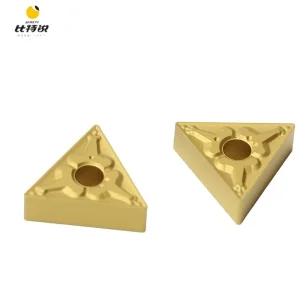
Indexable milling inserts, tube scarfing blades, crushing roll inserts, and high-impact mining blanks manufactured for severe industrial wear environments.





Request a Custom Powder Formulation or Drawing Feasibility Review
Send your 2D/3D part drawings, target annual volumes, and operating wear parameters. Our metallurgical engineering team provides a detailed manufacturability review, grade recommendation, and factory-direct wholesale quotation within 8 hours.