High-Performance Tooling Inserts & Sintered Carbide Components
Engineered via vacuum Sinter-HIP processing to eliminate internal microporosity, providing extreme fracture toughness, hot hardness, and sustained edge retention in heavy-duty milling, scarfing, and wear operations.






The Paradigm Shift in Wholesale Tooling Manufacturing: Powder Metallurgy, Sinter-HIP, and Precision Engineering
In modern industrial fabrication, tooling companies no longer serve merely as suppliers of standard consumables; they act as pivotal technical partners in component lifecycle optimization, scrap reduction, and autonomous machining throughput.
Formulation Tailoring & Microstructure
Cemented tungsten carbide (WC-Co/WC-Ni) performance is fundamentally determined at the molecular interface. Our foundries manipulate tungsten carbide grain size across classifications ranging from sub-micron (0.4–0.8 μm) for razor-sharp edge retention in aerospace profiling down to coarse grain (2.5–5.0 μm) for extreme mechanical impact tools.
- Controlled decarburization eliminating detrimental η-phase
- Nano-grain homogeneity with near-zero free carbon
- Precise Co/Ni binder balance from 3% to 25%
Overpressure Sinter-HIP Consolidation
Traditional vacuum sintering risks micro-cavities that induce micro-chipping under cyclic dynamic shear loads. Zhongfu implements high-pressure sinter-HIP (Hot Isostatic Pressing) furnaces at up to 10 MPa of argon atmosphere during the liquid cobalt phase, collapsing metallurgical micro-voids to negligible levels.
- Attainment of theoretical density (>99.98%)
- Transverse Rupture Strength (TRS) gains up to 35%
- Exceptional thermal fatigue threshold under coolant cycling
Micron-Tolerance Grinding & Functional PVD/CVD
Sintered carbide blanks undergo CNC multi-axis surface, centerless, and contour diamond-wheel grinding to achieve h6 tolerances on cylindrical pins/rods and optical mirror surfaces on wear blocks. Advanced multi-layer TiAlN, AlTiSiN, and diamond CVD coatings provide thermal barriers up to 1100°C.
- Ra ≤ 0.05 μm ultra-polished chipbreaker flutes
- Controlled edge honing from 5 to 30 μm radius
- Tribological coatings lowering friction coefficient to < 0.2
Navigating International Supply Dynamics & Large-Scale Procurement Ecosystems
In a volatile global landscape characterized by fluctuating raw tungsten (ammonium paratungstate) prices, geopolitical resource governance, and intensifying lead-time pressures, procurement directors require tooling factories with secured upstream access and integrated downstream support.
Upstream Mineral Integrity & Sourcing Hegemony
With production facilities situated in Nanchang, Jiangxi Province—the epicenter of world tungsten reserves—Zhongfu bypasses multiple tiers of metal-trader margins. We utilize exclusively high-purity virgin Ammonium Paratungstate (APT), eliminating brittle crystalline clusters and secondary inclusions commonly traced to scrap carbide recycling.
Inventory Buffer & Just-In-Time Consignment
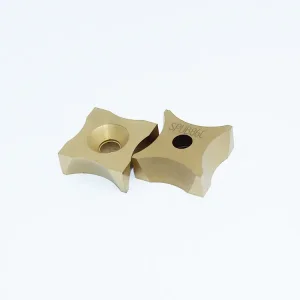
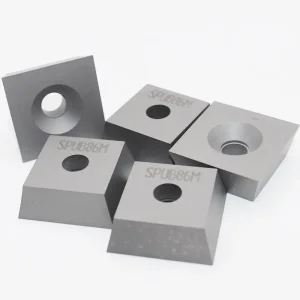
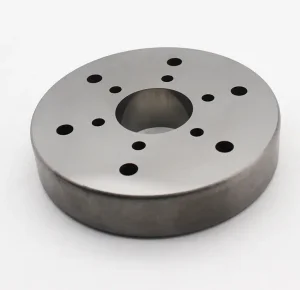
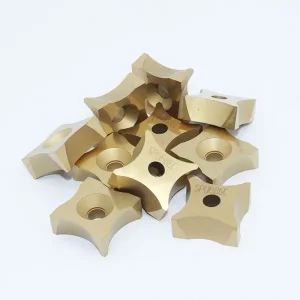
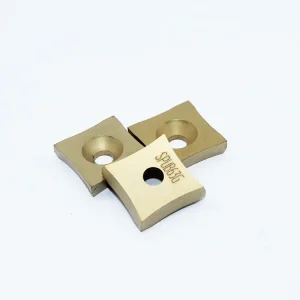
To insulate heavy manufacturers against lead-time spikes, we provide tailored Vendor Managed Inventory (VMI) frameworks. Standard insert geometry blanks such as SPUB63, SPUB86, and cylindrical ground rod inventory are pre-sintered and buffered for immediate custom coating, edge finishing, and rapid air-dispatch within 72 hours.
Total Cost of Ownership (TCO) Rationalization
Purchasing wholesale tooling based purely on initial unit acquisition cost frequently inflates production overhead through tool breakage, chatter marks, and frequent machine stoppages. Our metallurgical formulations optimize tool wear predictability, extending indexable intervals by 30% to 50% and slashing machine downtime.
Tungsten Carbide Grade Standards for OEM Machining & Severe Wear
Reference technical properties for selecting application-appropriate carbide grades. Mechanical attributes strictly verified via ISO 3738 Rockwell hardness (HRA) and ISO 3327 transverse rupture strength protocols.
| Alloy Grade | Binder Phase (%wt) | Grain Size Class | Density (g/cm³) | Hardness (HRA) | TRS (N/mm²) | Target Industrial Application |
|---|---|---|---|---|---|---|
| YG6 / K10 | 6% Cobalt | Fine (1.0–1.4 μm) | 14.85 – 15.00 | 90.5 ± 0.5 | 1900 – 2100 | Chilled cast iron finishing, non-ferrous alloys, semi-conductor slitters, wire drawing dies. |
| YG8 / K20 | 8% Cobalt | Medium (1.4–1.8 μm) | 14.60 – 14.80 | 89.5 ± 0.5 | 2200 – 2400 | Chuck torque grippers, mining button inserts, heavy wood planing, rough turning of refractory steels. |
| YG15 / K40 | 15% Cobalt | Coarse (2.0–3.0 μm) | 13.90 – 14.15 | 87.0 ± 0.5 | 2800 – 3000 | Stamping dies, cold heading dies for fasteners, heavy hydraulic valve sleeves, high-stress punches. |
| YG20 / P40 | 20% Cobalt | Coarse (2.5–3.5 μm) | 13.45 – 13.65 | 85.5 ± 0.5 | 3100 – 3400 | Extreme shock resistance, cold forging dies, tube scarfing weld-seam gouging, high-impact roll rings. |
| NM-12 (Non-Mag) | 12% Nickel Binder | Sub-Micron (0.8 μm) | 14.30 – 14.50 | 88.5 ± 0.5 | 2400 – 2600 | Magnetic sensor enclosures, downhole MWD/LWD drilling tools, corrosive sour gas valving. |
| Ultra-Nano UF05 | 10% Cobalt + VC/Cr3C2 | Ultrafine (0.4 μm) | 14.40 – 14.55 | 92.8 ± 0.3 | 3800 – 4100 | High-speed solid carbide end mills, medical orthopedic bone drills, composite aerospace routing. |
Engineering Solutions Across Rigorous Industrial Operating Fronts
From high-frequency electric resistance welded (ERW) steel tube mills to subsea petro-chemical extraction, cemented carbide tools must perform reliably without sudden cataclysmic failure.
1. Longitudinal Pipe & Tube Scarfing (ERW Steel)
In high-speed continuous tube mill lines, external weld bead scarfing tools (e.g., SPUB63, SPUB86 series) endure violent thermal cycling, high-temperature oxide scale friction, and severe interrupted shock as the continuous strip is formed and welded at high frequency.
- Challenge Rapid edge micro-chipping due to dynamic weld seam heat up to 900°C.
- Solution Micro-engineered P40/YG20 grade with thick multi-layer CVD TiCN+Al2O3 coatings that prevent thermal propagation into the substrate.
- Yield 40% reduction in continuous tube line downtime for insert indexing.
2. Deep Exploration Drilling & Downhole Non-Magnetic Parts
Directional drilling apparatus (MWD/LWD) utilize precision magnetometers to map downhole azimuth and inclination. Standard cobalt-bonded carbide distorts sensor telemetry due to its ferromagnetic nature.
- Challenge Magnetic permeability must stay below μr ≤ 1.005 while maintaining severe abrasion resistance against abrasive rock cuttings.
- Solution Nickel-alloy matrix formulations (WC-Ni-Cr) engineered with zero magnetic interference, high cavitation resistance, and H2S/CO2 corrosion tolerance.
- Yield Flawless directional logging across offshore extended-reach drilling wells.
3. Heavy Railway Maintenance & Ballast Tamping
Track maintenance machines employ vibratory tamping tines that penetrate crushed granite ballast stones under high mechanical impact and frequency to consolidate railway foundations.
- Challenge Extreme gouging abrasion paired with high-frequency harmonic shocks shattering standard hardmetal brazing joints.
- Solution High-toughness YG8/YG11C shaped carbide button plates induction-brazed with proprietary silver-copper interlayer alloy foils to absorb vibrational shear.
- Yield Tine operational lifespan extended beyond 120 track kilometers per maintenance cycle.
International Regulatory Compliance, Conflict-Free Sourcing & Quality Rigor
Tooling procurement for North American, European, and Asia-Pacific multinationals requires stringent environmental safety, verifiable ethical material extraction, and comprehensive metallurgical traceability.
RMI & Conflict Minerals
Strict adhesion to the Responsible Minerals Initiative (RMI) standards. Every batch of Tungsten (W) is sourced exclusively from certified conflict-free smelters meeting Dodd-Frank Section 1502 compliance.
RoHS & REACH Compliance
Our powders, sintering aids, and functional PVD coatings are fully non-hazardous, compliant with EU Directive 2011/65/EU (RoHS) and Regulation (EC) No 1907/2006 (REACH) for SVHC substances.
Full Heat Traceability 3.1
Every bulk shipment includes EN 10204 Type 3.1 Inspection Certificates containing detailed spectrometry analysis, density validation, saturation magnetization, and optical microstructure photos.
Local Engineering Hubs
We provide localized technical assistance and CAD/CAM reverse engineering support across our export distribution partners in Germany, the USA, Mexico, and Australia, delivering 8-hour inquiry turnarounds.
Metallurgical Evolution: Next-Gen Additive Tooling & AI Micro-Structuring
As advanced materials like carbon fiber reinforced polymers (CFRP), nickel superalloys (Inconel 718), and titanium alloys (Ti-6Al-4V) challenge cutting tool limits, wholesale tooling manufacturers are innovating through cutting-edge material synthesis.
Additive Binder Jetting of Complex Geometries
Transitioning from mechanical die pressing to industrial 3D binder jetting for carbide wear parts with intricate internal conformable cooling channels, preventing thermal shock in dry milling operations.
Ultra-Fine High-Entropy Alloy (HEA) Binders
Replacing traditional cobalt binders with Co-Ni-Fe-Cr multi-component high-entropy alloys, boosting high-temperature oxidation thresholds and preventing chemical crater wear during high-speed cutting.
Smart Sensor-Embedded Indexable Inserts
Integrating micro-thin piezoelectric thin-film sensors directly beneath CVD diamond coatings to stream real-time acoustic emission and thermal vibration data to autonomous CNC control centers.
Closed-Loop Hydrometallurgical Recycling
Implementing low-emission zero-acid chemical reclamation processes yielding recycled tungsten carbide powders indistinguishable in grain distribution from virgin materials, fulfilling ESG mandates.
Frequently Addressed Questions by Industrial Buyers & Plant Directors
Detailed technical, logistical, and commercial inquiries answered by our senior metallurgical engineers and international export trade managers.
How does vacuum Sinter-HIP processing compare to conventional hydrogen or vacuum sintering for industrial tooling?
What criteria determine the choice between cobalt-bonded and nickel-bonded tungsten carbide wear components?
Can Zhongfu manufacture custom profile carbide parts directly from 2D/3D engineering CAD models?
How do you verify batch-to-batch repeatability and prevent counterfeit or recycled powder ingress?
What are your typical production lead times, minimum order quantities (MOQs), and rapid prototyping options?
Specialized Wear Parts, Threading Tools & Industrial Cutting Blanks
Explore our targeted industrial tooling lines covering rotary diamond tools, heavy-duty concrete scarifiers, woodworking button inserts, and precision cold roll crushers.