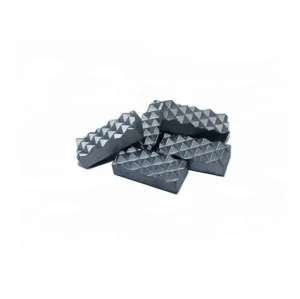
Core Machined Tungsten & Cemented Carbide Products
Engineered for high-temperature stability, exceptional compressive modulus, and micro-erosion resistance across heavy machining and drilling sectors.
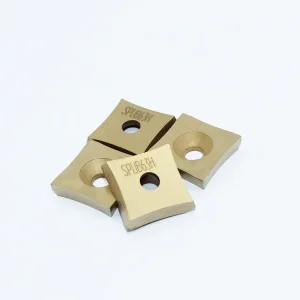
Woodworking Blades Tungsten Carbide Insert Milling Inserts Inconel
Configure & Sourcing
SPUB-63 Series Machine Cutter Carbide CNC Cutting Tools Turning
Configure & Sourcing
Cemented Tungsten Carbide Gripper Inserts/Tips for Mining & Diamond Drilling
Configure & Sourcing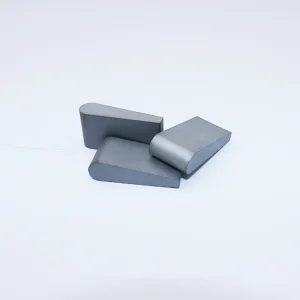
China New Shape Tungsten Carbide Tamping Tines for Railway Maintenance
Configure & Sourcing
Tungsten Carbide Tamping Tine Tools for Railway Infrastructure
Configure & Sourcing
Non-Magnetic Solid Cemented Carbide Pin Plug Gauges & Cylindrical Rods
Configure & Sourcing
YG8 Standard Tungsten Carbide Torque Gripper Inserts for Chuck Jaws
Configure & Sourcing
Sintered Cemented Carbide Stone, Wood & Diamond Composite Cutting Tools
Configure & SourcingGlobal Market Dynamics & The Machining Tungsten Paradigm Shift
Transitioning from commodity carbide supply to high-precision microstructural tailoring and intelligent refractory alloys.
Additive-Subtractive Hybrid Machining
The contemporary tungsten manufacturing sector is rapidly adopting hybrid methodologies. Where pure subtractive EDM and diamond grinding previously dominated, binder jet additive manufacturing combined with precision CNC 5-axis post-sinter grinding now yields intricate internal cooling geometries for extreme-duty milling inserts and aerospace nozzles.
Ultrafine & Nano-Grain Microstructure
Global procurement metrics indicate a substantial demand migration toward grain sizes beneath 0.5 microns. Fine crystalline tungsten carbide (WC) matrix control diminishes cobalt binder mean free path, dramatically improving hardness beyond HRA 92 while preventing catastrophic shear failure in demanding high-feed conditions.
Supply Chain Decoupling & Localization
Due to raw material geographical concentration, tier-one manufacturers must provide total provenance validation. Enterprise procurement directors increasingly vet factories capable of in-house ammonium paratungstate (APT) conversion, closed-loop recycling, and zero-defect Sinter-HIP hot isostatic densification.
Enterprise Purchasing Architecture: Beyond Baseline Tolerances
How global tooling conglomerates, mining consortiums, and CNC machine shops evaluate supplier capability.
Porosity & Densification
Demanding ISO Class A00-A02 porosity ratings. Sinter-HIP processing under 10 MPa argon pressure ensures complete elimination of internal micro-voids, guaranteeing flawless mirror finishes under electrical discharge machining (EDM).
Geometric Runout (h6 Class)
High-speed rotating tools demand micron-level tolerance bands. Precision centerless grinding of solid rods requires cylinder straightness within 0.002 mm per 300 mm length to safeguard high-RPM CNC spindle bearings from unbalance.
Metallurgical Traceability
Every shipment must feature verifiable heat-lot tracking, magnetic saturation (Cobalt-magnetization % 4πσ), and coercive force (Hc) spectrum readouts that confirm uniform cobalt diffusion without eta-phase embrittlement.
Virgin vs Recycled Blends
Procurement teams require strictly documented 100% virgin tungsten powder formulations for high-impact tamping tines and heavy scarfing inserts, eliminating zinc-process impurities that provoke spontaneous cracking.
Metallurgical Formulations for Hostile Working Environs
Selecting optimum cobalt binder content, secondary grain inhibitors, and carbide crystal matrices.
| Standard Grade Class | Cobalt / Binder % | Density (g/cm³) | Hardness (HRA / HV) | TRS (MPa) | Primary Industrial Use-Case |
|---|---|---|---|---|---|
| YG6X / K10 (Ultrafine) | 6.0% Co | 14.90–15.05 | 91.5 HRA / 1650 HV | 2,400 | Chilled cast iron, non-ferrous finish milling, high-precision gauge blocks. |
| YG8 / K20–K30 (Medium) | 8.0% Co | 14.60–14.80 | 89.5 HRA / 1480 HV | 2,800 | Rotary drill bits, torque chuck jaws, railway maintenance ballast tampers. |
| YG15 / K40 (Tough) | 15.0% Co | 13.95–14.15 | 87.0 HRA / 1250 HV | 3,200 | Cold heading dies, heavy stamping punches, impact-heavy rotary tooling. |
| YG20C / G50 (Coarse) | 20.0% Co | 13.45–13.65 | 84.5 HRA / 1050 HV | 3,600 | Extreme shock forging dies, quarry rock cutters, high-tonnage draw dies. |
| Ni-Binder (Non-Magnetic) | 8.0–12.0% Ni | 14.40–14.70 | 88.0–90.0 HRA | 2,600 | MWD/LWD oilfield logging sensors, magnetic electronics tooling, corrosive fluids. |
Inconel & Superalloy Aerospace Turning
Machining nickel-chromium superalloys generates intense localized heat surpassing 1,000°C at the shear zone. Our proprietary submicron WC grades with specialized PVD TiAlN / AlCrN coatings maintain cutting edge integrity without notch wear, providing predictable tool life across long aerospace cycles.
Railway Infrastructure & Ballast Tamping
Tamping tine tools endure severe percussive shock coupled with continuous quartz abrasive wear. By combining vacuum brazing with fracture-resistant YG8/YG11C carbide inserts featuring tailored chamfers, we extend field longevity up to 350 track-kilometers per set without tip loss.
Heavy Metallurgical Slab Scarfing
Steel mill slab conditioning requires heavy-duty scarfing inserts such as the SPUB-63 and SPUB-86 series. These tools handle aggressive continuous peeling of oxidized scales under extreme thermal gradients without thermal fatigue crack formation.
Total Quality Assurance, ESG & Global Compliance Framework
Bridging Chinese manufacturing excellence with North American, European, and Australian engineering standards.
Metallographic Verification (ASTM B657)
Every production sintering lot undergoes strict cross-sectional optical and SEM analysis. We verify free carbon balance, absence of brittle cobalt-tungsten carbide double carbides (W3Co3C / η-phase), and establish grain boundary distribution indices prior to release.
Conflict-Free RMI & ESG Alignment
Full compliance with the Responsible Minerals Initiative (RMI). We guarantee zero conflict minerals in our supply chain, accompanied by transparent carbon footprint tracking and closed-loop scrap recycling credit schemes tailored for Tier-1 corporate ESG mandates.
Localized Buffer Stocks & JIT Consignment
Mitigate international freight bottlenecks via customized consignment warehousing programs across Houston, Rotterdam, and Melbourne. We maintain minimum 90-day safety stock buffers for critical wear items and standard h6 ground rods.
Next-Generation Machining Tungsten Technology Roadmap
A strategic projection of metallurgical breakthroughs, coating architectures, and automated manufacturing.
Sinter-HIP 10 MPa Densification
Broad-scale deployment of integrated overpressure sintering furnaces, ensuring void-free microstructures for EDM die tooling and high-precision wear rods.
Binderless & Nano-Grain Formulations
Development of binderless tungsten carbide (>99.5% WC) via Spark Plasma Sintering (SPS) for optical glass molds, corrosive semiconductor seals, and magnetic non-interference parts.
HiPIMS & Nanocomposite Layers
High-Power Impulse Magnetron Sputtering (HiPIMS) creating ultra-dense AlTiN/Si3N4 nanolaminate coatings, pushing continuous dry-machining thermal boundaries to 1,200°C.
In-Situ Closed-Loop Metrology
AI-assisted vision sorting, automated acoustic emission grinding diagnostics, and 100% digital twinning for every custom tungsten workpiece dispatched globally.
Frequently Addressed Engineering & Commercial Questions
Expert insights on grades, EDM parameters, brazing techniques, and global procurement lead times.
How does electrical discharge machining (EDM) affect the surface integrity of tungsten carbide parts?
What metallurgical criteria differentiate non-magnetic tungsten carbide from conventional grades?
How should OEM manufacturers approach brazing tungsten carbide to carbon or alloy steel shanks?
What are the standard tolerances achievable on centerless ground solid carbide rods?
What is the standard turnaround cycle for custom-geometry sintered blanks from CAD prints?
Industrial Cutting, Scarfing & Wear Assemblies
Engineered for high-volume steel tube production, specialized woodworking, and heavy lathe shaping.
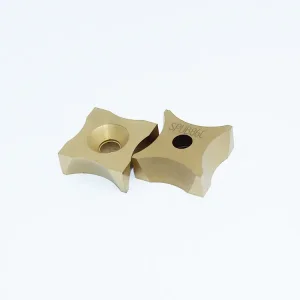
SPUB86C Customized Lathe Tungsten Carbide Inserts Drill Bit Insert
Configure & Sourcing
SPUB63B Wholesale ISO TiN Tungsten Carbide Tube Scarfing Insert
Configure & Sourcing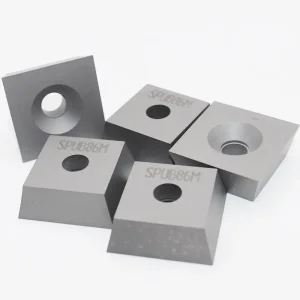
Boxes Tungsten Woodworking Carbide Button Inserts & Cutters
Configure & Sourcing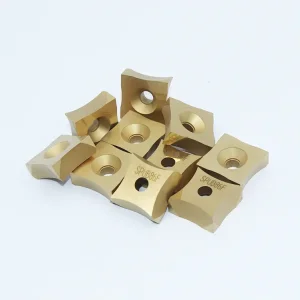
Tungsten Carbide Insert Cutting Tools & Heavy Turning Tool Inserts
Configure & Sourcing
SPUB86J CVD Coating Woodworking Tungsten Carbide Button Insert
Configure & Sourcing
1x1x0.375" CVD Coating Tungsten Carbide Tube Scarfing Insert
Configure & Sourcing
Carbide Cutting Rods for Tungsten Alloy Cutting Tool Components
Configure & Sourcing