
High-Precision Sintered Blanks & Tooling Inserts
Explore our core export-grade tungsten carbide wear elements, cutting tools, and industrial plates manufactured from 100% virgin tungsten ore powders.

China Wholesale carbide insert cutting tools cnc Supplier, Factory
View Product Details
Wholesale China best price custom tungsten carbide steel cutters concrete scarifier blade Supplier, Factory
View Product Details
China YG8 Standard tungsten carbide torque gripper inserts for chuck jaws Factory, Factories
View Product Details
China Wholesale custom tungsten carbide module gear milling shaper cutters Manufacturers, Suppliers
View Product Details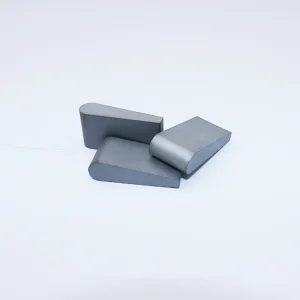
China New shape tungsten carbide tamping tines for railway Manufacturers, Factory
View Product Details
China Best price CVD coating tungsten carbide non standard carbide jaw insert cnc Manufacturer, Factory
View Product Details
Wholesale Wholesale Steel Pipe Scarfing Tools SPUB63J Tube Scarfing Inserts Supplier, Factories
View Product Details
China SPUB86C P40 uncoated blank cemented tools carbide inserts Suppliers, Factory
View Product DetailsThe Science of Sinter-HIP: Eradicating Internal Flaws in Cemented Carbide Plates
In the domain of heavy industrial tooling, cold forming, stamping, and extreme wear resistance, conventional vacuum sintering often leaves sub-surface micro-voids that trigger early micro-cracking and catastrophic component fracture under cyclic mechanical fatigue. Jiangxi Zhongfu Cemented Carbide Co., Ltd. implements full-cycle Hot Isostatic Pressing (HIP) sintering technology under high-purity argon atmospheres at pressures reaching 60 to 100 bar at 1,400°C.
The synergistic interaction of high hydrostatic pressure and elevated liquid-phase temperatures drives the molten cobalt or nickel binder into interstitial voids, collapsing metallurgical microporosity to ISO 4505 / ASTM B276 class A00, B00, C00. For international mold makers, progressive stamping houses, and mechanical tool manufacturers, this metallurgical density translates into a 25% to 35% increase in Transverse Rupture Strength (TRS), vastly superior impact toughness, and mirror-grade polishability for optical and precision EDM wire-cutting applications.
Elimination of Internal Microporosity
Overpressure sintering collapses micro-cavities that traditional sintering leaves behind, mitigating stress concentrations during heavy punching, high-pressure die casting, and wire-EDM fabrication.
Virgin WC Microstructural Uniformity
We strictly reject recycled scrap carbide powders. Utilizing 100% pure virgin wolframite-derived tungsten powder maintains precise grain boundaries, ensuring unyielding wear longevity and batch reliability.
Superior Wire-EDM Machinability
Uniform cobalt distribution prevents pitting, micro-cracking, and cobalt leaching during electrical discharge wire machining, guaranteeing razor-sharp edges without micro-spalling.
Formula Tuning to Working Parameters
Our metallurgists calibrate cobalt content (6% to 20%), nickel binders, and carbide grain size (0.4µm to 4.5µm) to strike the exact mechanical equilibrium between abrasive wear resistance and impact fracture toughness.
Tungsten Carbide Plate Technical Grades & Performance Index
Compare standard and custom formulation parameters to align material specifications with your actual tooling stresses, stamping tonnages, and wear conditions.
| Carbide Grade | Binder Phase (wt%) | Density (g/cm³) | Hardness (HRA) | T.R.S. (MPa) | Grain Size (µm) | Primary Industrial Utility |
|---|---|---|---|---|---|---|
| YG6 | 6.0% Co | 14.90 - 15.05 | 90.5 - 91.5 | ≥ 2000 | 1.2 - 1.6 | High-wear precision wear plates, drawing dies, non-ferrous metal stamping. |
| YG8 | 8.0% Co | 14.65 - 14.85 | 89.5 - 90.5 | ≥ 2400 | 1.4 - 1.8 | General purpose tooling plates, chuck jaw inserts, shear blades, rock tamping. |
| YG11C | 11.0% Co | 14.30 - 14.50 | 87.0 - 88.0 | ≥ 2700 | 2.2 - 3.2 | Heavy-impact mining blanks, mineral crushing wear bars, geotechnical cutters. |
| YG15 | 15.0% Co | 13.95 - 14.15 | 87.0 - 88.0 | ≥ 2900 | 1.6 - 2.2 | Cold heading molds, heavy stamping dies, sheet metal punching preforms. |
| YG20 | 20.0% Co | 13.45 - 13.65 | 85.0 - 86.5 | ≥ 3100 | 1.8 - 2.5 | Severe shock cold forging dies, thick steel plate perforation, large draw punches. |
| Ni-Bonded (NM10) | 10.0% Ni | 14.40 - 14.60 | 88.5 - 89.5 | ≥ 2300 | 1.0 - 1.5 | Non-magnetic wear plates, corrosive subsea fluid trims, MWD downhole instrumentation. |
High-Stakes Industrial Deployments for HIP Sintered Carbide Plates
Modern engineering demands customized carbide performance matched directly to environmental loads, aggressive friction, and high-frequency cyclical shock.
EV Battery Manufacturing & Slitting
In high-speed slitting lines for lithium-ion battery cathode (aluminum) and anode (copper) foils, microscopic edge burrs cause short circuits. Our sub-micron grain HIP plates provide burr-free razor finishes that endure hundreds of thousands of continuous linear cuts without edge chipping.
Motor Stator Lamination Dies
Silicon steel lamination dies operate under rapid progressive stamping sequences. HIP sintered plates (YG15 and YG20 grades) resist adhesive galling and mechanical punch fatigue, holding positional tolerances of ±0.002 mm across multi-million stroke stamping runs.
Downhole MWD & Subsea Wellhead Tools
Oil & gas directional drilling environments encounter drilling fluids mixed with sand alongside electromagnetic signal transmission. Our custom nickel-bonded, non-magnetic carbide plates resist abrasive cavitation and brine corrosion while preventing magnetic field distortion.
Steel Tube ID/OD Hot Scarfing Tools
Continuous welded steel pipe mills require outer and inner weld seam removal at incandescent steel temperatures exceeding 800°C. Sinter-HIP scarfing inserts (SPUB63, SNMX, and SQ series) demonstrate thermal crack stability and resistance to cobalt depletion under sudden coolant spray.
Why International OEM Toolmakers Source Directly from Jiangxi Zhongfu
Securing a resilient, high-volume supply chain for sintered tungsten carbide requires geographical closeness to mineral reserves, end-to-end metallurgical control, and disciplined manufacturing economics.
Direct Tungsten Belt Proximity
Situated in Nanchang, Jiangxi—the epicenter of global tungsten reserves—our factory eliminates raw material supply chain bottlenecks. Direct access to pristine virgin wolframite stabilizes wholesale pricing against global commodity fluctuations.
Full-Cycle Vertical Integration
From wet ball-milling, spray-drying atomization, and multi-axis hydraulic pressing to vacuum sinter-HIP and CNC precision surface grinding, every stage remains 100% in-house under rigorous Quality Control checkpoints.
Lead Time Compression
Standard grade plates (YG6, YG8, YG15, YG20) in common thicknesses are stocked as semi-finished HIP blanks, reducing custom wire-EDM or ground preform delivery times from 8 weeks down to 10 to 15 business days globally.
Export Verification & Traceability
Every shipment is delivered with comprehensive Mill Test Certificates, including Archimedes density analysis, Rockwell hardness (HRA), magnetic saturation measurements (4πσ), and coercive force (Hc) tests confirming zero structural carbon defects.
Metallurgical Roadmap: Next-Generation Cemented Carbide Plates
Continuous evolution in powder technology, nano-grain stabilization, and automated sintering profiles is redefining industrial tool life benchmarks.
Phase 1: Current AI Sinter-HIP Profiles
Dynamic pressure-temperature curves orchestrated by thermal algorithm sensors within 100-bar HIP furnaces to eliminate differential thermal contraction and residual internal stresses in thick block plates (>50mm).
Phase 2: 2026-2027 Nano-Carbide Grain Refinement
Implementing sub-micron VC (Vanadium Carbide) and Cr3C2 (Chromium Carbide) grain growth inhibitors to create 0.2µm to 0.4µm ultra-fine microstructures yielding hardness levels above 93 HRA without embrittlement.
Phase 3: 2028+ Functionally Graded Plates (FGM)
Development of continuous gradient plates containing an ultra-hard, wear-resistant outer boundary layer seamlessly transitioning to a cobalt-enriched, high-toughness shock-absorbing core.
Engineered Wear Inserts, Scarfing Tools & Special Profiles
Complete your tooling line with our wear components, pipe scarfing blades, track maintenance tines, and cold heading dies manufactured to exact customer drawings.
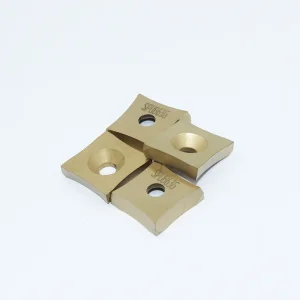
Buy Wear resistant technical round tungsten lathe carbide inserts knife blade Manufacturers, Supplier
Explore Specification
China tungsten carbide tube scarfing inserts SQ8615WCB Manufacturers, Supplier
Explore Specification
China Wholesale SPUB-63C cemented mining tungsten tools carbide drill insert Supplier, Factories
Explore Specification
China Wholesale SPUB63M30 tin coating scarfing insert carbide od scarfing insert Manufacturer, Factories
Explore Specification
China Best price SPUB86J CVD coating boxes woodworking tungsten carbide button insert Manufacturer, Supplier
Explore Specification
China New shape cemented carbide tips for railway track tamping pick center tooth Manufacturers, Factory
Explore Specification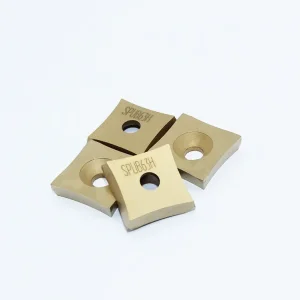
Buy SPUB-63 welding tube scarfing insert,Welding Pipe peeling insert Manufacturer, Manufacturers
Explore Specification
Buy Customized Tungsten Carbide Cold Heading molds/punch dies/wire drawing dies Manufacturers, Suppliers
Explore SpecificationFrequently Asked Questions on Wholesale HIP Sintered Plates
Authoritative technical answers addressing tooling design, grade selection, wire-EDM procedures, and international delivery compliance.
Why is HIP sintering critical for carbide plates destined for Wire-EDM operations?
During wire electrical discharge machining (WEDM), electrical spark discharges generate localized temperatures exceeding 10,000°C, creating rapid thermal expansion and quenching cycles. If a carbide plate contains microscopic voids (common in non-HIP vacuum sintering), the electric arc can bridge through these porosities, initiating micro-explosions that leach the cobalt binder and trigger catastrophic cracking along the cut profile. HIP sintering closes these micro-pores, ensuring clean, spall-free cut edges.
How do I select between cobalt-bonded and nickel-bonded carbide plates?
Cobalt binders (WC-Co) provide the highest mechanical hardness and transverse rupture strength, making them the standard choice for general stamping, punching, and mechanical cutting tools. However, cobalt is ferromagnetic and susceptible to acid attack. Nickel-bonded carbide (WC-Ni) is non-magnetic and significantly more resistant to corrosive environments, making it ideal for downhole MWD oilfield sensors, magnetic core powder stamping dies, and marine flow valves.
What grinding and machining allowances are standard for sintered blanks?
For as-sintered carbide plate blanks, we recommend a standard dimensional machining allowance of +0.5mm to +1.5mm on thickness and +1.0mm to +2.5mm on width and length to accommodate post-sintering surface grinding and wire-EDM finishing. Upon request, Zhongfu supplies pre-ground blanks finished to h6 tolerances with surface roughness down to Ra 0.05µm via diamond-wheel surface grinders.
Can Zhongfu manufacture custom-shaped carbide plates according to OEM drawings?
Yes. Custom tooling forms over 60% of our annual production. Customers can supply 2D (DWG, DXF, PDF) or 3D (STEP, IGES) CAD drawings specifying required tolerances, bevels, countersunk mounting holes, and edge radiuses. Our engineering team reviews each design within 8 hours to verify manufacturability, press mold geometry, and the optimal grade formula for your application.