
Precision Tooling & High-Tolerance Carbide Die Solutions
Explore our core sintered tungsten carbide wear parts, high-speed rotary tableting dies, and precision ground blanks engineered to Elizabeth-standard dimensional profiles.

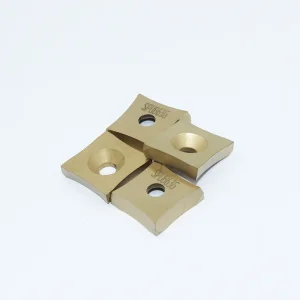






The Architecture of Elizabeth Carbide Die Tooling in Modern High-Velocity Compaction
A deep engineering exploration into why pharmaceutical tableting, solid-state battery compression, and precision powder metallurgy mandate interchange-compatible Elizabeth-grade tungsten carbide dies.
Zero-Porosity Sinter-HIP Consolidation
Standard liquid-phase vacuum sintering frequently leaves sub-surface micro-voids that initiate stress fractures under rotary tableting punch impact. Our Elizabeth-equivalent carbide dies undergo Hot Isostatic Pressing (HIP) at 1450°C and 100 bar of ultra-pure Argon, yielding metallurgically pristine microstructures rated at ISO 4505 Porosity A00, B00, C00.
Elimination of Tablet Capping & Lamination
By engineering custom internal die bore taper reliefs (commonly 0.025 mm to 0.075 mm per side) coupled with longitudinal mirror micro-lapping (mirror finish Ra 0.03 µm), our dies release trapped air during high-speed compression cycles up to 120 RPM, eliminating capping and reducing punch tip mechanical binding.
Interchangeable Global Tooling Standards
Every die manufactured matches international press turret specifications: European Standard (EU 19, EU 1", EU 1"-441) and American TSM (Tablet Specification Manual) B-Tooling, D-Tooling, and BB-Tooling envelopes. Complete dimensional concentricity is maintained within ±0.002 mm (±2 µm) across entire production batches.
Mission-Critical Industrial Applications & In-Field Performance
From cGMP pharmaceutical cleanrooms to hazardous solid-state battery dryrooms, Elizabeth-specification carbide dies perform where tool steels deform, gall, or pit.
Pharmaceutical High-Speed Rotary Presses
Installed on Fette, Korsch, Kilian, Manesty, and Cadmach presses. Handling abrasive excipients like microcrystalline cellulose (MCC), effervescent salts, and active pharmaceutical ingredients (APIs) without premature bore ring-formation or barrel scoring.
Solid-State & Lithium Battery Pelletizing
Compacting solid electrolyte powders (garnet-type LLZO, sulfide-based argyrodite) requires zero metallic contamination. We supply non-magnetic nickel-bonded tungsten carbide dies that resist chemical attack in low-humidity cleanroom environments.
Rare Earth Magnets & Ferrite Core Compacting
High-tonnage compaction of NdFeB and SmCo magnetic powders induces extreme frictional shear. Our Elizabeth-spec YG11 and YG15 dies offer transverse rupture strength over 3400 MPa, preventing catastrophic cracking during ejection cycles.
Cold Heading & Fastener Forming Dies
Elizabeth-style tungsten carbide insert rings mechanically press-fitted or shrink-fitted into heat-treated alloy steel retainer casings (HRC 42-45), enduring repetitive ballistic impact without radial micro-fissuring or mechanical dislocation.
Comparative Metallurgical Specifications & Mechanical Limits
Quantitative validation of our ultra-dense tungsten carbide formulations against standard AISI D2 tool steel and commodity-grade sintered carbide tooling.
| Performance Indicator | AISI D2 Tool Steel | Standard Commercial Carbide | Zhongfu Elizabeth-Grade (ZF-E10) | Zhongfu Elizabeth Non-Magnetic (ZF-EN12) |
|---|---|---|---|---|
| Binder Chemistry & Content | Chromium Matrix (12% Cr) | 6.0% - 10.0% Cobalt (Co) | 6.0% Ultrafine Cobalt | 8.5% Nickel-Chromium (Ni-Cr) |
| Average Grain Size (µm) | N/A (Crystalline Melt) | 1.8 - 2.5 µm (Medium/Coarse) | 0.6 - 0.8 µm (Sub-Micron) | 0.8 - 1.2 µm (Fine) |
| Hardness (HRA / HRC) | 60 - 62 HRC (~82 HRA) | 88.0 - 89.5 HRA | 91.8 - 92.5 HRA (78 - 80 HRC Equiv) | 89.5 - 90.8 HRA |
| Transverse Rupture Strength (TRS) | 2200 - 2400 MPa | 2600 - 2800 MPa | 3800 - 4100 MPa | 3200 - 3500 MPa |
| Compressive Yield Strength | ~2100 MPa | ~4200 MPa | > 5400 MPa | > 4800 MPa |
| Magnetic Permeability (μ) | Ferromagnetic (> 500) | Ferromagnetic (1.4 - 2.2) | Ferromagnetic (1.3 - 1.8) | Non-Magnetic (< 1.005 μ) |
| Wear Life Multiple (Base D2 = 1x) | 1.0x (Baseline) | 5.5x - 7.0x | 18.0x - 24.0x Lifecycle | 14.0x - 17.5x Lifecycle |
| Primary Compaction Application | Short-run non-abrasive pills | Standard industrial stamping | Continuous Pharma Rotary Tableting | Solid-State Battery & Sensor Tooling |
China Supply Chain Resilience, Vertical Integration & Cost Efficiency
How Jiangxi Zhongfu leverages proximate mineral deposits, closed-loop powder metallurgy, and automated production to safeguard overseas supply networks.
Upstream Tungsten Ore Security
Situated in Jiangxi Province—the epicentre of global tungsten reserves—our production floor accesses guaranteed virgin Ammonium Paratungstate (APT) feedstock. We do not blend secondary post-industrial scrap into our Elizabeth-grade dies, ensuring zero trace elemental contamination or unpredictability during sintering shrinkage.
Full In-House Processing Workflow
From wet ball-milling and automated spray-drying towers to high-tonnage multi-axis presses, 100-bar Sinter-HIP furnaces, Sodick slow-feeding wire EDMs, and Studer CNC cylindrical grinding stations—our fully enclosed 5,000 m² production ecosystem maintains 100% control over physical lead times and quality audits.
40% - 60% Procurement Cost Arbitrage
By bypassing third-party trading entities, catalog brokers, and Western white-label brand markups, industrial buyers access wholesale pricing directly from the manufacturing core. We provide turnkey CAD/CAM design-for-manufacturability (DFM) reviews within 8 hours, slashing prototyping and mass replenishment cycles.
Global Market Dynamics & cGMP Regulatory Documentation
Operating across North America, Europe, and Asia requires rigorous metallurgical traceability, regulatory validation, and standardized audit transparency.
Pharma Validation Packages (IQ/OQ & Traceability)
Every consignment of Elizabeth-specification tableting dies dispatched to pharmaceutical facilities is accompanied by full EN 10204 Type 3.1 Inspection Certificates. This includes complete raw material melt heat records, quantitative optical emission spectroscopy (OES) chemical breakdowns, metallographic grain structure micrographs, and 100% CMM dimensional inspection protocols conforming to FDA 21 CFR Part 211 cGMP validation standards.
Global Environmental & Safety Compliance
All carbide compositions supplied strictly comply with RoHS Directive 2011/65/EU and REACH (EC 1907/2006) regulations governing hazardous chemical elements. For high-purity food, nutraceutical, and pediatric medical compacts, our non-magnetic nickel-bonded formulations eliminate concerns regarding toxic leaching, oxidation spalling, or micro-particulate delamination in aggressive aqueous tablet formulations.
Technology Roadmap: Next-Generation Precision Tooling Horizons
Anticipating the technological demands of continuous manufacturing (CM), sub-micron nanocomposites, and autonomous rotary compaction presses.
Binderless Nanocrystalline Hardmetals
Researching pure sub-0.2 µm tungsten carbide matrices densified via Spark Plasma Sintering (SPS) without metallic Co or Ni binders. This eliminates corrosion leaching during the pressing of acidic active compounds, achieving near-diamond hardness ratings of 94.5 HRA.
Multi-Layered DLC & CrN PVD Coatings
Deploying advanced High-Power Impulse Magnetron Sputtering (HiPIMS) to deposit ultra-dense Diamond-Like Carbon (DLC) and Chromium Nitride (CrN) nanocomposite films onto internal die bores. Friction coefficients drop below 0.08, permitting oil-free, dry compaction of sticky formulations.
Smart IoT Tooling & Closed-Loop Circularity
Integrating non-invasive acoustic emission and embedded piezo-strain micro-sensors directly within multi-cavity die retaining rings to detect localized ejection binding in real time. Backed by our zero-waste tungsten buyback recycling loop for end-of-life carbide reclamation.
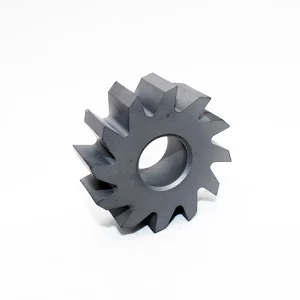
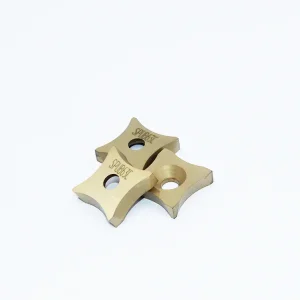
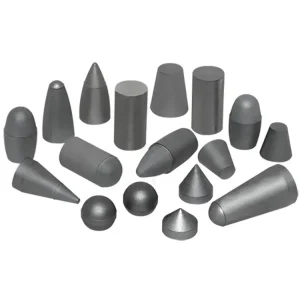
Specialty Hardmetal Tooling, Molds & Inserts
Complementary tungsten alloy wear solutions manufactured to identical metallurgical and dimensional standards for high-stress manufacturing sectors.





Frequently Asked Questions on Elizabeth Carbide Dies & Wholesale Supply
In-depth responses from our senior metallurgical application engineers regarding tolerances, press interchangeability, delivery logistics, and custom formulations.
What defines an "Elizabeth Carbide Die," and are your products dimensionally interchangeable?
The term "Elizabeth Carbide Die" denotes high-performance compaction dies originally engineered to the exacting standards established by Elizabeth Carbide Die Co., primarily serving the pharmaceutical, battery, and precision powder compaction industries. Our dies are 100% direct-drop-in interchangeable with all standard OEM Elizabeth specifications, matching standard outer diameters (such as standard B-die Ø30.162 mm, D-die Ø38.1 mm, and BB-die Ø24.0 mm) with outer casing tolerances ground to within +0.013/-0.000 mm and concentricity controlled within ±0.002 mm.
How does your Sinter-HIP process prevent premature ring wear and die cracking under high tonnage?
Under repeated compaction loads exceeding 50 to 100 kN, standard vacuum-sintered carbide experiences microscopic fatigue cracking originating at internal pore sites (porosity levels A02 to A06). Our Hot Isostatic Pressing (Sinter-HIP) operates at 1450°C under 100 bar of pressurized Argon gas. This collapses all internal voids, achieving complete theoretical density (porosity rating A00, B00). Transverse Rupture Strength increases by 25% to 35% (reaching up to 4100 MPa), preventing radial splitting and significantly delaying bore ring groove wear.
Can you supply non-magnetic carbide dies for solid-state battery and electronic compaction?
Yes. While standard tungsten carbide employs a ferromagnetic Cobalt (Co) binder, we engineer non-magnetic carbide dies utilizing an advanced Nickel-Chromium (Ni-Cr) binder matrix. These dies exhibit a relative magnetic permeability (μ) of less than 1.005 μ, eliminating magnetic interference during the compaction of rare earth magnets, inductive ferrite powders, and sensitive solid-state lithium battery electrolyte pellets, while providing heightened resistance to chemical oxidation.
What internal bore relief options (tapers) do you provide to eliminate tablet capping?
Tablet capping and delamination are primarily driven by entrapped air escaping violently as the tablet is ejected from the die bore. We offer precision engineered internal taper reliefs—including single-sided tapers, double-sided reverse tapers, and parabolic entry blends. Typical tapers range from 0.025 mm to 0.075 mm diametrically over depths of 3 mm to 8 mm, custom-machined via CNC optical grinding to ensure smooth tablet decompression at continuous speeds up to 120,000 tablets per hour.
What documentation is provided to satisfy FDA and cGMP validation inspections?
Every commercial delivery includes an EN 10204 Type 3.1 Certified Material Test Report (MTR). This document records exact elemental composition via optical emission spectrometry, Vickers/Rockwell hardness verification, density via Archimedes method, transverse rupture strength, and metallographic grain size determination. Furthermore, we provide full dimensional inspection certificates logged with Mitutoyo CMM optical comparators, verifying full compliance with FDA 21 CFR Part 211.68 equipment maintenance and audit records.
What are your minimum order quantities (MOQ), production lead times, and global shipping options?
For standard round Elizabeth B-tooling and D-tooling dies, our MOQ starts at just 10 pieces for trial evaluations, with standard wholesale batches ranging from 50 to 5,000 pieces per run. Standard blanks are dispatched within 5 to 7 business days, while custom-shaped dies (multi-tip, oval, capsule, convex) require 15 to 22 business days including EDM wire cutting, heat treatment of retainer rings, and bore hand-lapping. Global courier shipping (DHL Express, FedEx Priority, air cargo) delivers directly to North American and European facilities within 3 to 5 transit days.