
High-Performance Brazed Tips & Precision Wear Inserts
Explore our engineering-grade tungsten carbide blanks, scarfing modules, and specialized cutting tips formulated from 100% virgin powder with pressure Sinter-HIP metallurgy.

Wholesale Factory Direct Sale Tungsten Carbide Turning Inserts
Inspect Specifications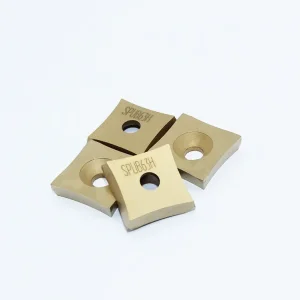
SPUB-63 Welding Tube Scarfing & Pipe Peeling Insert
Inspect Specifications
Straight Toothed Steel Small Pinion Gears Factory Supply
Inspect Specifications
Cemented Carbide Tips for Railway Tamping Pick Center Tooth
Inspect Specifications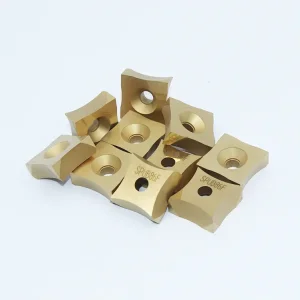
Tungsten Carbide Insert Cutting Tools Turning Lathe Blades
Inspect Specifications
Carbide & Steel Composite Reducer Blind Plate Flange
Inspect Specifications
Steel Pipe Scarfing Tools SPUB63J Tube Conditioning Inserts
Inspect Specifications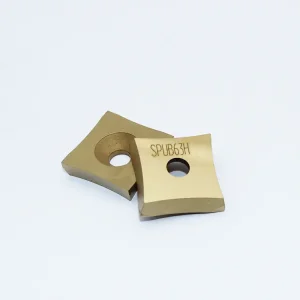
SPUB63H Square Tungsten Carbide Cemented Turning Blades
Inspect SpecificationsMacro Dynamics in Industrial Brazed Tips & Hardmetals
A rigorous examination of powder metallurgy evolutions, interfacial thermal stresses, and microstructural trends driving the wholesale carbide sector.
In modern industrial cutting, shaping, and ground-engagement applications, the cemented carbide brazed tip remains the undisputed workhorse across severe environments where indexable clamping systems fail due to geometric limits, heavy chip packing, or catastrophic impact loads. As deep-hole drilling, heavy rail maintenance, and ultra-high-feed turning demand heightened edge reliability, wholesale manufacturers and direct buyers are moving past generic off-the-shelf grades in favor of scientifically calibrated carbide-substrate couplings.
The contemporary industry trajectory focuses heavily on mitigating the fundamental thermodynamic challenge of brazed tooling: the severe mismatch between the coefficient of thermal expansion (CTE) of tungsten carbide (approx. 4.5–6.0 × 10⁻⁶ / K) and standard structural alloy tool steel shanks (11.0–12.5 × 10⁻⁶ / K). Leading Chinese factories and research centers have resolved this interfacial stress through advanced ternary and quaternary braze filler alloys, sandwich-braze foil buffers, and vacuum Sinter-HIP densification that preserves the virgin integrity of the WC-Co composite matrix.
Interfacial Wetting Tech
Next-generation brazing tips incorporate localized surface activation treatments (vacuum decarburization control and sub-micron nickel strike coatings) ensuring complete wettability with silver-copper-zinc-nickel tri-metal sandwich foils.
Gradient Cobalt Formulations
Modern wholesale manufacturing implements functional gradient sintering, synthesizing an outer micro-layer optimized for extreme hardness (>91.5 HRA) supported by an impact-resistant core containing elevated cobalt (10-12% Co).
Near-Net Shape Sinter-HIP
Utilizing high-isostatic pressing during sintering eliminates internal voids and micro-porosity down to A02-B00 levels under ISO 4505 standards, drastically extending tool lifespan across interrupted cutting cycles.
Global Enterprise Sourcing Architecture
How Tier-1 tooling integrators, oilfield exploration firms, and steel production plants assess carbide manufacturers to lower Total Cost of Ownership (TCO).
Purity Auditing of Virgin WC
Global procurement teams explicitly stipulate zero scrap/recycled tungsten powder integration. Virgin ammonium paratungstate (APT) ensures consistent crystallographic orientation, reducing unexpected chipping along cutting edges.
Braze Joint Shear Toughness
Industrial specifications require braze shear testing yielding minimum threshold capacities exceeding 220 MPa on finished tools. Buyers evaluate factory-level automated induction heating recipes to avoid overheating damage.
Dimensional Tolerance Control
For custom brazed blanks and rock drilling picks, holding profile variances within ±0.05 mm eliminates post-braze tool room grinding overhead, enabling instant automated insertion into automated tool-making lines.
Macro-Sector Industrial Solutions
Brazed tungsten carbide tips and wear components engineered to overcome the harshest industrial processing bottlenecks.
Railway Infrastructure & Track Maintenance
Railway tamping tines experience brutal cyclic ballast impacts and abrasive rock contact. Our custom carbide tips for tamping picks utilize impact-resilient YG11C and YG15 grades, featuring metallurgical tapers that extend pick operational life by over 300% compared to hard-faced steel alternatives.
Tube & Pipe Mill Continuous Scarfing
In high-frequency welded (ERW) tube manufacture, hot internal and external weld beads demand unrelenting thermal stability. Specialized scarfing inserts (such as SPUB63, SPUB86, and SDUW) withstand cutting edge temperatures upwards of 850°C without plastic deformation or crater breakthrough.
Deep Rotary Boring & Mineral Mining
From water well drill bits to underground mining cutters, YG8 and YG8C brazed chisel and button profiles endure abrasive granite, sandstone, and mixed aggregate strata. Our pressure HIP sintering preserves near-zero porosity, preventing shock fracturing in deep boreholes.
Cemented Carbide Grade Selection Reference Matrix
Cross-match metallurgical compositions, cobalt percentages, and mechanical properties to pair the ideal hardmetal blank with your operational cutting demands.
| Standard Grade | ISO Classification | Binder Ratio (%) | Density (g/cm³) | Hardness (HRA) | TRS (N/mm²) | Recommended Industrial Duty |
|---|---|---|---|---|---|---|
| YG6 | ISO K10–K20 | 6.0% Co | 14.8 – 15.0 | ≥ 90.5 | 1,900 | Cast iron finishing, non-ferrous alloy turning, high-wear guides |
| YG8 | ISO K20–K30 | 8.0% Co | 14.6 – 14.8 | ≥ 89.5 | 2,200 | Universal brazed tips, water well core bits, stone cutting picks |
| YG11C | ISO K30–K40 | 11.0% Co (Coarse) | 14.3 – 14.5 | ≥ 87.0 | 2,600 | Heavy impact rock drilling, percussion tools, railway tamping picks |
| YG15 | ISO K40 | 15.0% Co | 13.9 – 14.1 | ≥ 87.0 | 2,800 | Heavy cold heading, punch dies, extreme mechanical shock tools |
| YG20 | Wear / Forming | 20.0% Co | 13.4 – 13.6 | ≥ 85.5 | 3,100 | Deep-drawing dies, stamping tools, thick EDM wire cutting stock |
| Ni-Bonded | Non-Magnetic | 8.0–12.0% Ni | 14.5 – 14.9 | 88.0 – 90.0 | 2,000 | Corrosive environments, MWD downhole logging tools, sensor housings |
Localized Support, Compliance & Traceability
End-to-end quality assurance ensuring cross-border compliance across North American, European, and Asia-Pacific industrial corridors.
Full Metallographic Certification
Every shipment is delivered with comprehensive Material Test Reports (MTR) including Vickers/Rockwell hardness ratings, coercive force (Hc), magnetic saturation (4πσ), and micro-porosity evaluations conforming to ASTM B276.
Strict Conflict-Free Sourcing
Jiangxi Zhongfu operates in full alignment with the OECD Due Diligence Guidance for Responsible Supply Chains of Minerals and the Responsible Minerals Initiative (RMI), ensuring 100% ethically sourced virgin tungsten ore.
Logistical Redundancy & Consignment
With established fulfillment pipelines across the USA, Germany, Mexico, Canada, and Australia, we support JIT delivery schedules, vendor-managed inventories (VMI), and tailored customs classification assistance.
Technical Roadmap & Metallurgy Horizons
Pioneering advancements in grain boundary engineering, binder substitution, and automated brazing compatibility.
Ultrafine Sub-Micron WC Blanks
Refining powder reduction and doping with vanadium carbide (VC) and chromium carbide (Cr3C2) grain inhibitors to achieve uniform grain structures below 0.4 µm, radically lifting edge retention in hardened steel machining.
Eco-Friendly Fe-Ni-Co Formulations
Developing high-strength multicomponent intermetallic binders reducing reliance on pure cobalt, addressing chemical leaching in aggressive cooling emulsions and complying with evolving European chemical regulations.
Laser Clad & Pre-Tinned Tips
Integrating pre-applied braze paste alloys directly onto the seating surfaces of carbide tips, eliminating flux handling inconsistencies and accelerating automated high-frequency induction brazing cycles for OEM customers.
Automated Defect Tomography
Deploying computer vision and ultrasonic non-destructive testing (NDT) along production lines to catch internal density gradients, micro-cracks, and geometric irregularities before parts leave the factory floor.
Frequently Asked Questions for Sourcing Engineers
Practical, direct engineering insights addressing custom manufacturing, grade matching, brazing nuances, and international freight.
Can you produce custom brazed tip geometries directly from 2D/3D CAD models?
Yes. Custom carbide wear components and brazed tips represent over 60% of our production volume. Our tool designers work with STEP, IGES, DXF, and DWG files, calibrating pressing shrinkage ratios and Sinter-HIP parameters to match finished dimensions, rake angles, and radii.
What is the recommended brazing alloy and flux for mounting tungsten carbide tips?
For moderate mechanical loads, silver-based alloys (such as BAg-7 or BAg-22 with 49–50% Ag) paired with active fluoride flux are ideal. For heavy impact applications like railway picks and rock chisels, tri-metal sandwich foils (Copper shim sandwiched between Silver-Copper layers) absorb thermal contraction stress.
How do you resolve thermal shock cracking during post-braze tool cooling?
Thermal cracking happens when tools cool too rapidly or unevenly. We advise controlled slow cooling in vermiculite or thermo-regulated cooling chambers following induction brazing. Never quench freshly brazed carbide tips in water or oil, which introduces severe tensile stress cracks across the WC matrix.
What is the operational distinction between cobalt and nickel bonded carbide?
Cobalt binders offer superior mechanical bonding, higher transverse rupture strength (TRS), and superior fatigue resistance. Nickel-bonded grades are completely non-magnetic and provide vital corrosion resistance against acidic fluids, cooling emulsions, and downhole petroleum exploration chemicals.
What are your typical wholesale production lead times and Minimum Order Quantities?
Standard catalog blanks, scarfing inserts, and common turning tips are maintained in inventory for dispatch within 3–5 business days. Custom-tooled pressings and prototype batches require 15–20 days for tooling development and Sinter-HIP execution. Flexible sample MOQs accommodate initial engineering trials.
How does Zhongfu ensure metallurgical consistency across high-volume production batches?
We execute 100% raw material virgin powder verification via wet chemical and X-ray fluorescence analysis. Our sintering utilizes automated computer-controlled Sinter-HIP cycles with real-time temperature, dew point, and pressure logs, accompanied by optical microstructure examination of every furnace lot.
Precision Ground Plates, Tooling Blanks & Tube Scarfing Cutters
Direct wholesale access to our precision finished plates, heavy-duty lathe modules, round inserts, and track maintenance teeth.

HIP Processed Square Carbide Plate & Polished Flat Blank
Inspect Specifications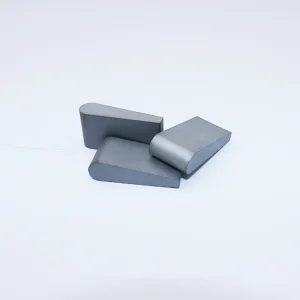
Wear-Resistant Tungsten Carbide Railway Tamping Tines
Inspect Specifications
SPUB63B Lathe Round Tungsten Carbide Turning Inserts
Inspect Specifications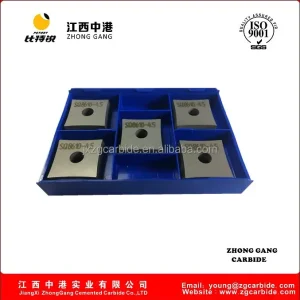
Carbide OD Tube Scarfing Insert SDUW for Steel Weld Beads
Inspect Specifications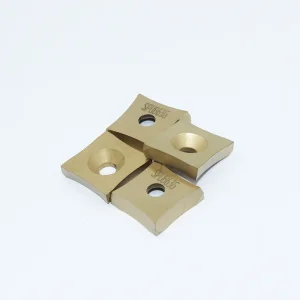
Technical Round Lathe Carbide Inserts & Circular Knife Blades
Inspect Specifications
Carbide Cutting Rods for End Mills & Tool Blanks
Inspect Specifications
Carbide Tamping Tines for Railway Construction Equipment
Inspect Specifications