High Specific Gravity Carbide Components & Tooling (Part I)
Advanced sintering blanks, precision valve components, high-density EDM blocks, and heavy scarfing systems manufactured to tight tolerance limits.

Wholesale Customized tungsten cemented carbide hardware parts water jet nozzle seat valve Factory, Factories
Explore Specifications
China Wholesale SPUB-63 series carbide wood insert milling carbide insert Supplier, Suppliers
Explore Specifications
Buy Customized size style tungsten cemented carbide carbon steel reducer blind plate flange Factory, Factories
Explore Specifications
Wholesale tungsten carbide scarfing insert SQ8615WCB Supplier, Factory
Explore Specifications
Wholesale Tungsten Carbide Plate 100×100×60 mm — Thick Block Stock for EDM, Die & Wear Parts Manufacturers, Suppliers
Explore Specifications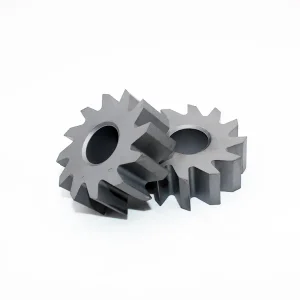
Buy Custom made transmission reverse idle gear starter gear spur gear set Manufacturer, Factory
Explore Specifications
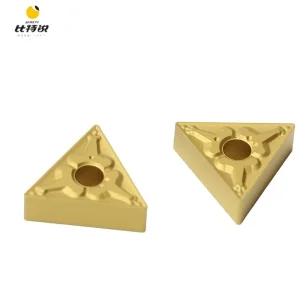
Wholesale Factory direct sale tungsten carbide turning inserts Manufacturer, Factory
Explore Specifications
China Factory wholesale tungsten cemented tools carbide coated blank inserts Factory, Factories
Explore SpecificationsSpecific Gravity Physics in Tungsten Matrix Engineering
Why density (specific gravity) serves as the primary metallurgical indicator of structural integrity, chemical homogeneity, and performance limits in sintered carbides and high-density tungsten alloys.
In advanced powder metallurgy, specific gravity (the ratio of material density to the density of deionized water at standard reference conditions) is not merely a passive physical attribute; it represents the ultimate quantitative barometer of structural compaction, stoichiometric accuracy, and the total eradication of sub-surface micro-porosity. Pure tungsten boasts an exceptional theoretical density of 19.25 g/cm³, a property resulting from its body-centered cubic (BCC) crystal lattice and high atomic mass (183.84 u). However, when fabricating sintered tungsten carbide (WC-Co/WC-Ni) and Tungsten Heavy Alloys (W-Ni-Fe / W-Ni-Cu), the achieved specific gravity directly dictates wear life, compressive resistance, fracture toughness, and dynamic attenuation under severe cyclic stress.
At Jiangxi Zhongfu Cemented Carbide Co., Ltd., specific gravity metrology is embedded into every stage of the manufacturing process. Utilizing hydrostatic balance verification compliant with ASTM B311 and ISO 3369, our quality assurance protocols track density variances down to ±0.02 g/cm³. A measured deviation from calculated theoretical density instantly signals metallurgical defects—such as harmful carbon deficiency (eta-phase, η-Fe3W3C formation causing embrittlement), excess free carbon graphite pockets, or inadequate liquid phase sintering dwell times. By maintaining absolute control over the cobalt binder ratio (spanning from 3% to 25%) and applying high-pressure 100-bar Hot Isostatic Pressing (Sinter-HIP), our Jiangxi manufacturing facility produces tungsten components that achieve 99.98% of true theoretical density across small components and massive EDM structural blocks alike.
Stoichiometric Carbon Balance
Precise regulation of total carbon (6.13% ± 0.05% in virgin WC) prevents sub-density phase shifts. Carbon deficits produce brittle eta-phases that reduce apparent density, whereas excessive carbon yields micro-flocculent graphite voids that impair transverse rupture strength.
Overpressure Sinter-HIP Consolidation
Operating at 1,450°C with up to 10 MPa of ultra-pure Argon pressure, our integrated Sinter-HIP furnaces collapse micro-cavities before liquid cobalt solidification, driving density to the absolute upper physical ceiling and eliminating Class A/B porosity.
Binder Fraction Optimization
Specific gravity linearly decreases as lighter binder phases (Co: 8.90 g/cm³, Ni: 8.908 g/cm³) increase. Formulating precise binary and ternary binder systems enables tailor-made balances between maximum specific gravity (mass concentration) and mechanical toughness.
| Material Classification | Composition Ratio (wt%) | Specific Gravity (g/cm³) | Hardness (HRA / HV30) | Transverse Rupture Strength (MPa) | Primary Industrial Role |
|---|---|---|---|---|---|
| Ultra-Wear Sintered Carbide (YG3X) | WC - 97% / Co - 3% | 15.10 – 15.30 | 92.5 – 93.5 HRA | ≥ 1,650 | Micro-nozzles, wire drawing dies, ultra-abrasive waterjet orifices |
| Tooling & EDM Standard (YG6) | WC - 94% / Co - 6% | 14.85 – 15.05 | 90.0 – 91.5 HRA | ≥ 2,100 | Precision cutting inserts, scarfing tools, non-ferrous machining |
| General Engineering Grade (YG8) | WC - 92% / Co - 8% | 14.60 – 14.80 | 89.0 – 90.5 HRA | ≥ 2,400 | Brazed drill tips, rock bit buttons, steel pipe scarfing cutters |
| High Impact Stamping (YG15) | WC - 85% / Co - 15% | 13.90 – 14.20 | 86.5 – 88.0 HRA | ≥ 3,000 | Cold heading dies, punching pins, heavy sheet metal stamping |
| Heavy Shock / Extrusion (YG20) | WC - 80% / Co - 20% | 13.40 – 13.70 | 85.0 – 86.5 HRA | ≥ 3,300 | Heavy-impact cold forming punches, forging dies, shear blades |
| Corrosion & Non-Magnetic (YN6 / YN12) | WC - 88-94% / Ni - 6-12% | 14.45 – 14.90 | 88.0 – 91.5 HRA | ≥ 2,200 | Magnetic powder compacting dies, downhole MWD sensor sleeves |
| Tungsten Heavy Alloy (Class 1 W-Ni-Fe) | W - 90% / Ni-Fe - 10% | 17.00 – 17.20 | 27 – 32 HRC | ≥ 920 (Tensile) | Counterweights, crankshaft dampeners, collimator radiation shielding |
| Extreme Density Heavy Alloy (Class 4 W-Ni-Fe) | W - 97% / Ni-Fe - 3% | 18.40 – 18.70 | 32 – 38 HRC | ≥ 880 (Tensile) | Nuclear beam stops, multi-leaf collimators (MLC), aerospace ballast |
Global Supply Chain Architecture & China Tungsten Dominance
Analyzing raw ore reserves, ammonium paratungstate (APT) conversion efficiency, vertical processing, and how China's integrated supply chain insulates global OEM buyers from volatility.
The macroeconomic landscape of refractory hard metals is inherently tied to geopolitical geography: the People's Republic of China commands over 80% of global upstream tungsten reserves and primary extractive yield, centered predominantly within the rich scheelite and wolframite mineral belts of Jiangxi and Hunan provinces. For global industrial procurement specialists across North America, the European Union, East Asia, and Australasia, qualifying a direct Chinese manufacturer that manages the value chain from Ammonium Paratungstate (APT) and pure tungsten blue oxide reduction down to finished diamond-ground carbide parts provides significant security against price shocks and intermediate trading markups.
Historical disruptions across transatlantic logistics corridors have exposed the fragility of localized secondary carbide re-processors in the West who rely on imported concentrates. As environmental ESG compliance tightens and energy-intensive high-temperature hydrogen reduction becomes subject to regional tariffs, our Nanchang facility maintains localized power resilience, sustainable chemical scrap recycling (via zinc-melting and chemical oxidation pathways), and raw powder synthesis. This vertical integration guarantees batch traceability, predictable lead times, and stable price-per-kilogram structures that European and American machine builders depend upon for high-volume automotive, aerospace, and energy tooling programs.
Ore-to-Part Traceability
100% virgin tungsten ore converted on-site prevents recycled scrap contaminants (such as silicon, sulfur, or unwanted titanium traces) from undermining transverse rupture strength or specific gravity tolerances.
Hedge Against Supply Shocks
Direct factory partnerships shield tier-1 engineering companies from volatile spot-market fluctuations in London Metal Exchange (LME) and Fastmarkets APT pricing indices through structured annual allocation contracts.
Energy Grid Optimization
Our continuous high-temperature vacuum furnaces leverage stable provincial green energy infrastructure, allowing lower carbon footprints per ton of sintered carbide compared to legacy Western facilities.
Global Export Readiness
Over two decades of streamlined air and ocean logistics handling DDP, CIF, and FOB terms to over 20 nations ensures regulatory customs compliance without delay at import border points.
Specific Gravity Metrology & Porosity Elimination Protocols
A rigorous examination of Archimedean buoyancy testing, magnetic saturation indices, coercivity screening, and overpressure sinter-HIP thermodynamics.
To achieve tight specific gravity repeatability across continuous production runs, Jiangxi Zhongfu employs a dual-tier analytical validation loop:
1. Hydrostatic Archimedean Immersion Metrology (ISO 3369 / ASTM B311)
Each sample batch undergoes high-precision mass calculation in clean ambient air (m1) followed by immersion in distilled, surfactant-treated water of known temperature and calibrated fluid density (m2). The specific gravity is derived using the relation:
ρ = [m1 / (m1 - m2)] × (ρw - ρa) + ρa
where ρw represents the temperature-compensated water density and ρa represents air buoyancy (0.0012 g/cm³). Any specific gravity shortfall exceeding 0.04 g/cm³ from nominal target specifications triggers an automated quarantine of the entire sintering tray for metallographic sectioning.
2. Magnetic Saturation (4πσ) and Coercivity (Hc) Correlation
Specific gravity is intimately linked to the magnetic saturation of the cobalt binder phase. Cobalt can dissolve a substantial amount of tungsten during high-temperature liquid phase sintering. When the dissolved tungsten percentage is excessive, brittle eta-phase (η) precipitates, slightly lifting specific gravity while severely compromising impact toughness. Conversely, if carbon content is too high, carbon precipitates out as free graphite flakes, dropping specific gravity below standard parameters. By measuring magnetic saturation (Compsat meter) and coercive force (Förster Koerzimat), our metallurgical staff monitors the carbon window within ±0.03 wt%, ensuring that the measured specific gravity reflects a pure, defect-free WC + γ-Co two-phase microstructural matrix.
3. Sinter-HIP Thermal Densification Dynamics
Standard vacuum sintering frequently leaves micropores categorized under ISO 4505 as A04 or B02 (pores up to 25 μm). When manufacturing thick EDM plates (e.g., 100×100×60 mm) or heavy impact punches, such pores cause structural failure or wire-EDM wire breaks. Zhongfu utilizes computerized Sinter-HIP furnaces where dewaxing, solid-state vacuum sintering, and high-pressure liquid-phase isostatic compaction (100 bar Argon) happen in a single continuous cycle. This closes all residual internal voids, producing a verified A00, B00, C00 porosity rating and elevating the specific gravity of the component to its theoretical limit.
ISO 4505 Micro-Porosity Control
Polished cross-sections are evaluated under 200× and 500× metallographic optical microscopes to verify the total absence of type A (pores < 10 μm) and type B (pores 10–25 μm) voids across all critical functional faces.
Grain Growth Inhibition
Doping our sub-micron formulations with trace quantities of Vanadium Carbide (VC) and Chromium Carbide (Cr3C2) prevents abnormal grain coalescence during liquid sintering, maintaining uniform density profiles.
Hydrostatic High-Precision Scales
Our metrology labs utilize automated analytical balances with 0.0001g resolution and temperature-monitored baths to maintain calibration against national physical reference standards.
Localized Engineering Solutions Across Industrial Verticals
From deep-well directional drilling tools in North American shale basins to heavy pipe scarfing lines in European steel mills, discover how engineered specific gravity unlocks performance advantages.
Downhole Energy & Directional Drilling (MWD/LWD)
In deep petroleum extraction, Measurement-While-Drilling (MWD) and Logging-While-Drilling (LWD) pulsers operate in severe vibration and magnetic environments. Our non-magnetic nickel-bonded tungsten parts (YN6/YN12) combine high specific gravity (14.65 g/cm³) with magnetic permeability (μ ≤ 1.005). These components prevent sensor distortion while withstanding abrasive drilling mud erosion under fluid velocities surpassing 40 m/s.
Steel Tube & Pipe Heavy Scarfing Systems
High-frequency electric resistance welded (ERW) steel pipe lines require rapid removal of continuous red-hot weld beads. Our heavy-duty SPUB63, SPUB86, and SQ8615WCB scarfing inserts leverage high specific gravity substrates (14.75 g/cm³) paired with optimized binder toughness to resist thermal fatigue cracking, hot chipping, and mechanical impact at feed speeds up to 120 m/min.
Nuclear Attenuation & Medical Collimators
With a specific gravity reaching 17.5 to 18.5 g/cm³, our machinable W-Ni-Fe and W-Ni-Cu heavy alloy components provide gamma ray and X-ray shielding capability 1.5 times greater than lead, with zero toxic hazard. Used extensively in linear accelerator multi-leaf collimators (MLC), radiopharmaceutical transport casks, and industrial non-destructive testing (NDT) isotope shielding.
Aerospace Inertial Masses & Dynamic Ballast
Where space constraints demand maximum mass concentration, our tungsten balance weights stabilize rotor blades, flight control surfaces, and satellite telemetry gyroscopes. The combination of high density, elevated Young's modulus (up to 620 GPa), and high creep resistance eliminates harmonic resonance and thermal drift under atmospheric re-entry conditions.
Global Standards Compliance & Localized Technical Support
Comprehensive regulatory alignment safeguarding commercial clients across the USA, Canada, Germany, Mexico, and Australia.
Procuring industrial wear components from China requires certainty regarding physical performance, environmental standards, and ethical raw material sourcing. Jiangxi Zhongfu operates under an enterprise quality management framework certified to ISO 9001:2015, ensuring comprehensive documentation from initial powder lot blending to final export palletization.
All delivered materials comply fully with international environmental and trade regulations, including the European Union's RoHS Directive (2011/65/EU) and REACH Regulation (EC 1907/2006) concerning hazardous substances and Candidate List SVHC compounds. Additionally, in compliance with international conflict mineral protocols (Section 1502 of the Dodd-Frank Act / OECD Due Diligence Guidance), our tungsten ore sources are verified conflict-free, supported by smelter-level certifications.
ASTM B777 / AMS-T-21014
Our high-density tungsten heavy alloys are produced and qualified in strict conformance with ASTM B777 (Classes 1, 2, 3, and 4) specifications, guaranteeing minimal tensile, yield, and specific gravity metrics for critical defense, aerospace, and energy assemblies.
3D Coordinate Metrology (CMM)
Precision-ground rods, EDM plates, and formed blanks are checked using multi-axis Zeiss CMMs, optical profile projectors, and surface roughness interferometers, ensuring dimensional compliance down to ±0.002 mm (h6 tolerances on centerless ground rods).
8-Hour Engineering Support SLA
Our dedicated technical engineering department guarantees an actionable response within 8 hours to all overseas drawing submissions, RFQs, and material selection consultations, bridging international time-zone differences.
Technology Roadmap: Next-Generation High-Density Metallurgy
Exploring binderless carbides, nano-crystalline tungsten matrices, and additive manufacturing pathways shaping tomorrow's wear components.
As industrial machinery operates under increasingly extreme speeds, temperatures, and aggressive chemical environments, traditional WC-Co alloys encounter physical boundary limits. The metallurgical development team at Jiangxi Zhongfu is actively pursuing three primary advanced manufacturing vectors designed to push the boundaries of specific gravity, hardness, and thermal wear life:
Binderless & Ultra-Low Binder Carbides
By reducing metallic binders (Co/Ni) below 0.5% through Spark Plasma Sintering (SPS) and advanced microwave heating, we are developing near-pure tungsten carbide components with specific gravities exceeding 15.60 g/cm³ and micro-hardness exceeding 2,400 HV, unlocking corrosion and erosion resistance for semiconductor chemical-mechanical polishing (CMP) tools and sapphire processing.
Nano-Grain Sintering Kinematics
Transitioning from standard sub-micron powders to 100–200 nm ultrafine WC powders combined with dynamic grain growth inhibitors allows our engineers to achieve simultaneous gains in hardness (≥93.5 HRA) and transverse rupture strength (≥4,000 MPa). These microstructures yield sharp cutting edges and high wear resistance in micro-drilling applications for printed circuit boards (PCBs).
Additive Manufacturing & Binder Jetting
Research into Binder Jet 3D Printing (BJ3DP) of high-density tungsten alloys enables conformal cooling channels inside complex mold inserts, intricate radiation collimator geometries, and topology-optimized aerospace balance weights previously impossible to machine with conventional subtractive diamond grinding.
Frequently Asked Questions on Tungsten Specific Gravity & Manufacturing
Addressing the technical, metallurgical, and commercial inquiries most critical to global procurement teams and lead mechanical engineers.
What is the typical specific gravity range for cemented tungsten carbide versus tungsten heavy alloys?
Standard cemented tungsten carbide (WC-Co) grades generally exhibit a specific gravity ranging from 13.40 g/cm³ up to 15.30 g/cm³, depending directly on the cobalt binder percentage (e.g., 3% Co yields ~15.25 g/cm³, whereas 20% Co drops the specific gravity to ~13.50 g/cm³). In contrast, Tungsten Heavy Alloys (W-Ni-Fe or W-Ni-Cu), which contain 90% to 97% pure elemental tungsten, exhibit much higher specific gravities ranging from 17.00 g/cm³ up to 18.80+ g/cm³, in strict compliance with ASTM B777 standards.
Why does specific gravity drop in low-quality or poorly sintered tungsten carbide parts?
A lower-than-theoretical specific gravity indicates one of three common metallurgical defects: (1) Internal micro-porosity caused by insufficient vacuum or lack of high-pressure Sinter-HIP processing; (2) Free carbon precipitation (graphite voids) resulting from excessive carbon additions during ball milling; or (3) Contaminated low-grade recycled scrap powder containing lighter trace elements such as Titanium, Tantalum, or Silicon. Jiangxi Zhongfu avoids these issues by utilizing 100% virgin WC powder and vacuum Sinter-HIP furnaces operating at 100 bar pressure.
How does Jiangxi Zhongfu measure and verify the specific gravity of finished parts?
Every production lot is verified according to ASTM B311 and ISO 3369 using high-precision hydrostatic analytical balances. The dry mass of the component is compared with its buoyant mass suspended in distilled water with temperature compensation applied. If any test coupon deviates by more than ±0.04 g/cm³ from nominal engineering specifications, the lot is quarantined for microstructural examination.
What are the advantages of nickel-bonded (non-magnetic) carbide in high-density applications?
Standard cobalt-bonded carbide is ferromagnetic, making it unsuitable for applications near sensitive magnetometers, such as directional drilling (MWD/LWD) collars, electronics assembly, or magnetic compaction molds. Our nickel-bonded grades (such as YN6, YN8, and YN12) offer a high specific gravity (14.50–14.85 g/cm³) while maintaining a magnetic permeability (μ) of less than 1.005, combined with superior corrosion resistance in acidic or marine environments.
Can Zhongfu manufacture custom components directly from engineering drawings?
Yes. Tailor-made, drawing-based manufacturing accounts for the majority of our export volume. We work with standard CAD formats including STEP, IGES, DWG, and PDF. Our in-house tooling engineers review your wear requirements, operational temperatures, and impact profiles to recommend the ideal grain size, binder ratio, and density target, delivering near-net shapes or precision-ground components with tolerances down to ±0.002 mm.
What is the typical lead time for custom carbide plates, rods, or inserts?
Standard tooling inserts and stock carbide blanks typically ship within 5 to 7 business days. Custom-pressed and sintered components requiring unique tooling or precision grinding generally ship in 15 to 22 business days. Expedited production runs are available for urgent downhole or industrial maintenance requirements.
High Specific Gravity Carbide Components & Tooling (Part II)
Explore our extensive line of tube scarfing tools, lathe turning inserts, gear cutters, bar peeling solutions, and CVD-coated systems.

Buy Wholesale SPUB63 tungsten carbide insert scraps lathe cutting tools turning Supplier, Factories
Explore Specifications
China tungsten carbide tube scarfing inserts SQ8615WCB Manufacturers, Supplier
Explore Specifications
Wholesale Wholesale Steel Pipe Scarfing Tools SPUB63J Tube Scarfing Inserts Supplier, Factories
Explore Specifications
China SPUB-63 Steel Pipe Scarfing Tools Tube Scarfing Inserts Supplier, Suppliers
Explore Specifications
China Wholesale SPUB63M30 tin coating scarfing insert carbide od scarfing insert Manufacturer, Factories
Explore Specifications
Wholesale Factory wholesale custom tungsten carbide spiral bevel gear milling cutters for sale Suppliers, Factory
Explore Specifications
Buy 1*1*0.375“ CVD coating tungsten carbide tube scarfing insert Supplier, Factory
Explore Specifications