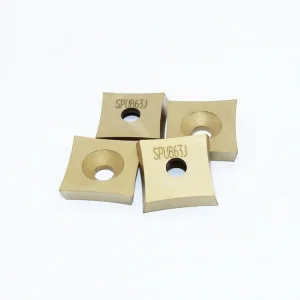
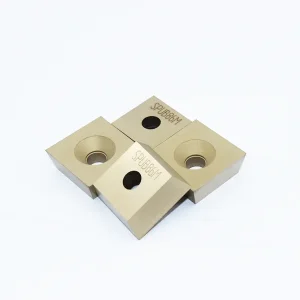
Direct-From-Press Solutions
Engineered Tungsten Carbide Sheet, Plate & Tooling Inventory
Explore standard, non-magnetic, and custom-sintered components engineered for optimal transverse rupture strength and prolonged duty cycles.
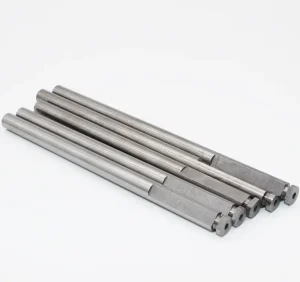
Wholesale Customized tungsten non-magnetic carbide scarifier cutter/through hole wear parts Manufacturers, Factories
Explore Specs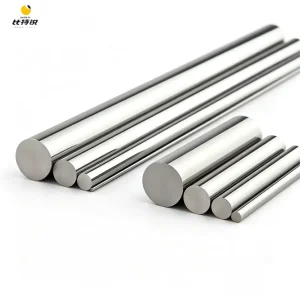
China Carbide Cutting Rods for Tungsten Alloy Cutting Tool Components Suppliers, Factories
Explore Specs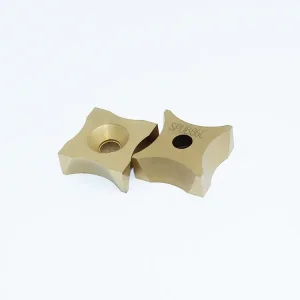
China SPUB86C P40 CVD coating tungsten carbide scarfing insert Manufacturers, Suppliers
Explore Specs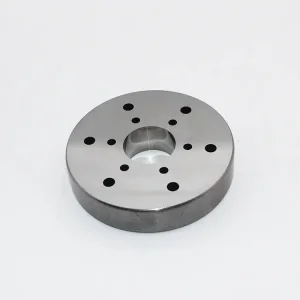
China Customized tungsten carbide fitting elbow tee cap reducer pipe flanges Suppliers, Factories
Explore Specs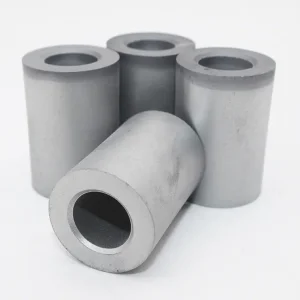
Buy Customized Tungsten Carbide Cold Heading molds/punch dies/wire drawing dies Manufacturers, Suppliers
Explore Specs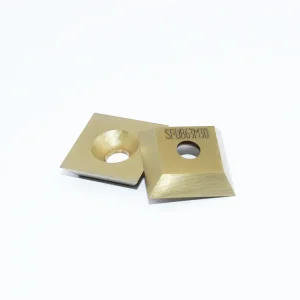
China SPUB-63 Steel Pipe Scarfing Tools Tube Scarfing Inserts Supplier, Suppliers
Explore Specs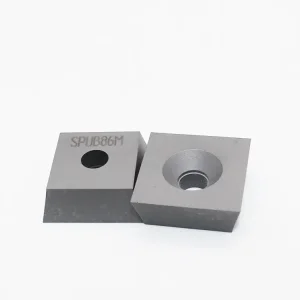
China 2020 Tungsten carbide whole seller Tungsten carbide square thread inserts tools Factory, Factories
Explore Specs
Market Dynamics
Global Enterprise Sourcing Architecture for Cemented Carbides
International procurement departments face severe supply chain vulnerabilities, stringent porosity constraints, and the demand for higher transverse rupture strength under corrosive, abrasive, and thermal loads.
Supply Chain Resiliency & Upstream Control
Tungsten ore availability dictates long-term cost models. Sourcing directly from Jiangxi, China's core tungsten mineral basin, allows original equipment manufacturers to circumvent international intermediary markups while safeguarding unbroken bulk capacity allocations.
Precision Near-Net Shaping & EDM Reliability
Complex tooling dies and semiconductor wear components demand near-net dimensional consistency. High internal stress or micro-porosity leads to micro-cracking during electrical discharge machining (EDM), causing catastrophic die failures in stamping presses.
Aggressive Corrosion & Erosion Synergy
Offshore downhole applications, fluid valves, and harsh chemical slurries degrade standard cobalt binders rapidly. Industrial buyers are shifting toward proprietary nickel-bonded and chromium-carbide doped matrices that withstand extreme acidic downhole conditions.
24+
Years of Carbide Sintering Mastery
5,000 m²
Modernized Manufacturing Facility
80+
Registered Powder Metallurgy Patents
< 8 hrs
Engineering Review Turnaround Time
Comprehensive Engineering
Cross-Sector Macro Solutions: Beyond Standard Hard Metals
Custom metallographic formulations tailored to suppress mechanical abrasion, micro-chipping, and high-temperature oxidation in demanding environments.
Metal Stamping & Forming Dies
From progressive electrical lamination dies to heavy-load cold heading tools, our high-cobalt (YG15–YG20) formulations resist cyclic shock without thermal fatigue or catastrophic fracture.
Pipe Scarfing & Heavy Peeling
Specially developed SPUB63, SPUB86, and SNMX inserts eliminate continuous flash burrs from welded high-pressure steel tubes and high-frequency welded ERW pipe lines without premature spalling.
Downhole MWD/LWD Drilling Tools
Non-magnetic nickel-based carbide grades deliver high wear resistance for measurement-while-drilling assemblies, eliminating directional magnetic interference in oil, gas, and directional utility boreholes.
Advanced Micro Grain Cutting Blanks
Ultrafine-grain WC rods ground to h6 roundness tolerances serve as high-performance blanks for solid carbide end mills, micro-drills, and aircraft composite machining cutters.
Metallurgical Roadmap
Material Chemistry: Densification, Grain Boundaries & Sinter-HIP Standards
Our vacuum pressure sinter-HIP furnaces apply 60 to 100 bar of argon pressure at peak sintering temperature (1,450°C), eliminating internal micro-voids.
| Standard Grade | Binder Phase (wt%) | Grain Topology (μm) | Density (g/cm³) | Hardness (HRA) | T.R.S. (MPa) | Primary Industrial Sector |
|---|---|---|---|---|---|---|
| YG6X | 6.0% Co | 0.8 (Submicron) | 14.90 – 15.05 | 91.5 – 92.5 | ≥ 2,200 | Precision EDM wear plates, non-ferrous wire finishing |
| YG8 | 8.0% Co | 1.4 – 1.8 (Medium) | 14.60 – 14.80 | 89.0 – 90.0 | ≥ 2,500 | Brazed cutting tool tips, rotary scrapers, wood cutters |
| YG15 | 15.0% Co | 2.0 – 3.2 (Coarse) | 13.90 – 14.15 | 86.5 – 87.5 | ≥ 3,000 | Heavy cold punching dies, fasteners heading, draw dies |
| YG20C | 20.0% Co | 2.5 – 4.0 (Extra Coarse) | 13.40 – 13.60 | 84.5 – 86.0 | ≥ 3,300 | Severe impact stamping, rotary forging rolls, armor sheet |
| NM-10 (Non-Mag) | 10.0% Ni-Cr | 1.2 – 1.6 (Corrosion Grade) | 14.50 – 14.70 | 88.5 – 89.5 | ≥ 2,400 | Magnetic powder compacting dies, offshore MWD seals |
Quality Assurance
Enterprise Traceability, Compliance, and Local Logistics
Every production heat undergoes non-destructive ultrasonic verification, saturation magnetization checks, and coercive force testing.
100% Virgin Powder Metallurgy
We reject recycled scrap powders that induce inconsistent thermal expansion. Using certified virgin ammonium paratungstate (APT) compounds ensures uniform carbide grain growth across deep cross-sections.
Rigorous Metallographic Inspection
Each delivery heat includes EN 10204 3.1 inspection certificates documenting Rockwell A hardness, density measurements, transverse rupture values, and porosity grades (A02, B00, C00 standard).
Export Packaging & Rapid DDP Logistics
Plates and blanks are individually vacuum-sealed with anti-corrosion barrier papers, cushioned against impact, and shipped via air/sea under Incoterms 2020 (FOB, CIF, DDP) to over 20 countries worldwide.
Knowledge Base
Engineering Questions & Technical Consultation
Direct metallurgical answers to help you evaluate grade compatibility, tool longevity, and custom manufacturing limits.
How do Sinter-HIP processing techniques improve carbide plate performance over standard vacuum sintering?
Standard vacuum sintering leaves microscopic gas pores within the cemented carbide matrix, which can act as stress risers under heavy cyclic load or during electrical discharge machining (EDM). Our Sinter-HIP process subjects the molten binder phase to high-purity argon gas at 60 to 100 bar, collapsing residual voids. This yields a micro-porosity grade of A02/B00 or better, boosting transverse rupture strength (TRS) by up to 25% and reducing edge breakout on precision punch dies.
Can custom non-magnetic tungsten carbide plates replace conventional magnetic grades in sensor housing dies?
Yes. Standard cemented carbide relies on cobalt as its primary binder phase, which is ferromagnetic and distorts electromagnetic fields. Our specialized non-magnetic series replaces cobalt with an engineered nickel-chromium matrix, bringing relative magnetic permeability (μr) below 1.005. This eliminates sensor interference in downhole MWD/LWD drilling tools and prevents ferrite buildup in magnetic powder compaction tooling.
What are the standard tolerances, grinding capabilities, and max dimensions for carbide plates?
We manufacture as-sintered blanks with standard tolerances of ±0.5mm, as well as finish-ground plates holding tolerances down to ±0.005mm. Surface finishes can reach Ra 0.05μm through diamond micro-lapping. Our max block capacities extend up to 350mm × 300mm × 80mm. Custom profile cuts, wire EDM starter holes, and mounting bolt countersinks can be pre-formed prior to final sintering to minimize diamond grinding costs.
How does the factory prevent cobalt leaching during wire EDM processing?
Cobalt leaching occurs when deionized water in wire EDM units electrochemically degrades the cobalt binder along cut edges, creating a weakened zone prone to spalling. To prevent this, we offer grain-growth-inhibited, low-binder submicron grades, along with corrosion-resistant grades containing chromium carbide (Cr3C2) and tantalum carbide (TaC) additions. These elements stabilize the binder phase during extended water-submerged wire EDM operations.
What is your technical inquiry response time and prototype production lead time?
Our engineering team evaluates 2D/3D CAD drawings (STEP, DWG, DXF, PDF) and replies within 8 hours with grade recommendations and manufacturability feedback. Standard stock plates and blanks dispatch within 48 hours. Custom molds, non-standard scarfing inserts, or pre-formed blanks typically complete powder-pressing, Sinter-HIP runs, and diamond grinding within 12 to 18 business days.
Heavy Duty Wear Parts
Precision Finished Inserts, Blocks & Carbide Components
Engineered for high thermal tolerance, low vibration, and extended tool life across heavy industrial environments.
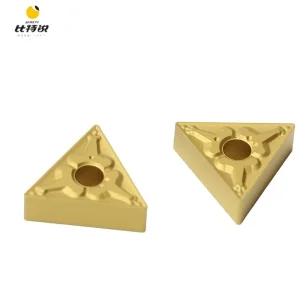
China Tungsten Carbide Bar Peeling Insert Hard Alloy Cutting for Centerless Lathe Steel Rod Manufacturer, Suppliers
Explore Specs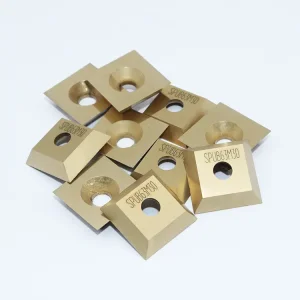
China Hot sale SPUB63M30 tungsten carbide odinternalexternal tube scarfing insert Manufacturer, Factories
Explore Specs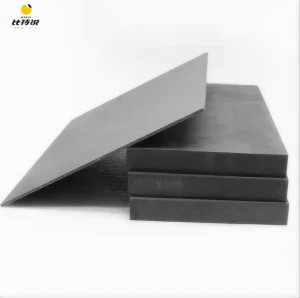
Wholesale Tungsten Carbide Plate 100×100×60 mm — Thick Block Stock for EDM, Die & Wear Parts Manufacturers, Suppliers
Explore Specs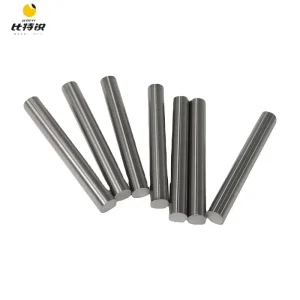
Wholesale Industrial Tungsten Alloy Rod Tungsten Material For Stainless Steel Machining Wear‑Resistant Solid Tungsten Bar Supplier, Suppliers
Explore Specs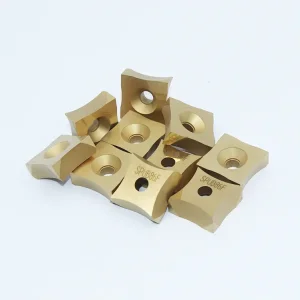
China Factory sale tungsten carbide insert cutting tools turning tool Manufacturer, Supplier
Explore Specs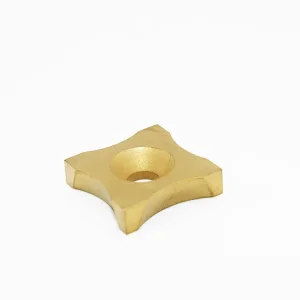
Wholesale Wholesale SPUB63B tungsten carbide insert box used carbide inserts price Supplier, Factories
Explore Specs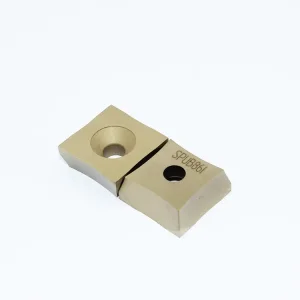
Buy Carbide turning inserts manufacturer square carbide Inserts for milling tools Supplier, Factory
Explore Specs