

High-Performance Carbide Tooling Selection
Precision Tooling & Cutting Inserts Portfolio
Engineered for high-impact deburring, turning, milling, and severe continuous weld seam trimming operations
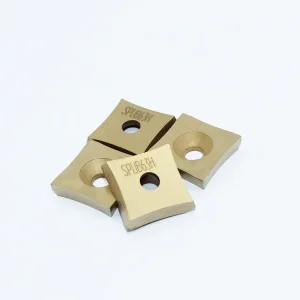
Buy Wholesale Woodworking Blades Tungsten Carbide Insert Milling Inserts Inconel
View Details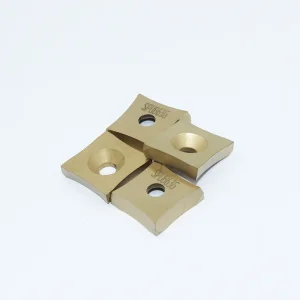
Buy Wear Resistant Technical Round Tungsten Lathe Carbide Inserts Knife Blade
View Details
Wholesale Custom Tungsten Carbide Spiral Bevel Gear Milling Cutters
View Details
China High Quality SPUB-63 Series Machine Cutter Carbide CNC Cutting Tools Turning
View Details
China Factory Supply SPUB86 CVD Coating Radius Tungsten Carbide Tips Brazed Insert
View Details
Buy Customized Tungsten Carbide Cold Heading Molds, Punch Dies & Wire Drawing Dies
View Details
China CVD Coating Tungsten Carbide Non-Standard Carbide Jaw Insert CNC
View Details
Industry Macro Solutions & Engineering Foundation
High-Frequency Longitudinal Weld Seam Scarfing: The Physics of Continuous Steel Tube Milling
Analyzing thermomechanical stress, chip formation mechanics, and microstructural demands in ERW & HFW tube plants
In modern industrial high-frequency electric resistance welded (ERW/HFW) longitudinal pipe manufacturing, the tube scarfing operation represents one of the most mechanically and thermally punishing environments encountered in metal cutting. As coiled hot-rolled or cold-rolled strip steel passes through breakdown and fin-pass stands, high-frequency induction coils (typically operating between 200 kHz and 450 kHz) concentrate electrical energy directly along the converging strip edges. The molten and plasticized edges are rapidly forged together under intense pressure exerted by squeeze rolls, expelling molten oxides and creating continuous flash beads along both the outer diameter (OD) and inner diameter (ID) of the newly formed tube shell.
Removing this molten and rapidly quenching flash—a process known in global steel manufacturing as tube scarfing or bead deburring—must occur instantaneously while the pipe line travels at feed rates ranging from 25 m/min up to exceeding 120 m/min. Because the bead material hardens instantaneously due to atmospheric cooling and internal quench water, the cutting edge of the scarfing insert does not face a normalized metallurgical structure. Instead, it encounters an inhomogeneous weld seam consisting of hard martensitic structures, brittle oxide inclusions, slag, high residual tensile stresses, and severe thermal gradients exceeding 900°C.
120 m/min
Max Continuous Line Speed
1150°C
Peak Seam Flash Temp
2800 MPa
Target Substrate TRS
92.0 HRA
Extreme Hardness Index
The Triad of Wear Failure in Longitudinal Weld Deburring
A standard catalog CNC turning insert introduced into an ERW pipe mill will fail in a matter of seconds. High-performance cemented carbide scarfing inserts manufactured by Jiangxi Zhongfu are engineered to overcome three distinct, simultaneous metallurgical degradation mechanisms:
1. Severe Mechanical Impact and Cyclic Shock: Pipe mill continuous feed is prone to micro-chatter, wall thickness fluctuations, coil butt-welds passing the cutting station, and radial seam tracking deviations. The cutting edge must possess exceptional transverse rupture strength (TRS) to withstand relentless intermittent shock without micro-chipping or catastrophic bulk breakage.
2. Thermal Fatigue and Comb Cracking: The scarfing insert operates in the immediate vicinity of the weld zone, experiencing intense frictional contact with red-hot weld flash while simultaneously being doused in intermittent synthetic coolant or hydraulic emulsions. This rapid oscillation between thermal expansion and cryogenic quenching induces perpendicular thermal micro-cracks (comb cracks) that rapidly spall standard tooling.
3. Abrasive Oxidation and Adhesive Crater Wear: The chemical interaction between unalloyed steel flash at elevated temperatures and the binder phase (cobalt) of carbide leads to aggressive adhesive tool wear. Without dense refractory barrier coatings, iron diffusion rapidly dissolves cobalt out of the tungsten carbide matrix, causing crater erosion behind the primary cutting edge.
Hot Isostatic Pressing (HIP)
Zero internal porosity achieved through 100 MPa argon pressure sintering at 1450°C, virtually eliminating structural micro-voids and increasing toughness against heavy flash shocks.
Nano-Composite CVD/PVD
Multi-layered TiCN + Al₂O₃ + TiN coatings deposited with specialized post-treatment stress-relief shot peening, mitigating thermal micro-fracturing and reducing friction coefficients.
Tailored Radius & Rake Profiles
Optimized chamfers, custom radius contours (SPUB86 series R25–R150), and specialized positive chipbreaker geometries designed for controlled continuous ribbon chip evacuation.
Global Status & Supply Chain Geopolitics
The Global Tube & Pipe Manufacturing Landscape
Market forces, capacity distribution, and the strategic economic advantage of China-manufactured precision carbide wear parts
The global steel pipe industry is undergoing an unprecedented structural transition driven by the expansion of cross-country hydrogen-blend oil and gas pipelines, expanding urban district heating infrastructure, automotive light-weighting initiatives using high-strength Hydroformed DOM (Drawn Over Mandrel) structural tubes, and rigorous OCTG (Oil Country Tubular Goods) performance mandates under API Spec 5CT and 5L. Within this multi-billion dollar industrial sector, the weld seam deburring consumable market holds tremendous leverage: an insert that fails unexpectedly causes mill downtime running at thousands of dollars per hour, defectively scarfed pipe scrap, or expensive offline salvage grinding.
Historically, European and North American toolmakers dominated the niche market for high-frequency pipe scarfing tooling. However, the international industrial supply chain has radically shifted towards Jiangxi Zhongfu Cemented Carbide Co., Ltd. and Chinese advanced manufacturers due to several powerful systemic advantages:
1. Upstream Raw Material Security and Vertical Integration
Jiangxi Province serves as the undisputed global capital of tungsten resources, containing the planet's richest deposits of high-purity wolframite and scheelite. By maintaining manufacturing headquarters in Nanchang, Jiangxi, Zhongfu controls the upstream synthesis of Ammonium Paratungstate (APT), tungsten metal powder, and tungsten carbide (WC) grain production. We guarantee 100% virgin tungsten carbide stock—strictly banning the degraded recycled zinc-process powders frequently utilized by secondary fabricators. This yields unmatched crystal lattice integrity and predictable tool wear life.
2. Total Cost of Ownership (TCO) Dominance Over Western Legacy Brands
Purchasing directors and tool room managers across North America, Latin America, Southeast Asia, and the Middle East are frequently confronted by excessive lead times (often 16 to 24 weeks) and monopolistic pricing structures from traditional European tooling brands. Zhongfu delivers direct manufacturer pricing, agile engineering turnarounds, and custom mold creation within 10 to 14 days, reducing consumable procurement budgets by 35% to 50% while meeting or exceeding legacy tool longevity in ASTM A53, A500, and API X65/X70 continuous scarfing runs.
| Zhongfu Grade | ISO Classification | Cobalt Binder (%) | Density (g/cm³) | Hardness (HRA) | TRS (MPa) | Recommended Steel Workpiece & Seam Type |
|---|---|---|---|---|---|---|
| ZF-P25T | ISO P20–P30 | 8.0% | 14.65 | 91.8 | 2650 | Low-carbon structural pipe (ASTM A500, ERW conduit) |
| ZF-P35C | ISO P30–P40 | 9.5% | 14.45 | 90.8 | 2850 | Heavy-wall line pipe, High-alloy, API 5L Gr. B through X60 |
| ZF-P45X | ISO P35–P45 | 11.0% | 14.25 | 89.6 | 3100 | Severe impact scarfing, high-speed microalloyed X65–X80, strip butt-welds |
| ZF-K15N | ISO K10–K20 | 6.0% | 14.95 | 92.6 | 2400 | Ferritic & austenitic stainless steel tubes (304, 316L, 409 exhaust) |
| ZF-DOM20 | Special DOM | 8.5% | 14.55 | 91.2 | 2750 | Precision cold-drawn mechanical tubing requiring flush, zero-notch deburring |
Compliance & Quality Engineering
Localized Support & International Compliance Assurance
Certified manufacturing protocols aligning with strict petroleum, pressure vessel, and automotive standards
For industrial tube manufacturers, tool failure is not simply a consumable cost issue—it is an existential product liability concern. A chipped or prematurely worn scarfing insert leaves microscopic gouges, unremoved flash steps, or severe notch stresses on the ID or OD of the pipe seam. In high-pressure hydrotesting or downstream expanding operations, these scarfing defects trigger seam rupture under catastrophic conditions.
Jiangxi Zhongfu operates under fully audited ISO 9001:2015 Quality Management and ISO 14001 Environmental Management Systems. Our testing laboratory performs continuous verification across every production lot before dispatch:
API Spec 5L & API 5CT Seam Compliance
Our tooling profiles are designed to meet American Petroleum Institute (API) tolerances requiring outer bead removal flush with the pipe curvature (+0.3 mm / -0.0 mm) without creating undercut notches that induce stress concentrations during sour service operations.
ASTM A53 / A500 Structural Precision
For round, square, and rectangular structural mechanical tubing, our SPUB, SNMX, and radius inserts maintain uniform wall thickness and seamless aesthetic joint finishes crucial for downstream powder coating, chrome plating, and robotic welding.
Traceable Batch Metallurgy & Spectrometry
Every powder blend undergoes X-ray fluorescence (XRF) spectrometry and carbon-sulfur combustion analysis to verify precise stoichiometry. Metallographic microscopes audit grain uniformity, ensuring strict compliance with ASTM B276 porosity standards (A00, B00, C00).
Global Engineering Technical Response (<8h)
Whether your pipe mill is located in Houston, Monterrey, the Ruhr Valley, or Dammam, our application engineers provide complete CAD drawing evaluations, custom radius matching, and cutting speed/feed optimization recommendations within an 8-hour window.
Field Engineering Scenarios
High-Demanding Application Scenarios & Operational Field Notes
Real-world tooling performance data across specialized tube production environments
OCTG & Heavy-Wall Line Pipe (API 5L X65 / X70)
Challenge: Heavy flash volumes in pipe walls up to 16 mm with extreme work-hardening microalloying elements (Nb, V, Ti).
Solution: Zhongfu heavy-duty SNMX19 / SNMX25 inserts with ZF-P45X grade and CVD multi-layer coatings, achieving 4,500 meters of continuous deburring per cutting corner without edge cratering.
Automotive DOM & Hydroformed Shock Absorber Tubing
Challenge: Demanding internal diameter (ID) scarfing where internal bead height must be trimmed strictly below 0.05 mm without chatter marks prior to cold-drawing.
Solution: Precision ground internal scarfing rings and ID cutting tips with mirror-polished positive rakes, eliminating chip clumping and preventing internal tube scratching.
Ferritic & Austenitic Stainless Exhaust Systems
Challenge: Severe work-hardening and gummy adhesive chip tendencies of grade 409 and 304 stainless steel strips at 80 m/min.
Solution: Ultra-fine grain ZF-K15N substrate paired with PVD TiAlN/AlTiN nano-layer coatings featuring ultra-sharp honed edges that slice cleanly through viscous weld flash.
Industry 4.0 R&D
Technology Roadmap & Next-Generation Tooling Outlook
How advanced material physics, telemetry sensors, and automated deburring systems are transforming tube mills
As ERW/HFW mills move towards autonomous, high-speed Industry 4.0 production environments, tooling demands are accelerating rapidly beyond static carbide geometries. Jiangxi Zhongfu's advanced R&D center is leading three foundational technological initiatives slated to redefine longitudinal weld preparation over the coming decade:
1. Smart Telemetry Toolholders with Acoustic & Thermal Feedback
In cooperation with advanced mill system integrators, Zhongfu is testing insert holders fitted with embedded micro-piezoelectric sensors and high-temperature thermocouples. By analyzing high-frequency acoustic emission signatures at the chip-tool interface, the system detects micro-chipping and predicts imminent edge failure up to 500 meters before total tool breakdown occurs, triggering automated index rotations without operator intervention.
2. Ultra-Thick Multi-Layered α-Al₂O₃ CVD Nanocoatings
Traditional chemical vapor deposition (CVD) coatings on scarfing inserts suffer from interfacial thermal stress when coating thicknesses exceed 12 microns. Zhongfu's patented medium-temperature CVD (MT-CVD) process enables stable, highly oriented alpha-alumina layers exceeding 18 microns in thickness. This provides an impenetrable thermal shield allowing continuous mill operation on titanium-stabilized and high-manganese advanced high-strength steels (AHSS) without thermal deformation.
3. Circular Economy & Eco-Friendly Closed-Loop Carbide Refining
With global ESG standards and carbon border adjustment mechanisms (CBAM) taking center stage, Zhongfu has deployed clean chemical hydrometallurgical recycling routes. We offer certified circular take-back agreements for spent scarfing inserts, regenerating 99.95% pure tungsten oxide while reducing carbon footprints by over 40% compared to primary ore refining.
Technical Clarifications & Buyer Support
Frequently Asked Questions: Tube Scarfing Tooling & Sourcing
Authoritative technical answers to common queries faced by ERW mill managers, purchasing agents, and tooling engineers
What is the key difference between SPUB-63 and SPUB-86 scarfing inserts?
SPUB-63 (typically 19.05×19.05×6.35 mm) is the international industry standard for small-to-medium ERW pipe mills producing outer diameters up to 114 mm (4.5 inches). SPUB-86 (typically 25.4×25.4×8.0 mm or 8.6 mm thick) features a significantly larger cross-section, heavier clamping retention, and pre-ground radius profiles (SPUB86B, 86C, 86D, up to 86M) engineered to match large-diameter pipes (OD 168 mm to 610 mm) where weld flash thickness and dynamic cutting forces are substantially higher.
Why do scarfing inserts develop perpendicular comb cracks, and how is this prevented?
Comb cracks (thermal fatigue cracking) occur due to the rapid cyclic temperature swings experienced as the insert cuts red-hot weld flash (900°C–1100°C) while being flooded with coolant. Zhongfu overcomes this by utilizing sub-micron grain tungsten carbide substrates with precisely controlled cobalt volume fractions (9%–11%) and proprietary compressive stress-relieved TiCN/Al₂O₃ CVD coatings that prevent surface crack initiation.
Can you provide custom pre-radiused inserts matching our specific tube diameters?
Yes. Custom radius grinding is one of our primary core competencies. By supplying your exact outer tube diameter, steel grade, and wall thickness, our CNC multi-axis profile grinding machines prepare concave or convex arc radiuses matching your pipe curvature precisely, ensuring continuous flush cuts without secondary shoulder steps.
What is the typical lead time for custom production orders shipped internationally?
Standard geometry catalog items (e.g., SPUB-63, SPUB-86, SNMX1907) are maintained in finished stock for immediate dispatch within 48 hours. Custom engineered geometries, non-standard radius profiles, or tailored binder formulations are manufactured from raw powder through sinter-HIP, grinding, and CVD coating within 12 to 18 business days, backed by express air or sea freight forwarding worldwide.
Complete Industrial Scarfing & Carbide Tooling Series
Precision Scarfing Inserts & Specialized Wear Products
Explore the complete catalog of indexable brazed tips, gear cutters, and heavy-duty external tube scarfing inserts
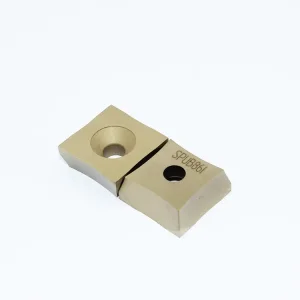
Buy Carbide Turning Inserts Manufacturer Square Carbide Inserts for Milling Tools
View Details
Wholesale Cemented Carbide Metal Insert SPUB86B/86C/86D/86E/86F/86G/86H/86K/86M
View Details
Wholesale SPUB63 Tungsten Indexable Carbide Brazing Inserts Woodworking Tools
View Details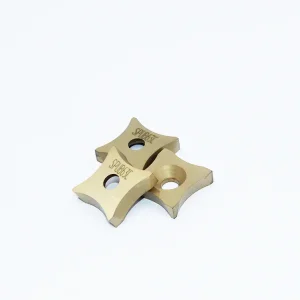
Buy SPUB-63 External Scarfing Inserts for Tubes Machining and High Frequency Pipes
View Details
Buy New Shape Tungsten Carbide Tamping Tine Tools for Railway Industry
View Details
Wholesale China Best Price Straight Toothed Steel Small Pinion Gears
View Details
China Factory Wholesale Tungsten Cemented Tools Carbide Coated Blank Inserts
View Details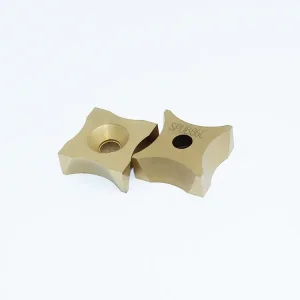
China SPUB86C P40 CVD Coating Tungsten Carbide Scarfing Insert
View Details
Direct Metallurgical Engineering Collaboration
Accelerate Your Tube Mill Productivity with Zhongfu Carbide
Submit your 2D/3D part drawings, current scarfing consumable part numbers, or tube specifications for a comprehensive technical evaluation
Need Custom SPUB86 Radiuses or High-Toughness P40 Inserts?
Our engineering team analyzes tube chemistry, mill line velocity, and deburring geometry to configure custom powder formulas, radius grinds, and high-impact coatings tailored directly to your mill lines.