
Precision Engineered Catalog
High-Performance Tooling & Carbide Components
Integrated tooling blanks, heavy-duty scarfing inserts, and high-impact ground components manufactured to stringent DIN and ISO tolerance standards.

Custom Tungsten Carbide / Carbon Steel Reducer Blind Plate Flange
Product Specifications
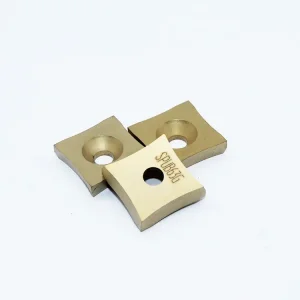
Industrial Tungsten Carbide Scarfing Insert SQ8615WCB Standard
Product Specifications
Custom Carbide Spiral Bevel Gear Milling Cutters
Product Specifications
YG8 Grade Tungsten Carbide Torque Gripper Inserts for Chuck Jaws
Product Specifications
SPUB-63 Series Wood Planing & Surface Milling Carbide Insert
Product Specifications
CVD Coated Non-Standard Carbide Jaw Chuck Insert for Multi-Axis CNC
Product Specifications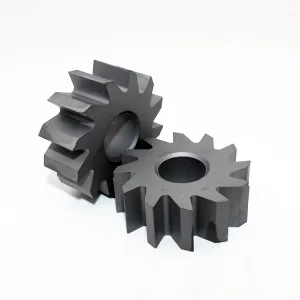
Precision Cultivator Drive Parts & Hardened Spur Back Gear Assemblies
Product Specifications
Market Economics & Supply Chain Resilience
Macro-Level Strategic Sourcing in Specialty Tool Steel & Carbide
Analyzing procurement volatility, total cost of ownership (TCO), and metallurgical consistency across global manufacturing ecosystems.
Mitigating Raw Material Volatility
Global procurement specialists are navigating intense fluctuations in refractory metal markets, particularly Tungsten (W), Cobalt (Co), and Nickel (Ni). Chinese integrated suppliers provide a vital hedge, utilizing onshore deposits and direct downstream sintering capabilities to ensure guaranteed pricing tiers and reliable delivery schedules.
Total Cost of Ownership (TCO)
Rather than evaluating upfront tooling blank prices, Tier-1 aerospace and automotive plants optimize lifecycle efficiency. A specialty tool steel insert that withstands 35% higher mechanical shear without thermal cracking reduces catastrophic machine changeover costs and tool downtime.
Strict Dimensional Repeatability
Global multi-axis CNC systems require micron-level batch uniformity. Variation in carbide binder distribution or residual core porosity can result in premature tooling fracture under high-speed milling, making advanced metallographic qualification non-negotiable for enterprise procurement.
Metallurgical Whitepaper
Engineering Architecture: Sinter-HIP and Solid-State Kinetics
How precise thermodynamic control during vacuum sintering eliminates microporosity to achieve fracture toughness limits.
Thermodynamics of Hot Isostatic Pressing (Sinter-HIP)
In high-grade cemented carbide tooling, conventional vacuum sintering often leaves microporosities (A02-B02 standards) that act as stress concentration hubs under high torsional loading. The integrated Sinter-HIP (Hot Isostatic Pressing) process introduces up to 10 MPa of ultra-pure inert Argon gas during the liquid-phase sintering phase.
This process forces the closing of microscopic internal voids through bulk plastic deformation, atomic diffusion, and grain boundary creep. The result is a structure nearing 100% of theoretical density (zero internal micro-voiding), significantly increasing transverse rupture strength (TRS) values.
"Eliminating micro-voids during liquid-phase consolidation remains the decisive barrier preventing premature micro-fracturing in downhole drilling and heavy metal scarfing."
Cobalt Mean Free Path & Solid-Solution Nickel Systems
Balancing wear resistance and impact fracture toughness hinges on controlling the cobalt binder mean free path (λCo). While low binder contents (YG6) maximize Vickers microhardness via tightly packed WC-WC contiguous skeletons, heavy-duty applications (YG15/YG20) expand the binder pool to arrest crack propagation.
For chemical manufacturing and magnetic assembly fixtures, Zhongfu engineers replace the ferromagnetic Cobalt phase with high-purity austenitic Nickel-Chromium solid solutions, delivering non-magnetic performance (μr < 1.005) with enhanced resistance to acid corrosion.
| Alloy Grade Matrix | Binder (wt%) | Grain Boundary Size (μm) | Hardness Rating (HRA) | TRS Minimum (MPa) | Primary Industrial Sector |
|---|---|---|---|---|---|
| Ultra-Fine Machining (YG6X) | 6.0% Co | 0.4 – 0.8 μm | 91.5 – 92.5 | 2,400 | Automotive Finishing, Non-Ferrous Alloys |
| General Purpose Tooling (YG8) | 8.0% Co | 1.2 – 2.0 μm | 89.0 – 90.0 | 2,800 | Cold Heading, Metal Lathe Brazed Tips |
| Heavy Duty Stamping (YG15) | 15.0% Co | 1.8 – 3.0 μm | 86.5 – 87.5 | 3,200 | Progressive Stamping, Fastener Tooling |
| Extreme Dynamic Impact (YG20) | 20.0% Co | 2.0 – 3.5 μm | 84.5 – 86.0 | 3,600 | Forging Dies, Heavy Scraping, Scarfing |
| Non-Magnetic Corrosion (Ni10) | 10.0% Ni-Cr | 1.0 – 1.6 μm | 88.0 – 89.5 | 2,600 | MWD Downhole Logging, Chemical Seals |
Macro Sector Engineering
High-Performance Solutions for Heavy Industry
Engineered to withstand extreme cyclical mechanical shock, high thermal friction, and severe abrasive wear environments.
Steel Mills & Pipe Metallurgy
Engineered tube scarfing inserts (SPUB 63, SNMX, SQ8615WCB) endure intense flash burr removal operations at billet feed speeds above 120 m/min. Custom multi-layer CVD/PVD coatings prevent crater wear and withstand hot weld spatter in continuous ERW tube production.
Die Casting & Stamping Tools
For high-volume stamping, progressive press tooling requires uniform wear distribution. Zhongfu provides thick cemented carbide EDM blocks with low internal residual stress, preventing stress cracking during wire electrical discharge machining.
Subsurface Energy & Mineral Mining
Well drilling, horizontal boring, and ballast tamping tines demand alloys with superior fracture toughness. Our rock drill bit tips and brazed cutter inserts use controlled-grain WC-Co grades to resist impact fatigue in hard rock formations.
Future Metallurgy Roadmap
Precision Manufacturing & Technology Roadmap
Continuously innovating in raw powder synthesis, additive consolidation, and precision grinding tolerances to meet demanding engineering specifications.
Sub-Micron Nano Powder
Transitioning to ultra-pure 0.2 μm tungsten carbide grains, combined with proprietary grain growth inhibitors (VC and Cr3C2), yielding cutting-tool blanks with up to 93.0 HRA hardness.
h6 Tolerance Grinding
Expanding precision CNC centerless grinding suites to achieve solid carbide round rods with continuous h6 diameter precision and runout under 0.002 mm.
Automated Laser Sizing
Integrating online optical-profile sensors and automated laser diffraction units to ensure tight dimensional tolerances across long-run production batches.
Low-Cobalt Alternatives
Developing eco-friendly alternative alloy binders to replace critical cobalt components, maintaining corrosion resistance without sacrificing mechanical toughness.
24+
Years Sintering Experience
5,000 m²
Modern Production Facility
80+
Proprietary Formulations
< 8 h
Engineering Response Window
Compliance & Reliability
Global Logistics, Export Compliance & Traceability
Comprehensive material verification, strict quality inspection, and reliable international delivery chains.
EN 10204 3.1 Traceability
Every shipment includes comprehensive Material Test Reports (MTRs) detailing specific density, Vickers/Rockwell hardness, magnetic saturation (4πσ), coercive force (Hc), and porosity certifications conforming to ISO 4505 standards.
RoHS, REACH & Conflict Minerals
Our raw materials are sourced from compliant, verified mineral supplies, completely free from conflict zones. We guarantee 100% virgin powder use, avoiding degraded or chemically unstable secondary scrap recyclates.
Specialized Industrial Packaging
Wear components and precision ground rods are packed in impact-resistant shock-absorbing cases, complete with VCI rust-inhibiting liners. This ensures critical edge geometry arrives intact at overseas factories and distribution centers.
Procurement & Technical Support
Frequently Asked Questions
Key technical insights on alloy selection, manufacturing lead times, and global shipping policies.
Can Zhongfu manufacture custom specialty tool steel and carbide parts from engineering drawings?
Yes. Custom precision fabrication is our core focus. Send your 2D (DWG, DXF, PDF) or 3D (STEP, IGES) CAD drawings complete with designated dimensional tolerances, geometric surface finishes, and specific working conditions. Our engineering metallurgists will review the design, recommend suitable alloy grades, and fine-tune binder ratios for optimal performance in demanding wear, impact, or high-temperature environments.
Which cemented carbide grades and binder formulations are available?
We provide a broad spectrum of standard WC-Co compositions spanning YG6, YG8, YG11, YG15, to YG20, as well as ultra-fine/nano-grain formulations specifically tailored for solid carbide drills, end mills, and profile reamers. For corrosive or magnetic-sensitive environments, we formulate solid-solution nickel-bonded grades (Ni6 through Ni12) that provide non-magnetic properties (μr < 1.005) alongside high resistance to acid-induced galvanic corrosion.
What metallurgical advantages distinguish Sinter-HIP carbide from conventional vacuum sintered parts?
Standard vacuum sintering relies solely on solid-state and liquid-phase shrinkage, which can leave microscopic pores (porosity levels A04/B04). The Sinter-HIP process introduces high-pressure Argon gas (up to 100 bar) during the liquid-phase stage. This eliminates internal micro-voids, elevating density close to 100% of theoretical maximums and significantly improving the material's transverse rupture strength (TRS) and fatigue limit.
What is the typical response and delivery timeline for overseas purchase orders?
Every technical request or RFQ receives a response within 8 hours, including tooling feasibility feedback and pricing structures. For standard stocked rods, blanks, and common scarfing inserts (SPUB 63, SQ8615WCB), delivery typically takes 5–7 business days. Custom molded or complex ground items require 15–22 business days for pressing, sintering, wire EDM slicing, precision grinding, and final metallographic inspection.
Which export markets are regularly served with logistical clearance?
We regularly export tooling components to manufacturing hubs across more than 20 countries, including the United States, Germany, Canada, Mexico, Australia, Italy, and Poland. All shipments include complete commercial documentation, packing lists, and EN 10204 3.1 inspection certificates.
Industrial Tooling Inventory
Precision Inserts, Heavy Wear Parts & Rotary Blanks
High-grade square chip blanks, wear inserts, water-jet valve seats, and precision ground blanks for OEM equipment builders.

Square Tungsten Large Chip Heavy Blank Carbide Insert
Product Specifications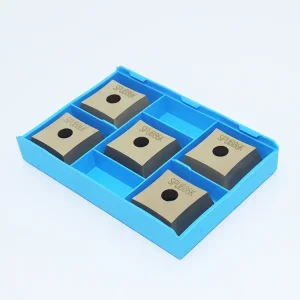
SPUB86K CVD Coated Tungsten Carbide Lathe Cutting Tool Insert
Product Specifications
SPUB63J Multilayer CVD Coated OD Pipe Scarfing Insert
Product Specifications
Tungsten Carbide Water Jet High-Pressure Nozzle Seat Valve
Product Specifications
Square Tungsten Special Carbide Tools Button Insert
Product Specifications
Tungsten Carbide Heavy Insert for Crushing Roll & Mill Parts
Product Specifications
Nickel-Based Tungsten Carbide Rods (Non-Magnetic Ni Binder)
Product Specifications