
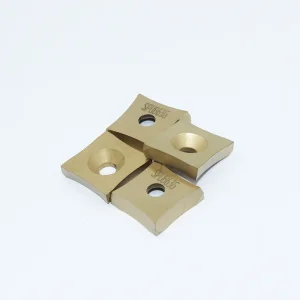
Precision Wear Parts & Scarfing Inserts Showcase (Batch I)
Direct factory manufacturing of sintered tungsten carbide inserts, OD weld-bead scarfing tools, and corrosion-resistant hardmetal blanks engineered for global heavy industry.





China Nickel Alloys List: Classification, Chemistry & Physical Properties
Authoritative metallurgical breakdown of wrought superalloys, cast grades, and nickel-binder cemented carbide matrices manufactured in high-capacity Chinese facilities.
In modern high-performance materials engineering, the term Nickel Alloys List encompasses both monolithic nickel-based superalloys (such as solid-solution strengthened and precipitation-hardenable systems) and engineered composite materials where nickel serves as the foundational binder phase. Modern industrial procurement requires an exhaustive understanding of these metallurgical designations to guarantee structural integrity in extreme environments characterised by high temperatures, corrosive chemicals, and electromagnetic constraints.
Chinese metallurgical plants utilize state-of-the-art Vacuum Induction Melting (VIM), Electro-Slag Remelting (ESR), Vacuum Arc Remelting (VAR), and Hot Isostatic Pressing (HIP) technology. In carbide fabrication, replacing traditional ferromagnetic cobalt binders with pure nickel (or tailored Ni-Cr-Mo ternary systems) yields the non-magnetic cemented carbide rods, wear tiles, and precision inserts widely deployed in measurement-while-drilling (MWD) downhole tools, fluid metering assemblies, and corrosive subsea equipment.
| Alloy Classification | Common International Grade | UNS / Standard Code | Nominal Composition | Density & Magnetic Permeability (μ) | Primary Industrial Properties |
|---|---|---|---|---|---|
| WC-Ni Composite | YG-Ni / Non-Magnetic Carbide | ISO K05-K30 / Custom | WC + 6% - 15% Ni (Optional Cr3C2) | 14.50–14.95 g/cm³ | μ < 1.005 | Exceptional wear resistance, zero magnetic interference, acid-corrosion passivation. |
| Nickel-Chromium | Inconel 625 / Inconel 718 | UNS N06625 / UNS N07718 | 58Ni-22Cr-9Mo-3.5Nb / 52Ni-19Cr-3Mo-5Nb | 8.44–8.19 g/cm³ | μ < 1.002 | High rupture strength up to 700°C, superb pitting and crevice corrosion resistance. |
| Nickel-Molybdenum | Hastelloy C-276 / C-22 | UNS N10276 / UNS N06022 | 57Ni-16Cr-16Mo-4W-5.5Fe | 8.89 g/cm³ | μ < 1.001 | Universal resistance to wet chlorine gas, hypochlorite, and harsh oxidizing acids. |
| Nickel-Copper | Monel 400 / Monel K-500 | UNS N04400 / UNS N05500 | 67Ni-30Cu / 65Ni-30Cu-3Al-0.6Ti | 8.80–8.44 g/cm³ | μ ≈ 1.001 (K-500) | Immunity to chloride stress corrosion cracking, superior resistance to marine biofouling. |
| Nickel-Iron-Chromium | Incoloy 800H / 825 | UNS N08810 / UNS N08825 | 32Ni-21Cr-46Fe / 42Ni-21Cr-3Mo-30Fe | 7.94–8.14 g/cm³ | μ ≈ 1.005 | Resistance to sulfur-containing atmospheres and continuous high-temperature oxidation. |
| Nickel-Chromium-Cobalt | Nimonic 80A / 90 | UNS N07080 / UNS N07090 | Balance Ni-20Cr-2.4Ti-1.4Al | 8.19 g/cm³ | Paramagnetic | Optimized creep and fatigue resistance for turbine blades and exhaust valves up to 815°C. |
Localized Industrial Application Scenarios & Engineering Case Studies
How nickel alloys and nickel-binder carbide tools solve mission-critical challenges across demanding geographical and operating environments worldwide.
Subsea Petrochemical & Deep Sea Extraction
In offshore basins such as the Gulf of Mexico, the North Sea, and the South China Sea, extraction fluids contain high concentrations of wet H2S, CO2, and chloride brines. Traditional steels succumb to sulfide stress cracking (SSC). Nickel-chromium-molybdenum alloys (Hastelloy C-276, Inconel 625) and nickel-bonded tungsten carbide seal faces prevent blowout events and sustain dynamic valve seal integrity under hydrostatic pressures up to 15,000 PSI.
Aerospace Propulsion & Afterburner Zones
Turbine discs, combustor liners, and exhaust nozzles in commercial aviation and rocket propulsion operate above 1,150°C. Inconel 718 and Nimonic series superalloys maintain tensile yield strength and creep rupture limits where titanium alloys liquefy or oxidize rapidly. Chinese foundries supply pre-machined near-net forgings and precision investment castings certified for aerospace thermal-barrier architectures.
Downhole MWD/LWD Drilling Systems
Directional drilling tools rely on sensitive fluxgate magnetometers located in the drill string to calculate wellbore azimuth and inclination. Standard cobalt-bonded carbide parts distort magnetic fields, causing severe drilling deviation errors. Our factory’s non-magnetic cemented carbide rods (Ni-binder, relative permeability μ < 1.005) form telemetry pulsers, erosion-resistant drill nozzles, and bearing sleeves without disrupting navigation sensors.
High-Frequency ERW Steel Pipe Welding
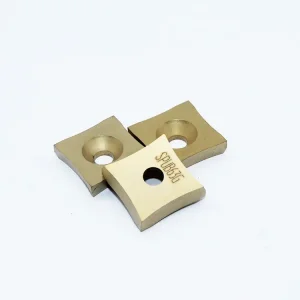
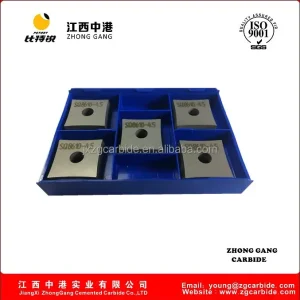
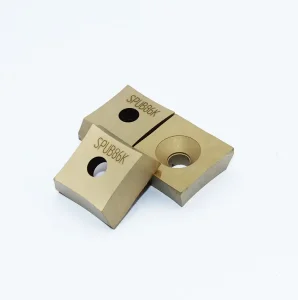
Continuous Electric Resistance Welded (ERW) and Longitudinal Submerged Arc Welded (LSAW) tube manufacturing creates continuous red-hot weld beads. Tube scarfing inserts—specifically models SPUB-63, SPUB-86, SDUW, and SQ8615WCB—withstand severe intermittent impact at temperatures reaching 900°C. CVD titanium carbonitride/aluminum oxide (TiCN/Al2O3) multi-layer coatings coupled with fine-grain substrate formulations eliminate chipping during high-speed line trimming.
Railway Infrastructure & Ballast Tamping
High-speed rail maintenance across heavy ballast environments causes rapid tool erosion on tamping tines. Tungsten carbide tamping tips braze-bonded with specialized nickel-silver-copper alloys endure intense cycle vibration and heavy aggregate impact without debonding. Our optimized carbide grades extend operational life up to 150 track kilometers per tool set compared to standard quench-tempered tool steel.
Semiconductor & High-Purity Fluid Handling
Fluorinated gases, hydrofluoric acid etching media, and ultra-pure chemical distribution pipelines in wafer fabs require zero trace metal leaching. Nickel-based alloys and polished non-magnetic nickel-carbide plungers avoid ionic contamination in micro-dosing pumps, delivering reliable cleanroom performance across millions of continuous reciprocal strokes.
China Factory Supply Chain Resilience, Smelting Ecosystem & Cost Advantages
Vertical industrial integration from primary mine extraction in Jiangxi and Hunan to high-precision CNC finished components.
China holds over 60% of the world's upstream tungsten reserves and controls roughly 80% of global ammonium paratungstate (APT) processing capacity. Furthermore, China's vast nickel refining capacity—bolstered by sustainable HPAL (High-Pressure Acid Leach) processing facilities—secures uninterrupted raw material flow for nickel superalloys and nickel-bonded carbide components. Sourcing directly from verified Chinese industrial clusters eliminates multi-tiered intermediary markups and shields overseas buyers against acute raw material shortages.
Our integrated manufacturing facility in Nanchang, Jiangxi integrates automated powder ball milling, spray drying towers, precision multi-axis CNC dry presses, computerized 60-bar overpressure Sinter-HIP furnaces, and h6-tolerance centerless grinding lines under a single roof. This vertical continuity delivers strict microstructural consistency: ASTM B276 porosity ratings consistently score A02-B00-C00, eliminating microscopic voids that trigger premature fracture in cyclic load applications.
Technological Roadmap & Next-Generation Horizons (2025–2035)
Strategic advancements in additive manufacturing, ultra-fine nanostructured grain matrices, and machine-learning driven alloy synthesis.
Additive Manufacturing (LPBF & Binder Jetting) of Complex Superalloys
Moving beyond conventional casting limitations, our technological roadmap integrates Laser Powder Bed Fusion (LPBF) using gas-atomized spherical Inconel 718, Inconel 625, and customized WC-Ni feedstocks. This enables conformal cooling channels within scarfing toolholders, complex downhole telemetry geometries, and lightweight aerospace structural manifolds with 99.8% nominal density.
Nanoscale Grain Boundary Engineering & Grain Inhibitor Optimization
By doping nickel-bonded tungsten carbide formulations with trace rare earth oxides (Y2O3, CeO2) and grain growth inhibitors (VC, Cr3C2), we control sintered carbide grain size within the 0.2 to 0.5 μm range. This suppresses high-temperature binder pooling, increases hardness to > 92.5 HRA without sacrificing impact toughness, and expands service limits in ultra-abrasive rock drilling environments.
Next-Generation CVD/PVD Hard Coatings for Extreme Friction Hotspots
High-speed weld trimming demands cutting materials that outlast severe thermal shocks. Next-generation coatings deploy silicon-doped AlTiSiN and boron-based nanocomposites through Arc Ion Plating and medium-temperature CVD. These coatings form an in-situ protective alumina-silica barrier at temperatures above 1,000°C, blocking crater wear and extending insert working life by over 240%.
AI-Driven Predictive Powder Thermodynamics & Automated Defect Screening
Deploying CALPHAD (Calculation of Phase Diagrams) algorithmic modeling, our metallurgical team simulates phase boundaries and precipitation kinetics before powder batch formulation. On the production floor, high-resolution optical inspection stations combined with real-time eddy current sensor arrays inspect every ground insert and rod for subsurface microcracks and geometrical variance at sub-micron levels.
Global Commercial Landscape: Competitive Analysis & Procurement Risk Mitigation
Strategic evaluation of lead times, capital expenditure efficiency, and supply continuity between Chinese production hubs and Western manufacturers.
Global original equipment manufacturers (OEMs) and precision machine shops face ongoing supply chain challenges: protracted delivery schedules from legacy North American and European specialty mills (frequently reaching 26 to 52 weeks for Hastelloy and custom Inconel bar stock) alongside sharp volatility in alloy surcharges. Working with qualified Chinese tier-1 factories presents a dependable pathway to restore operational flexibility, protect capital reserves, and maintain steady delivery rhythms.
| Evaluation Parameter | Direct Chinese Tier-1 Factory | North American Specialty Mill | European Fine Alloy Producer |
|---|---|---|---|
| Standard Production Lead Time | 3 to 6 Weeks (Custom parts & blanks) | 16 to 36 Weeks (Subject to mill queue) | 20 to 48 Weeks (Allocated batches) |
| Minimum Order Quantity (MOQ) | Flexible (10–50 pcs for custom prototypes) | Substantial tonnage requirements | Strict minimum billet melt quotas |
| Tooling & Mold Development Cost | Direct workshop cost ($300 – $1,200) | Elevated tooling fees ($3,000 – $8,500) | Premium charges ($4,000 – $10,000) |
| Raw Material Verticality | Direct mine-to-refinery regional access | Dependent on third-party import ores | Vulnerable to offshore energy & feed limits |
| Custom Grade Optimization | Agile powder formulation in-house | Standardized catalog specifications | High metallurgical surcharge for adjustments |
Localized Support, Stringent Testing & Global Compliance Guarantees
Comprehensive certification protocols ensuring full alignment with international aerospace, oil & gas, and industrial machining standards.
Material Test Certification (EN 10204 3.1)
Every shipment is accompanied by complete inspection documentation, including optical emission spectrometry (OES) chemical breakdowns, carbon-sulfur analyzer reports, and verifiable heat traceability linking finished parts to raw vacuum induction furnace melts.
NACE MR0175 / ISO 15156 Compliance
Corrosion-resistant nickel components and non-magnetic cemented carbide parts are tested against strict sulfide stress cracking (SSC) and stress corrosion cracking (SCC) criteria, guaranteeing trouble-free service in upstream sour oil and gas wells.
Non-Destructive Testing (NDT) & Microstructure Checks
Our quality lab utilizes ultrasonic flaw detection, liquid penetrant testing (PT), coordinate measuring machines (CMM) with 0.001 mm resolution, and metallographic microscopes to verify grain boundary distribution, carbide saturation, and zero internal micro-porosity.
Advanced Hardmetal Tooling, Rods & Railway Inserts Showcase (Batch II)
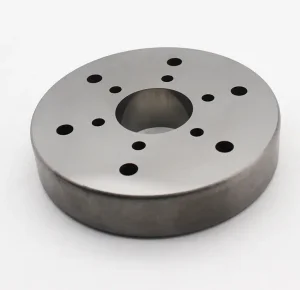
Precision-ground non-magnetic nickel binder rods, heavy wear plates, high-speed profile scarfing tools, and railway maintenance tips.






Frequently Asked Questions: Technical & Commercial Guide
In-depth engineering answers addressing metallurgical grade matching, magnetic shielding criteria, precision tolerances, and international export logistics.
Request Engineering Review & Direct Factory Quotation
Send your component drawings, target alloy specifications, or application parameters. Our metallurgical specialists review your technical requirements and provide grade recommendations, tooling feasibility assessments, and pricing within 8 hours.