
Engineered Carbide Inserts, CNC Cutters & Tube Scarfing Tools
Direct-from-factory sintered and ground tungsten carbide cutting components engineered to withstand high shear forces, thermal shock, and aggressive abrasive environments.

SPUB-63 Series Machine Cutter CNC Carbide Turning Tool
View Product Specs
Non-Magnetic Carbide Scarifier Cutter & Through-Hole Wear Parts
View Product Specs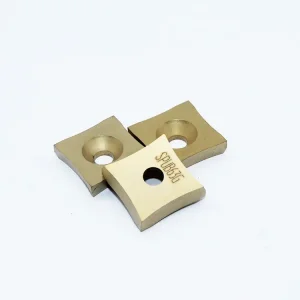
Wear Resistant SPUB 63 Series Carbide Tube Scarfing Inserts
View Product Specs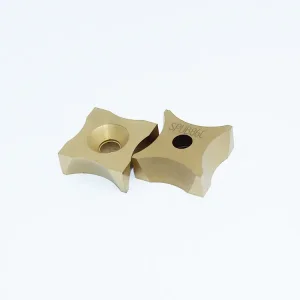
SPUB86C Customized Lathe Tungsten Drill Bit Insert
View Product Specs
SQ8615WCB Tungsten Carbide Tube Scarfing Inserts
View Product Specs
Precision Ground Scarfing Insert SQ8615WCB Grade
View Product Specs
Industrial Grade Carbide Insert CNC Milling & Cutting Tools
View Product Specs
SPUB86F TiN Coated Heavy Tube Scarfing Insert
View Product SpecsThe Mechanics of Grinding Tungsten Carbide: From HIP Sintering to Micron Precision
Tungsten carbide (WC-Co) manufacturing requires strict control of chemical stoichiometry, carbon equilibrium (W-C phase diagram), and multi-axis diamond wheel grinding dynamics to prevent micro-fracture propagation.
Stoichiometric Phase Control
The boundary between high performance and brittle failure lies within the narrow carbon window (±0.05 wt% C). Insufficient carbon triggers the formation of brittle η-phase (Co3W3C or Co6W6C) double carbides, whereas excess carbon precipitates free graphite flakes. Jiangxi Zhongfu utilizes vacuum reduction furnaces that calibrate oxygen-to-carbon ratios, preventing premature flaking.
- Elimination of micro-voids via high-temperature Sinter-HIP at 1450°C.
- In-situ coercive force (Hc) and magnetic saturation (4πσ) phase checks.
- Uniform binder distribution avoiding localized cobalt pooling defects.
Ultra-Precision Grinding Kinematics
Tungsten carbide exhibits extreme hardness (HV 1400–2200), rendering conventional abrasive wheels useless. Our CNC profile and centerless grinding cells deploy vitrified and resinoid bonded superabrasive diamond wheels (D46 to D126 mesh) paired with chilled synthetic emulsions to keep thermal checking below detection thresholds.
- Centerless through-feed grinding for solid rods reaching ISO h6 tolerance.
- Creep-feed surface grinding minimizing subsurface micro-crack propagation.
- Automated optical tool presetters for profile runout control < 0.002 mm.
Binder Phase Nano-Optimization
Beyond traditional WC-Co matrices, modern industrial tribology demands advanced resistance against acidic, alkaline, and intense magnetic fields. We engineer customized nickel, chromium, and molybdenum alloyed binder phases (WC-Ni-Cr) that inhibit chemical leaching in downhole or water-metering applications.
- Non-magnetic grades with magnetic permeability μ ≤ 1.005.
- Sub-micron grain size (0.2–0.5 μm) for razor-sharp micro-milling inserts.
- Coarse grain grades (3.0–5.0 μm) optimized for heavy rock tamping impact.
Why Global Tier-1 Tool Makers Rely on Chinese Tungsten Carbide Production
Evaluating supply chain resilience, raw material upstream integration, and the structural economics of the Jiangxi tungsten corridor.
The Upstream Geological Advantage & Vertical In-House Control
Over 60% of the world’s proven tungsten reserves are concentrated within southern China, predominantly throughout Jiangxi and Hunan provinces. As a premier manufacturer headquartered in Nanchang, Jiangxi, Zhongfu Cemented Carbide taps directly into pristine supplies of Ammonium Paratungstate (APT) and virgin tungsten trioxide (WO3).
Unlike Western tool re-grinders who import expensive carbide powder subject to multi-layered distributor margins and maritime tariff volatility, our manufacturing route is 100% vertically synthesized: from ball milling virgin refractory powders, wet spray drying (granulation), multi-axial isostatic compaction, to computer-controlled vacuum Sinter-HIP.
Capital Efficiency, Equipment Fleet & Prototyping Speed
Modern high-mix, low-volume (HMLV) tooling mandates extreme agility. Our 5,000 m² manufacturing floor hosts a dense concentration of modern press sintering autoclaves, 5-axis CNC diamond profile grinders, wire-EDM machines, and optical profile projectors operating on continuous 24/7 cycles.
Where European or American toolmakers typically quote 8 to 14 weeks lead time for custom carbide profiling, our integrated mold tooling room fabricates near-net preforms within 72 hours, delivering precision-ground custom inserts or wear components to international ports in under 3 weeks.
Specialized Deployment Environments for Ground Tungsten Carbide
Engineered solutions solving friction, thermal cycling, and catastrophic mechanical impact across major global manufacturing and infrastructure hubs.
1. Longitudinal ERW Tube & Pipe Scarfing
In continuous electric resistance welding (ERW) tube mills across North America and Western Europe, removing internal (I.D.) and external (O.D.) molten weld beads requires specialized carbide scarfing inserts like our SPUB-63, SPUB86, and SQ8615WCB series. Ground radii conform exactly to pipe circumference without gouging the parent steel strip.
Failure Mode Mitigated: Thermal shock fracturing caused by intermittent 900°C weld flash exposure followed by sudden flood cooling with water-soluble lubricity fluids.
2. Railway Ballast Tamping & Track Maintenance
Global high-speed passenger and heavy-haul freight networks (such as Class I railways in North America and freight lines in Australia) require periodic ballast consolidation. We manufacture precision brazed tungsten carbide tamping tines combining ductile structural steel shanks with high-cobalt (YG11 to YG15) impact-grade carbide tips.
Failure Mode Mitigated: High-frequency percussive shear and catastrophic tip shattering against hard crushed granite trackbed aggregate.
3. Downhole Drilling, MWD/LWD & Valve Trims
Directional oil, gas, and geothermal drilling tools utilize Measurement-While-Drilling (MWD) electromagnetic pulsers. Our proprietary non-magnetic cemented carbide rods, nozzles, and choke valves deploy nickel-based binder systems that ensure zero electromagnetic distortion to sensitive directional magnetometers.
Failure Mode Mitigated: Magnetic distortion interfering with telemetry coupled with hydro-abrasive slurry erosion under 5,000+ PSI downhole fluid pressures.
4. Metal Stamping, Cold Heading & Wire Drawing
High-volume fastener factories producing stainless steel and aerospace titanium fasteners demand tooling with uncompromising yield strength. Zhongfu ground carbide progressive dies and drawing nibs maintain micro-inch bore tolerances across millions of punch cycles, dramatically reducing costly press recalibration downtime.
Failure Mode Mitigated: Plastic deformation and micro-galling along internal die throat geometries caused by extreme frictional heat generation.
5. High-Speed Solid Carbide Round Tool Blanks (End Mills & Drills)
For precision CNC mold machining, 3C electronics casing fabrication, and titanium aerospace milling, we supply centerless ground h6 round carbide rods with single or double helical coolant channels. Sintered from ultrafine 0.4 μm nano-grains, our tool blanks provide superior transverse rupture strength (> 4,000 MPa) ensuring long-term edge stability at 30,000+ RPM spindle speeds.
Failure Mode Mitigated: Micro-chipping along primary cutting cutting-flute edges and dynamic harmonics chatter during deep-pocket cavity roughing.
Technology Roadmap: The Next Decade in Advanced Cemented Carbides
Strategic investments in additive preforming, functional gradient metallurgy, and cryogenic grinding to push operational limits in extreme manufacturing.
Functionally Graded Carbides (FGC)
Engineering dual-zone carbide structures featuring a cobalt-enriched, high-toughness core integrated with a high-hardness, cobalt-depleted outer surface boundary layer. This architecture provides ultimate fracture resistance while prolonging outer abrasion tool wear life by over 300%.
Laser-Assisted Precision Micro-Grinding
Integrating pulsed picosecond laser softening optics directly in-line with multi-axis diamond wheel grinding spindles. This localized thermal plasticity process drastically lowers grinding forces on diamond wheels, completely eliminating micro-chipping on ultra-fragile knife blades.
Binder-Jet 3D Additive Preforming
Pioneering production-scale binder jet additive manufacturing of complex inner-conformal cooling channels for carbide dies and turbine wear sleeves, followed by standard Sinter-HIP consolidation and precision CNC grinding to exact tolerance specs.
Closed-Loop Clean Tungsten Hydrometallurgy
Deploying advanced zinc recycling and green hydrometallurgical extraction to regenerate end-of-life carbide inserts into premium virgin-grade carbide powder with a 75% reduction in carbon footprint, meeting strictest European CBAM carbon tax parameters.
Engineering Grade Selection Matrix & Metallurgical Tolerances
Strict adherence to ASTM B294, ISO 3738, and ISO 4505 porosity inspection standards. Reference chemical composition and physical properties for initial RFQ engineering qualification.
| Carbide Grade | Binder (Co/Ni %) | Grain Size (μm) | Density (g/cm³) | Hardness (HRA) | TRS (MPa) | Primary Industrial Sector |
|---|---|---|---|---|---|---|
| YG6X | 6.0% Co | 0.6 – 1.0 (Sub-micron) | 14.90 – 15.10 | 91.5 – 92.5 | 2,200 | Chilled cast iron, non-ferrous finishing, micro-slitters |
| YG6 | 6.0% Co | 1.2 – 1.8 (Medium) | 14.80 – 15.00 | 90.0 – 91.0 | 2,400 | SPUB tube scarfing inserts, cold drawing dies, guide bushes |
| YG8 | 8.0% Co | 1.4 – 2.2 (Medium) | 14.50 – 14.80 | 89.0 – 90.0 | 2,800 | Rock drill bits, scarifier cutters, heavy steel lathe turning |
| YG11C | 11.0% Co | 2.5 – 4.0 (Coarse) | 14.20 – 14.50 | 86.5 – 87.5 | 3,100 | Railway ballast tamping tines, percussion drilling inserts |
| YG15 | 15.0% Co | 1.8 – 2.6 (Medium) | 13.90 – 14.20 | 87.0 – 88.0 | 3,300 | Cold heading dies, punching pins, heavy crushing rolls |
| YG20 | 20.0% Co | 2.0 – 3.0 (Coarse) | 13.40 – 13.70 | 85.0 – 86.0 | 3,600 | High-impact stamping, cold forging dies, shear blades |
| NM-9 | 9.0% Ni (Cr) | 1.2 – 2.0 (Non-Magnetic) | 14.40 – 14.70 | 88.5 – 89.5 | 2,500 | MWD downhole parts, water meter shafts, magnetic powder dies |
Frequently Asked Technical Questions on Ground Tungsten Carbide
Direct answers to critical questions asked by lead tooling engineers, quality auditors, and overseas procurement specialists.
How do you eliminate grinding thermal cracks (thermal checking) on finished carbide inserts?
Thermal checking occurs when localized frictional heat generated by the diamond grinding wheel exceeds the thermal conductivity of the tungsten carbide matrix, triggering differential expansion between the cobalt binder and WC grains. We prevent this by maintaining strict wheel dressing regimens, employing vitrified diamond wheels with porous structures that facilitate generous high-pressure flood coolant delivery, and keeping linear depth-of-cut increments under 0.005 mm during final finishing passes.
What is the true difference between traditional vacuum sintering and Sinter-HIP?
Standard vacuum sintering relies strictly on capillary action of the molten cobalt binder to pull tungsten carbide grains together, frequently leaving residual sub-surface micro-porosity (A02 to A06 rating under ISO 4505). In contrast, our Sinter-HIP furnaces inject high-purity argon gas at over 10 MPa (100 bar) pressure while the cobalt is still in its liquid phase (1420°C–1450°C). This hydrostatic overpressure mechanically collapses internal voids, elevating density to near-theoretical levels (100%) and tripling transverse rupture strength consistency.
Can you provide non-magnetic carbide parts with guaranteed zero magnetic attraction?
Yes. Standard tungsten carbide uses cobalt as a binder, which is naturally ferromagnetic. For non-magnetic components (such as water meter shafts, MWD telemetry probes, or sensor housings), we formulate specialized grades substituting cobalt with high-purity nickel (Ni) and chromium (Cr). These grades achieve a relative magnetic permeability (μ) of less than 1.005, making them totally non-responsive to permanent magnets and MRI magnetic flux lines while resisting harsh chemical corrosion.
What dimensional tolerances and surface finishes can Zhongfu achieve via CNC grinding?
On precision centerless ground round carbide rods (such as tool blanks for drill bits and end mills), we routinely guarantee ISO h6 and h5 diametrical tolerances (within 0.005 mm) with total runout below 0.002 mm per 330 mm length. On flat wear plates, scarfing inserts, and progressive dies, our diamond surface grinders achieve flatness within 0.002 mm and mirror-like surface roughness down to Ra 0.05 μm upon customer request.
How do you verify internal microstructural integrity before export dispatch?
Every production batch undergoes non-destructive and destructive metallographic evaluation. We test coercive force (Hc) to verify carbon stoichiometry, magnetic saturation (σ) to detect trace η-phase precipitation, Rockwell hardness (HRA) via calibrated diamond indenters, and cross-sectional polish checks under 1500x optical and scanning electron microscopy (SEM) to inspect porosity against ASTM B276 standards.
What is the typical turnaround time for custom OEM carbide tooling from CAD drawings?
Upon receiving your 2D/3D CAD drawings (STEP, IGES, DXF, or PDF), our engineering department returns a detailed Design-for-Manufacturability (DFM) review and formal quote within 8 hours. Prototype batches requiring custom mold tooling are typically pressed, Sinter-HIP treated, ground, and ready for air freight dispatch within 12 to 18 business days.
Wear Parts, Heavy Machinery Components & Non-Magnetic Shafts
Heavy-duty industrial wear components, railway tamping tips, and round carbide rod solutions precision ground to strict dimensional tolerances.

Custom 60 Knife Heavy-Duty Metal Gear & Tooling Component
View Product Specs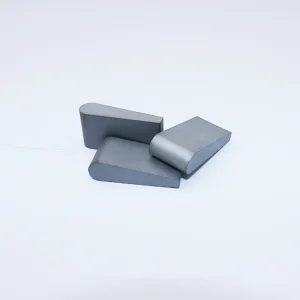
Engineered Tungsten Carbide Tamping Tines for Railway Ballast
View Product Specs
Lathe Tool Holder & Cemented Carbide Cutting Inserts
View Product Specs
Custom Carbide Insert for Wear Parts & High-Pressure Crushing Roll
View Product Specs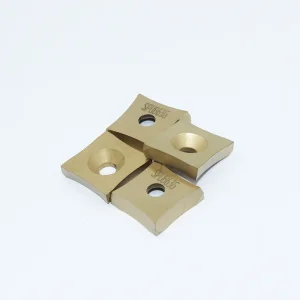
Technical Round Tungsten Carbide Lathe Inserts & Knife Blade
View Product Specs
Factory Direct Precision Ground Carbide Turning Inserts
View Product Specs
Non-Magnetic Cemented Carbide Rods for Water Meter Shafts
View Product Specs