
Featured Production Blanks, Inserts & Wear Components
Direct-from-factory sintered tungsten carbide inserts, indexable tooling blades, and chuck jaw grippers manufactured under ISO 9001:2015 process controls.

Buy SPUB86C customized tungsten carbide cnc diamond metal cutting inserts tools Factory, Factories

Wholesale Best price woodturning tungsten carbide turning tip inserts and cutter railway Manufacturer, Suppliers
Wholesale Factory wholesale SPUB86 CVD coating tungsten carbide turning inserts Manufacturers, Factories

Buy YG8 carbide gripper inserts for chuck jaw Manufacturers, Supplier
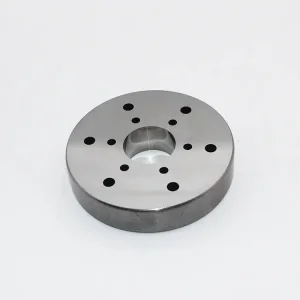
China Customized tungsten carbide fitting elbow tee cap reducer pipe flanges Suppliers, Factories

China YG8 Standard tungsten carbide torque gripper inserts for chuck jaws Factory, Factories

China tungsten carbide tube scarfing inserts SQ8615WCB Manufacturers, Supplier
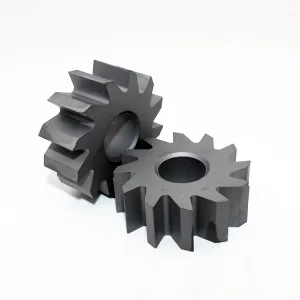
Buy Customize good quality precision metal parts spur gear tiller cultivator parts back gear Manufacturer, Manufacturers
What Are Alloys Used For? Metallurgical Synergy and Industrial Sourcing Dynamics
When enterprise procurement directors, mechanical design authorities, and manufacturing engineers search for a vetted "alloys supplier and factory", their commercial intent transcends standard raw metal catalog requests. Modern industrial assemblies operate under multi-axial mechanical stress, aggressive chemical media, rapid thermal cycling, and high-velocity abrasive slurry wear. Pure elemental metals—such as pure iron, copper, titanium, or nickel—exhibit fundamental lattice limitations that render them vulnerable to rapid plastic deformation, thermal softening, and corrosive breakdown.
An alloy is an engineered metallic substance composed of two or more elements, strategically compounded to induce solid-solution strengthening, precipitate hardening, intermetallic phase transformation, or grain boundary pinning. In precision cemented carbide metallurgy—pioneered by specialized manufacturing centers such as Jiangxi Zhongfu Cemented Carbide Co., Ltd.—the alloy mechanism transitions into a metal-matrix composite (MMC). Hexagonal tungsten monocarbide (WC) ceramic grains are liquid-phase sintered with a ductile metallic binder (typically cobalt or nickel) to generate a consolidated refractory alloy capable of reaching Vickers hardness ratings surpassing 1600 HV while preserving critical fracture toughness.
Procurement decisions across aerospace tooling, automotive deep-draw stamping, subsea petroleum exploration, and continuous steel tube processing hinge directly upon matching specific alloy microstructures to localized failure mechanics. Below, our metallurgical engineering team maps the core functional families of industrial alloys, detailing why virgin refractory alloy components form the structural backbone of 21st-century manufacturing infrastructure.
Cemented Tungsten Carbides (WC-Co)
Sintered refractory metal matrix composites containing 80% to 95% WC crystals bonded by ductile cobalt. Designed for extreme abrasive edge retention, centerless rod peeling, circular slitting, and heavy-feed CNC milling of difficult alloys.
Nickel-Bonded Non-Magnetic Alloys
Refractory composites replacing ferromagnetic cobalt with nickel-chromium solid solution binders. Essential for directional drilling (MWD/LWD downhole telemetry), magnetic flux molding cores, semiconductor die handling, and acid-resistant valves.
Superalloys & High-Entropy Formulations
Complex nickel-, iron-, and cobalt-base superalloys alongside emerging multi-principal element alloys (MPEAs) exhibiting exceptional high-temperature creep rupture strength, hot oxidation barriers, and cryogenic ductility in extreme service corridors.
Cemented Carbide Alloy Selection Framework
Procurement engineers balancing tooling life cycle cost versus catastrophic fracture risk must evaluate density, nominal cobalt binder ratio, Rockwell A hardness (HRA), and transverse rupture strength (TRS). Sourced directly from our Nanchang production metallurgical laboratory:
| Alloy Grade Class | Binder Mass (%) | Grain Size (µm) | Density (g/cm³) | Hardness (HRA) | TRS (N/mm²) | Primary Industrial Use-Cases |
|---|---|---|---|---|---|---|
| YG6 (ISO K10-K20) | 6.0% Co | 1.2 – 1.6 | 14.80 – 15.00 | ≥ 90.5 | ≥ 1,900 | Cast iron turning, non-ferrous finish drawing, slitter blades, wear bushings |
| YG8 (ISO K20-K30) | 8.0% Co | 1.4 – 2.0 | 14.60 – 14.80 | ≥ 89.5 | ≥ 2,200 | Chuck torque grippers, rock drill chisel inserts, railway tamping tine braze tips |
| YG15 (ISO K40) | 15.0% Co | 1.8 – 2.4 | 13.90 – 14.15 | ≥ 87.0 | ≥ 2,800 | Heavy cold stamping punches, metal shearing knives, high-impact cold heading dies |
| YG20 (Impact Class) | 20.0% Co | 2.2 – 3.0 | 13.40 – 13.65 | ≥ 85.5 | ≥ 3,100 | Fastener heading dies, powder metallurgy compaction punches, thick blank EDM blocks |
| Ni-Bonded (ZF-N10) | 8.5% – 10% Ni | 1.0 – 1.8 | 14.45 – 14.75 | ≥ 88.5 | ≥ 2,100 | Non-magnetic MWD telemetry components, corrosive offshore mechanical seal faces |
| Submicron Ultra-Fine | 10.0% Co + Cr/V | 0.4 – 0.6 | 14.30 – 14.50 | ≥ 92.5 | ≥ 3,800 | Solid micro-endmills, printed circuit board (PCB) routing drills, aerospace titanium cutting |
How Global Manufacturers Deploy Specialty Alloys in Hostile Work Environments
Alloys are engineered solutions to mechanical failure modes. In real-world factory floors, subsea drill strings, and high-speed stamping presses, their chemistry determines uptime, scrap rates, and system integrity.
High-Altitude Aerospace & Defense Machining
Aerospace engine pylons and landing gear assemblies utilize difficult-to-machine nickel-chromium superalloys (Inconel 718) and titanium aluminides (Ti-6Al-4V). Cutting these materials requires ultra-fine submicron tungsten carbide indexable tooling enriched with cubic tantalum and titanium carbides. The refractory alloy edge retains hardness at tool-chip interface temperatures exceeding 900°C without chemical notch diffusion.
Subsea Directional Drilling & MWD Tooling
Drilling deep horizontal shale formations requires measurement-while-drilling (MWD) probe sleeves that do not distort geomagnetic positioning telemetry. By substituting ferromagnetic cobalt with a non-magnetic nickel-based refractory binder, our factory delivers magnetic permeability ratings below 1.005 µ, preventing telemetry noise while resisting erosive downhole mud slurry.
Automotive Gigafactory EV Battery Stamping
The transition to electric vehicle traction battery packs demands progressive stamping dies capable of punching millions of micro-toleranced copper current collectors and aluminum busbars without micro-burring. Specialized HIP-sintered YG15 and YG20 carbide die blocks deliver sub-micron edge longevity, reducing tool sharpening shutdowns from once per shift to once per month.
Continuous Steel Pipe Scarfing & Peeling
High-frequency welded (ERW) steel pipes demand automated exterior and interior bead scarfing at speeds over 60 meters per minute. Standard tool steels soften instantly under this friction. Heavy-duty SPUB63, SPUB86, and SQ8615WCB tungsten carbide scarfing inserts maintain extreme shear geometry under continuous red heat (750°C), stripping flash cleanly across entire coil campaigns.
Heavy Infrastructure & Railway Track Tamping
High-speed rail maintenance depends on automatic ballast tamping tines that penetrate compacted granite ballast under violent vibration. Braze-on YG8 carbide wear tamping tiles and road scarifier picks absorb continuous shock while protecting the underlying forged alloy steel shank from scouring erosion.
Technological Trajectory: Refractory Alloy Metallurgy Through 2030
The commercial cemented carbide landscape is evolving beyond legacy vacuum sintering. Factory investments across the Jiangxi industrial corridor reflect key macro-technological transitions shaping the next decade of metal-cutting and wear-resistant hardware:
Phase 1: 100% Sinter-HIP Consolidation Standard (Near-Zero Microporosity)
Eliminating residual internal pores is paramount for wire-EDM die cutting and mirror-polished cold heading tools. Sinter-HIP technology applies over 60 bar of inert argon gas pressure at peak liquidus sintering temperatures (approx. 1420°C). This collapses micro-voids, increasing Transverse Rupture Strength (TRS) by 25% to 35% compared to vacuum-sintered blanks, ensuring crack resistance under cycling shock loads.
Phase 2: Nanocrystalline WC Grain Growth Inhibition (0.2 µm - 0.4 µm)
Ultrafine grain refinement allows tools to achieve extraordinary hardness (>92.5 HRA) without becoming brittle. Modern powder formulation integrates small, tightly balanced additions of vanadium carbide (VC) and chromium carbide (Cr₃C₂) to retard grain boundary coalescence during liquid phase sintering. The resulting nano-grain cemented carbide creates sharper, more durable micro-tools for composite aircraft panels and glass-fiber circuit boards.
Phase 3: Multi-Layer Plasma CVD/PVD Nano-Coatings
Next-generation inserts feature advanced chemical/physical vapor deposition coatings. Multi-layered architectures (such as AlTiN/AlCrN and nano-crystalline diamond) form dynamic thermal barriers. By withstanding oxidation up to 1100°C and generating lubricating tribo-films, these coatings prevent chip welding during high-speed dry machining of hardened alloy tool steels.
Phase 4: Closed-Loop Chemical Zinc Recycling & Circular Sustainability
With global strategic raw material traceability mandates (EU Battery Passport, ESG compliance), sustainable alloy synthesis is critical. Proprietary zinc recovery and ammonium paratungstate (APT) closed-loop refining convert end-of-life carbide inserts into virgin-equivalent tungsten powder, significantly lowering embodied carbon emissions while securing steady supply against mineral export quotas.
Chinese Factory Supply Chain Resilience & Jiangxi Tungsten Cluster Advantages
Global OEM buyers do not merely purchase an alloy part; they purchase confidence in their tier-1 supply continuity. Sourcing cemented carbide from Jiangxi province anchors manufacturing operations within the world's most concentrated tungsten extraction and refining corridor.
Upstream Ore Dominance & Cost Hedging
Jiangxi province hosts over 60% of verified global tungsten reserves. Direct physical proximity to major mining sites, ammonium paratungstate (APT) refineries, and reduction furnaces protects Zhongfu from speculative commodity swings, allowing us to pass transparent, factory-direct cost structures to overseas volume buyers.
Integrated Metallurgy: Powder to Finish Ground
Brokers and distributors rely on fragmented, outsourced processing steps. In contrast, our 5,000 m² Nanchang production facility operates the entire production lifecycle in-house: high-energy wet ball milling, spray-drying atomization, CNC pressing, 10MPa sinter-HIP furnaces, and automated h6 centerless grinding.
Rapid Tooling & Prototype Turnaround
Time-to-market defines competitive margins. Our in-house toolroom designs and wire-cuts custom compaction dies in days. With dedicated rapid prototyping presses and engineering reviews completed within 8 hours, custom pre-sintered blanks ship out in 10 to 14 working days.
Global Metallurgy Market Dynamics & Total Cost of Ownership (TCO)
Procurement decisions should look beyond initial invoice pricing. In high-output stamping facilities or precision multi-axis CNC cells, the purchase cost of an indexable insert or wear bushing typically accounts for less than 3% to 5% of overall manufacturing operating expenses. Unplanned downtime, frequent line stoppages for tool offsets, and discarded micro-cracked components drive the vast majority of operational losses.
| Evaluation Parameter | Catalog Distributor / Middleman | Direct Engineered Alloy Factory (Zhongfu) | Direct Commercial Impact |
|---|---|---|---|
| Raw Material Traceability | Mixed lots, recycled scrap blends | 100% Virgin APT-derived tungsten powders | Prevents premature chipping and structural fatigue |
| Porosity & Microstructure | Standard vacuum sintering (A04/B02) | Over-pressure 60-Bar Sinter-HIP (< A02/B00) | Enables defect-free mirror-polished surfaces |
| Dimensional Tolerancing | Broad commercial tolerances (±0.05 mm) | Precision ground to h6, circularity < 0.002 mm | Eliminates manual shimming and spindle vibration |
| Custom Engineering Support | Off-the-shelf catalog skus only | Formulation tuning & custom geometry drawings | Tool life extended by 40% to 150% in tailored operations |
Comprehensive Metallurgical Certification & Export Compliance
Every export batch leaving our Nanchang production facility is accompanied by complete, transparent metallurgical test certifications. We implement strict quality protocols aligned with North American and European industrial procurement mandates:
ISO 9001:2015 Audited
Total quality management across incoming powder lot analysis, compaction density verification, sintering curves, and digital dimensional inspection.
Metallographic Micro-Checks
Optical and scanning electron microscope (SEM) verification guaranteeing absence of brittle eta-phase (W₃Co₃C) and graphite precipitation.
REACH & RoHS Compliant
Certified non-hazardous formulations complying with European chemical safety regulations and conflict-free mineral sourcing frameworks.
Global Logistics Safety
Vapor corrosion inhibitor (VCI) hermetic vacuum sealing, shock-absorbent cushioning, and heavy wooden crates for secure air and ocean transit.
Frequently Answered Questions for Sourcing Industrial Alloys
Straightforward, engineering-backed answers to core technical and commercial questions raised by international procurement managers:
Can Zhongfu manufacture custom tungsten carbide alloy blanks directly from customer CAD drawings?
What distinct mechanical properties make non-magnetic carbide superior to standard cobalt-bonded grades?
Why does your factory emphasize 100% virgin raw materials over recycled scrap powders?
What dimensional grinding tolerances can be achieved on finish-ground rods and wear plates?
Which export markets and logistic arrangements does your facility support?
Heavy-Duty Mining, Gripper & Scarfing Components
Direct-from-factory sintered tungsten carbide inserts, indexable tooling blades, and chuck jaw grippers manufactured under ISO 9001:2015 process controls.
China Wholesale SPUB-63C cemented mining tungsten tools carbide drill insert Supplier, Factories

China Best price YG8 tungsten carbide gripper inserts for chuck jaw Suppliers, Factories
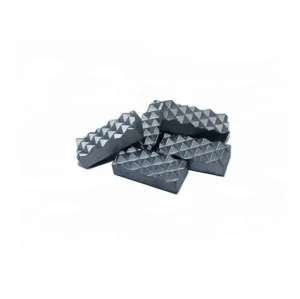
Buy YG8 carbide gripper inserts Manufacturers, Factory

Wholesale Wholesale SPUB63 tungsten indexable carbide brazing inserts woodworking tools Manufacturers, Supplier
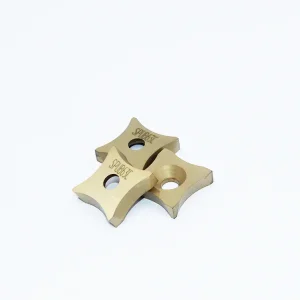
Wholesale Best price SPUB-63C tungsten scrap brake lathe carbide cutting inserts tools Supplier, Suppliers

Wholesale Wholesale SPUB63B tungsten carbide insert box used carbide inserts price Supplier, Factories

Wholesale tungsten carbide scarfing insert SQ8615WCB Supplier, Factory
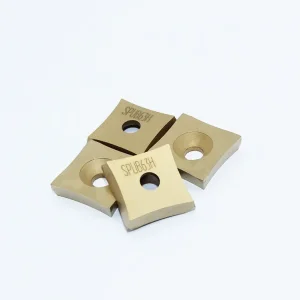
Buy SPUB-63 welding tube scarfing insert,Welding Pipe peeling insert Manufacturer, Manufacturers
Partner With a Sintered Carbide Manufacturer Built Around Custom Performance
Whether optimizing an existing YG8/YG15 wear component, sourcing non-magnetic drill string sleeves, or developing high-volume indexable tooling, our metallurgists provide drawing reviews and competitive factory-direct quotations within 8 hours.