
Featured Tungsten Carbide Molds, Inserts & Wear Tooling
Engineered for extreme abrasion, high cyclic compressive stress, and precision metal forming. Explore our primary production run components.

China Wholesale SPUB63M30 tin coating scarfing insert carbide od scarfing insert Manufacturer, Factories

Buy SPUB86C customized tungsten carbide cnc diamond metal cutting inserts tools Factory, Factories

Wholesale Cemented carbide metal insert_cutting_tool SPUB86B/86C/86D/86E/86F/86G/86H/86K/86M Manufacturers, Factory

China New shape cemented carbide tips for railway track tamping pick center tooth Manufacturers, Factory
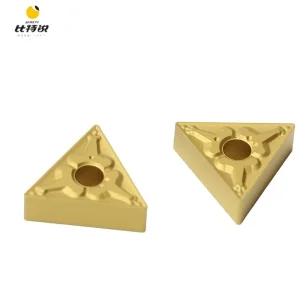
China Tungsten Carbide Bar Peeling Insert Hard Alloy Cutting for Centerless Lathe Steel Rod Manufacturer, Suppliers

Buy Wholesale tungsten non-magnetic cemented carbide wear parts Supplier, Suppliers
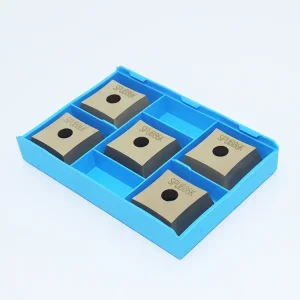
China Best price SPUB86K CVD coating tungsten carbide lathe cutting tool insert Manufacturer, Manufacturers

Buy Wholesale SPUB63 tungsten carbide insert scraps lathe cutting tools turning Supplier, Factories
Tungsten Mold & Tooling Metallurgy: Precision Sintering & Structural Mechanics
In modern ultra-high pressure compaction and continuous stamping, tungsten carbide molds provide unparalleled compressive rigidity and dimensional fidelity.
Industrial metal forming, cold heading, pharmaceutical pelleting, and powder metallurgy compaction impose relentless mechanical stresses on tooling inserts. When procurement officers search to buy tungsten mold manufacturer capabilities, they are not merely purchasing machined components; they are investing in the grain boundary mechanics, stoichiometric phase stability, and wear resilience of sintered tungsten carbide (WC-Co and WC-Ni systems).
As an established Chinese manufacturing leader located in the primary tungsten industrial corridor of Nanchang, Jiangxi, Jiangxi Zhongfu Cemented Carbide Co., Ltd. has spent over 24 years refining the interplay between submicron carbide grain morphology and binder matrix distribution. In heavy-duty molding applications, tool breakdown occurs through three intertwined failure mechanisms: abrasive micro-cutting, fatigue-induced spalling, and binder phase leaching under elevated frictional temperatures. Our fully integrated facility addresses these challenges at the powder metallurgy phase.
Phase Equilibria & The Prevention of Detrimental Eta (η) Phases
The metallurgical integrity of a tungsten carbide mold depends profoundly on precise carbon balance. Slight deviations during vacuum carburization or decarburization lead directly to either free graphite precipitation (causing severe localized pitting and micro-cracking under cyclic compression) or carbon deficiency resulting in brittle η-phase (Co3W3C or Co6W6C) compounds. The formation of eta-phase carbides strips cobalt from the binder matrix, drastically lowering transverse rupture strength (TRS) and creating internal stress concentrations that initiate catastrophic brittle fracture in cold heading dies and stamping punches.
By employing 100% virgin ammonium paratungstate (APT) derived raw powder, high-energy wet ball milling with computer-monitored wax homogenization, and closed-loop atmosphere sintering, our factory locks the carbon window within a razor-thin tolerance of ±0.03 wt%. This ensures a pure two-phase α (WC) + β (binder) microstructure featuring optimum mean free path spacing in the cobalt network.
Sinter-HIP (Hot Isostatic Pressing) Overpressure Technology
Conventional vacuum sintering leaves micro-porosity classified under ISO 4505 as A02/B02. For high-stress tungsten molds, any residual sub-surface micro-void functions as a fatigue crack initiator. Zhongfu utilizes advanced Overpressure Sinter-HIP furnaces operating at 1,450°C under 100 bar of ultra-pure argon. Under this simultaneous thermal and hydrostatic pressure, micro-pores collapse and diffusion-bond completely, eliminating internal porosity to near-zero (A00, B00, C00), increasing transverse rupture strength by up to 25%, and allowing mirror polishing to Ra 0.02 μm for scratch-free tablet and optical lens tooling.
Why Global Tier-1 Buyers Source Tungsten Molds from China Factories
A strategic convergence of upstream mineral dominance, high-density industrial clusters, multi-axis machining capabilities, and unyielding cost efficiency.
Integrated Upstream Raw Material Security
China holds over 80% of global tungsten reserves, with Jiangxi province serving as the epicentre. Direct access to virgin APT powders insulates overseas customers from raw material supply shocks, avoids the inconsistencies of scrap-blended powders, and maintains cost stability across multi-year contracts.
Multi-Axis CNC, AgieCharmilles EDM & Micro-Grinding
Our workshop houses high-precision wire EDM, CNC optical profile grinding, and slow-wire cutting machines. We process intricate mold geometries, micro-cavities, and keyway contours with dimensional repeatability of ±0.001mm and surface roughness of Ra 0.02 μm without micro-crack initiation.
Rigorous Metallurgical QA & Microstructure Audit
Every production batch is verified via Vickers and Rockwell hardness testers, magnetic saturation and coercivity meters (Koerzimat), and high-resolution metallographic microscopes. We supply EN 10204 3.1 inspection certificates verifying density, hardness, cobalt distribution, and porosity standards.
The Real Total Cost of Ownership (TCO) Calculation
For automated progressive stamping presses operating at 600 to 1,200 strokes per minute, or cold heading operations producing automotive fasteners at thousands of units per hour, tool purchase price represents less than 5% of overall operational cost. The remaining 95% is dictated by unplanned downtime, change-over labor, line readjustment, and out-of-tolerance scrap metal.
By partnering directly with a dedicated Chinese tungsten mold factory that optimizes cobalt binder content, grain sizing, and compressive residual stress, overseas manufacturing plants achieve between 2.5x to 4x service life extension compared to generic wear-grade carbide. Longer service life equates directly to tens of thousands of dollars in eliminated press downtime and superior margin preservation.
Tungsten Carbide Mold Grades & Performance Specification Guide
Balancing hardness (HRA), compressive strength, and fracture toughness (KIC). Consult our standard metallurgical matrix before dispatching your engineering blueprints.
| Alloy Grade | Binder (wt%) | WC Grain Size (μm) | Density (g/cm³) | Hardness (HRA) | TRS (MPa) | Recommended Mold Application |
|---|---|---|---|---|---|---|
| YG6 / K10 | 6.0% Co | 1.2 – 1.6 | 14.90 – 15.00 | 90.5 ± 0.5 | ≥ 2,100 | Fine wire drawing dies, compacting punches for low-abrasive ceramics, non-ferrous trim dies |
| YG8 / K20 | 8.0% Co | 1.4 – 1.8 | 14.65 – 14.85 | 89.5 ± 0.5 | ≥ 2,400 | Wear guide plates, centerless lathe peeling bushings, rock drill tamping inserts, light cold stamping |
| YG15 / G30 | 15.0% Co | 1.6 – 2.2 | 13.95 – 14.15 | 87.0 ± 0.5 | ≥ 2,800 | Medium cold heading dies, progressive stamping dies, hex bolt forming matrices, tube drawing plugs |
| YG20 / G50 | 20.0% Co | 2.0 – 3.0 | 13.45 – 13.65 | 85.5 ± 0.5 | ≥ 3,200 | Heavy cold forging dies, high-impact cold extrusion, large-diameter blanking punches, severe-shock tooling |
| YG25 / Heavy | 25.0% Co | 2.5 – 3.5 | 13.00 – 13.25 | 84.0 ± 0.5 | ≥ 3,400 | Extreme shock resistance, fastener cold upsetting matrices, heavy metal stamping with severe dynamic shock |
| NM-Ni10 | 10.0% Ni | 1.2 – 1.8 | 14.50 – 14.70 | 88.5 ± 0.5 | ≥ 2,300 | Non-magnetic NdFeB magnet compaction dies, corrosive acid/alkali pumping sleeves, MWD/LWD sensor tooling |
Selecting the ideal grade represents an engineering compromise between wear resistance (hardness) and impact resistance (toughness). Where abrasive sliding without heavy impact is present, lower cobalt formulations such as YG6 or YG8 maintain pristine surface finishes over millions of cycles. Conversely, in cold forging or thick metal piercing where tensile hoop stresses can exceed 2,000 MPa, higher cobalt matrices like YG15, YG20, and YG25 dissipate energy elastically, arresting micro-crack propagation and avoiding catastrophic mold fragmentation.
Emerging Trends Shaping Tungsten Mold & Tooling Manufacturing
How advanced nanomaterials, functional coatings, non-magnetic matrices, and precision subtractive processes are revolutionizing industrial mold performance.
Ultrafine & Nano-Grain WC Formulations
By integrating grain growth inhibitors such as Vanadium Carbide (VC) and Chromium Carbide (Cr3C2), our engineers stabilize WC grain sizes at 0.2 – 0.5 μm. Nano-grain carbide exhibits ultra-high hardness without sacrificing fracture toughness, enabling sharper cutting edges in micro-electronic leadframe punching and razor-sharp slitting cutters.
Non-Magnetic Nickel-Bonded Matrices
Standard cobalt binders possess high ferromagnetic permeability (μr), rendering them unusable in rare-earth magnet molding or electronic sensor assembly. Our proprietary non-magnetic nickel-based carbide grades deliver magnetic permeability ≤ 1.005 μ0, zero residual magnetism, and exceptional resistance to galvanic and acidic corrosion.
Advanced Nanostructured CVD & PVD Coatings
Applying TiAlN, AlTiN, AlCrN, or multi-layer CVD diamond-like coatings onto precision-ground carbide molds drastically reduces coefficient of friction (down to μ < 0.15). This prevents adhesive galling, cold welding, and material transfer when drawing galvanized steels, copper foil, or aluminium alloys.
The End-to-End Precision Manufacturing Route
A precision tungsten mold cannot be produced by fast generic machining. It requires a synchronized five-stage powder metallurgy and micro-subtractive pathway:
Formulation & Wet Milling
Virgin WC + Co/Ni blended with alcohol and paraffin wax in high-capacity ball mills for 48 hours to achieve sub-micron dispersion.
Spray Drying & Pressing
Spray tower atomization produces spherical, free-flowing granules. Automated CNC hydraulic presses compact near-net blanks.
100-Bar Sinter-HIP
Vacuum pre-sintering followed by 1,450°C overpressure argon consolidation. Eliminates micro-voids and seals structural density.
Precision Grinding & EDM
Diamond-wheel cylindrical, surface, and optical profile grinding combined with sub-micron wire EDM create finished geometries.
Mirror Polish & CMM
Diamond paste hand lapping to Ra 0.02 μm mirror finish, Zeiss 3D CMM coordinate inspection, and metallographic validation.
Localized Application Scenarios: Where Tungsten Molds Outperform Tool Steels
Proven across tier-one automotive plants, energy drilling contractors, EV battery gigafactories, and pharmaceutical compaction cleanrooms.
Automotive Fastener Cold Heading & Stamping
In high-volume fastener production (producing M6–M24 Grade 8.8, 10.9, and 12.9 high-tensile bolts), standard Cr12MoV or D2 tool steel dies suffer early bore enlargement and gauling within 50,000 hits. Zhongfu’s YG20 carbide cold heading dies comfortably exceed 1,500,000 cycles, sustaining thread pitch tolerances and avoiding premature tool fatigue.
EV Lithium Battery Electrode Slitting Dies
Slitting cathode (aluminum coated with LiCoO2 / NMC) and anode (copper coated with graphite) foils demands zero burrs (< 2 μm) to prevent catastrophic battery thermal runaway. Our sub-micron YG6X / YG8X ultra-precision slitter rotary knives and shear dies sustain razor-sharpness over hundreds of kilometers of continuous web processing without edge chipping.
Semiconductor & Electronic Leadframe Punching
Micro-electronic leadframe stamping dies require micro-punches as small as 0.3mm in diameter operating at 1,000 SPM. Utilizing ultrafine tungsten carbide blanks ground via optical projection, our punch matrices deliver superior elastic modulus (600+ GPa), eliminating punch deflection, galling, and burr formation across multi-million cycle runs.
Beyond stamping, tungsten carbide molds are critical in wire, bar, and tube drawing. High-carbon steel wire, stainless rod, and copper welding wire rely on carbide drawing dies to achieve high-reduction cross-sections. When drawn through our Sinter-HIP YG6 or YG8 carbide nibs, friction is minimized, lubricating films are preserved, and wire surface finish achieves uniform mirror luster free from micro-scratches.
Strategic Global Sourcing: The Technical Checklist for Overseas Buyers
How technical procurement officers in North America, Europe, Australia, and East Asia vet and audit Chinese tungsten mold manufacturers.
Purchasing precision tooling across borders introduces quality assurance, logistics, and engineering interpretation challenges. When qualifying a Chinese factory for critical mold tooling, engineering directors and global purchasing teams should enforce the following four-point audit protocol:
1. 100% Virgin Powder Traceability
Mandate that suppliers provide chemical composition certificates confirming zero blending of secondary recycled scrap carbide (zinc-process powders). Recycled powder introduces variable grain sizes and trace elemental impurities (Fe, Cr, Ti) that drastically reduce mold fracture toughness and cause premature catastrophic cracking under high cyclic loads.
2. Sinter-HIP Furnace Documentation
Verify that your manufacturer owns and operates integrated Overpressure Sinter-HIP furnaces rather than outmoded vacuum-only units. Sinter-HIP documentation guarantees that components operate with near-zero porosity (ISO A00/B00) and full theoretical density, ensuring exceptional mechanical reliability.
3. Shrink-Fit & Pre-Stressing Engineering
Because tungsten carbide features exceptionally high compressive strength (~4,500 MPa) but lower tensile strength (~1,500 MPa), high-pressure molds require shrink-fitting into alloy steel jackets (H13, 4140, or 4340). Audit whether the factory can calculate interference tolerances (δ) and deliver fully pre-stressed die assemblies.
At Jiangxi Zhongfu Cemented Carbide Co., Ltd., all export consignments undergo strict outgoing quality control (OQC). We provide complete technical documentation packages with each shipment, including:
- EN 10204 Type 3.1 Certified Material Test Reports (MTR): Specific density, Rockwell hardness (HRA), Vickers hardness (HV30), and coercive force (Hc).
- Zeiss 3D CMM Coordinate Dimensional Reports: Complete geometric dimensioning and tolerancing (GD&T) verifying runout, concentricity, and profile tolerances.
- Surface Roughness Profilometry Traces: Quantitative verification of optical mirror polish (Ra 0.02 μm – Ra 0.2 μm).
- Ultrasonic Non-Destructive Testing (NDT): Verification of zero sub-surface structural fractures or voids in thick EDM blocks and blanks.
Engineered Tungsten Stock, Semi-Finished Blanks & Tooling Inserts
In addition to custom finished molds, our factory provides high-density stock blanks, precision-ground rods, and specialized industrial inserts ready for your wire EDM and tool-room machining.

Buy Premium Bright Surface Tungsten Heavy Alloy Sheets & Pure Tungsten Plates for Industrial Applications Manufacturer, Factories

China Tungsten tool holder lathe cemented carbide cutting tool inserts for chian saw Manufacturer, Suppliers

China Wholesale SPUB-63 series carbide wood insert milling carbide insert Supplier, Suppliers

Wholesale Industrial Tungsten Alloy Rod Tungsten Material For Stainless Steel Machining Wear‑Resistant Solid Tungsten Bar Supplier, Suppliers

Wholesale Wholesale SPUB63B tungsten carbide insert box used carbide inserts price Supplier, Factories
China Wholesale SPUB63M30 tungsten carbide the cutter indexable cutting tools Supplier, Suppliers
China Factory wholesale Tungsten square original carbide cutting inserts Manufacturer, Manufacturers

China Carbide Cutting Rods for Tungsten Alloy Cutting Tool Components Suppliers, Factories
Frequently Asked Questions for Industrial Mold Sourcing
Clear, metallurgical insights addressing tool life, wire EDM handling, corrosion resistance, and custom manufacturing parameters.
Can Zhongfu manufacture custom tungsten carbide molds directly from 2D/3D CAD drawings?
How do you prevent wire EDM micro-cracking and cobalt depletion during mold cavity machining?
What are the metallurgical differences between cobalt-bonded and nickel-bonded carbide molds?
What is the typical production lead time for prototype versus production-scale mold orders?
How does Zhongfu guarantee dimensional concentricity on shrink-fitted carbide die assemblies?
What surface finish parameters (Ra) can be achieved on tungsten mold working surfaces?
Submit Your Blueprints for Metallurgical Consultation & Fast Quotation
Connect directly with Jiangxi Zhongfu’s application engineering team. Send your 2D/3D part drawings, dimensional tolerances, and operating load conditions for confidential review, grade optimization, and a binding factory-direct quotation within 8 hours.