
Precision Carbide Tooling & Machining Solutions
Procure directly from ISO9001 certified Chinese sintering facilities. High structural density, controlled microstructure, and high scrap-return efficiency.
Tungsten Carbide Scrap Dynamics: Direct Metallurgy & Hydrometallurgical Upcycling
Understanding grade sorting, contamination limits, and conversion methodologies to virgin-equivalent ammonium paratungstate (APT).
The Macro-Industrial Metallurgy of Cemented Carbide Scrap
Tungsten carbide (WC-Co) scrap is not merely industrial refuse; it represents the highest-density, most chemically pure input available for secondary tungsten refiners. Because tungsten occurs in natural minerals like wolframite and scheelite at concentrations typically below 1.5% WO3, processed tungsten scrap containing 70% to 95% W content yields vast thermodynamic efficiencies over primary extraction. Global manufacturing enterprises actively participate in closed-loop recycling loops to hedge against volatile geopolitical extraction controls and satisfy stringent Scope 3 emissions frameworks.
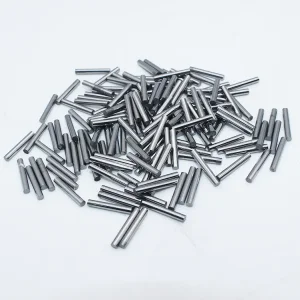
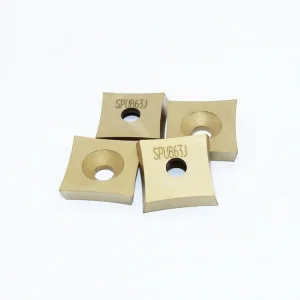
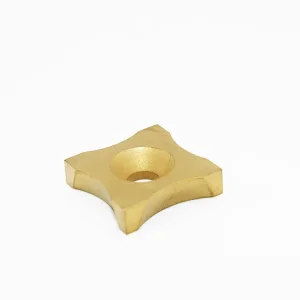
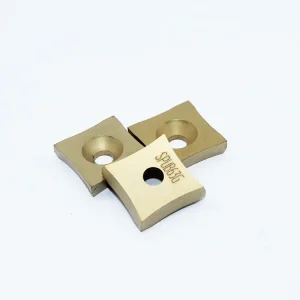
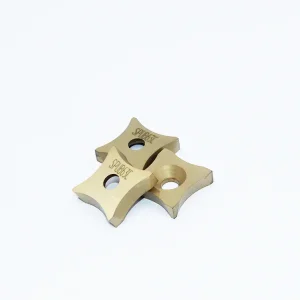
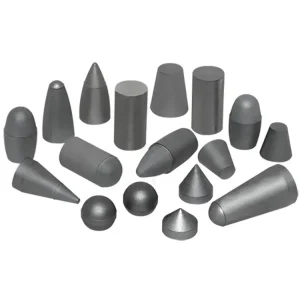
Industrial carbide scrap generally segments into two primary structural forms: Solid Carbide Scrap and Soft Scrap / Carbide Sludge. Solid scrap comprises worn endmills, CNC turning inserts (e.g., SPUB, SNMX, CNMG configurations), rock drilling buttons, cold heading dies, and wear plates. Soft scrap consists of grinding sludge, swarf, and uncured green compacts originating from CNC tool grinding facilities. The refining routes diverge considerably:
- The Zinc Reclamation Process (Direct Metallurgy): Solid scrap is submerged in molten zinc at approximately 900°C. The liquid zinc selectively alloys with the cobalt binder phase, causing the crystal lattice to expand and disintegrating the sintered mass. Subsequent vacuum distillation boils off the zinc for reuse, leaving a spongy, virgin-grade WC-Co sponge that can be micronized directly into ready-to-press (RTP) powder without chemical transformation.
- Hydrometallurgical Refining (Chemical Conversion): Mixed solid tools with complex multi-layer coatings (TiN, AlTiN, CVD diamond), high-titanium cermets, and oxidized grinding sludge undergo oxidative roasting at 800°C, high-pressure digestion in sodium hydroxide, liquid-liquid ion exchange, and crystallization into premium Ammonium Paratungstate (APT). This route totally resets the chemical footprint, eliminating unwanted tramp elements like tantalum, niobium, chromium, and sulfur.
Why Tier-1 Global Procurement Teams Source Scrap & Recycled Carbide in China
Evaluating Jiangxi and Hunan's geographic cluster economics, supply chain security, and processing capacity.
Supply Chain Epicenter (Jiangxi/Hunan)
China controls over 80% of upstream tungsten concentrate reserves and primary metallurgical refining capacity. Located in core hubs like Nanchang and Zhuzhou, Chinese recycling facilities operate adjacent to large-scale virgin APT smelters, enabling continuous chemistry adjustment and zero-latency feedstock blending for custom sinter grades.
Advanced Sinter-HIP Modernization
Leading Chinese carbide factories no longer rely on atmospheric sintering. Sinter-HIP furnaces operating at 100 bar isostatic argon pressure completely eliminate internal microporosity (A00-B00 ratings), converting high-grade reclaimed scrap into precision blanks with identical rupture stress and hardness as 100% virgin-source carbide.
Rigorous ICP-OES Quality Assurance
Scrap sorting in state-of-the-art Chinese plants utilizes automated XRF sorting guns coupled with full ICP-OES (Inductively Coupled Plasma Optical Emission Spectroscopy). Trace tramp elements (Ti, Ta, Nb, Cr, Ni, Fe) are calibrated down to parts-per-million thresholds, ensuring no brittle eta-phase formation during resintering.
Industrial Wear Deployments: From Secondary Stock to Critical Performance
Real-world integration points where secondary tungsten carbide products excel in cost-to-wear ratios.
Heavy Metallurgical Descarfing & Bar Peeling
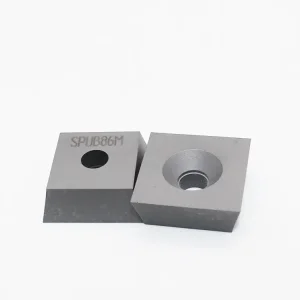
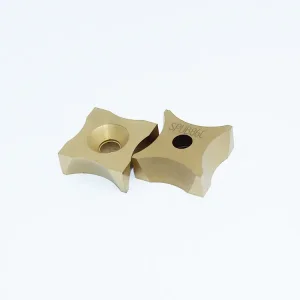
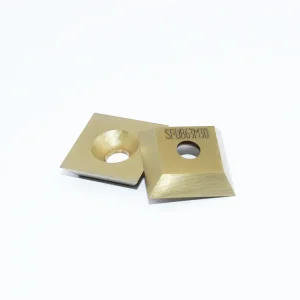
Steel mills condition continuous-cast billets and hot-rolled seamless tubes utilizing high-shock inserts such as SPUB-63, SPUB-86, and SDUW scarfing geometries. By employing secondary-refined micro-grain carbide with elevated cobalt binder (9-12% Co), these tools withstand intense thermal shock while dramatically reducing tooling cost per ton.
Railway Infrastructure & Mining Excavation
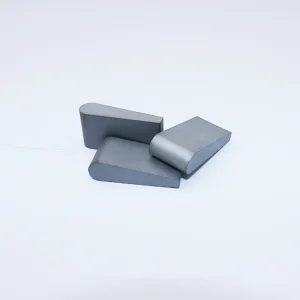
Track maintenance ballast tamping requires extreme impact-resistant tamping tines and road scarifier picks. Reclaimed tungsten carbide composites embedded via robotic braze matrices deliver exceptional abrasion resistance against granite gravel ballast, cutting maintenance cycles across high-speed rail networks.
Severe Corrosion & Non-Magnetic Components
Reclaiming scrap via chemical conversion enables complete separation of cobalt binders, replacing them with nickel-chromium (WC-Ni-Cr) formulations. These non-magnetic grades power Measurement While Drilling (MWD) downhole tools, flow-control valves, and subsea petroleum choke valves that resist both H2S erosion and magnetic sensor interference.
Macro Supply Chain Solutions for Global Buyers
How multinational engineering groups balance circular procurement, metallurgical safety, and price arbitrage.
Mitigating Grade Contamination: The Scrap Evaluation Protocol
When purchasing tungsten carbide scrap or procuring tools manufactured from high-reclaim stock, procurement managers face significant metallurgical risks if scrap sorting is compromised. Scrap streams generally categorize across precise industrial grades:
- Clean Grade A Solid (Clean Inserts & Endmills): Uncoated or PVD-coated solid milling tools and indexable inserts. High tungsten purity (88-94% WC), low tramp metals. Ideal for direct zinc conversion.
- Mixed Tooling Scrap (Brazed Assembly Cutters): Rock drills and trenching picks containing copper-silver braze alloy and tool steel shanks. Requires induction debrazing and mechanical blasting before pyrometallurgical treatment.
- Wet Grinding Sludge (Cake/Swaf): Fine WC particles mixed with coolant, tramp oils, and diamond grinding wheel fragments. Requires solvent degreasing, magnetic separation to remove steel chips, and full hydrometallurgical digestion.
Top-tier Chinese partner factories apply rigorous spectrographic incoming audits. Buyers are strongly advised to secure certificates of chemical analysis covering not only tungsten (W) and cobalt (Co), but also critical trace elements: Iron (Fe < 0.08%), Titanium (Ti < 0.05%), and Nickel (Ni < 0.10%) for standard WC-Co grades to prevent uncontrolled grain growth and embrittlement during downstream powder compaction.
Engineered Wear Parts & High-Grade Tungsten Blanks
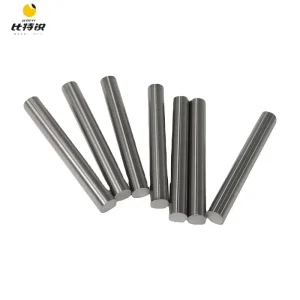
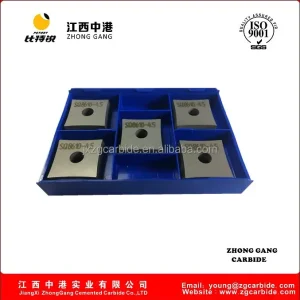
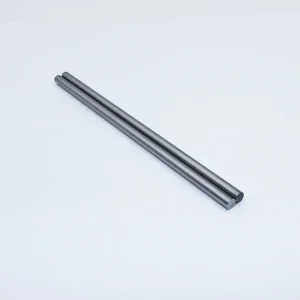
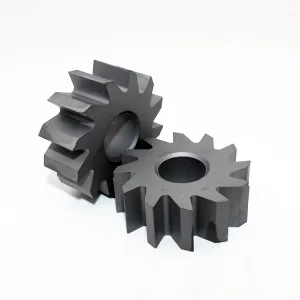
Direct export of wear-resistant carbide grades, h6 tolerance ground bars, railway tamping components, and scarfing inserts.
Frequently Asked Questions: Purchasing & Evaluating Tungsten Carbide Scrap
Essential guidance on density testing, grade segregation, pricing benchmarks, and export compliance.