
High-Performance Cemented Carbide Wear Solutions: Category Portfolio A
Explore our engineering-grade carbide tips, pipe scarfing inserts, drill trims, and severe wear blanks manufactured to micrometer tolerances for high-wear gas, pipeline, and manufacturing operations.
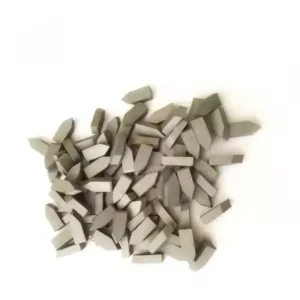
Wholesale Customized carbide welding tips for turning milling cutters Manufacturer, Manufacturers
View Product Specs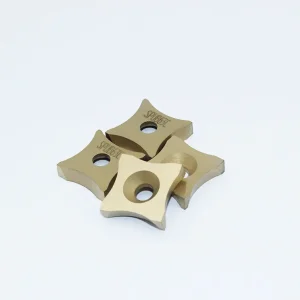
China Wholesale SPUB-63C cemented mining tungsten tools carbide drill insert Supplier, Factories
View Product Specs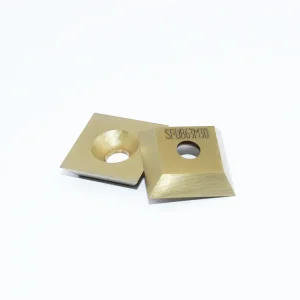
China SPUB-63 Steel Pipe Scarfing Tools Tube Scarfing Inserts Supplier, Suppliers
View Product Specs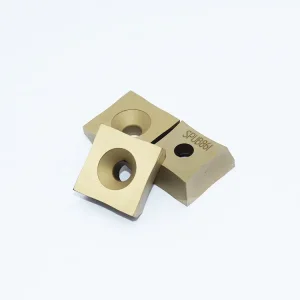
China Tungsten tool holder lathe cemented carbide cutting tool inserts for chian saw Manufacturer, Suppliers
View Product Specs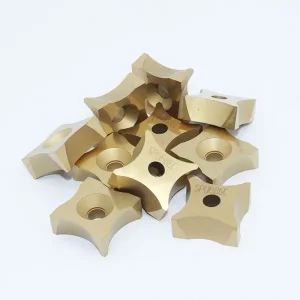
Buy SPUB86C P40 tungsten carbide tube scarfing insert for heavy machining Supplier, Factories
View Product Specs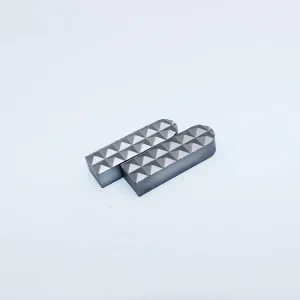
China YG8 Standard tungsten carbide torque gripper inserts for chuck jaws Factory, Factories
View Product Specs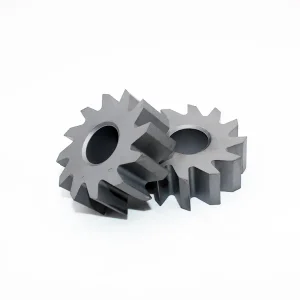
Buy Custom made transmission reverse idle gear starter gear spur gear set Manufacturer, Factory
View Product Specs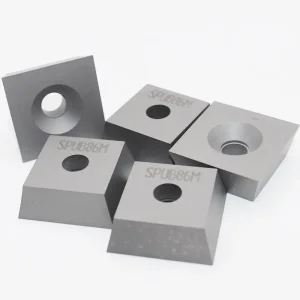
China Factory wholesale boxes tungsten woodworking carbide button inserts Supplier, Factories
View Product SpecsEngineering Gas Wear Solutions: Understanding Severe Solid Particle Gas Erosion
A rigorous metallurgical exploration of multiphase high-velocity gas erosion, micro-abrasion dynamics, and binder binder-leaching mitigation in severe gas industrial systems.
In modern industrial gas transport, petrochemical refining, natural gas liquefaction (LNG), and hydrocarbon extraction, components are subjected to destructive fluid dynamics broadly categorized as Gas Wear. Unlike low-speed sliding wear, gas wear is driven by multiphase gas-solid erosion (SPE), wherein compressible gas streams propel abrasive entrained particulate—such as formation silica sand, catalyst fines, or iron sulfides—at velocities exceeding 80 to 250 meters per second. When these micro-particulates strike valve chokes, compressor guide vanes, metering orifices, and tube scarves, they exert instantaneous localized pressure spikes in excess of several gigapascals, triggering micro-cleavage, subsurface plastic fatigue, and catastrophic material loss.
Jiangxi Zhongfu Cemented Carbide Co., Ltd. has spent over 24 years deciphering this complex tri-tribological mechanism (abrasion, impact, and chemical dissolution). Standard structural steels (AISI 4140, 316L, or Duplex 2205) quickly disintegrate under severe gas flow velocity because their yield strength is insufficient to impede particle penetration. Through hot isostatic pressing (Sinter-HIP) of refined tungsten carbide (WC) bound in cobalt or non-magnetic nickel matrices, our engineering team manufactures gas wear parts capable of surviving hundreds of atmospheres of differential pressure and severe erosive attack.
Multiphase Gas Impingement
Under shallow angle gas impact (< 30°), mechanical scratching and micro-cutting dominate wear rates. Sub-micron WC grains maintain structural integrity by offering high micro-hardness (HRA 89.5 - 92.5) that prevents abrasive particle indentations.
Perpendicular Shock Fatigue
At normal impact angles (90°), kinetic energy transfer leads to brittle fracture and surface spalling. Our optimized ductile cobalt and nickel intergranular matrices dissipate kinetic shocks and stop micro-crack propagation across grain boundaries.
Sour Gas Corrosive Synergy
Acidic gases containing H2S, CO2, and wet chloride vapors leach traditional cobalt binders through electrochemical corrosion. Our proprietary non-magnetic nickel-based carbide grades eliminate binder washout in extreme sour environments.
Why Buy From Zhongfu: Chinese Manufacturing Excellence in Tungsten Carbide
Combining world-class mineral resource proximity in Jiangxi with 24 years of sintering metallurgy, computerized dimensional control, and factory-direct price advantages.
Upstream Tungsten Supply Dominance
Situated in Nanchang, Jiangxi—the epicenter of global tungsten reserves—Zhongfu guarantees 100% virgin ammonium paratungstate (APT) raw materials. We enforce zero recycled scrap powder in our gas wear series, guaranteeing consistent hardness, absence of trace impurities, and zero batch-to-batch chemical deviation.
Overpressure Sinter-HIP Technology
All carbide wear components undergo high-pressure Sinter-HIP processing at 1,450°C under 60 to 100 bar of ultra-pure argon. This hydraulic-like compaction closes micro-voids, elevating transverse rupture strength (TRS) beyond 2,800 MPa and driving metallurgical porosity to ISO class A00/B00/C00.
Micro-Precision Grinding & EDM
Our 5,000 m² workshop integrates multi-axis CNC surface grinding, optical profile grinding, and wire electrical discharge machining (WEDM). We routinely achieve tolerances within ±0.002 mm (h6 standards on circular bars) and mirror finishes down to Ra 0.05 µm for gas-tight sealing faces.
Global Gas Wear Industry Trends & Next-Gen Metallurgical Evolution
How the green energy transition, high-pressure LNG transport, and hydrogen-enriched natural gas handling are reshaping wear material requirements.
Hydrogen Embrittlement Mitigation
As pipeline operators introduce hydrogen blending into methane infrastructure, conventional cobalt-bound tools face hydrogen micro-cracking. Zhongfu is pioneering ultra-low cobalt and tantalum-doped solid matrices to prevent localized embrittlement.
Cryogenic LNG Flow Reliability
Liquefied natural gas systems operating down to -162°C induce extreme thermal shock contraction. Our engineered sub-micron fine grades sustain their fracture toughness without brittle structural transitions during rapid thermal cycles.
Supercritical CO2 (sCO2) Tribology
Carbon capture, utilization, and storage (CCUS) demands gas wear trims that survive supercritical CO2 phase transitions. Dense WC-Ni matrices provide complete resistance against carbonic acid corrosion and high-velocity erosion.
CVD & PVD Nano-Coatings
Complementing our core Sinter-HIP carbide bodies, CVD titanium aluminum nitride (TiAlN) and diamond-like carbon (DLC) multi-layer barriers further diminish the coefficient of friction against erosive gas-borne silicates.
Tungsten Carbide Material Selection Guide for Severe Gas & Mechanical Wear
Select the optimal cemented carbide formulation based on kinetic particle velocity, impact energy, and corrosive gas chemistry.
| Alloy Grade | Binder Type & Wt% | Grain Size (µm) | Density (g/cm³) | Hardness (HRA) | TRS (MPa) | Primary Industrial Gas & Wear Application |
|---|---|---|---|---|---|---|
| YG6X | Cobalt 6.0% | 0.6 - 0.8 (Sub-Micron) | 14.90 - 15.05 | 91.5 - 92.5 | 2,400 | Dry gas sand nozzles, fine gas metering orifices, low-impact high-velocity SPE shielding. |
| YG8 | Cobalt 8.0% | 1.2 - 1.6 (Medium) | 14.65 - 14.80 | 89.5 - 90.5 | 2,800 | Wellhead choke stems, high-temperature gas valve trims, pipe scarfing inserts (SPUB series). |
| YG15 | Cobalt 15.0% | 1.8 - 2.5 (Coarse) | 13.95 - 14.15 | 86.5 - 87.5 | 3,200 | Heavy pulsed gas compressor valves, extreme mechanical shock, high-impact forming dies. |
| ZF-Ni8 | Nickel 8.0% | 1.0 - 1.4 (Medium) | 14.60 - 14.75 | 89.0 - 90.0 | 2,500 | Wet sour gas (H2S/CO2) handling, subsea gas choke valves, downhole MWD/LWD non-magnetic tools. |
| ZF-Nano04 | Cobalt 4.5% | 0.25 - 0.4 (Nano-Grain) | 15.05 - 15.15 | 93.5 - 94.2 | 2,300 | Extreme erosion cutting edges, precision micro-gas spray tips, abrasive powder blasting injectors. |
Localized Applications & Macro Engineering Solutions
Demonstrating how Zhongfu cemented carbide components extend operational uptime across high-pressure pipeline networks, steel processing, and heavy mechanical systems.
Gas Pipeline Tube Scarfing
During the induction welding of steel pipe lines for high-pressure gas transport, red-hot weld beads must be instantly removed. Our SPUB-63 and SPUB-86C tungsten carbide scarfing inserts endure continuous thermal cycling at 900°C while shearing high-tensile flash without edge notch failure.
Choke Valves & Flow Control
Wellhead choke manifolds experience sudden gas pressure drops from 10,000 PSI down to transport pressures, accelerating abrasive entrained sands to sonic speeds. Zhongfu solid carbide cage trims and needle stems enhance valve longevity by 800% over Stellite hardfacing.
Railway Tamping & Civil Ballast
Heavy track maintenance machinery operates in violent abrasive dust and gas environments. Our tungsten carbide tamping tine wear plates withstand dynamic pounding into granite ballast, drastically extending track maintenance intervals without premature tip breakage.
Global Supply Chain Quality Assurance & Compliance Architecture
How Zhongfu protects multinational OEM buyers through stringent metallurgical tracing, ultrasonic flaw inspection, and international standards verification.
100% Raw Material Chemical Traceability
Every production batch is accompanied by 3.1 Mill Inspection Certificates validating pure WC/Cobalt content, carbon balance, and saturation magnetization (magnetic saturation & coercive force Hc). We eliminate eta-phase embrittlement and free carbon micro-clustering at the molecular stage.
Non-Destructive & Microstructural NDT
Critical gas wear blanks undergo non-destructive ultrasonic flaw examination to verify absolute internal density. Our metallurgical laboratory uses automated optical and scanning electron microscopy (SEM) to verify porosity grades under ISO 4505 standards.
Export-Ready Packaging & Rapid Logistics
All carbide parts are vacuum-sealed in rust-preventative VCI barriers and housed in high-density customized wooden crates. With direct access to major international freight hubs, overseas air shipments reach clients in North America and Europe within 5 to 7 business days.
Frequently Asked Questions: Purchasing Severe Gas Wear Components
In-depth responses compiled by Zhongfu senior metallurgical engineers to assist procurement teams and mechanical designers.
Most gas wear failures occur through grain pluck-out (binder washing), microscopic chipping under shock impact, or chemical corrosion of the cobalt binder in wet gas flows. Zhongfu prevents this through overpressure Sinter-HIP densification (near-zero porosity), grain refinement down to sub-micron scales to elevate micro-hardness, and deploying corrosion-immune nickel binder systems.
Cobalt-bonded grades (YG6, YG8) offer superior mechanical shock toughness and are standard for dry gas, pipe scarfing, and metalworking. However, if your gas stream contains moisture, carbon dioxide (CO2), hydrogen sulfide (H2S), or organic acids (pH < 6), cobalt rapidly dissolves electrochemically. In such sour gas environments, our ZF-Ni series provides unmatched corrosion-erosion endurance.
Yes, bespoke custom-manufactured carbide parts represent over 65% of our daily production volume. Simply provide CAD drawings (.step, .dwg, .pdf) detailing dimensions, geometric tolerances, and required surface roughness. Our engineering department conducts a Design-for-Manufacturability (DFM) review and issues quote calculations within 8 hours.
We control the entire manufacturing vertical: raw APT tungsten reduction, computer-controlled ball milling, automated high-tonnage uniaxial pressing, computerized vacuum Sinter-HIP cycles, and multi-axis CNC grinding. Every production step follows standardized statistical process control (SPC) charts, guaranteeing dimensional and metallurgical uniformity order after order.
High-Performance Cemented Carbide Wear Solutions: Category Portfolio B
Review the second series of precision-manufactured tungsten carbide inserts, scarfing cutters, specialized gears, and railway wear parts available for OEM ordering.
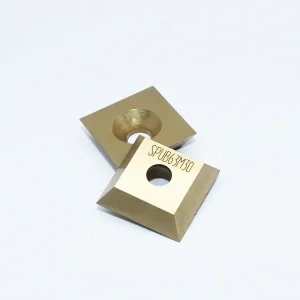
Buy Wholesale SPUB63 tungsten carbide insert scraps lathe cutting tools turning Supplier, Factories
View Product Specs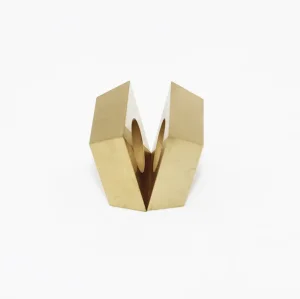
Wholesale Carbide hard alloy blade square Carbide Cutting Inserts for Metal Processing Suppliers, Factories
View Product Specs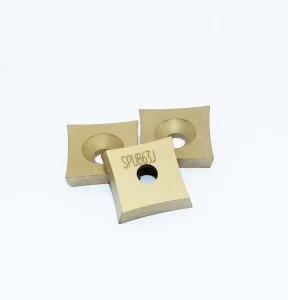
China SPUB63J CVD coating tungsten carbide od scarfing insert Manufacturers, Suppliers
View Product Specs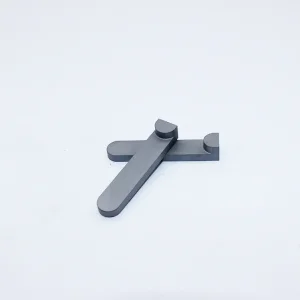
Buy Tungsten carbide tamping tines use tip wearing part for Railway Industry Supplier, Suppliers
View Product Specs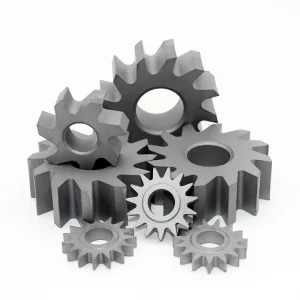
Wholesale Factory wholesale custom tungsten carbide spiral bevel gear milling cutters for sale Suppliers, Factory
View Product Specs
Wholesale Best price woodturning tungsten carbide turning tip inserts and cutter railway Manufacturer, Suppliers
View Product Specs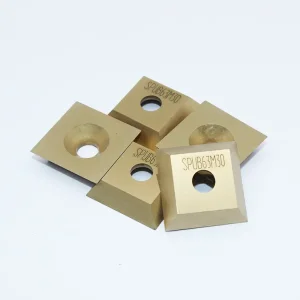
Buy Wholesale SPUB63M30 tungsten carbide welding inserts square for needle holders Suppliers, Factory
View Product Specs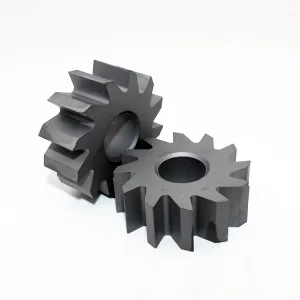
Buy Customize good quality precision metal parts spur gear tiller cultivator parts back gear Manufacturer, Manufacturers
View Product SpecsPartner with China's Premier Gas Wear & Carbide Components Manufacturer
From initial prototype drawings to high-volume recurring procurement, Zhongfu delivers metallurgical reliability, tighter tolerances, and reduced total cost of ownership.