
Choosing the best Steel Tooling for your business begins with understanding the work it must perform. A stamping die for thin stainless sheet faces different demands than tooling for thick carbon steel. Material grade, part geometry, production volume, and required tolerances all affect the right choice. So does the press: its capacity, operating speed, and setup conditions can expose weaknesses that look invisible on a drawing.
Shigeo Shingo, an influential manufacturing engineer, warned, “The most dangerous kind of waste is the waste we do not recognize.” That principle matters when comparing tooling options. A low purchase price may conceal frequent sharpening, slow changeovers, or costly scrap. Ask suppliers for details on tool steel grade, heat treatment, expected service life, maintenance needs, and support after installation. Then compare those answers against your actual production records, not just a sales estimate.
Details matter. A useful evaluation also considers lead time, spare-part availability, and whether the tooling can accommodate future product changes. For example, a shop producing short runs may value flexible inserts more than maximum cycle speed. A high-volume line may prioritize durability and predictable maintenance intervals. There is no universal winner. Even careful forecasts can miss changes in demand or material behavior, so leave room to review the decision after real production begins. This guide outlines practical criteria for selecting Steel Tooling that fits your parts, equipment, budget, and operating goals.
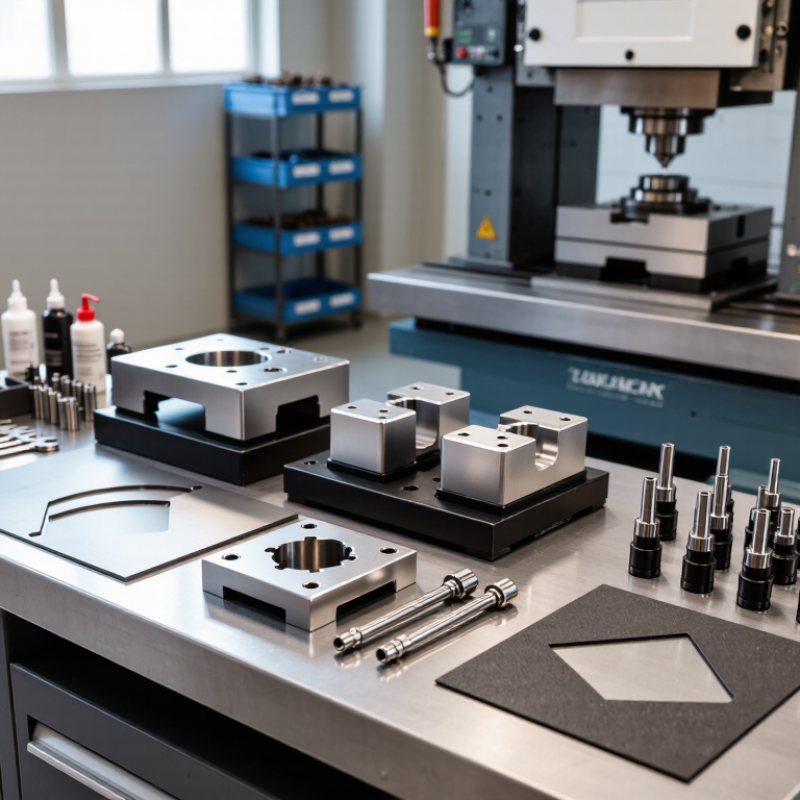
Steel tooling is the shaped metal equipment that cuts, forms, or holds material during production. Its design affects part accuracy, cycle time, and how often a line must stop for repairs. In production, small details matter: a sharp cutting edge, a close-fitting guide, or a polished cavity can change the finished part. That matters. A stamping die, for example, must handle repeated force without losing its shape. The right steel depends on the job, not just a hardness number. Abrasion, impact, heat, and production volume all influence wear.
Tool selection should begin with the material being processed and the tool’s working conditions. A tool forming abrasive sheet may need strong wear resistance, while one facing sudden loads may need more toughness. For example, a supplier or metallurgist can help compare steel grades against expected loads and maintenance needs. Ask about heat treatment, too; uneven treatment can leave a tool vulnerable to cracking or distortion. I would not treat any grade recommendation as final without checking actual production results. Keep records of tool life, surface finish, and repair intervals. They reveal whether the chosen steel suits the process—or whether the process itself needs adjustment.
Start with the part. Record its dimensions, material, wall thickness, and the tightest tolerances it must meet. A small hole near an edge may affect punch layout, tool strength, and inspection time. Include a real sample part or drawing, not just a verbal description. Small details matter.
Next, define how the tool will be used. Estimate annual volume, batch size, shift length, and expected changeovers. Note the machine’s working area, available tonnage, stroke, and shut height. These limits can rule out a design before fabrication begins. Also consider the production environment: abrasive stock, heat, or frequent cleaning may influence steel selection and surface treatment. The best choice depends on the actual process, not simply the hardest steel available.
Think about upkeep as well as output. Ask who will sharpen, repair, and inspect the tooling, and whether spare inserts can reduce downtime. A tool that runs quickly but needs difficult repairs may cost more over its service life. Compare expected part quality, maintenance hours, and replacement intervals with a tooling specialist. Estimates are still estimates. Leave room for trial runs, because real production can reveal wear or alignment issues that drawings do not show.
Choosing steel tooling starts with the job, not the grade name. A punch cutting abrasive sheet needs wear resistance; a forming die taking repeated impact needs toughness. Consider contact pressure, operating temperature, batch size, and expected maintenance. Small details matter. A tiny burr can signal edge wear before a tool fails.
A2 air-hardening tool steel offers a balance of dimensional stability and toughness for dies and punches. D2 typically holds an edge longer in abrasive work, but may be less forgiving under shock. O1 is easier to machine and can suit shorter runs, though it needs protection from rust. H13 retains strength at elevated temperatures, making it common for hot-work tooling. None is best everywhere.
Compare hardness alongside the full production process. A very hard insert may resist wear, yet crack if alignment is poor or impact is uneven. Review heat treatment, surface finish, and whether your shop can maintain the tool. Request material certificates and test results for the specified grade and condition. A sample run can reveal chipping, galling, or excessive polishing time. There is no perfect chart. Treat grade comparisons as a shortlist, then reconsider the choice after production data arrives.
| Steel Grade | Tool Steel Category | Typical Hardened Hardness | Key Properties | Common Tooling Applications | Best Fit and Trade-Offs |
|---|---|---|---|---|---|
| A2 | Air-hardening, cold-work | About 57–62 HRC | Good dimensional stability during hardening; balanced wear resistance and toughness. | Blanking and forming dies, punches, shear blades, gauges, and general-purpose dies. | A versatile choice when predictable heat treatment and a balance of wear resistance and toughness matter. Usually less wear resistant than D2. |
| D2 | High-carbon, high-chromium cold-work | About 58–62 HRC | High wear resistance and compressive strength; lower toughness than many less highly alloyed cold-work grades. | Long-run blanking dies, punches, slitting knives, thread-rolling dies, and wear-resistant inserts. | Consider for abrasive or high-volume work where edge life is important. Less suitable for applications involving severe impact or shock loading. |
| O1 | Oil-hardening, cold-work | About 57–62 HRC | Good machinability in the annealed condition and useful wear resistance; oil quenching can cause more distortion than air-hardening grades. | Small dies, punches, cutting tools, gauges, and short-run production tooling. | A practical option for simpler tools and lower-volume work. Plan carefully for heat-treatment distortion and dimensional finishing. |
| S7 | Shock-resisting | About 54–58 HRC | High toughness and impact resistance; moderate wear resistance compared with cold-work grades such as D2. | Chisels, punches, hammering tools, trimming dies, and tooling exposed to repeated impact. | Choose when resistance to chipping or breakage is more important than maximum abrasion resistance. Surface treatments may help where wear is also a concern. |
| H13 | Hot-work, chromium-based | About 44–52 HRC | Good hot strength, thermal-fatigue resistance, and toughness; retains useful properties at elevated temperatures. | Die-casting dies, hot-forging dies, extrusion tooling, and hot-shear blades. | A common choice for tooling exposed to heat cycling. Final performance depends on operating temperature, cooling, heat treatment, and tool design. |
| M2 | Molybdenum high-speed steel | About 62–65 HRC | High wear resistance and hot hardness; maintains cutting ability better than ordinary tool steels as temperatures rise during cutting. | Drills, milling cutters, taps, broaches, and other high-speed cutting tools. | Suited to cutting applications requiring edge retention at elevated cutting temperatures. Generally more specialized and costly than basic cold-work grades. |
Selection note: Hardness ranges are typical values, not guaranteed specifications. Actual results vary with the steel supplier, section size, heat-treatment procedure, and testing method. Match the grade to the dominant failure mode—wear, impact, heat, or distortion—and confirm requirements with a qualified heat treater.
Choosing steel tooling is not just a hardness decision. Match the grade and heat treatment to the job: abrasive materials may need stronger wear resistance, while complex shapes demand toughness and reliable machining. Check drawings for clearances, tolerances, and finish requirements. Ask suppliers for material certificates, heat-treatment records, inspection results, and a sample-run plan. Small details matter.
Supplier quality affects more than reject rates. Review how the supplier tracks changes, handles rework, and keeps replacement components consistent. Deloitte’s 2024 manufacturing outlook reports that 86% of surveyed executives expect smart-factory solutions to drive competitiveness within five years. That is a useful reason to favor suppliers who can share clear, traceable production data—not proof that digital systems alone ensure quality.
Compare total cost, not just the quotation. Include maintenance, sharpening, changeover time, scrap, delivery risk, and expected tool life. McKinsey has reported that predictive maintenance can reduce equipment downtime by 30–50%; this is an equipment-level benchmark, not a tooling guarantee. Ask for trial data from your own process. A low initial price can still be expensive. I would also question overly precise life estimates: material variation and operator practices can make real results messier than a supplier’s forecast.
Steel tooling performs best when its condition is measured against a clear baseline. Record dimensions, edge condition, burr height, and surface finish when a tool is new or freshly serviced. Check the same points at planned intervals, using gauges and magnification where appropriate. Tiny changes count. Rising press tonnage or rougher edges can signal wear before parts fall outside tolerance.
The U.S. Department of Energy’s Operations & Maintenance Best Practices Guide reports predictive maintenance savings of 8–12% over preventive maintenance and 25–30% over reactive maintenance. These are broad facility-level estimates, not guaranteed results for a particular die or punch. Still, they support using inspection data to guide service timing instead of relying only on fixed calendar intervals. One caveat: a dashboard can look reassuring while a small chip damages the next batch.
Build a maintenance plan around tool material, workload, and the stock being formed. Log cycle counts, inspect cutting edges, and note when sharpening or clearance adjustments occur. Clean and store tools so residue and moisture do not compromise working surfaces. Set practical limits for wear, then stop and review when measurements approach them. Production pressure can make inspections easy to postpone; that is exactly when consistent records matter most.
Start with the job, not the grade name. Consider contact pressure, temperature, batch size, and maintenance needs. A tiny burr can reveal edge wear early.
A2 balances dimensional stability and toughness. D2 often holds an edge longer in abrasive work but tolerates shock less well. O1 machines easily but needs rust protection. H13 retains strength at high temperatures.
No. A very hard insert may resist wear but crack under poor alignment or uneven impact. Hardness is only one part of the decision.
Confirm the specified grade and condition. Request material certificates and test results. A sample run can expose chipping, galling, or excessive polishing time.
Record its dimensions, edge condition, burr height, and surface finish when new or freshly serviced. Compare those measurements later. Tiny changes count.
Rising press tonnage or rougher edges may signal wear before parts fall outside tolerance. A small chip can still damage the next batch.
Track cycle counts, inspect cutting edges, and log sharpening or clearance adjustments. Use measurements to guide service timing, not just calendar dates. Records help.
Clean and store tools so residue and moisture do not harm working surfaces. Set practical wear limits, then stop and review as measurements approach them. Production pressure can make inspections easy to postpone.
Choosing the best Steel Tooling begins with understanding how tooling supports production, from shaping materials to maintaining consistent output. Businesses should first define their requirements, including the materials being processed, production volume, part complexity, operating conditions, and acceptable tolerances. These factors help narrow the choice of steel grades by comparing properties such as hardness, toughness, wear resistance, and heat resistance, as well as their suitability for specific applications.
A sound decision also considers tool design, manufacturing quality, supplier capabilities, and total cost over the tooling’s service life—not just the initial purchase price. Before adopting a tool, verify its performance under realistic production conditions and check that it meets quality and consistency targets. Finally, plan regular inspection, cleaning, and maintenance to reduce unexpected downtime, extend tool life, and keep production reliable as business needs evolve.